Thanks for submitting!
You will be contacted as soon as possible


QUICK LINKS


PROFILES
PUBLICATIONS
EXPOSURE
VULNERABILTY
SOFTWARE
EQ MODELS
Search Results
Search this site
1170 results found with an empty search
- Join the GEM Webinar: Become a Public Governor Sponsor - GEM Foundation
News Join the GEM Webinar: Become a Public Governor Sponsor By: Apr 5, 2025 Mar 10, 2025 Share Facebook LinkedIn The GEM Foundation invites public institutions to join its Governing Board as Public Governors under its new scheme — a unique opportunity to shape the future of global earthquake risk reduction. The scheme features three sponsorship tiers, each providing full involvement in strategic initiatives and project support. While two tiers involve financial contributions, the third offers a merit-based pathway through the new Partnership Opportunity Application, with the objective of engaging with more countries, especially those in the Global South. This structure strengthens collaboration between GEM and leading public organisations by broadening participation, promoting shared expertise, open-access science, innovative risk modeling, and data-driven decision-making. To share more details on the sponsorship tiers, including the competitive merit-based pathway, GEM will host a webinar on April 10th, 2025. The event will cover the scheme's structure, selection criteria, and the benefits of becoming a Public Governor. Don’t miss this chance to learn how your institution can play a key role in advancing earthquake risk reduction efforts. Register for the webinar: https://www.globalquakemodel.org/gemevents/public-sponsor-partnership-gem-2025-call Application deadline (merit-based tier): 24 May 2025 Download the instructions and Application template: https://www.globalquakemodel.org/get-involved?tab=partnership-opportunity No images found. GALLERY 1/0 VIDEO RELATED CONTENTS
- Central Asia Exposure | GEM Foundation
License Request Form You have chosen to get more information about: Central Asia Exposure Exposure Please check the link below to see if this product already meets your your requirements before submitting your request for a license. Thank you. DOWNLOAD THE OPEN VERSION Summary of steps to obtain a license for the requested product. Fill in the application form below. Click Submit. Please check your email Inbox or Spam folder for the summary of your request. You will then be contacted by the GEM Product Manager with either a request for more information, or a request to sign the license. If you do not hear from us within 2 weeks, please send an email to product@globalquakemodel.org . REQUEST DETAILS A. Requesting party information First Name Last Name Role/Job Email Business type Business type Other business Sector Sector Other sector B. License agreement signatory information The signatory must be someone who is authorised to sign license agreements on your behalf such as your immediate supervisor, manager or legal officer. If you’re a PhD student, the signatory must be your adviser or a university officer in charge of license agreements or similar legal documents. Full Name of Signatory Position Company Email of Signatory Organisation name Complete Address C. Purpose of request GEM is able to offer products for free because of the support of our project partners, national collaborators and institutional sponsors. All of GEM’s products are freely available for public good, non-commercial use, but with different license restrictions. In most cases we release products under an open license (e.g., CC BY-SA or CC BY-NC-SA), which permits (re)distribution. In this case, we are granting access under a more restricted license that forbids distribution or disclosure and requires signing by GEM and the licensee in order to better assure accountability for the confidentiality of the information. In order for GEM to properly assess your request, please answer the following questions below. 1. Explain briefly how will the GEM product be used e.g. project, research including the expected results and the foreseen public benefit. Minimum 60 words. 2. Will you be able to share the results of your work with GEM? YES NO 3. Will you be able to provide feedback to GEM on the quality and usefulness of this product via a survey? YES NO D. Privacy Policy By submitting this form, you consent to the processing of your personal data in accordance with our Privacy Policy and the EU General Data Protection Regulation (GDPR). We are committed to safeguarding your information and ensuring it is only used for the purpose outlined in this form. You have the right to access, rectify, or delete your data at any time. For more information, please refer to our Privacy Policy. I agree Words: 0 Email us at product@globalquakemodel.org if you're experiencing problems submitting your application. Thank you. Submit Thanks for submitting! You will be contacted as soon as possible Incomplete data. Please fill in all required fields. Thank you.
- Probabilistic seismic hazard analysis model for the Philippines | GEM Foundation
Publications Probabilistic seismic hazard analysis model for the Philippines Share Facebook LinkedIn Download 2020 | Peer-reviewed The Philippine archipelago is tectonically complex and seismically hazardous, yet few seismic hazard assessments have provided national coverage. This article presents an updated probabilistic seismic hazard analysis for the nation. Active shallow crustal seismicity is modeled by faults and gridded point sources accounting for spatially variable occurrence rates. Subduction interfaces are modeled with faults of complex geometry. Intraslab seismicity is modeled by ruptures confined to the slab volume. Source geometries and earthquake rates are derived from seismicity catalogs, geophysical data sets, and historic-to-paleoseismic constraints on fault slip rates. The ground motion characterization includes models designed for global use, with partial constraint by residual analysis. Shallow crustal faulting near metropolitan Manila, Davao, and Cebu dominates shaking hazard. In a few places, peak ground acceleration with 10% probability of exceedance in 50 years on rock reaches 1.0g. The results of this study may have utility for defining the design base shear in the National Structural Code of the Philippines.
- EuroPython Conference - GEM Foundation
News EuroPython Conference By: Jul 2, 2018 Share Facebook LinkedIn GEM’s Michele Simionato presented ‘Lessons Learned from Parallel Programming’ during the 2017 Conference on July 14 held in Rimini, Italy. He was joined by IT Team members Paolo Tormene and Armando Scarpati in the week long event that featured five parallel tracks covering more than 200 sessions and attended by hundreds of developers across Europe. Michele, a Senior Software Developer at GEM, shared his hard-learned knowledge gained in several years of parallel programming covering performance and ways to measure it; memory usage; data transfer and ways to reduce data transfer time; and how to debug parallel programs and useful libraries. He also shared practical examples both in enterprise and scientific programming (importing CSV files in a database and numerical simulations respectively). The initial part of the talk was pedagogical, advocating the convenience of parallel programming in a small, single machine environment; while the second part focused more on advanced programming discussing a few things to know when writing parallel programs for medium sized clusters. EuroPython is the largest Python conference in Europe organized by the EuroPython Workgroups (WGs), reporting directly to the EuroPython Society Board. The conference series was started in 2002 in Charleroi, Belgium and considered to be the first major Python conference run entirely by volunteers. No images found. GALLERY 1/0 VIDEO RELATED CONTENTS
- User guide Geospatial tools for building footprint and homogenous zone extraction from imagery | GEM Foundation
Publications User guide Geospatial tools for building footprint and homogenous zone extraction from imagery Share Facebook LinkedIn Download 2014 | User manual Thisreportdescribes the tools required toextractbuildinginformation from remotely-sensed satelliteand aerialimagery.Itprovidesastep-by-stepuserguideforasetofopen-sourcesoftwaretoolsforgenerating data for the Global Exposure Database. IDCT has proposed an expansive suite of tools for inventory and damage data collection. The opens source image processing and GIS software, Quantum GIS (QGIS) and GRASS provide the core functionality for pre-processing imagery. Algorithms for automatically extracting building footprints are provided as a plug-in toolbar to QGIS. These have evolved from the Building RECognitiontool (BREC),developedbytheUniversityofPavia,andhavebeencustomisedforuseintheIDCT suite. Protocols formodifying GIS information are also provided. For regional exposure development, and generating information for use in mapping schemes, areas of homogenous land use can be manually extracted.ThiscanalsobeachievedinQGIS,howevertheuseofGoogleEarthforgeneratingthesedataare alsodescribed.
- Round up of GEM events (2017 Jan-Feb) - GEM Foundation
News Round up of GEM events (2017 Jan-Feb) By: Jul 2, 2018 Share Facebook LinkedIn During the last two months, GEM participated in a number of events in various countries. Here’s a list of GEM’s participation to some notable gatherings.- Risk assessment for Costa Rica at the Cruz Roja CRC workshop: Building a collaboration network across Central America.- Short training workshop on earthquake risk with CIGIDEN after the 16th WCEE in Santiago, Chile- Introduction of GEM to the Indian Institute of Technology Bombay (IITB) to explore synergies in 2017- CAT Risk Management and Modeling Europe 2017 held in London, United Kingdom from 1-2 March 2017Featured Event- European Conference on Earthquake Engineering (ECEE). The next European Conference on Earthquake Engineering will take place from 18-21 June 2018 in the beautiful city of Thessaloniki, Greece. The purpose of the Conference is to provide a platform to present and discuss the recent progress on Earthquake Engineering along with priority issues of global importance in seismic risk reduction, preparedness and management. Make sure to submit your abstract before the 31st May 2017 deadline! More information can be found at http://www.16ecee.org/ . See you there! No images found. GALLERY 1/0 VIDEO RELATED CONTENTS
- GEM Governing Board Meeting December 2022 - GEM Foundation
News GEM Governing Board Meeting December 2022 By: Dec 6, 2022 Share Facebook LinkedIn This year, GEM held its second hybrid-format Governing Board meeting, with 17 partners and 18 staff attending in person, and 30 partners and 9 staff attending remotely. More than 50 guests remotely attended an open session featuring presentations of GEM’s progress report on its technical work program in the second semester. The Governing Board approved several new and renewed memberships. CelsiusPro is a new Advisory Sponsor and Aon is a new Private Governors, represented by Alireza Khodaverdian and Adam Podlaha, respectively. Also approved was a change in sponsorship type for MarshMcLennan/Guy Carpenter and Willis Towers Watson from Advisors to Private Governors, with Stuart Callum and Matthew Eagle as the new voting representatives, respectively. The meeting also highlighted the participation of Rui Pinho, who presented the program for the upcoming World Conference on Earthquake Engineering, which will be held in Milan in 2024. Rui is leading the WCEE Organising Committee. He also served as GEM Secretary General from 2009-2013 setting the foundation for the achievements of GEM today. Here’s an excerpt from his speech at the GEM dinner. “GEM is going very strong,” said Rui. “Well done to the people who make up GEM today. Keep the GEM mission going forward. Thank you.” GEM would like to extend its gratitude to all the participants and guests who actively participated in the open sessions. GEM will hold its next Governing Board meeting on June 15-16, 2023, also in hybrid format. No images found. GALLERY 1/87 Gallery VIDEO RELATED CONTENTS
- GEM Contributes to Multi-Hazard Risk Assessment Progress in Malawi - GEM Foundation
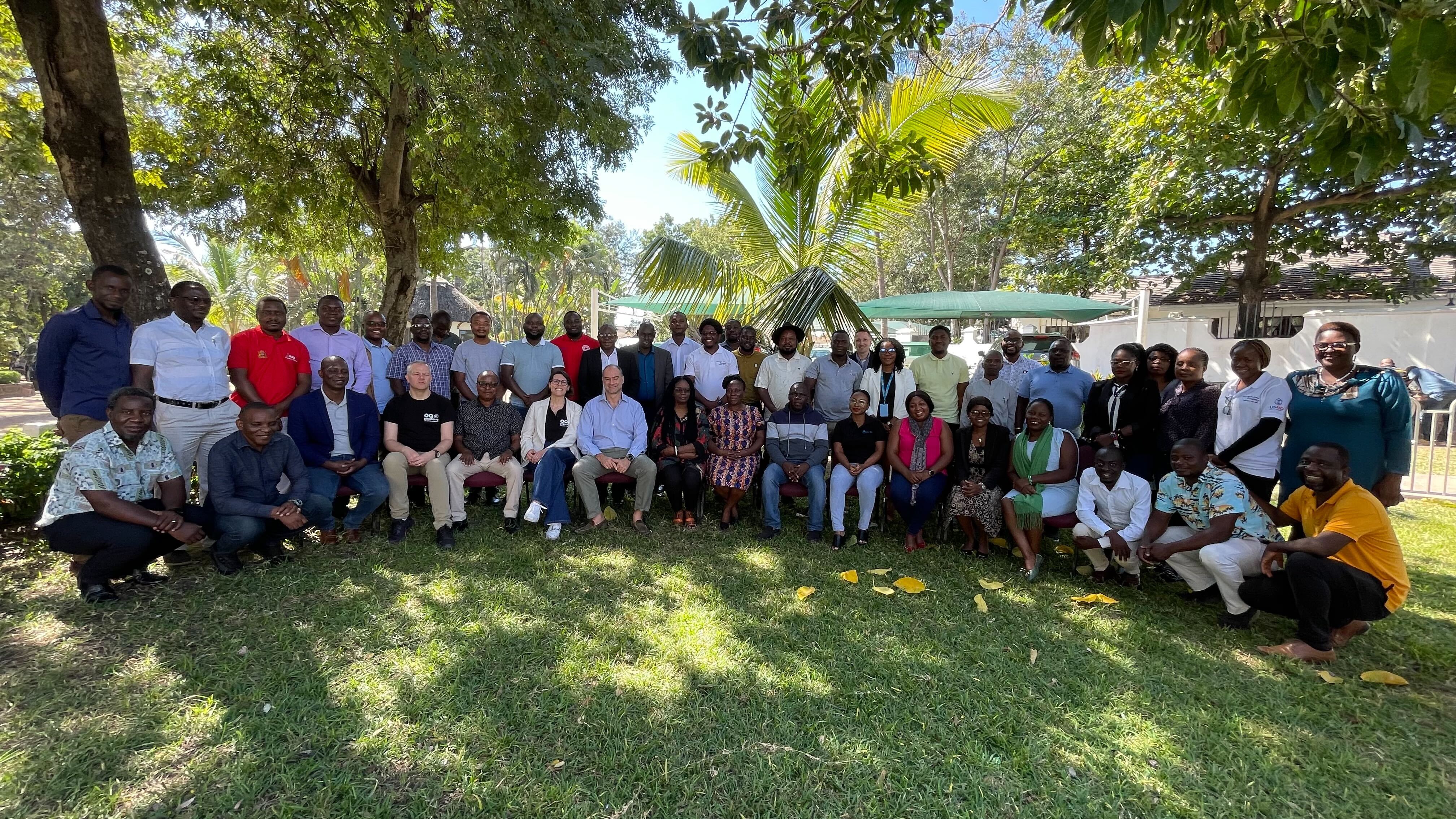
News GEM Contributes to Multi-Hazard Risk Assessment Progress in Malawi By: Jul 8, 2024 Jun 10, 2024 Share Facebook LinkedIn The Global Earthquake Model (GEM) Foundation actively participated in a Multi-Hazard Risk Assessment workshop held in Salima, Malawi, from June 3-7, 2024. This collaborative effort involved the Department of Disaster Management Affairs (DODMA) as the host, alongside the International Centre for Environmental Monitoring (CIMA Research Foundation), Malawi University of Business and Applied Sciences (MUBAS), and the British Geological Survey (BGS). GEM representatives, Martina Caruso and Paul Henshaw, played a key role by presenting the Risk Atlas Database and Seismic Hazard and Risk Methodologies. A crucial aspect was training DODMA's ICT team to install and utilise the Database. Additionally, they collaborated with local experts to showcase the findings of the Multi-Hazard Risk Atlas. Interactive sessions explored the strengths and limitations of the results, along with practical applications for data use and dissemination. The workshop facilitated valuable discussions among a diverse group—government representatives, civil society organizations, UN agencies, private sector participants, academics, and development partners. GEM extends its gratitude to DODMA for hosting the event and to all attendees for their dedication and collaborative spirit. This collective effort represents a significant step towards a more resilient Malawi in the face of natural hazards. The Comprehensive Multi-hazard Risk Assessment Project in Malawi is supported by the World Bank (2023-2024). For more information and future updates, please visit: https://www.globalquakemodel.org/proj/malawi-multi-drr No images found. GALLERY 1/33 VIDEO RELATED CONTENTS
- Development and Application of OpenQuake, an Open Source Software for Seismic Risk Assessment | GEM Foundation
Publications Development and Application of OpenQuake, an Open Source Software for Seismic Risk Assessment Share Facebook LinkedIn Download 2012 | Peer-reviewed Risk analysis is a critical link in the reduction of casualties and damages due to earthquakes. Recognition of this relation has led to a rapid rise in demand for accurate, reliable and flexible risk assessment numerical tools and software. As a response to this need, the Global Earthquake Model (GEM) initiated the development of an open source platform called OpenQuake for calculating seismic hazard and risk at any scale. In this paper a description of the architecture of OpenQuake is provided, highlighting the current workflow of the main loss calculators. In addition, a case study is presented using the Marmara Region (Turkey) for the calculations.
- Nigel Priestley Seminar 2018 - GEM Foundation
News Nigel Priestley Seminar 2018 By: Jul 12, 2018 Share Facebook LinkedIn The Fourth International Nigel Priestley Seminar took place on May 24 and 25 within the premises of the CAR College Auditorium in Pavia. The Seminar is named in honour of Prof. Nigel Priestley, co-founder of the ROSE School in 2001. The Seminar is an occasion for Master and PhD students of the Understanding and Managing Extremes (UME) Graduate School of the IUSS (Istituto Universitario di Studi Superiori) to present and discuss their research work to an audience of international experts in the field of Earthquake Engineering, Engineering Seismology and Hydrological, Weather, Geological, Chemical and Environmental Risks. On May 25 Alejandro Calderón, Physical Risk Engineer at GEM, delivered a presentation titled “Towards a Unified Earthquake Loss Assessment Model for Central America and the Caribbean”, which he also presented in Greece in June at the 16th European Conference on Earthquake Engineering. As part of his doctoral research, Alejandro is interested in the state of physical earthquake risk in the region of Central America and the Caribbean. Within the framework of the GEM CCARA project, Alejandro contributed in the risk assessment for the region by deriving exposure models for these countries combining census datasets and satellite imagery. The results presented in the seminar included the country earthquake risk profiles for the region that are part of the Global Risk Model currently in development by the GEM Foundation. Each profile contains valuable information about the exposed human and economic capital, the level of earthquake hazard and the expected average annual losses for each country. Alejandro also presented preliminary results on the assessment of possible future risk scenarios for which the spatial distribution of buildings, their structural typologies and earthquake vulnerability were inferred from the construction evolutive process observed in Central America and other regions of the world. In addition to standard presentations on research work carried out within the Programmes of the School, the annual Seminar features also the tradition of inviting a prominent scientist to deliver a keynote lecture on a given contemporary and highly relevant topic in the field of Earthquake Engineering and Engineering Seismology. At this year’s event, the keynote lecture entitled “Twenty-three years from Kobe - Japanese research and practice on collapse, performance, functionality, and resilience” was delivered by Professor Masayoshi Nakashima, Professor at the University of Kyoto. As it is customary at each end of the event, the Seminar concluded with the awarding of a prize to one of the most prominent scientists studying in the field of earthquake engineering. This year, the sixth edition of the ROSE School Prize has been awarded to Professor Anil K. Chopra. Below, an excerpt of the motivation: “Anil K. Chopra, Professor Emeritus at the University of California at Berkeley, is a renowned leader in structural dynamics and earthquake engineering. His work has had a profound influence on the direction of structural engineering research and practice. […] Chopra’s research activities have included studies of structural dynamics, various problems in earthquake analysis and design of buildings, dynamic soil structure interaction, dynamic fluid structure interaction, and earthquake analysis and design of concrete dams. His textbook, Dynamics of Structures: Theory and Applications to Earthquake Engineering, 1995, 2001, 2007, 2012, and 2017 is the most highly regarded and internationally translated textbook in the field of structural dynamics and earthquake engineering. It is considered a must-read book for everybody working in seismic analysis.” No images found. GALLERY 1/0 VIDEO RELATED CONTENTS