Thanks for submitting!
You will be contacted as soon as possible


QUICK LINKS


PROFILES
PUBLICATIONS
EXPOSURE
VULNERABILTY
SOFTWARE
EQ MODELS
Search Results
Search this site
1172 results found with an empty search
- New Zealand Hazard | GEM Foundation
License Request Form You have chosen to get more information about: New Zealand Hazard Hazard Please check the link below to see if this product already meets your your requirements before submitting your request for a license. Thank you. DOWNLOAD THE OPEN VERSION Summary of steps to obtain a license for the requested product. Fill in the application form below. Click Submit. Please check your email Inbox or Spam folder for the summary of your request. You will then be contacted by the GEM Product Manager with either a request for more information, or a request to sign the license. If you do not hear from us within 2 weeks, please send an email to product@globalquakemodel.org . REQUEST DETAILS A. Requesting party information First Name Last Name Role/Job Email Business type Business type Other business Sector Sector Other sector B. License agreement signatory information The signatory must be someone who is authorised to sign license agreements on your behalf such as your immediate supervisor, manager or legal officer. If you’re a PhD student, the signatory must be your adviser or a university officer in charge of license agreements or similar legal documents. Full Name of Signatory Position Company Email of Signatory Organisation name Complete Address C. Purpose of request GEM is able to offer products for free because of the support of our project partners, national collaborators and institutional sponsors. All of GEM’s products are freely available for public good, non-commercial use, but with different license restrictions. In most cases we release products under an open license (e.g., CC BY-SA or CC BY-NC-SA), which permits (re)distribution. In this case, we are granting access under a more restricted license that forbids distribution or disclosure and requires signing by GEM and the licensee in order to better assure accountability for the confidentiality of the information. In order for GEM to properly assess your request, please answer the following questions below. 1. Explain briefly how will the GEM product be used e.g. project, research including the expected results and the foreseen public benefit. Minimum 60 words. 2. Will you be able to share the results of your work with GEM? YES NO 3. Will you be able to provide feedback to GEM on the quality and usefulness of this product via a survey? YES NO D. Privacy Policy By submitting this form, you consent to the processing of your personal data in accordance with our Privacy Policy and the EU General Data Protection Regulation (GDPR). We are committed to safeguarding your information and ensuring it is only used for the purpose outlined in this form. You have the right to access, rectify, or delete your data at any time. For more information, please refer to our Privacy Policy. I agree Words: 0 Email us at product@globalquakemodel.org if you're experiencing problems submitting your application. Thank you. Submit Thanks for submitting! You will be contacted as soon as possible Incomplete data. Please fill in all required fields. Thank you.
- Development and Application of OpenQuake, an Open Source Software for Seismic Risk Assessment | GEM Foundation
Publications Development and Application of OpenQuake, an Open Source Software for Seismic Risk Assessment Share Facebook LinkedIn Download 2012 | Peer-reviewed Risk analysis is a critical link in the reduction of casualties and damages due to earthquakes. Recognition of this relation has led to a rapid rise in demand for accurate, reliable and flexible risk assessment numerical tools and software. As a response to this need, the Global Earthquake Model (GEM) initiated the development of an open source platform called OpenQuake for calculating seismic hazard and risk at any scale. In this paper a description of the architecture of OpenQuake is provided, highlighting the current workflow of the main loss calculators. In addition, a case study is presented using the Marmara Region (Turkey) for the calculations.
- EuroPython Conference - GEM Foundation
News EuroPython Conference By: Jul 2, 2018 Share Facebook LinkedIn GEM’s Michele Simionato presented ‘Lessons Learned from Parallel Programming’ during the 2017 Conference on July 14 held in Rimini, Italy. He was joined by IT Team members Paolo Tormene and Armando Scarpati in the week long event that featured five parallel tracks covering more than 200 sessions and attended by hundreds of developers across Europe. Michele, a Senior Software Developer at GEM, shared his hard-learned knowledge gained in several years of parallel programming covering performance and ways to measure it; memory usage; data transfer and ways to reduce data transfer time; and how to debug parallel programs and useful libraries. He also shared practical examples both in enterprise and scientific programming (importing CSV files in a database and numerical simulations respectively). The initial part of the talk was pedagogical, advocating the convenience of parallel programming in a small, single machine environment; while the second part focused more on advanced programming discussing a few things to know when writing parallel programs for medium sized clusters. EuroPython is the largest Python conference in Europe organized by the EuroPython Workgroups (WGs), reporting directly to the EuroPython Society Board. The conference series was started in 2002 in Charleroi, Belgium and considered to be the first major Python conference run entirely by volunteers. No images found. GALLERY 1/0 VIDEO RELATED CONTENTS
- GEM1: OpenGEM System Design Document | GEM Foundation
Publications GEM1: OpenGEM System Design Document Share Facebook LinkedIn Download 2010 | Report The aim of this document is to provide an overview of the design of the OpenGEM system, within the scope of the GEM1 project. OpenGEM is the name that was chosen for the IT platform which will allow calculation and communication of earthquake risk on a global scale. One of the goals of the GEM1 project was to design an initial model building structure and this report hence describes the various components of the design. The IT infrastructure described in this report has been reviewed during an intensive IT-review after which a strategy has been determined for further development of GEMs IT architecture, which makes use of the work done during GEM1, but has taken a different approach.
- Request demo for Global Block Model | GEM Foundation
You have chosen to request a demo on: Global Block Model First Name Last Name Email Company or Institution Name Country Sector Provide Details I accept the license terms and the conditions of products use. Email us at product@globalquakemodel.org if you're experiencing problems submitting this form or if you have any inquiries. Thank you. Request Thanks for submitting! You will be contacted as soon as possible Add answer here
- Request demo for Global Exposure Model | GEM Foundation
You have chosen to request a demo on: Global Exposure Model First Name Last Name Email Company or Institution Name Country Sector Provide Details I accept the license terms and the conditions of products use. Email us at product@globalquakemodel.org if you're experiencing problems submitting this form or if you have any inquiries. Thank you. Request Thanks for submitting! You will be contacted as soon as possible Add answer here
- Forecasting seismic risk within the context of the Sendai framework: An application to the Dominican Republic | GEM Foundation
Publications Forecasting seismic risk within the context of the Sendai framework: An application to the Dominican Republic Share Facebook LinkedIn Download 2022 | Peer-reviewed The Sendai Framework proposes recording disaster losses from hazard events between 2015 and 2030 to monitor the progress towards reduction targets to curtail risk worldwide. In the case of earthquakes, relying on losses over 15 years is unlikely to yield sufficient evidence to support risk mitigation strategies. In this study we propose a general methodology to monitor and forecast Sendai indicators. We apply our approach to explore trajectories of probabilistic indicators of mortality (A1) and economic loss (C1) in the form of custom Sendai Indicators for the Dominican Republic. Risk reduction targets, at national and subnational level, are established and tested along with two mitigation strategies: nationwide retrofitting campaign and stronger code-enforcement. The baseline projection indicates that earthquake risk is expected to increase at a national level, with indicators A1 and C1 increasing over 17% and 27%, respectively, in a period of 35 years. At that scale, code enforcement is more effective in meeting the targets of reduced mortality by 2030 and 2050. At the sub-national level, results depend on the risk drivers in each municipality. We provide two cases: in Santiago de los Caballeros, the baseline risk projection suggests that indicators A1 and C1 will increase by more than 18% and 26% by 2050, respectively, while in Distrito Nacional they decrease by almost 5% and 3%, respectively. In the former region, code-enforcement is the most effective measure to meet the risk reduction targets, while for the latter it was found to be the retrofit campaign.
- GEM announces new partnerships and projects in the second half of 2019 - GEM Foundation
News GEM announces new partnerships and projects in the second half of 2019 By: Jul 31, 2019 Share Facebook LinkedIn GEM is proud to announce it’s new partnerships with the private sector in the second half of 2019: Swiss Re, Guy Carpenter and EdF/CEA. Swiss Re has joined the GEM family as an Advisor. Swiss Re first supported GEM through Swiss Re Foundation by funding the South America Risk Assessment (SARA) Project, which focused on assessing earthquake hazard and risks to the Andean Mountains Region of the South American continent. The SARA Project was implemented from 2013 - 2015, resulting in improved understanding of earthquake risk and a wide range of collaborations with academic institutions, governments and the private sector in the region, particularly in Colombia, Ecuador and Chile. Swiss Re has also collaborated with GEM in the past year to evaluate the use of GEM hazard and risk models for reinsurance applications. The new sponsorship signals a longer term commitment to the use of GEM software tools, data and models as part of their in-house modelling capability. Guy Carpenter, a world leader in reinsurance broking, strategic advisory services, and analytics, has also joined GEM as an Advisor for the next three years. Guy Carpenter will use GEM’s OpenQuake software, tools and data as part of their in-house earthquake modelling and evaluation capability. They will also work with GEM to promote and disseminate the use of GEM products to their clients globally. A project with Électricité de France (EDF), a nuclear electric power generation company and France’s Alternative Energies and Atomic Energy Commission (CEA) will start in the second half of 2019. GEM will collaborate with the two agencies and provide OpenQuake tools and advice on earthquake hazard assessment to the nuclear energy development sector in France. EdF and CEA are using OpenQuake for research into earthquake hazard assessment for nuclear power plant design and safety assessment. No images found. GALLERY 1/3 VIDEO RELATED CONTENTS
- Test Event 4 Homepage Banner
Post Event List PURPOSE The purpose of this page is to provide GEM website visitors, researchers, loss modellers, and emergency and disaster risk reduction professionals with specific downloadable information related to red alert events based on USGS PAGER alerts. GEM promotes the sharing of seismic hazard and risk information with a wide range of stakeholders to enhance understanding of damaging earthquake events. This initiative aims not only to give an overview of the models, data and publications available in areas recently impacted by earthquakes, but also hopes to serve as a resource that can inform future risk reduction strategies. The information provided is intended solely for situational awareness purposes and is not aimed towards driving an official emergency response. Please contact your local authorities for further assistance related to official emergency response services and support. Test Event 4 Homepage Banner Second round of add and edit tests for the post-event Homepage Banner USGS PAGER Alert https://earthquake.usgs.gov/data/pager/ Related GEM Products Name Description Caribbean & Central America Exposure Repository with the inventory of residential, commercial and industrial buildings in the Caribbean and Central America No content. Related GEM Publications GEM1 Seismic Risk Report User guide Android mobile tool for field data collection Variable resolution probabilistic modeling of residential exposure and vulnerability for risk applications Earthquake-induced liquefaction and landslides in Cali, Colombia Variable resolution probabilistic modeling of residential exposure and vulnerability for risk applications User guide Android mobile tool for field data collection Earthquake-induced liquefaction and landslides in Cali, Colombia Earthquake-induced liquefaction and landslides in Cali, Colombia User guide Android mobile tool for field data collection Variable resolution probabilistic modeling of residential exposure and vulnerability for risk applications Variable resolution probabilistic modeling of residential exposure and vulnerability for risk applications User guide Android mobile tool for field data collection No content. Other Related Products test test2 test test GEM Vulnerability Model for Colombia GEM's country risk profile for Colombia GEM's Country Risk Profile for Venezuela GEM Vulnerability Model for Venezuela Other Related Publications 1234 aaa aaa 1234 aaa 1234 South America Risk Assessment (SARA) Project DISCLAIMER The information and data provided on this page are for informational purposes only. The Global Earthquake Model (GEM) Foundation makes no warranties, expressed or implied, regarding the accuracy, completeness, or reliability of the data. Users are responsible for their own interpretation and use of the information. GEM shall not be liable for any loss, damage, or injury arising from the use of, or reliance on, the information provided on this page. By downloading or utilising the data, users acknowledge and agree to these terms. The information presented on this page is provided by different organisations and governed by different licenses, please check the individual license before use. CONTACT US
- News Briefs: April - June 2024 - GEM Foundation
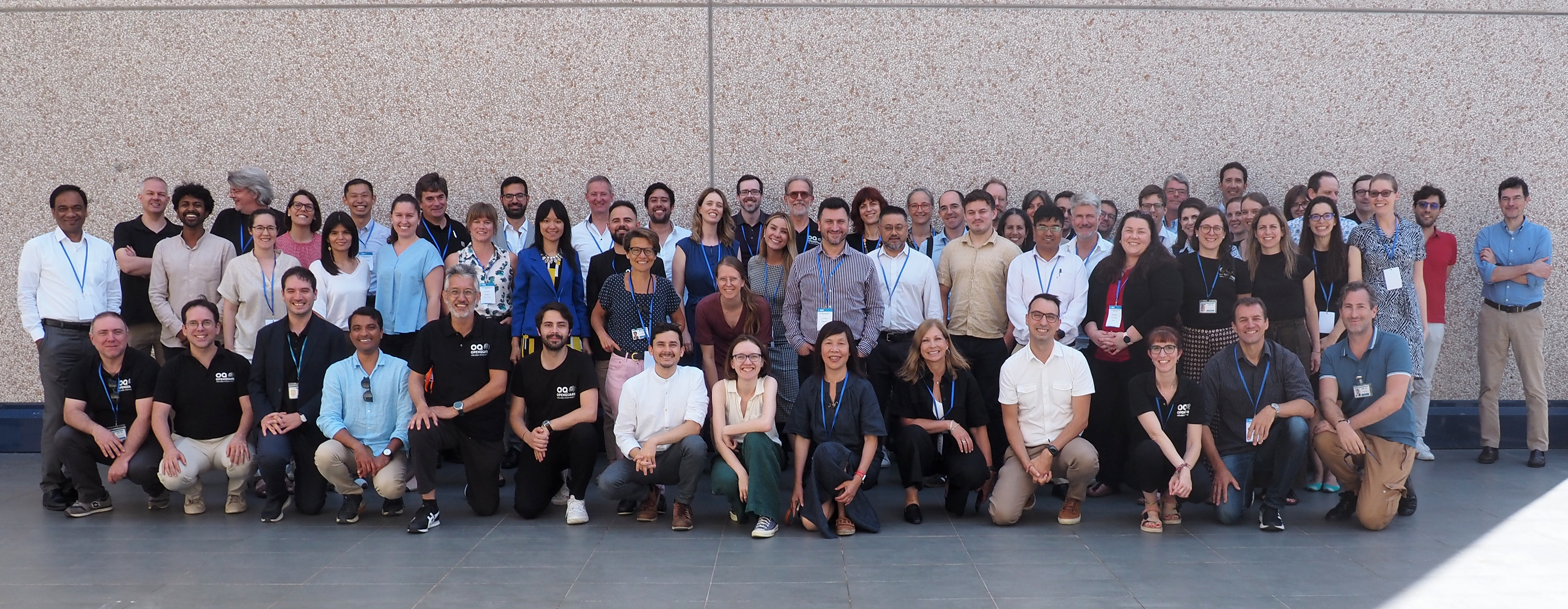
News News Briefs: April - June 2024 By: Jul 8, 2024 Jul 8, 2024 Share Facebook LinkedIn GEM at Sismica 2024 conference, Portugal The GEM Foundation participated in Sismica 2024, the 13th National Congress of Seismology and Earthquake Engineering, held in Portugal. Vitor Silva and Catarina Costa represented GEM on panels discussing comprehensive earthquake risk assessment in Portugal and innovative methods for estimating earthquake damage to roads in urban areas. Vitor also moderated a session on ground motion simulations and contributed to discussions on using low-cost sensors to assess damage to reinforced concrete structures. GEM's involvement highlighted its contributions to various aspects of seismic risk reduction and the importance of international collaboration in earthquake preparedness. GEM at OASIS conference in London The GEM Foundation participated in the Oasis Loss Modelling Framework Ltd. Insight Conference in London. Andrés Abarca, GEM Product Manager, presented a 3-minute pitch during the "Messages from Providers" session. He highlighted GEM's vision, mission, and how its resources can empower businesses and organisations in earthquake risk management. GEM Governing Board Meeting June 2024 GEM successfully held its summer Governing Board meeting in June 2024. Participants engaged in productive discussions, reviewing governance, secretariat and partner activities, and finalising strategic priorities for the latter half of the year. New sponsors joined and existing commitments were renewed, solidifying a strong foundation for GEM's future. Looking forward to seeing everyone again in December! GEM Sponsors OQ training workshop GEM recently hosted a successful training workshop in Pavia, Italy (May 6-10). The week-long event brought together 26 participants from its global network of sponsors and partners. Through active participation, the group focused on knowledge sharing and capacity development to strengthen the GEM community to better address seismic risk. Participants gained practical experience with the OpenQuake Engine and explored datasets crucial for seismic hazard and risk modelling. Assessing Future Earthquake Risks - TREAD Horizon Lecture Series Alejandro argues that earthquake risk assessment should consider not just current risk, but also how risk will change in the future due to factors like population growth and new buildings, proposing that future risk models should be time-dependent to account for these changes. Watch his presentation below, organised by TREAD Horizon – a doctoral network that aims to tackle the challenges of earthquake forecasting in complex tectonic settings using integrated observations and physics. The project is funded by the European Union Horizon Europe Programme (Grant Agreement No. 101072699) and will run until 2026. ( www.tread-horizon.eu ) https://www.youtube.com/watch?v=vJ0sQ2FuoiA https://www.youtube.com/watch?v=vJ0sQ2FuoiA No images found. GALLERY 1/0 VIDEO RELATED CONTENTS