Thanks for submitting!
You will be contacted as soon as possible


QUICK LINKS


PROFILES
PUBLICATIONS
EXPOSURE
VULNERABILTY
SOFTWARE
EQ MODELS
Search Results
Search this site
1170 results found with an empty search
- New blood: Meet GEM’s new team members from Costa Rica, Italy, France and the United States - GEM Foundation
News New blood: Meet GEM’s new team members from Costa Rica, Italy, France and the United States By: Mar 17, 2020 Share Facebook LinkedIn The GEM Secretariat is proud to welcome its newest members: Sandra Giacomini, Nicole Paul, Alejandro Calderon, Thomas Chartier and Antonio Ettorre. Sandra joined the Support Services team as Administration and Secretarial Officer working on various accounting tasks, event planning and coordination. She also works closely with the communications unit and helps in maintaining GEM’s social media up-to-date, in particular Facebook and LinkedIn. Sandra is from Italy and previously worked at a labour consultancy company for about 10 years while, for the last 6 years, she was in charge of the Understanding and Managing Extremes (UME) Master and Doctoral programmes at the Post Graduate Office of Scuola Universitaria Superiore IUSS Pavia. Nicole joined the Risk Team as an Earthquake Risk Modeller. She is currently involved in the propagation of uncertainty within the METEOR project, which is funded by the UK Space Agency and aims to develop innovative application of Earth Observation (EO) technologies to improve understanding of exposure with a specific focus on the countries of Nepal and Tanzania. She will also contribute to improvement, validation, verification, and documentation of the Global Risk Model. She brings to GEM 5 years of experience in earthquake engineering and risk analysis from her former role with Arup San Francisco. Her degrees are an MS in Structural Engineering from Stanford University and a BS in Civil Engineering from UC Berkeley. Alejandro joined the Risk Team as Physical Risk Engineer. He is currently involved in the implementation of the GEM and USAID-OFDA Project: Training and Communication for Earthquake Risk Assessment (TREQ) in Quito, Ecuador and Cali, Colombia. He is also the lead of the seismic risk model development and maintenance for Central America and the Caribbean region. Ale is from Costa Rica, having just completed his PhD on “Towards a Uniform Earthquake Loss Model across Central America” in the Risk & Emergency Management Program of the Institute for Advanced Studies in Pavia. Ale also interned with GEM as part of his PhD program and contributed to GEM projects in Central America. Thomas joined the Hazard Team as Seismic Hazard Scientist. His role will focus on the development of open-source tools and software for probabilistic seismic hazard and risk assessment, in collaboration with the IT team. Thomas will also provide support for the creation of national, regional and global PSHA hazard models, in close collaboration with scientists working in different parts of the world. Thomas is from France, having recently completed a PhD at the Ecole Normale Superiore in Paris on “Modeling Active Faults for Seismic Hazard and Risk Assessment” and also bringing several years of work experience including on earthquake hazard modelling for application to nuclear power plant safety with IRSN in France. Antonio joined the Information Technology Team as Systems Administrator. His role is to ensure that GEM’s networks and services are working 24/7 especially the computer clusters that run complex OpenQuake-engine calculations. He is also in charge of maintaining all GEM hardware such as workstations and servers. Antonio is from Italy, having graduated in Physics from the University of Pavia and bringing two decades of work experience as a senior systems engineer. For a complete list of GEM Secretariat members, visit https://www.globalquakemodel.org/our-team. No images found. GALLERY 1/4 VIDEO RELATED CONTENTS
- Risk Starts with Buildings: Why GEM Supports Overture - GEM Foundation
News Risk Starts with Buildings: Why GEM Supports Overture By: Jul 11, 2026 Jul 13, 2026 Share Facebook LinkedIn Image Credit: Overture Maps Foundation When an earthquake strikes, the question is never only where the ground shook or how large the magnitude was. The deeper question is: who and what was in harm’s way? For the Global Earthquake Model (GEM) Foundation, that question begins with the built environment, and primarily with buildings. To better understand earthquake risk, we need to know where buildings are, how many people may be inside them, what they are made of, how they were constructed, and how they are likely to behave when exposed to strong ground shaking. And to answer those questions, we need to be able to combine geospatial datasets from various sources. This is why GEM is pleased to join Overture Maps Foundation in celebrating its milestone of reaching 50 members. Overture’s growing community reflects something GEM has believed for many years: open geospatial data becomes far more powerful when it is consistent, interoperable and designed to be used by many different communities. As GEM Secretary General Helen Crowley notes: “Reducing disaster risk depends on reliable, consistent geospatial data about the built environment and the communities it supports. The Global Earthquake Model (GEM) Foundation is proud to contribute to Overture Maps because this growing community is helping make open map data easier to combine, compare and use for resilience planning and risk-informed decision-making worldwide.” GEM develops open software, tools, models and data for earthquake hazard and risk assessment around the world. A central part of this work is exposure modelling: representing the people, buildings, infrastructure and assets that may be affected by earthquakes and other hazards. Traditionally, exposure models rely heavily on housing census and official statistical data. These sources are indispensable, but they often come with limitations. They may be available only at coarse administrative levels, updated infrequently, or missing precise information on where buildings are actually located. For seismic risk analysis, that missing location detail is crucial. It can affect how we estimate the number of buildings exposed to different levels of hazard, how we distribute people and assets, and how we assess possible damage and losses. GEM at the Overture Summit in April in Florence, Italy This is where Overture data helps change the starting point. The availability of open building footprints allows GEM and the wider risk community to place buildings closer to where they actually are. They support risk analysis at a much higher spatial resolution and can also help us understand how damage to buildings may affect surrounding systems, such as road networks and access routes after an earthquake. But building footprints are only the beginning. For earthquake risk analysis, we also need to understand the attributes of those buildings: construction material, number of storeys, age, occupancy, structural system and other features that influence vulnerability to earthquakes and other natural hazards. GEM has been working on these questions for many years, from earlier earthquake exposure initiatives such as the GED4GEM to GED4ALL and its current global exposure modelling efforts . GEM’s exposure development work has not been an isolated technical exercise, but a deliberate investment in making exposure information more reusable across hazards, places, users and decision contexts. That broader vision is closely aligned with Overture’s work. Open map data is not just about making data available. It is about making data easier to connect, compare, improve and apply. For risk reduction, this is important. The same building, road or community may be relevant to earthquake risk, flood risk, wildfire risk, emergency response, urban planning and climate adaptation. Interoperability is what allows these different use cases to speak to one another. Overture’s Global Entity Reference System ( GERS ) offers a powerful way for GEM to link its exposure information to global building footprint datasets through stable, shared identifiers. There are still important challenges. Global building data must be consistent, scientifically robust and reproducible. It must also handle questions of licensing, privacy, sensitive information and uneven coverage across regions. No single organisation can solve these issues alone. That is why Overture’s 50-member milestone matters. It represents not only growth, but collaboration around a shared foundation for open geospatial data. For GEM, contributing to Overture is part of a larger commitment: to help turn open map data into practical risk information, and practical risk information into better decisions for safer, more resilient communities. For more information, please check Overture's press materials and posts below. Press materials: Press Release Member quotes Social media posts: LinkedIn X Bsky No images found. GALLERY overture logo.png overture logo.png 1/1 VIDEO RELATED CONTENTS
- GEM | Press Release Embargoed
PRESS RELEASE ----- GEM Conference 2023: A Milestone Event Showcasing Advances in Global Earthquake Hazard and Risk Maps, Models and Databases ----- Bergamo, Italy - June 13, 2023 The Global Earthquake Model (GEM) Foundation, a leading organisation in earthquake hazard and risk modelling and assessment, is set to release its new version of the global earthquake hazard and risk models, maps, and databases. This ground-breaking event will take place as the centrepiece of GEM’s international conference in Bergamo, Italy, on June 13th. Gathering leading researchers and risk management experts, the conference aims to propel the world towards greater earthquake resilience and discuss recent developments in the field. Since GEM released the Global Earthquake Hazard and Risk maps to the public in December 2018 , the data and maps have been recognised as a major milestone in establishing a unified and global understanding of seismic risk. Downloaded thousands of times and embraced by industry experts, these maps have provided valuable insights into earthquake-prone regions worldwide. Building upon this success, GEM continued to develop new products such as Atlas 1.0 , an interactive global seismic hazard map, and comprehensive hazard maps available through GEM and distributor platforms. "We are excited to host this important conference and bring world-leading experts in earthquake hazard and risk research, together with partners across the public and private disaster risk management and risk reduction sectors," said John Schneider, GEM Secretary General. "By sharing our knowledge and expertise, we can work together to reduce the impact of earthquakes and build more resilient communities around the world." What’s new In the forthcoming 2023 version of the global seismic hazard model, GEM has made substantial enhancements. Marco Pagani, the Hazard Team Coordinator, shared, "We have incorporated several new models contributed from our partners including the US, Canada, New Zealand and Japan, and achieved greater homogeneity among independent models. We have also improved the spatial resolution of computed results and added more intensity measure types to the hazard outputs, offering a more comprehensive and detailed assessment." Vitor Silva, the Risk Team Coordinator, highlighted the major updates in the seismic risk model, stating, "Enhancements include major improvements to the global exposure by incorporating new building data due to inflation and population growth, and disaggregating exposure information to a much higher spatial resolution to improve risk estimates, particularly for major urban areas. Building vulnerability estimates have also been updated to reflect local construction practices as well as to incorporate the vulnerability of building contents. Most importantly for humanitarian applications, risk results now include estimates of human mortality, injuries, and displacement." Alongside the global maps update, GEM’s Catalina Yepes, Seismic Risk Engineer will introduce the Earthquake Scenarios Database saying “We have developed a collection of information on the impacts of some of the most important historical earthquakes, including information on the physical and economic impact, as well as records of ground shaking and ground failure. This approach fills an important gap in disaster consequences databases by providing information on hazard and impact that is much needed for verifying models and estimating future event consequences. We are hosted in GitLab, as a free and open resource for global earthquake risk assessment efforts.” What to expect The theme of GEM’s conference “Are we making a difference” provides the platform to showcase these new developments as well as to sample some important applications of GEM’s analysis tools, models and data for risk assessment to inform risk reduction and management decisions. The conference sets off on an impactful note with an introductory session that highlights the invaluable insights gained from the 2023 M7.7 Kahramanmaras-Gaziantep, Turkey Earthquake. This serves as a powerful reminder of the pivotal role of integrating advanced earthquake risk analysis and modeling into comprehensive risk mitigation strategies. The final session will explore the future of earthquake risk assessment science and practice, emphasising innovation and collaboration. Distinguished keynote speakers will share their expertise, including Sinan Akkar, Principal Catastrophe Modeler at Turk Reinsurance Inc., who will discuss lessons from the recent M7.7 Kahramanmaras-Gaziantep earthquake in Turkey. Alanna Simpson, Lead Disaster Risk Management Specialist at the World Bank Group, will present on the landscape of disaster risk reduction initiatives, both past and future. Finally, David Wald, Research Geophysicist at the United States Geological Survey (USGS), will present the case for developing an International Macroseismic Scale. The conference welcomes select attendees in-person by invitation only, while also offering online registration for virtual participation. To join or watch the event online and to learn more about the conference, please visit the official conference web page at: https://www.globalquakemodel.org/gem-conference-2023 For more information or to request an interview with the GEM Secretary General, scientists and earthquake engineers, please contact: Jephraim Oro GEM Communications Email: communication@globalquakemodel.org ###
- Strengthening Tsunami Risk Governance: NEAM-COMMITMENT Project Launches in Athens - GEM Foundation
News Strengthening Tsunami Risk Governance: NEAM-COMMITMENT Project Launches in Athens By: Apr 5, 2025 Feb 27, 2025 Share Facebook LinkedIn The NEAM-COMMITMENT project was officially launched in Athens on February 24-25, marking a significant step forward in tsunami risk management across the North-Eastern Atlantic and Mediterranean (NEAM) region. Funded by the Union Civil Protection Mechanism (UCPM) and hosted by the National Observatory of Athens (NOA), the project aims to enhance tsunami risk governance over the next two years through capacity building and improved evacuation planning. The project focuses on two main components: national-scale capacity building through tsunami hazard assessment and mapping, and the development of local tsunami evacuation plans using a multi-hazard approach. This dual focus is intended to strengthen tsunami preparedness and mitigate the cascading effects of multiple hazards that may impact evacuation and emergency response efforts. The Global Earthquake Model (GEM) Foundation is playing a key role in the project by developing a framework to address cascading hazards, particularly those that affect tsunami evacuation and emergency response due to earthquake damage. This innovative approach will be piloted in Greece and Italy, providing practical strategies to enhance disaster preparedness. During the kick-off meeting, Marco Baiguera, GEM Exposure Analyst, presented insights on the task: Assessment of Multiple Hazards: Earthquake and Tsunami. He outlined the project’s strategy for risk assessment at the Greek pilot site, focusing on the integration of earthquake and tsunami hazards into a cohesive risk management plan. Marco explained how combining hazard assessment with emergency planning can significantly improve preparedness, especially in regions prone to both seismic and tsunami risks. The project also emphasises the importance of cross-border cooperation and the integration of scientific expertise from multiple disciplines. By leveraging GEM’s extensive experience in seismic risk assessment and NOA’s local knowledge, the NEAM-COMMITMENT project aims to build a resilient framework for communities facing complex hazard scenarios. The project launch in Athens highlighted the need for science-based policies and practices to protect communities in the NEAM region from tsunami risks. As the project progresses, the collaborative efforts between GEM, NOA, INGV and other partners are expected to yield valuable insights into managing tsunami hazards more effectively. For more information on the project, visit: NEAM-COMMITMENT No images found. GALLERY 1/3 VIDEO RELATED CONTENTS
- OpenQuake Engine 10 Year Anniversary Webinar: collaboration, open source approach - keys to OQ engine's success - GEM Foundation
News OpenQuake Engine 10 Year Anniversary Webinar: collaboration, open source approach - keys to OQ engine's success By: Nov 25, 2020 Share Facebook LinkedIn Almost 250 attendees participated in the webinar held on October 22nd to celebrate a decade of the OpenQuake Engine. Most of the attendees came from the academic and private sectors who have used the OpenQuake engine mainly for hazard and risk analysis, and academic research. The presentations were divided into two sections. The hazard part focused on the OQ history, future outlook and examples of how the OQ engine was used for site-specific, national and regional hazard assessment; and seismic hazard analysis for engineering-based insurance applications. The risk part focused on the use of the OQ engine for risk analysis as well as future outlook, and examples of how the OQ engine was used in Canada to build their national risk model; and how it was used for urban risk assessment in Colombia. The panelists composed of Laurentiu Danciu of ETH Zurich, Yufang Rong of FM Global, Murray Journeay of NRCan and Ana Beatriz Acevedo of EATFIT University Colombia as well as John Schneider, Marco Pagani and Vitor Silva of GEM, all agree that the open source approach in the development of the OQ engine over the past decade has not just led to a cutting-edge software for seismic hazard and risk analysis, but more importantly, to a community of dedicated scientists, researchers, modelers and risk professionals who share the same aspiration: to , and to reduce seismic risk in order to improve humanity’s resilience to disaster. If you missed the webinar, visit the event page here: to watch the video and to download the presentations. To read the press release, visit . GEM is currently conducting an OpenQuake Engine user survey to help us improve the engine in future releases. If you are currently using the OQ engine or have used it in the past, please take the survey . No images found. GALLERY 1/7 Gallery VIDEO RELATED CONTENTS
- ISC - GEM Global Instrumental Earthquake Catalogue | Global EarthQuake Model Foundation
An instrumental earthquake catalogue compiled by the International Seismological Centre (ISC) for the period of 1904-2021 Products ISC - GEM Global Instrumental Earthquake Catalogue An instrumental earthquake catalogue compiled by the International Seismological Centre (ISC) for the period of 1904-2021 Share Facebook LinkedIn Description The ISC-GEM Global Instrumental Earthquake Catalogue (1904-2021) is the result of a special effort to adapt and substantially extend and improve currently existing bulletin data for large earthquakes (magnitude 5.5 and above, plus continental events down to magnitude 5.0) to serve the requirements of the specific user group who assess and model seismic hazard and risk. How to cite this work International Seismological Centre (2025), ISC-GEM Earthquake Catalogue, https://doi.org/10.31905/d808b825 Available Versions The version 1 of the ISC-GEM Instrumental Earthquake Catalogue was funded by GEM as part of its five Global Hazard Components during GEM's first Working Programme (2009 - 2014), and additional funding was provided in 2015 for further improvements. The ISC have since continued to improve, extend and maintain the catalogue with funding from other sources. You can download the latest version of the catalogue (Version 12, 2025) from the "Access Dataset" button on the right panel of this webpage, which will take you to the ISC website where the data is hosted. If your use case does not comply with the license terms, a license can be requested by clicking on the "License Request", where a specific agreement will be provided, depending on the use case. License information The open version is available under a Creative Commons CC BY-SA 3.0 license, which requires: Attribution (you must give appropriate credit, provide a link to the license, and indicate if changes were made) ShareAlike (derivatives created must be made available under the same license as the original) Any deviation from these terms incur in license infringement and requires a license agreement that must be made tailored to your use case, in such instance please click on "License Request". Facebook LinkedIn Share Latest Version As original License CC BY-SA 3.0 Available resources Access Dataset License Request text Map View Search Popup title Close Country/Region Available Resources Afghanistan Exposure Africa Exposure Alaska Exposure Country/Region Available Resources Afghanistan Vulnerability Africa Vulnerability Alaska Vulnerability Country/Region Resource Url Afghanistan Risk Profile Africa Risk Profile Alaska Risk Profile Search Found Country/Region Resource Url Afghanistan Exposure Africa Exposure Alaska Exposure Preview Preview is not available. Search Found Country/Region Resource Url Afghanistan Vulnerability Africa Vulnerability Alaska Vulnerability Preview Preview is not available. Search Found Country/Region Resource Url Afghanistan Risk Profile Africa Risk Profile Alaska Risk Profile Preview Preview is not available. Related products Related publications For downloading or accessing detailed product information like PNG/PDF maps, datasets, license request, shapefiles and more, please switch to a desktop or laptop computer. Thank you for your understanding.
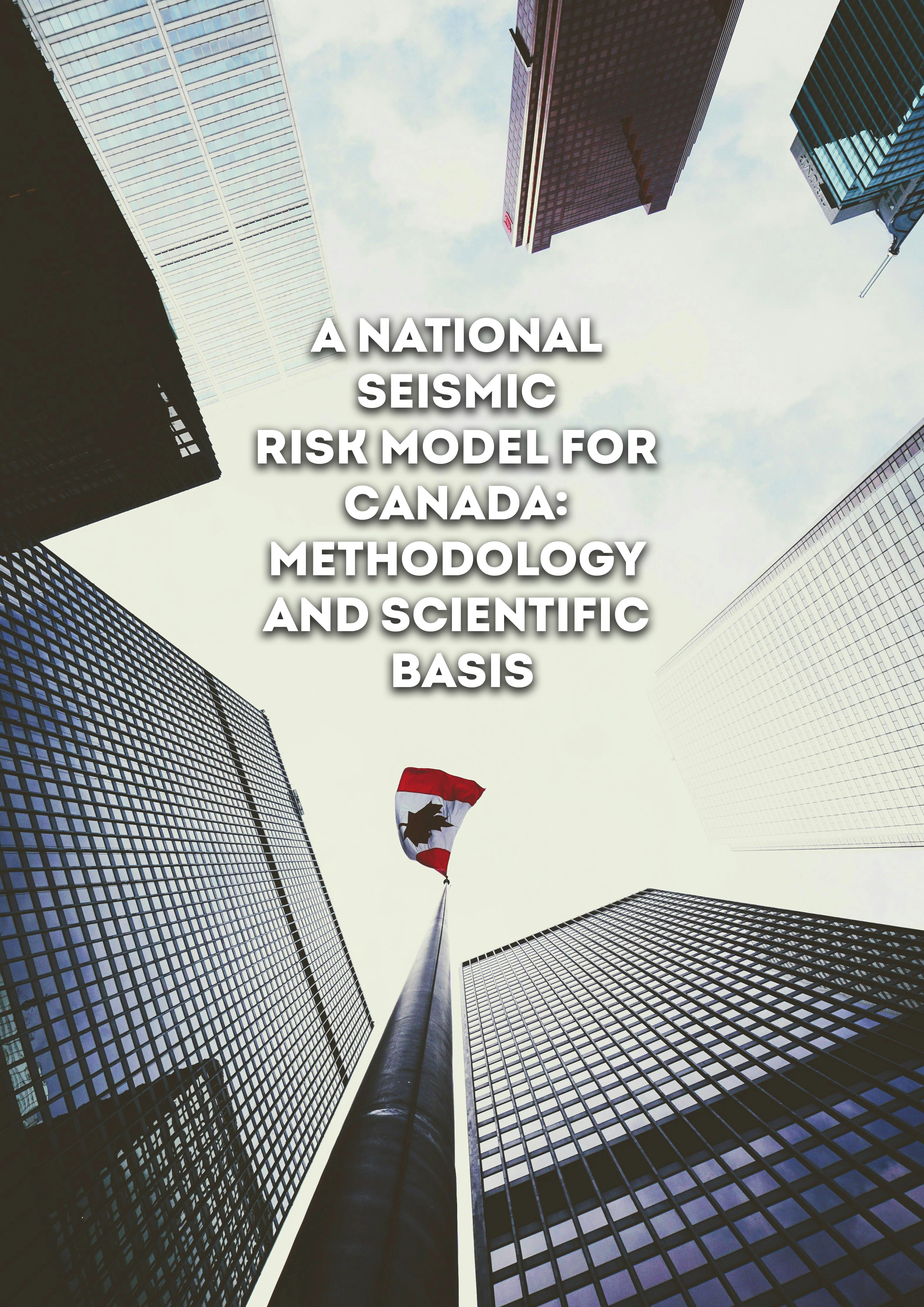
- A national seismic risk model for Canada: Methodology and scientific basis | GEM Foundation
Publications A national seismic risk model for Canada: Methodology and scientific basis Share Facebook LinkedIn Download 2023 | Peer-reviewed Canada is exposed to rare but potentially destructive earthquakes that threaten densely settled metropolitan centers in many parts of the country. To assess the impacts and consequences of future natural-hazard events and help advance policy goals and objectives of the Sendai Framework for Disaster Risk Reduction, Natural Resources Canada, through a collaborative partnership with the Global Earthquake Model Foundation, produced a national seismic risk model. Developing this model has required the creation of a national exposure inventory, Canadian-specific fragility and vulnerability curves, and significant simplification of the Canadian Seismic Hazard Model which forms the basis for the design seismic hazard values of the National Building Code of Canada. Using the Global Earthquake Model Foundation’s OpenQuake Engine, probabilistic stochastic risk modeling is completed under baseline and simulated retrofit conditions to assess seismic risk at the neighborhood level for all settled areas in Canada. Output risk metrics include the expected immediate physical impacts of earthquake events such as building damage, casualties, and direct economic losses. This article documents the technical details of the modeling approach including a description of novel data sets in use, a summary of the extensive sensitivity testing undertaken, and characterization of quality control implemented in the absence of usable validating earthquake loss data. The results from this model, such as loss exceedance curves and annual average losses, provide an open, accessible and quantitative base of evidence for decision-making at local, regional, and national levels. As a large country with a complex seismic hazard model and dispersed populations, this Canadian study is unique. However, the challenges faced and solutions offered are likely to be of interest to other nations pursuing similar programs.
- 31st August 2025 M6.0 Afghanistan
Post Event List PURPOSE The purpose of this page is to provide GEM website visitors, researchers, loss modellers, and emergency and disaster risk reduction professionals with specific downloadable information related to red alert events based on USGS PAGER alerts. GEM promotes the sharing of seismic hazard and risk information with a wide range of stakeholders to enhance understanding of damaging earthquake events. This initiative aims not only to give an overview of the models, data and publications available in areas recently impacted by earthquakes, but also hopes to serve as a resource that can inform future risk reduction strategies. The information provided is intended solely for situational awareness purposes and is not aimed towards driving an official emergency response. Please contact your local authorities for further assistance related to official emergency response services and support. 31st August 2025 M6.0 Afghanistan On 31 August 2025, at 23:47 AFT (19:17 UTC), a Mw 6.0 earthquake struck Kunar Province in eastern Afghanistan, near the border with Pakistan (source: https://en.wikipedia.org/wiki/2025_Afghanistan_earthquake). USGS PAGER Alert https://earthquake.usgs.gov/earthquakes/eventpage/us7000qsvj/pager Related GEM Products Name Description Middle East Hazard OpenQuake engine input model to perform hazard calculations for the Middle East Global Seismic Hazard Map Openly accessible global datasets and plots for peak ground acceleration with a return period of 475 years on rock Global Seismic Risk Map A milestone in global earthquake risk assessment No content. Related GEM Publications Understanding seismic risk in Santiago de Cali (Colombia) for its application in risk management Earthquake-induced liquefaction and landslides in Cali, Colombia Modelling the Residential Building Inventory in South America for Seismic Risk Assessment Tipologías constructivas en Quito, Cali and Santiago de los Caballeros Seismic risk assessment for the residential buildings of the three major cities in Colombia: Bogotá, Medellín, and Cali Executive summary Urban seismic risk assessment for the cities of Quito, Cali and Santiago de los Caballeros Scenario selection for representative earthquakes in Quito, Cali and Santiago de los Caballeros Assessment of earthquake damage considering the characteristics of past events in South America Evaluación de Riesgo Sísmico para Santiago de Cali Model of seismic design regulations and lateral force coefficients for buildings in South America Exploring the seismic risk of the unreinforced masonry building stock in Antioquia, Colombia Modelling the Residential Building Inventory in South America for Seismic Risk Assessment No content. Other Related Products GEM Vulnerability Model for Colombia GEM's country risk profile for Colombia GEM's Country Risk Profile for Venezuela GEM Vulnerability Model for Venezuela GEM Exposure Model for Venezuela GEM's country risk profile for Japan GEM Exposure Model for Japan GEM Vulnerability Model for Japan GEM's country risk profile for Afghanistan GEM vulnerability model for Afghanistan GEM exposure model for Afghanistan (admin 1) Other Related Publications South America Risk Assessment (SARA) Project GEM's PSHA input model documentation for Middle East 1234 Yang et al. (2023) Probabilistic seismic hazard assessments for Myanmar and its metropolitan areas. Geoscience Letters, 10(1), 48 Tun et al. (2017) The Sagaing Fault, Myanmar. In A. J. Barber, K. Zaw, & M. J. Crow (Eds.), Myanmar: Geology, Resources and Tectonics (Vol. 48, p. 0). The Geological Society of London GEM's PSHA input model documentation for SouthEast Asia GEM's PSHA input model documentation for China GEM's PSHA input model documentation for China DISCLAIMER The information and data provided on this page are for informational purposes only. The Global Earthquake Model (GEM) Foundation makes no warranties, expressed or implied, regarding the accuracy, completeness, or reliability of the data. Users are responsible for their own interpretation and use of the information. GEM shall not be liable for any loss, damage, or injury arising from the use of, or reliance on, the information provided on this page. By downloading or utilising the data, users acknowledge and agree to these terms. The information presented on this page is provided by different organisations and governed by different licenses, please check the individual license before use. CONTACT US
- Caribbean & Central America Exposure | GEM Foundation
License Request Form You have chosen to get more information about: Caribbean & Central America Exposure Exposure Please check the link below to see if this product already meets your your requirements before submitting your request for a license. Thank you. DOWNLOAD THE OPEN VERSION Summary of steps to obtain a license for the requested product. Fill in the application form below. Click Submit. Please check your email Inbox or Spam folder for the summary of your request. You will then be contacted by the GEM Product Manager with either a request for more information, or a request to sign the license. If you do not hear from us within 2 weeks, please send an email to product@globalquakemodel.org . REQUEST DETAILS A. Requesting party information First Name Last Name Role/Job Email Business type Business type Other business Sector Sector Other sector B. License agreement signatory information The signatory must be someone who is authorised to sign license agreements on your behalf such as your immediate supervisor, manager or legal officer. If you’re a PhD student, the signatory must be your adviser or a university officer in charge of license agreements or similar legal documents. Full Name of Signatory Position Company Email of Signatory Organisation name Complete Address C. Purpose of request GEM is able to offer products for free because of the support of our project partners, national collaborators and institutional sponsors. All of GEM’s products are freely available for public good, non-commercial use, but with different license restrictions. In most cases we release products under an open license (e.g., CC BY-SA or CC BY-NC-SA), which permits (re)distribution. In this case, we are granting access under a more restricted license that forbids distribution or disclosure and requires signing by GEM and the licensee in order to better assure accountability for the confidentiality of the information. In order for GEM to properly assess your request, please answer the following questions below. 1. Explain briefly how will the GEM product be used e.g. project, research including the expected results and the foreseen public benefit. Minimum 60 words. 2. Will you be able to share the results of your work with GEM? YES NO 3. Will you be able to provide feedback to GEM on the quality and usefulness of this product via a survey? YES NO D. Privacy Policy By submitting this form, you consent to the processing of your personal data in accordance with our Privacy Policy and the EU General Data Protection Regulation (GDPR). We are committed to safeguarding your information and ensuring it is only used for the purpose outlined in this form. You have the right to access, rectify, or delete your data at any time. For more information, please refer to our Privacy Policy. I agree Words: 0 Email us at product@globalquakemodel.org if you're experiencing problems submitting your application. Thank you. Submit Thanks for submitting! You will be contacted as soon as possible Incomplete data. Please fill in all required fields. Thank you.
- GEM at UR2024: Pioneering Global Seismic Hazard and Risk Assessment - GEM Foundation
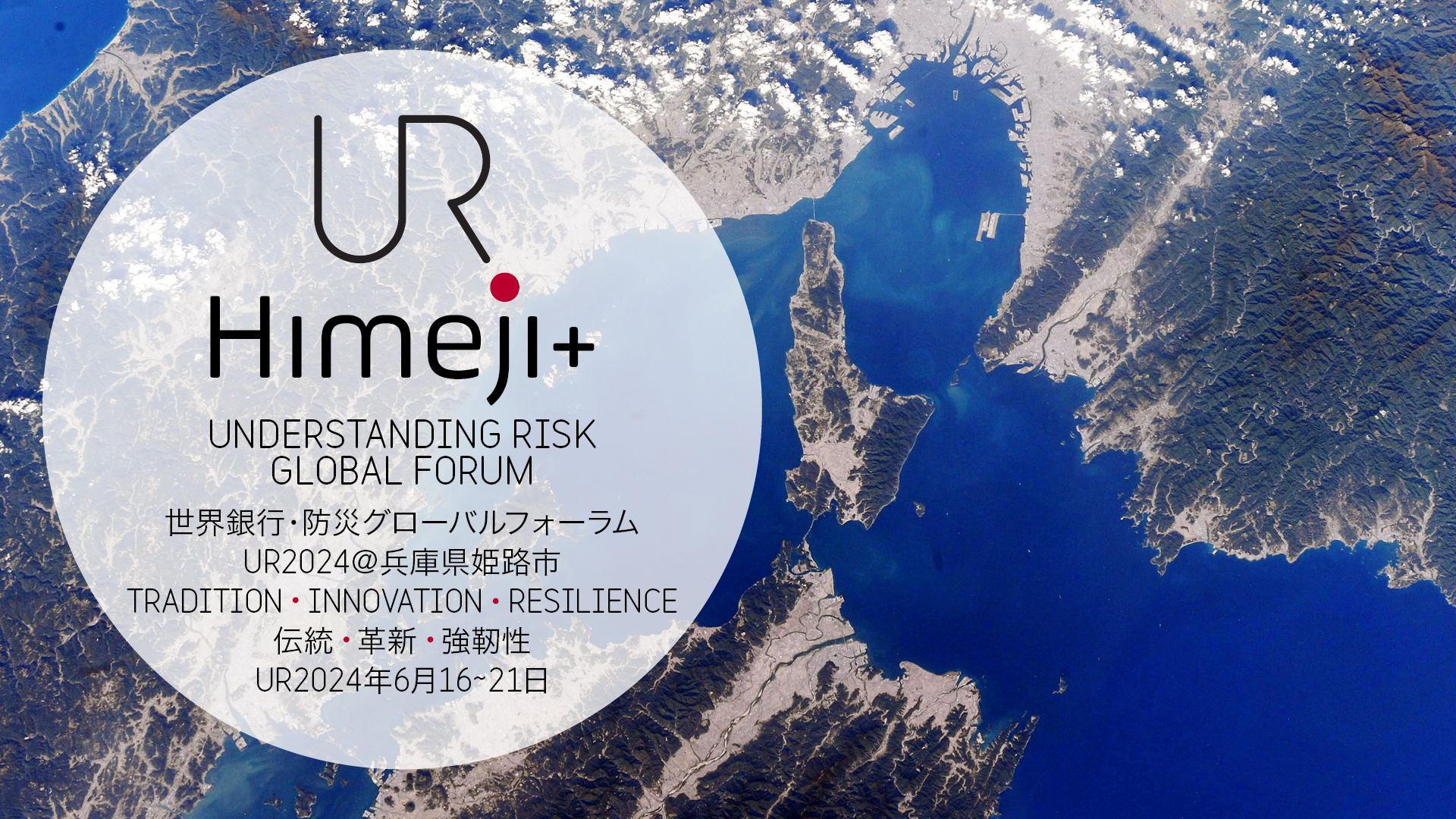
News GEM at UR2024: Pioneering Global Seismic Hazard and Risk Assessment By: May 27, 2024 Share Facebook LinkedIn Photo credit: UR24 The Global Earthquake Model (GEM) Foundation is set to make an impact at the upcoming Understanding Risk Global Forum 2024 (UR24) in Himeji, Japan. As a leader in global seismic hazard and risk assessment, GEM will not only participate but also co-organise technical sessions, underlining the importance of collaborative efforts in enhancing global resilience against geohazards. Highlighting the significance of this forum for GEM, Helen Crowley , GEM Secretary General, remarked, "UR24 provides a unique platform for us to share our latest insights on the modelling of global seismic hazard and risk, and to make those important personal connections with a global community of experts working on risk assessment and mitigation." John Schneider , GEM Senior Advisor, further emphasised this commitment by stating, "By co-organising sessions focused on geohazard risk assessment and building a global community, we aim to drive significant advancements in understanding and mitigating natural hazard risks." GEM's active participation at UR24 includes a series of key sessions that reflect its dedication to strengthening global seismic hazard and risk assessment and building international cooperation. UR24: The GEM-led Sessions June 18, 2024: What About Geohazards? The State of Practice in Risk Assessment and Needs for Improvement at National to Sub-National Level Time: 12:30 - 13:30 Convenors: John Schneider, GEM Senior Advisor, and Malaika Ulmi, Nat. Hazards & Climate Change Geoscience Program Manager, Geological Survey of Canada. June 20, 2024: Building a Global Community for Hazard and Risk Assessment Time: 14:00 - 18:00 Convenors: John Schneider, Senior Advisor, GEM; Malaika Ulmi, Nat. Hazards & Climate Change Geoscience Program Manager, Geo Survey of Canada; Gill Jolly, Chief Science Advisor, MBIE, GNS Science, New Zealand. Key Participation Helen will be participating in several key sessions across June 18th and 19th: On June 18th, she'll join the "Symphony of Tradition and Innovation" panel discussion (9:30 AM - 10:30 AM) convened by ImageCat, Inc. Later that morning, she'll be part of a panel of speakers at the "Richter Resilience: Advancing Seismic Protection Worldwide" plenary session (10:30 AM - 11:15 AM) convened by The World Bank. On June 19th, Helen will be featured as a speaker in the "Can ‘Seeing’ the Future Help us Change it? A Discussion on Future Directions for Disaster Scenarios" session (9:30 AM - 10:30 AM) convened by Janise Rodgers, COO of GeoHazards International. Exhibition Booth Beyond these insightful presentations, attendees can also visit GEM at booth S7 to explore available open seismic hazard and risk resources and engage directly with GEM's earthquake experts, including Marco Pagani, Head of Seismic Hazards. Our team will be there to provide valuable insights into the tools and methodologies used by GEM which help drive global earthquake preparedness and resilience. For more information and to follow GEM's participation at UR24, visit our dedicated event page at https://www.globalquakemodel.org/gemevents/gem-ur2024-japan . No images found. GALLERY 1/0 VIDEO RELATED CONTENTS