Thanks for submitting!
You will be contacted as soon as possible


QUICK LINKS


PROFILES
PUBLICATIONS
EXPOSURE
VULNERABILTY
SOFTWARE
EQ MODELS
Search Results
Search this site
1170 results found with an empty search
- Global building exposure model for earthquake risk assessment | GEM Foundation
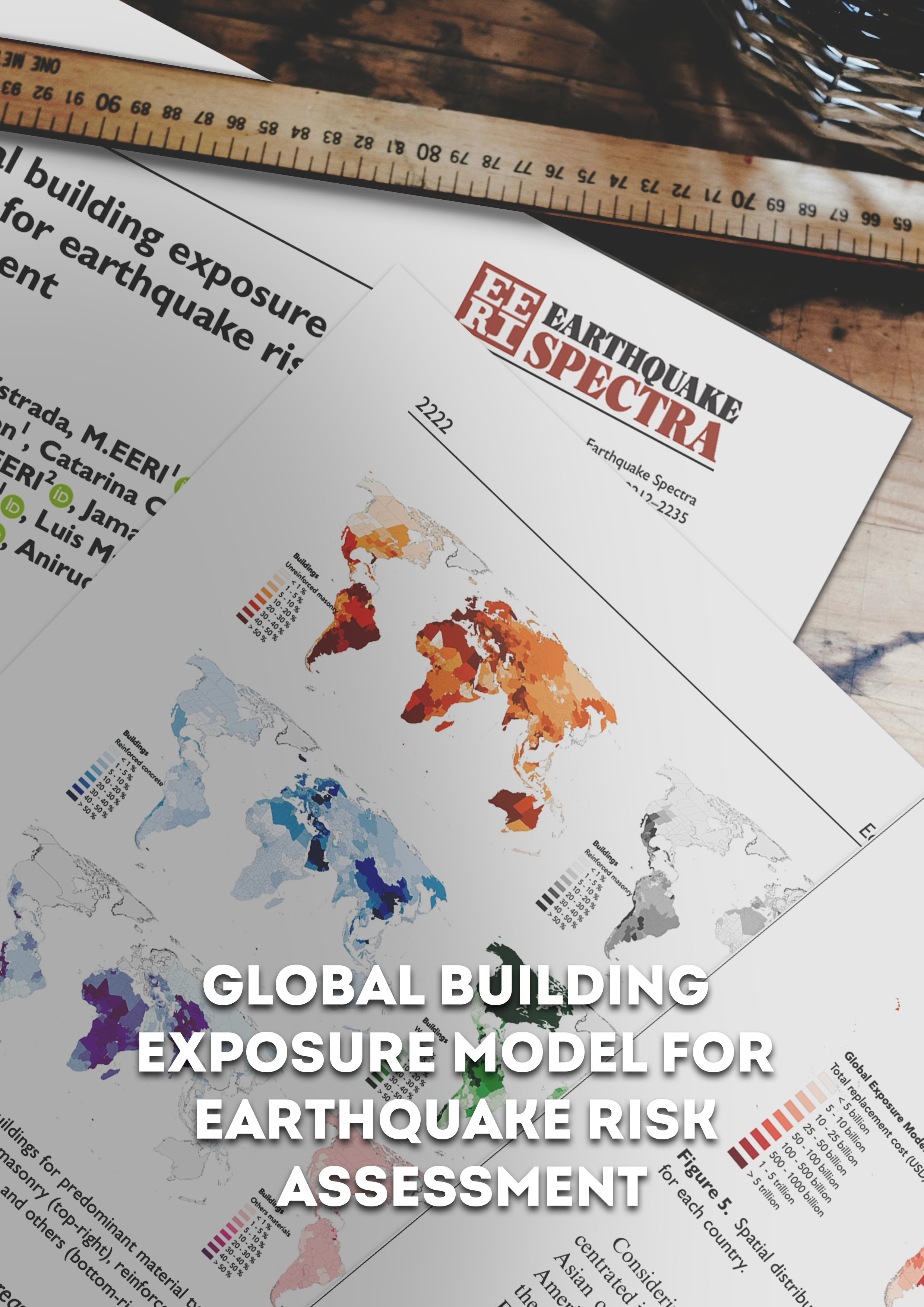
Publications Global building exposure model for earthquake risk assessment Share Facebook LinkedIn Download 2023 | Peer-reviewed The global building exposure model is a mosaic of local and regional models with information regarding the residential, commercial, and industrial building stock at the smallest available administrative division of each country and includes details about the number of buildings, number of occupants, vulnerability characteristics, average built-up area, and average replacement cost. We aimed for a bottom-up approach at the global scale, using national statistics, socio-economic data, and local datasets. This model allows the identification of the most common types of construction worldwide, regions with large fractions of informal construction, and areas prone to earthquakes with a high concentration of population and building stock. The mosaic of exposure models presented herein can be used for the assessment of probabilistic seismic risk and earthquake scenarios. Information at the global, regional, and national levels is available through a public repository (https://github.com/gem/global_exposure_model), which will be used to maintain, update and improve the models.
- GEM renews its commitment to help implement the Sendai Framework targets - GEM Foundation
News GEM renews its commitment to help implement the Sendai Framework targets By: Dec 13, 2021 Share Facebook LinkedIn GEM launched its Sendai Framework Voluntary Commitment page during this year’s International Day for Disaster Risk Reduction celebration. With the launch, GEM renewed its commitment to help implement the Sendai Framework targets and to continue its capacity development efforts with local scientists and government partners. The Sendai Framework promotes science to enable effective decision-making in disaster risk management. The Sendai Framework also created a shift from managing disasters to managing risks. To help this process, it promotes “dialogue and cooperation among scientific and technological communities, other relevant stakeholders and policymakers in order to facilitate a science policy interface for effective decision-making in disaster risk management.” Furthermore, it calls to focus on the disaster risk factors and scenarios, including emerging disaster risks, in the medium and long term; to increase research for regional, national and local application; and to support action by local communities and authorities. GEM is aligned with and contributes to the Sendai Framework. GEM is motivated to reduce earthquake risk and improve earthquake risk management especially in areas that are underserved, exposed and vulnerable to seismic risk. The contents of the Sendai Framework have strengthened the importance of our work. To sustain our efforts, GEM has trained people from more than 100 countries advancing earthquake science and engineering, and knowledge-sharing initiatives putting local experts at the forefront of regional and national initiatives in seismic hazard and risk assessments. GEM works in the Americas, Europe, Middle East, Africa and Asia-Pacific sharing knowledge, data and best practices to increase understanding of risk through social media and online channels to bring together international and local stakeholders. Visit our page at https://sendaicommitments.undrr.org/commitments/20210525_001 . No images found. GALLERY 1/1 Gallery VIDEO RELATED CONTENTS
- Request demo for Global Seismic Embodied Carbon Risk | GEM Foundation
You have chosen to request a demo on: Global Seismic Embodied Carbon Risk First Name Last Name Email Company or Institution Name Country Sector Provide Details I accept the license terms and the conditions of products use. Email us at product@globalquakemodel.org if you're experiencing problems submitting this form or if you have any inquiries. Thank you. Request Thanks for submitting! You will be contacted as soon as possible Add answer here
- GEM’s Governing Board meeting highlights the Global Earthquake Social Vulnerability maps - GEM Foundation
News GEM’s Governing Board meeting highlights the Global Earthquake Social Vulnerability maps By: Dec 18, 2019 Share Facebook LinkedIn Global Social Vulnerability map GEM conducted a successful end-of-year Governing Board meeting from 5-6 December in Pavia, Italy, where more than 30 individuals from the GEM Secretariat, public, private and associate sponsors participated in the meeting highlighted by the presentation of the Global Earthquake Social Vulnerability maps, and the formal induction of GEM’s new members: Swiss Re Institute, Guy Carpenter and Global Parametrics. Official representatives, Michael Ewald of Swiss Re, Malcolm Haylock of Global Parametrics and Matthew Eagle of Guy Carpenter were formally introduced as new members of the Board. Sonia Talwar was also officially recognized as the new NRCan representative replacing Phil Hill. GEM’s Risk and Social Vulnerability team has developed a robust and statistically validated set of Global Social Vulnerability and Resilience maps (SVR Global Model), presented during the social vulnerability workshop on June 18-19, 2019 to gather feedback from scientists across public, private and academic sectors; and shared with the GEM Governing Board on December 5-6, 2019 for initial internal validation. The global maps consists of three components that depict characteristics that affect the impact and recovery potential of populations from earthquakes namely: social vulnerability, economic vulnerability and reconstruction and recovery. GEM is currently working to establish a peer review process that will lead to the internal validation of the aforementioned maps and corresponding methodological documents. It is intended that the group will be comprised of experts from the public, private, academia and international organizations. The review is scheduled in the first quarter of 2020. The social vulnerability maps are expected to be publicly released next year at the World Bank’s Understanding Risk (UR) Forum in May 2020 in Singapore. Two peer reviewed technical papers will also be included in the release. Contact Miguel Toquica, GEM Social Vulnerability and Resilience Specialist at if you are interested and available to serve as a peer reviewer as soon as possible. The validation/review needs to be completed by January 31st, 2020. All inputs must be received on or before that date. The addition of the Social Vulnerability and recovery component into GEM’s scientific framework provides the means to analyze and better understand the various socio-economic factors that may exacerbate the impact of an earthquake, or that may affect the ability of communities to fully recover from damaging earthquake events. The understanding of Physical Seismic Risk combined with Social Vulnerability and Resilience (SVR) is what GEM calls Integrated Seismic Risk – a holistic understanding of the effects of earthquakes that can directly support decision making on short-term needs after an event (relief, shelter); medium-term needs (recovery and reconstruction); and long-term needs related to policies on risk mitigation. Watch this space for more updates. No images found. GALLERY 1/33 Gallery VIDEO RELATED CONTENTS
- Launch of new researcher-run journal SEISMICA aims to release earthquake science and seismology research from behind publisher paywalls - GEM Foundation
News Launch of new researcher-run journal SEISMICA aims to release earthquake science and seismology research from behind publisher paywalls By: Jul 6, 2022 Share Facebook LinkedIn On July 1, 2022, an international team of researchers launched a new journal, Seismica, supporting free global access to cutting-edge seismological research. Vitor Silva from the Global Earthquake Model (GEM) Foundation is a member of the core editorial team. Seismica will publish original, novel peer-reviewed research in seismology, earthquake science, and related disciplines. The new journal initiative began nearly two years ago when a group of seismologists were motivated to address the restrictive and expensive barriers to public and global access to research. More than 250 researchers from around the world, led by a core group of 44 editors, have designed and launched a community-centered journal. Editorial policies, platform, journal branding, publishing template, reviewer database and marketing. This initiative follows on from a movement of other journals that specialise in volcanoes, tectonics and sediments. Seismica’s mission is to publish rigorous peer-reviewed research which impacts the global community through policies which are accessible, transparent, respectful, credible, and progressive. Professor Christie Rowe, Canada Research Chair in Earthquake Geology and Associate Professor at McGill University, and Executive Editor for Community of Seismica said “Seismica is a community-driven journal dedicated to seismology, fully volunteer-run, diamond open-access journal. Articles are free to publish and free to read, without a subscription, and authors retain full copyright“. Seismica aims to appeal not only to academics and researchers alike but also to the industry, which plays a crucial role in this field of study. Seismica has an ongoing call for reviewers to subscribe to the journal database, for volunteers to help run the journal, and for scientists to submit their research. Interested people are asked to register at http://seismica.org . Seismica's various social media pages: ● https://twitter.com/WeAreSeismica ● https://www.facebook.com/WeAreSeismica ● https://www.instagram.com/weareseismica ● https://www.youtube.com/channel/UCuXzivYc6eqiGikSj82dYGg No images found. GALLERY 1/5 Gallery VIDEO RELATED CONTENTS
- OpenQuake engine on Oregon State University Open Source Lab (OSL) - GEM Foundation
News OpenQuake engine on Oregon State University Open Source Lab (OSL) By: Jul 2, 2018 Share Facebook LinkedIn The Oregon State University Open Source Lab (OSL), a nonprofit organization working for the advancement of open source technologies, in partnership with the School of Electrical Engineering and Computer Science at Oregon State University, has provided GEM free access to a powerful virtual machine which will be integrated with our current Continuous Integration system to extend the testing of the OpenQuake Engine, both for long running tests and numerical convergence, on a different CPU architecture (IBM Power CPU) widely used in some of the biggest supercomputers in the world. Aside from OpenQuake, OSL also hosts 160 other projects including worldwide leaders in open source technologies like the Apache Software Foundation, the Linux Foundation and Drupal content management system. The generosity of OS will not only help advance GEM’s ‘open data, open access’ advocacy in risk assessment but will also benefit users and testers of the OpenQuake engine, making it more widely available to broader stakeholders. “The whole GEM family is extending its deepest gratitude to Oregon State University’s OSL team for making their resources available to GEM. This is definitely a significant boost to the accessibility of OpenQuake engine,” John Schneider - GEM Secretary General. For the complete list of projects hosted by OSL Powerdev initiative, please visit: http://osuosl.org/services/powerdev/current-projects/ For more information about OSL, please visit http://osuosl.org . You can also help OSL by donating through their crowdfunding page. No images found. GALLERY 1/0 VIDEO RELATED CONTENTS
- Exposure model for European seismic risk assessment | GEM Foundation
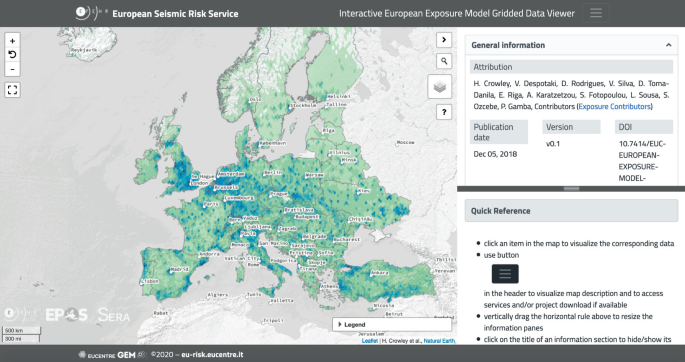
Publications Exposure model for European seismic risk assessment Share Facebook LinkedIn Download 2020 | Peer-reviewed Building exposure and vulnerability models for seismic risk assessment have been the focus of a number of European projects in recent years, but there has never been a concerted effort among the research community to produce a uniform European risk model. The European Commission’s Horizon 2020 SERA project has a work package that is dedicated to that objective, through the development of an exposure model, an associated set of fragility/vulnerability models, and a database of socioeconomic indicators in order to calculate probabilistic integrated seismic risk at a European scale. This article provides details of the development of the first versions of the European exposure model that describe the distribution of the main residential, industrial and commercial building classes across all countries in Europe, as well as their occupants and replacement costs. The v0.1 of the European exposure model has been integrated within the Global Earthquake Model’s global exposure and risk maps. Preliminary analyses using the model show that almost 35% of the residential population in Europe is exposed to a 475-year return period peak ground acceleration (PGA) hazard of at least 0.1 g, thus highlighting the importance of European seismic risk modeling and mitigation.
- 404 | GEM Foundation
There’s Nothing Here... We can’t find the page you’re looking for. Check the URL, or head back home. Go Home
- GEM Foundation
Seismic Regulations for Chile This page describes the seismic regulations that have been introduced in Chile since 1935, along with the seismic zonation maps associated with each code, and our estimated fraction of the building stock designed according to the different code levels. If you find incorrect or missing information on this page, please provide your feedback using the form linked at the bottom. Current Seismic Design Regulation The current seismic design regulation in Chile is NCh 433-1996 Mod.2012. The most recent official update to this standard was in 2012, which includes modifications to Supreme Decree No. 61 . According to this decree, the regulation was adjusted and supplemented based on the information from the damages caused by the February 2010 earthquake. This regulation will remain in effect until the INN (Instituto Nacional de Normalización) develops a new technical standard, which needs to be declared the Official Standard of the Republic of Chile by a Supreme Decree from the Minvu (Ministerio de Vivienda y Urbanismo). The Chilean standard is available in Spanish and is subject to a fee. Evolution of design regulations and seismic zonations Category Code Year of introduction Enforcement Seismic zonation Low code OGUC-1935 1935 C - Low code OGC-1949 1949 C - Moderate code NCh 433-1972 1972 B - High Code NCh 433-1993 1993 A Download High Code NCh 433-1996 1996 A Download High Code NCh 433-1996 Mod.2009 2009 A Download High Code NCh 433-1996 Mod.2012 2012 A Download Description of each regulation, including a link to access the document if available: OGUC-1935: Ley y Ordenanza General Sobre Construcciones y Urbanización de 1935 OGC-1949: Ordenanza General de Construcciones de 1949 NCh 433-1972: Norma Chilena Oficial, Cálculo Antisísmico de Edificios de 1972 NCh 433-1993: Norma Chilena Oficial, Diseño Sísmico de Edificios de 1993 NCh 433-1996: Norma Chilena Oficial, Diseño Sísmico de Edificios de 1996 (Modified in 2009 and 2012 ) Estimated fractions by code level for the country Estimated fractions by code level per region Send us your feedback or observations
- GEM Foundation
Seismic Regulations for Bolivia Overview This page describes the seismic regulations that have been introduced in Bolivia since 2006, along with the seismic zonation maps associated with each code, and our estimated fraction of the building stock designed according to the different code levels. If you find incorrect or missing information on this page, please provide your feedback using the form linked at the bottom. Current Seismic Design Regulation The current seismic design regulation in Bolivia is NBDS-2023, approved by Ministerial Resolution 271 on November 27, 2023. No updates have been reported since this date. The standard is available in Spanish and is freely accessible. Evolution of design regulations and seismic zonations Category Code Year of introduction Enforcement Seismic zonation Moderate code NBDS-2006 2006 C Download High Code GBDS-2020 2020 C Download High Code NBDS-2023 2023 C Download Description of each regulation, including a link to access the document if available: NBDS-2006: Norma Boliviana de Diseño Sísmico de 2006 NBDS-2020: Guía Boliviana de Diseño Sísmico de 2020 NBDS-2006: Norma Boliviana de Diseño Sísmico de 2023 Estimated fractions by code level for the country Estimated fractions by code level per region Send us your feedback or observations