Thanks for submitting!
You will be contacted as soon as possible


QUICK LINKS


PROFILES
PUBLICATIONS
EXPOSURE
VULNERABILTY
SOFTWARE
EQ MODELS
Search Results
Search this site
1172 results found with an empty search
- 10th August 2026 M7.4 Colombia
Post Event List PURPOSE The purpose of this page is to provide GEM website visitors, researchers, loss modellers, and emergency and disaster risk reduction professionals with specific downloadable information related to red alert events based on USGS PAGER alerts. GEM promotes the sharing of seismic hazard and risk information with a wide range of stakeholders to enhance understanding of damaging earthquake events. This initiative aims not only to give an overview of the models, data and publications available in areas recently impacted by earthquakes, but also hopes to serve as a resource that can inform future risk reduction strategies. The information provided is intended solely for situational awareness purposes and is not aimed towards driving an official emergency response. Please contact your local authorities for further assistance related to official emergency response services and support. 10th August 2026 M7.4 Colombia On 10 August 2026, a Mw 7.4–7.5 earthquake struck the department of Chocó in Colombia, killing at least 335 people, injuring more than 4,600 others, leaving 111 confirmed missing and causing extensive damage across the country. The earthquake was felt across much of western and central Colombia and in parts of neighbouring Ecuador and Panama, and caused extensive damage in Cali, Pereira, Quibdó, Manizales, Armenia, Buenaventura, and other areas. [Source: https://en.wikipedia.org/wiki/2026_Colombia_earthquake] USGS PAGER Alert https://earthquake.usgs.gov/earthquakes/eventpage/us6000tjl2/pager Related GEM Products Name Description Global Seismic Risk Map Global earthquake risk, mapped with the latest science Active Faults Database A repository with global homogenised characteristics of active faults Global Seismic Hazard Map First seismic hazard map to depict seismic hazard globally, including the oceans South America Exposure Repository with the inventory of residential, commercial and industrial buildings in South America South America Hazard OpenQuake engine input model to perform hazard calculations for South America No content. Related GEM Publications Understanding seismic risk in Santiago de Cali (Colombia) for its application in risk management Earthquake-induced liquefaction and landslides in Cali, Colombia Modelling the Residential Building Inventory in South America for Seismic Risk Assessment Tipologías constructivas en Quito, Cali and Santiago de los Caballeros Seismic risk assessment for the residential buildings of the three major cities in Colombia: Bogotá, Medellín, and Cali Executive summary Urban seismic risk assessment for the cities of Quito, Cali and Santiago de los Caballeros Scenario selection for representative earthquakes in Quito, Cali and Santiago de los Caballeros Assessment of earthquake damage considering the characteristics of past events in South America Evaluación de Riesgo Sísmico para Santiago de Cali Model of seismic design regulations and lateral force coefficients for buildings in South America Exploring the seismic risk of the unreinforced masonry building stock in Antioquia, Colombia No content. Other Related Products GEM Vulnerability Model for Colombia GEM's country risk profile for Colombia Other Related Publications DISCLAIMER The information and data provided on this page are for informational purposes only. The Global Earthquake Model (GEM) Foundation makes no warranties, expressed or implied, regarding the accuracy, completeness, or reliability of the data. Users are responsible for their own interpretation and use of the information. GEM shall not be liable for any loss, damage, or injury arising from the use of, or reliance on, the information provided on this page. By downloading or utilising the data, users acknowledge and agree to these terms. The information presented on this page is provided by different organisations and governed by different licenses, please check the individual license before use. CONTACT US
- Request demo for India and surroundings Hazard | GEM Foundation
You have chosen to request a demo on: India and surroundings Hazard First Name Last Name Email Company or Institution Name Country Sector Provide Details I accept the license terms and the conditions of products use. Email us at product@globalquakemodel.org if you're experiencing problems submitting this form or if you have any inquiries. Thank you. Request Thanks for submitting! You will be contacted as soon as possible Add answer here
- GEM 13th anniversary: launch of Atlas 1.0 - a new and easier way of accessing seismic hazard and risk information - GEM Foundation
News GEM 13th anniversary: launch of Atlas 1.0 - a new and easier way of accessing seismic hazard and risk information By: Mar 16, 2022 Share Facebook LinkedIn GEM is proud to commemorate its 13th year anniversary with the launch of Atlas 1.0 - a subscription-based dynamic web portal that allows subscribers to view information in a GIS style map viewer featuring instant display and download of hazard curves, high resolution exposure data and vulnerability curves for any selected point on the map. GEM’s Global Seismic Hazard Map (GSHM) version 2019.1 with associated hazard curves, will be the first dataset that will be made available through this platform. This service gives clients a pay-as-you-go alternative to licensing the GSHM data layers directly. About GSHM 2019.1 In 2018, GEM released its first version of the GSHM. The GEM GSHM was the first of its kind since the GSHAP was presented in 1999. The GEM GSHM was created by collating maps computed using national and regional probabilistic seismic hazard models developed by various institutions and projects, and by GEM Foundation scientists. The OpenQuake Engine, an open-source seismic hazard and risk calculation software developed principally by the GEM Foundation, was used to calculate the hazard values. A smoothing methodology was applied to homogenize hazard values along the model borders. Meeting the existing and future needs of the DRR community As part of GEM’s products and services strategy, GEM is offering value-added products for a fee such as the Atlas 1.0. These value-added products will also be available for free for public-good, non-commercial applications. In turn, the revenue generated from product or services fees will be reinvested to maintain GEM’s core capabilities, with an emphasis on providing support to developing countries. Visit the Atlas product page to subscribe or request a demo. No images found. GALLERY 1/0 Gallery VIDEO RELATED CONTENTS
- Empirical fragility curves for houses in Chile using damage data from two earthquakes | GEM Foundation
Publications Empirical fragility curves for houses in Chile using damage data from two earthquakes Share Facebook LinkedIn Download 2024 | Peer-reviewed Strong seismic events frequently strike Chile. The last three significant events that caused considerable damage and losses are the 2010 ( 8.8, Maule), 2014 ( 8.2, Iquique), and 2015 ( 8.3, Illapel) earthquakes. Therefore, reliable fragility curves are necessary to evaluate the threat of earthquakes to the built environment. This study aims to develop empirical fragility curves of Chilean houses using damage from the 2014 and 2015 earthquakes. The data from 9085 and 7431 damaged houses from the 2014 and 2015 earthquakes, respectively, was obtained by the government. The fragility curves were estimated for reinforced concrete, reinforced masonry, timber, and adobe houses. Additionally, the fragility curves were constructed using three different Peak Ground Acceleration (PGA) maps to quantify the variation of the fragility parameters based on the selected PGA map and to identify which PGA map generates the highest correlation with observed damage. Additionally, fragility curves obtained in this study are compared with curves from other studies. The median values of the fragility curves obtained in this study are larger than those from other reported studies.
- Request demo for Caribbean & Central America Exposure | GEM Foundation
You have chosen to request a demo on: Caribbean & Central America Exposure First Name Last Name Email Company or Institution Name Country Sector Provide Details I accept the license terms and the conditions of products use. Email us at product@globalquakemodel.org if you're experiencing problems submitting this form or if you have any inquiries. Thank you. Request Thanks for submitting! You will be contacted as soon as possible Add answer here
- Development of a fragility and vulnerability model for global seismic risk analyses | GEM Foundation
Publications Development of a fragility and vulnerability model for global seismic risk analyses Share Facebook LinkedIn Download 2020 | Peer-reviewed Seismic fragility and vulnerability assessment is an essential step in the evaluation of probabilistic seismic risk. Ideally, models developed and calibrated for the building portfolio of interest would be readily available. However, the lack of damage data and insufficient analytical studies lead to a paucity of fragility and vulnerability models, in particular in the developing world. This study describes the development of an analytical fragility and vulnerability model covering the most common building classes at the global scale. Nearly five hundred functions were developed to cover the majority of combinations of construction material, height, lateral load resisting system and seismic design level. The fragility and vulnerability were derived using nonlinear time-history analyses on equivalent single-degree-of-freedom oscillators and a large set of ground motion records representing several tectonic environments. The resulting fragility and vulnerability functions were validated through a series of tests which include the calculation of the average annual loss ratio for a number of locations, the comparison of probabilities of collapse across all building classes, and the repetition of past seismic events. The set of vulnerability functions was used for the assessment of economic losses due to earthquakes as part of the global seismic risk model supported by the Global Earthquake Model Foundation.
- Call for abstracts for 2024 World Conference on Earthquake Engineering (WCEE2024) - GEM Foundation
News Call for abstracts for 2024 World Conference on Earthquake Engineering (WCEE2024) By: Apr 17, 2023 Share Facebook LinkedIn The next World Conference on Earthquake Engineering (WCEE2024) will be held in Milan, Italy from 30 June to 5 July 2024 ( https://www.wcee2024.it/ ). This conference will bring together more than 3000 participants from academic/research, industry and public sectors. The Conference Organizers have accepted a number of proposals submitted by the GEM Secretariat and GEM partners for technical sessions within the theme of Seismic Hazard and Risk Assessment ( https://www.wcee2024.it/contributions/ ). SHR-2: Advances in seismic hazard analysis Convenors: M. Pagani, M.D. Petersen, M.C. Gerstenberger SHR-3: Managing earthquake risk through multi-lateral partnerships Convenors: J.F. Schneider, G. Trendafiloski SHR-5: Forward-looking earthquake risk modelling and quantification: recent advances and perspectives Convenors: C. Galasso, G. Cremen, V. Silva SHR-6: Macroseismology: current studies and future directions Convenors: D. Wald, J. Schwarz, V. Silva SHR-9: National seismic risk modelling efforts: challenges, achievements and future goals Convenors: V. Silva, H. Crowley, A.B. Acevedo SHR-16: New data and cutting-edge technologies for seismic hazard assessment and risk mitigation Convenors: L. Danciu, H. Crowley, O.-J. Ktenidou We encourage you to submit abstracts for these sessions. The deadline for abstracts is 15 May 2023. Check this page regularly for more information and updates in the future. No images found. GALLERY 1/0 VIDEO RELATED CONTENTS
- Insurance for Natural Perils – A Solution for Nepal? - GEM Foundation
News Insurance for Natural Perils – A Solution for Nepal? By: Jul 12, 2018 Share Facebook LinkedIn The government of Nepal recently conducted its annual RISK2RESILIENCE conference with the theme: International Conference on Experience of Earthquake Risk Management, Preparedness and Reconstruction in Nepal. The event, held from 18-20 June in Kathmandu, was jointly organized by the Ministry of Home Affairs (MOHA), National Reconstruction Authority (NRA), Nepal Academy of Science and Technology (NAST) and National Society for Earthquake Technology - Nepal (NSET). The conference gathered some 240 people comprised of 40 international professionals from 13 different countries and about 200 individuals composed of government officials, DRR experts, practitioners and academia who participated and shared their ideas and views as speakers, presenters and panelists. The event aimed to critically look back at what has been collectively done on Earthquake Risk Reduction and Preparedness in Nepal in the past decades in light of the 2015 Gorkha Earthquake; to critically examine the experience as well as the progress of Earthquake Reconstruction to date; and to help set the Way Forward in the Long Journey of Disaster Risk Management in Nepal. Anselm Smolka, GEM Special Advisor and former Secretary General, participated in the event presenting his insights on how insurance can help Nepal cope with natural perils in the future under the ‘Setting the Future’ keynote session. He also emphasized GEM’s work in promoting earthquake resilience worldwide through high quality open tools and open data. Anselm believes that given the large insurance gap demonstrated by the Gorkha earthquake and Terai Floods, Nepal presents a typical case for non-traditional insurance products. He recommended several options such as microinsurance for rural areas and insurance pool for urban regions. Microinsurance would cover poor or moderately poor people, while insurance pool would cover those residing in the cities and urbanized areas. Anselm added that the end goal of these non-traditional insurance products is disaster relief and recovery. On the last day, Mr. Prem Kumar Rai, Secretary of the Ministry of Home Affairs remarked that, "This 3-day International Conference has come up with important conclusions and way forward for the country to lessen the adverse impacts of disasters in Nepal based on lessons from the past. I assure you all that the Nepal Government highly acknowledges all these recommendations." (source: NSET) The Risk2Resilience Conference culminated with the approval of the Conference Resolution recommendations endorsed by the participants on how to move forward with Earthquake Risk Management, Preparedness and Reconstruction in Nepal. The resolution can be downloaded here. No images found. GALLERY 1/0 VIDEO RELATED CONTENTS
- GEM Foundation Chosen Among Ten Innovators for Hunger-Free and Resilient World - GEM Foundation
News GEM Foundation Chosen Among Ten Innovators for Hunger-Free and Resilient World By: Dec 14, 2023 Nov 20, 2023 Share Facebook LinkedIn November 20, 2023. The Global Earthquake Model (GEM) Foundation has been selected among 10 pioneering teams recognised by the World Food Programme Innovation Accelerator for their focus on crisis relief and resilience, contributing to a hunger-free world. This initiative aims to enhance global efforts toward a safer and stronger world by addressing acute food insecurity while promoting community resilience. With an astounding 1400+ applications from 122 countries, the selection process identified GEM Foundation's commitment to seismic safety and community resilience among the groundbreaking innovations. GEM's efforts align with this critical initiative, amplifying seismic safety measures and strengthening community resilience in earthquake-prone areas. Vitor Silva, Head of Risk Engineering expressed gratitude for the recognition, stating, “Being selected among numerous applicants reflects the value of GEM products to identify vulnerable communities, and act rapidly when destructive events occur. Our focus with the World Food Programme will be in aligning GEM models and tools with their existing framework.” GEM looks forward to participating in the WFP Innovation Pitch Event on February 16, 2024. This recognition not only acknowledges GEM's dedication to seismic safety but also affirms its role in contributing to a world where no one suffers from hunger. To learn more about the initiative and the selected teams, visit: https://wfpinnovation.medium.com/from-relief-to-resilience-ten-groundbreaking-innovations-for-a-hunger-free-and-sustainable-world-f014a4217b2e . No images found. GALLERY 1/0 VIDEO RELATED CONTENTS
- GEM Contributes to Multi-Hazard Risk Assessment Progress in Malawi - GEM Foundation
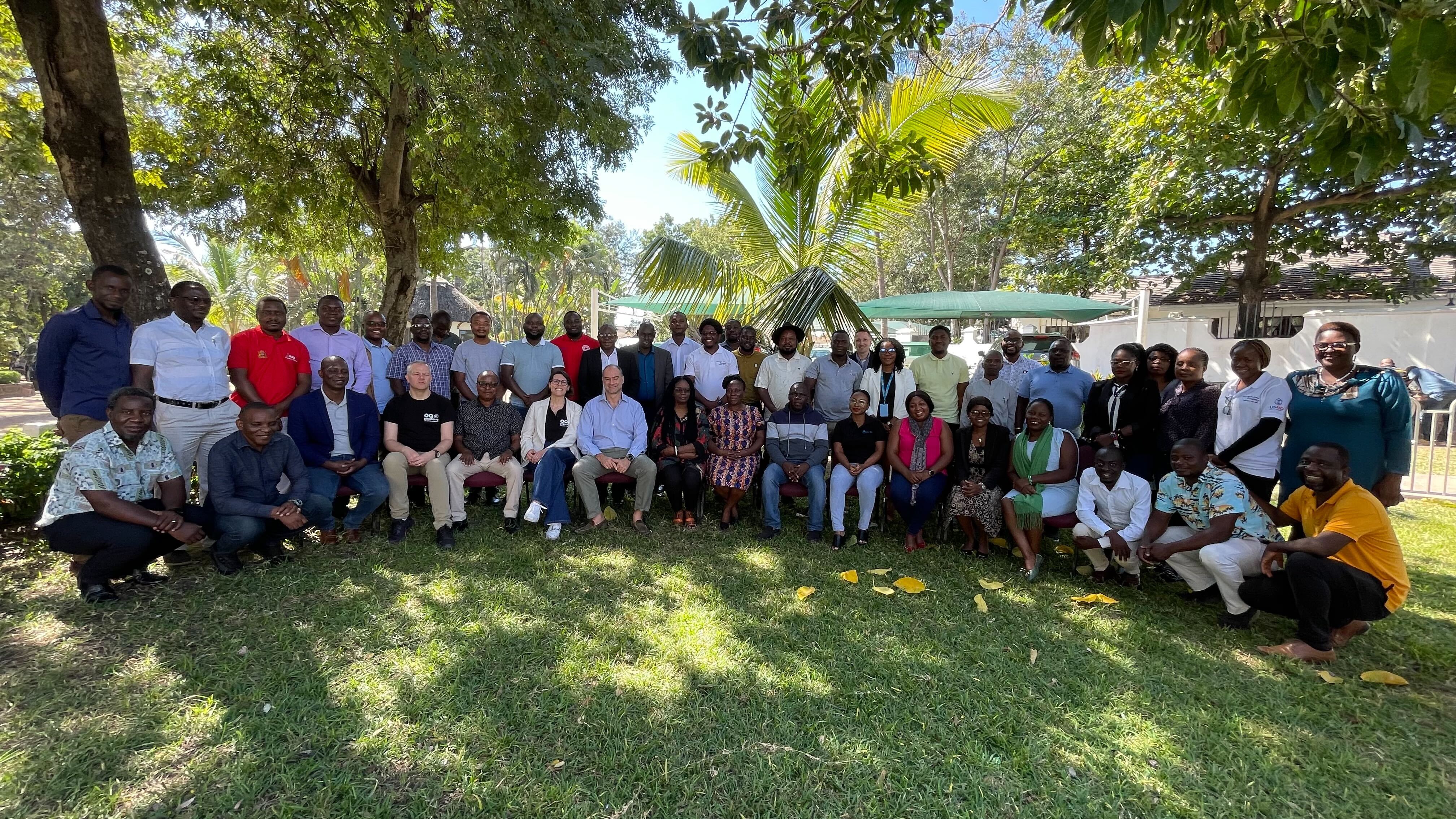
News GEM Contributes to Multi-Hazard Risk Assessment Progress in Malawi By: Jul 8, 2024 Jun 10, 2024 Share Facebook LinkedIn The Global Earthquake Model (GEM) Foundation actively participated in a Multi-Hazard Risk Assessment workshop held in Salima, Malawi, from June 3-7, 2024. This collaborative effort involved the Department of Disaster Management Affairs (DODMA) as the host, alongside the International Centre for Environmental Monitoring (CIMA Research Foundation), Malawi University of Business and Applied Sciences (MUBAS), and the British Geological Survey (BGS). GEM representatives, Martina Caruso and Paul Henshaw, played a key role by presenting the Risk Atlas Database and Seismic Hazard and Risk Methodologies. A crucial aspect was training DODMA's ICT team to install and utilise the Database. Additionally, they collaborated with local experts to showcase the findings of the Multi-Hazard Risk Atlas. Interactive sessions explored the strengths and limitations of the results, along with practical applications for data use and dissemination. The workshop facilitated valuable discussions among a diverse group—government representatives, civil society organizations, UN agencies, private sector participants, academics, and development partners. GEM extends its gratitude to DODMA for hosting the event and to all attendees for their dedication and collaborative spirit. This collective effort represents a significant step towards a more resilient Malawi in the face of natural hazards. The Comprehensive Multi-hazard Risk Assessment Project in Malawi is supported by the World Bank (2023-2024). For more information and future updates, please visit: https://www.globalquakemodel.org/proj/malawi-multi-drr No images found. GALLERY 1/33 VIDEO RELATED CONTENTS