Thanks for submitting!
You will be contacted as soon as possible


QUICK LINKS


PROFILES
PUBLICATIONS
EXPOSURE
VULNERABILTY
SOFTWARE
EQ MODELS
Search Results
Search this site
1170 results found with an empty search
- Swiss Re-GEM partnership aims to build insurance loss models using GEM’s OpenQuake and global databases - GEM Foundation
News Swiss Re-GEM partnership aims to build insurance loss models using GEM’s OpenQuake and global databases By: Oct 7, 2019 Share Facebook LinkedIn Global reinsurer Swiss Re has joined GEM as Advisor Sponsor. The sponsorship came on the heels of a successful pilot project with Swiss Re Institute and its Cat Perils unit to improve GEM’s hazard model for Italy using the OpenQuake engine for Swiss Re’s in-house model development. The project -- based on the SHARE European earthquake hazard model -- was successfully completed in September 2019 and set the basis for the Swiss Re sponsorship. With this renewed collaboration, Swiss Re will continue to use GEM datasets on exposure and vulnerability for reference, and work on integrating the OQ engine together with GEM and publicly available OQ hazard models in their model development process. "Swiss Re shares GEM's vision of a world more resilient to natural catastrophes and we're proud to support this truly global initiative. GEM provides state-of-the-art science and software tools and has become a valuable forum for open collaboration within the risk assessment community. By using the same open software for common tasks, the community can focus its efforts on analyzing and improving data and models. We believe that the pioneering work done by GEM will lead to a new era of collaboration and transparency on seismic hazard and risk assessment." Michael Ewald, Earthquake Perils Lead at Swiss Re Institute. “An important part of GEM’s evolving journey is to turn GEM models into products useful for the insurance industry. With this collaboration, GEM will not only have the opportunity to develop products for the insurance sector but also demonstrate that it can be done in a mutually beneficial way,” John Schneider, Secretary General, on partnering with Swiss Re for insurance loss modelling. A partnership built from past successes Swiss Re Foundation, a separate legal entity of Swiss Re Group, funded the South America Risk Assessment (SARA) project implemented collaboratively by GEM from 2013-2015. It focused mainly on risk assessment capacity development in South America. Local experts and stakeholders with GEM scientists and engineers carried out activities such as compilation of earthquake catalogues, creation of risk metrics and country risk profiles, and estimation of social vulnerability using GEM tools and products. Recently, a successful pilot project for Italy to improve GEM’s hazard module using the OpenQuake engine for Swiss Re’s in-house model development was completed in September. Way forward Swiss Re, Hannover Re and GEM are currently collaborating on a pilot project to implement national and regional GEM models in the OASIS loss modelling framework for risk quantification and a transparent approach in loss estimation using GEM models and tools. The goal is to bring the models up to industry standards and to have a market-ready model by Spring of 2020. About Swiss Re Swiss Re Group is one of the world’s leading providers of reinsurance, insurance and other forms of insurance-based risk transfer, working to make the world more resilient. Its distinct mission: Together, we apply fresh perspectives, knowledge and capital to anticipate and manage risk, in order to create smarter solutions for our clients, helping the world rebuild, renew and move forward. Today 75% of insurance risks – from natural catastrophes and climate change, to ageing populations and cybercrime – remain uninsured. Swiss Re aims to change that. Headquartered in Zurich, Switzerland, where it was founded in 1863, the Swiss Re Group operates through a network of around 80 offices globally. Its approximately 14,500 employees provide a wide range of technical expertise, enabling the company to develop unique solutions and drive growth. Swiss Re is organised into three Business Units, each with a distinct strategy and set of objectives contributing to the Group’s overall mission. No images found. GALLERY 1/0 VIDEO RELATED CONTENTS
- A township-level exposure model of residential buildings for mainland China | GEM Foundation
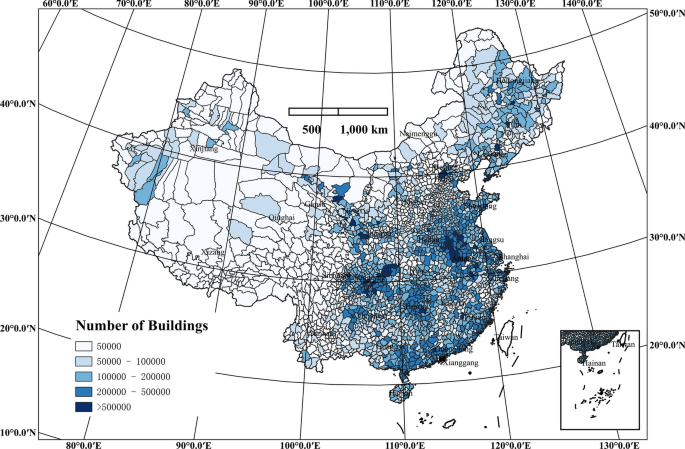
Publications A township-level exposure model of residential buildings for mainland China Share Facebook LinkedIn Download 2021 | Peer-reviewed The exposure model is a key component of a seismic risk model, which captures the spatial distribution of population and built assets along with their structural characteristics and valuation that are required for seismic risk assessment. Current and available exposure models for China have various limitations that make them less suitable for use in risk assessment, including low spatial resolution of building inventory and the limited identification of key structural characteristics. This study describes the development of a residential buildings’ township-level exposure model for mainland China, containing information about the geographical distribution, structural characteristics, age, ductility, number of stories, number of dwellings, average built-up area, and replacement cost at the township level. This exposure model is intended to be used for risk assessment and to support emergency planning, risk management, and decisions. The geographical distribution’s detailed analysis of the building typologies, heights, and construction vintage at the national, regional, and provincial levels is provided to better aid in understanding country exposure. The results indicate that based on the method, flow, and data from the 6th National Population Census of the People's Republic of China, we can generate key information used for seismic risk analysis, representing a significant step toward a better understanding of risk due to seismic hazards in mainland China.
- Assessing Integrated Earthquake Risk in OpenQuake with an Application to Mainland Portugal | GEM Foundation
Publications Assessing Integrated Earthquake Risk in OpenQuake with an Application to Mainland Portugal Share Facebook LinkedIn Download 2015 | Peer-reviewed At the forefront of the risk assessment sciences is the development of standards, data, and tools for the assessment of earthquake risk. Countries such as Portugal have been targets of extensive earthquake risk assessments to communicate damage potential and to improve methodologies. Few studies, however, have gone beyond the estimation of direct physical impacts by integrating estimates of physical risk (i.e., human or economic losses) with quantified metrics of socioeconomic characteristics of populations. The purpose of this paper is to describe an end-to-end assessment of earthquake risk for mainland Portugal that accounts for physical and social attributes using the Global Earthquake Model's (GEM) suite of risk assessment tools. The results indicate that the potential adverse effects from earthquakes in Portugal are related to interacting conditions, some conditional on geography, some due to the characteristics of the building stock, and some having to do with the social characteristics of populations.
- GEM moves to boost the availability of its Products and Services to a wider range of stakeholders - GEM Foundation
News GEM moves to boost the availability of its Products and Services to a wider range of stakeholders By: Jul 26, 2020 Share Facebook LinkedIn The Products and Services Strategy was approved by the Governing Board on June 19, 2020. GEM’s strategy for development of products and services is to facilitate the merging of the interests of public and private sectors to work together to fully assess risk and incorporate risk-based decisions into planning and sustainable development; to spearhead the development of common tools and solutions; and to provide a range of products and services for the combined disaster risk management and reduction community. As part of GEM’s long-term sustainability plan, GEM intends to generate funds from a combination of the following: Sponsorships – to support GEM’s global role as an independent and trusted authority on earthquake hazard and risk issues acting in the public interest; Institutional projects – to support applications of core capability such as the development of hazard models for public benefit; and For-a-fee applications – to bring value-added products to down-stream users such as for insurance or catastrophe bonds, or for the design of buildings and infrastructure. However, Check the summary of our products . A complete list of products is coming soon and will be available on our website. In the meantime, here's a list of models that will be released in September and December this year. Caribbean & Central America (v. 2018) South America Indonesia Southeast Asia Taiwan South Africa Korea Mexico Northeastern Asia Northwestern Asia Pacific Islands UCERF3 Conterminous US Alaska Canada (v.2015) Hawaii Japan Philippines No images found. GALLERY 1/6 Gallery VIDEO RELATED CONTENTS
- GEM-PEER Task 3 Project: Selection of a Global Set of Ground Motion Prediction Equations | GEM Foundation
Publications GEM-PEER Task 3 Project: Selection of a Global Set of Ground Motion Prediction Equations Share Facebook LinkedIn Download 2013 | Report Ground motion prediction equations (GMPEs) relate ground motion intensitymeasures to variables describing earthquake source, path, and site effects. Frommany available GMPEs, we select those models recommended for use in seismichazard assessments in the Global Earthquake Model. We present a GMPE selec-tion procedure that evaluates multidimensional ground motion trends (e.g., withrespect to magnitude, distance, and structural period), examines functional forms,and evaluates published quantitative tests of GMPE performance against inde-pendent data. Our recommendations include: four models, based principallyon simulations, for stable continental regions; three empirical models for interfaceand in-slab subduction zone events; and three empirical models for active shallowcrustal regions. To approximately incorporate epistemic uncertainties, the selec-tion process accounts for alternate representations of key GMPE attributes, suchas the rate of distance attenuation, which are defensible from available data.Recommended models for each domain will change over time as additionalGMPEs are developed. [DOI: 10.1193/013013EQS017M]
- GEM stakeholder survey preliminary results, new batch of survey invitations coming in September - GEM Foundation
News GEM stakeholder survey preliminary results, new batch of survey invitations coming in September By: Jul 26, 2020 Share Facebook LinkedIn GEM completed the first leg of its stakeholder survey conducted from May 29th to June 11th 2020. GEM received a total of 80 responses (OQ, 22 and Global Maps, 58) from at least 28 countries. Most respondents work as engineers, professors or researchers. Results are preliminary and no definitive conclusions can be made yet. However, the trends point to positive feedback for the OpenQuake engine and the Global Earthquake Hazard and Risk maps. 8 out of 10 said they were satisfied with their experience with OQ, and would recommend it to others. Most respondents also said that OQ is the best software out there or better than most hazard and risk analysis software. For the Global Maps, 7 out of 10 said the products they downloaded helped provide a solution to their research, studies, project or work. Respondents also said they trust GEM products because of the strong scientific and open approach, and the global, international collaborative process. The survey forms are currently being revised to make the questions clearer especially on the subject of ‘products for a fee’. A second batch of email invitations to participate in the survey will be sent to a selected group of GEM collaborators and product users not captured in the first batch of questionnaires. The objectives of the GEM survey are: to understand how GEM global maps and other products have been used by different stakeholders; and to feed the results into GEM’s strategy for developing, improving and disseminating products. The survey also aims to understand what’s in demand and what products are being sought after by GEM stakeholders. The next survey is scheduled in September 2020. No images found. GALLERY 1/0 Gallery VIDEO RELATED CONTENTS
- New Statistical Perspectives on Bath's Law and Aftershock Productivity | GEM Foundation
Publications New Statistical Perspectives on Bath's Law and Aftershock Productivity Share Facebook LinkedIn Download 2022 | Peer-reviewed The well-established Bath’s law states that the average magnitude difference between a mainshock and its strongest aftershock is roughly 1.2, independently of the size of the mainshock. The main challenge in calculating this value is the bias introduced by missing data points when the strongest aftershock is below the observed cut off magnitude. Ignoring missing values leads to a systematic error, because the data points removed are those with particularly large magnitude differences ∆M. The error is minimized, if we restrict the statistics to mainshocks at least two magnitude units above the cut-off, but then the sample size is strongly reduced. This work provides an innovative approach for modelling ∆M by adapting methods for time-to-event data, which often suffers from incomplete observation (censoring). In doing so, we adequately account for unobserved values and estimate a fully parametric distribution of the magnitude differences ∆M for M ą 6 mainshocks. Results show that magnitude differences are best modeled by the Gompertz distribution, and that larger ∆M are expected at increasing depths and higher heat flows. A simulation experiment suggests that ∆M is mainly driven by the number and the magnitude distribution of aftershocks. Therefore, in a second study, we modelled the variation of aftershock productivity in a stochastically declustered local catalog for New Zealand, using a generalized additive model approach. Results confirm that aftershock counts can be better modelled by a Negative Binomial than a Poisson distribution. Interestingly, there is indication that triggered earthquakes trigger themselves two to three times more aftershocks than comparable
- GEM 2009/2010 report 2nd edition | GEM Foundation
Publications GEM 2009/2010 report 2nd edition Share Facebook LinkedIn Download 2009 | Report The open source OpenQuake software for seismic hazard and risk assessment is already being used in various ways around the globe. Notwithstanding the fact that the current version of the software still is a ‘developer’ release, the code is stable and can already execute reliable hazard and risk calculations. That is the reason why the Instituto di Geofi sica of Ecuardor asked GEM to work together on developing the country's new seismic hazard maps, using OpenQuake. An example of preliminary maps produced so far is shown here. Furthermore, collaborations with the EMME and SHARE Regional Programmes have led to valuable lessons and improvements on both sides and produced results that will be used to visualise the work the Programmes carry out. Read more on the application of OpenQuake on page 28.
- News Briefs: May-August 2021 - GEM Foundation
News News Briefs: May-August 2021 By: Aug 30, 2021 Share Facebook LinkedIn IDF Summit 2021 https://idfsummit.insdevforum.org/ GEM joined its partners, the Insurance Development Forum for the inaugural IDF Summit 2021, held on June 7-8. The theme was Building resilience in a riskier world. Global leaders and hundreds of participants from around the world participated in the event. In case you missed it, you can still visit GEM’s dedicated booth @ Knowledge Hub bit.ly/3ghuJph . Governing Board meeting, June 2021 GEM would like to thank all the sponsors and partners for making the first virtual Governing Board meeting of 2021 a great success. The bi-annual meeting was attended by sponsors from public and private sponsors, as well associate and project partners. The meeting featured the usual (and highly appreciated) progress reports on GEM Secretariat activities, advances in the development of GEM products, including commercial risk models, and initial progress on the development of a new GEM Strategic Plan for 2021 to 2030. European Commission and World Bank Dialogue - Economics for Disaster Prevention and Preparedness https://ec.europa.eu/echo/field-blogs/videos/economics-disaster-prevention-and-preparedness_en https://www.worldbank.org/en/news/feature/2021/06/04/economics-for-disaster-prevention-and-preparedness-in-europe The European Commission and World Bank held a Dialogue on June 7th for the release of reports providing an in-depth look at the economics for disaster, prevention and preparedness in Europe. GEM provided research and analytics support on earthquake risk, exposure and vulnerability. Vitor Silva represented GEM in the dialogue. COMPDYN: 8th International Conference on Computational Methods in Structural Dynamics and Earthquake Engineering https://2021.compdyn.org/ GEM’s Vitor Silva participated as a panelist in the round table on fragility curves for existing buildings: open challenges in their definition and use for seismic risk analyses. Vitor presented the Global Risk Assessment: mistakes from the past and promises for the future. GEM at GAGE SAGE 2021 Community Science Workshop https://gage-sage-2021.us2.pathable.com/meetings/virtual/ToWA2isYjG7gxhAhF GEM joined the virtual GAGE SAGE 2021 Community Science Workshop on August 16th. GEM’s Catalina Yepes shared GEM’s experiences on the challenges and strategies in training and local collaborations in the International Panel for the Americas. GAGE, the Geodetic Facility for the Advancement of Geosciences, is a facility funded by the US National Science Foundation and NASA and operated by UNAVCO. SAGE is operated by the Incorporated Research Institutions for Seismology (IRIS). South Africa Model release GEM has completed the development of its earthquake risk model for South Africa into the Oasis Loss Modelling Framework and the AIR Touchstone formats. The model will be available soon for licensing from the Nasdaq Risk Modelling for Catastrophes Service (contact Nasdaq ) and the AIR Touchstone platforms (contact AIR ). The risk model may be used to assess potential financial losses to commercial, industrial and residential buildings due to earthquake ground shaking. GEM’s South Africa earthquake risk model was generated using the hazard model for South Africa developed by the South Africa Council for Geoscience as the national hazard model, and for input to South Africa building design regulations. The vulnerability and exposure models and data were developed by GEM and cover the residential, commercial and industrial building stock. In the commercial models, OpenQuake is used to generate a stochastic set of hazard footprints (i.e., the spatial distribution of ground motion for each scenario event in the stochastic set). The suite of hazard footprints is translated into the Oasis or Touchstone formats, together with the building vulnerability curves to produce ground up losses, which are then fed into the financial module to compute (re)insured losses. Portfolio analyses may be conducted using industry standard occupancy classes. The original OpenQuake (OQ) version of the South Africa model (hazard, vulnerability and exposure components) is available from GEM under a Creative Commons open license (CC BY-SA). See https://www.globalquakemodel.org/product/south-africa-model for licensing and access to the models and data, as well as model documentation. The OQ version provides a much more detailed view of hazard and risk than the commercial models, but provides risk in terms of ground-up losses (i.e., cost of direct physical damage), not insured losses. No images found. GALLERY 1/0 Gallery VIDEO RELATED CONTENTS
- Global Earthquake Risk Map
Global Earthquake Maps Global Earthquake Risk Map VIEWER PDF PNG CONTRIBUTORS DOCUMENTATION References TECHNICAL DESCRIPTION The Global Seismic Risk Map (v2018.1) comprises four global maps. The main map presents the geographic distribution of average annual loss (USD) normalised by the average construction costs of the respective country (USD/m2) due to ground shaking in the residential, commercial and industrial building stock, considering contents, structural and non-structural components. The normalised metric allows a direct comparison of the risk between countries with widely different construction costs. It does not consider the effects of tsunamis, liquefaction, landslides, and fires following earthquakes. The loss estimates are from direct physical damage to buildings due to shaking, and thus damage to infrastructure or indirect losses due to business interruption are not included. The Global Seismic Hazard Map depicts the geographic distribution of the Peak Ground Acceleration (PGA) with a 10% probability of being exceeded in 50 years, computed for reference rock conditions (shear wave velocity of 760-800 m/s). The Global Exposure Map depicts the geographic distribution of residential, commercial and industrial buildings. The Global Seismic Fatalities Map depicts an estimate of average annual human losses due to earthquake-induced structural collapse of buildings. The results for human losses do not consider indirect fatalities such as those from post-earthquake epidemics. The average annual losses and number of buildings are presented on a hexagonal grid, with a spacing of 0.30 x 0.34 decimal degrees (approximately 1,000 km2 at the equator). The average annual losses were computed using the event-based calculator of the OpenQuake engine, an open-source software for seismic hazard and risk analysis developed by the GEM Foundation. The seismic hazard, exposure and vulnerability models employed in these calculations were provided by national institutions, or developed within the scope of regional programs or bilateral collaborations. These global maps and the underlying databases are based on best available and publicly accessible datasets and models. Due to possible model limitations, regions portrayed with low risk may still experience potentially damaging earthquakes. The GEM Risk Map is intended to be a dynamic product, such that it may be updated when new datasets and models become available. Releases of updated versions of the seismic risk map are anticipated on a regular basis. Additional hazard and risk metrics for each country can be explored at globalquakemodel.org/gem. How to use and cite this work Please cite this work as: V. Silva, D. Amo-Oduro, A. Calderon, J. Dabbeek, V. Despotaki, L. Martins, A. Rao, M. Simionato, D. Viganò, C. Yepes-Estrada, A. Acevedo, H. Crowley, N. Horspool, K. Jaiswal, M. Journeay, M. Pittore (2018). Global Earthquake Model (GEM) Seismic Risk Map (version 2018.1), DOI: 10.13117/GEM-GLOBAL-SEISMIC-RISK-MAP- 2018. This work is licensed under the terms of the Creative Commons Attribution- NonCommercial-ShareAlike 4.0 International License (CC BY-NC-SA). Acknowledgements This map is the result of a collaborative effort and extensively relies on the enthusiasm and commitment of various organisations to openly share and collaborate. The creation of this map would not have been possible without the support provided by several public and private organisations during GEM’s second working programme (2014-2018). None of this would have been possible without the extensive support of all GEM Secretariat staff. These key contributions are profoundly acknowledged. A complete list of the contributors can be found at globalquakemodel.org/gem. Legal statements This map is an informational product created by the GEM Foundation for public dissemination purposes. The information included in this map must not be used for the design of earthquake-resistant structures or to support any important decisions involving human life, capital and movable and immovable properties. The values of seismic hazard and risk in this map do not constitute an alternative nor do they replace building actions defined in national building codes or earthquake risk estimates derived nationally. Readers seeking this information should contact the national authorities tasked with seismic hazard and risk assessment. The seismic risk map results from an integration process that is solely the responsibility of the GEM Foundation. https://www.globalquakemodel.org/risk-technical-description MAJOR SPONSORS Verisk ARUP GEOSCIENCE AUSTRALIA CSSC NRCan EAFIT ETH ZURICH EUCENTRE FM GLOBAL GFZ GIROJ GNS SCIENCE HANNOVER RE MUNICH RE NTU ICRM NEPHILA NERC NIED NSET OYO PARTNER RE DPC SGC SWISS SER SWISS RE FOUNDATION SURAMERICANA TEM RCN USGS USAID WTW ZURICH INSURANCE