Thanks for submitting!
You will be contacted as soon as possible


QUICK LINKS


PROFILES
PUBLICATIONS
EXPOSURE
VULNERABILTY
SOFTWARE
EQ MODELS
Search Results
Search this site
1170 results found with an empty search
- GEM at UR2024: Pioneering Global Seismic Hazard and Risk Assessment - GEM Foundation
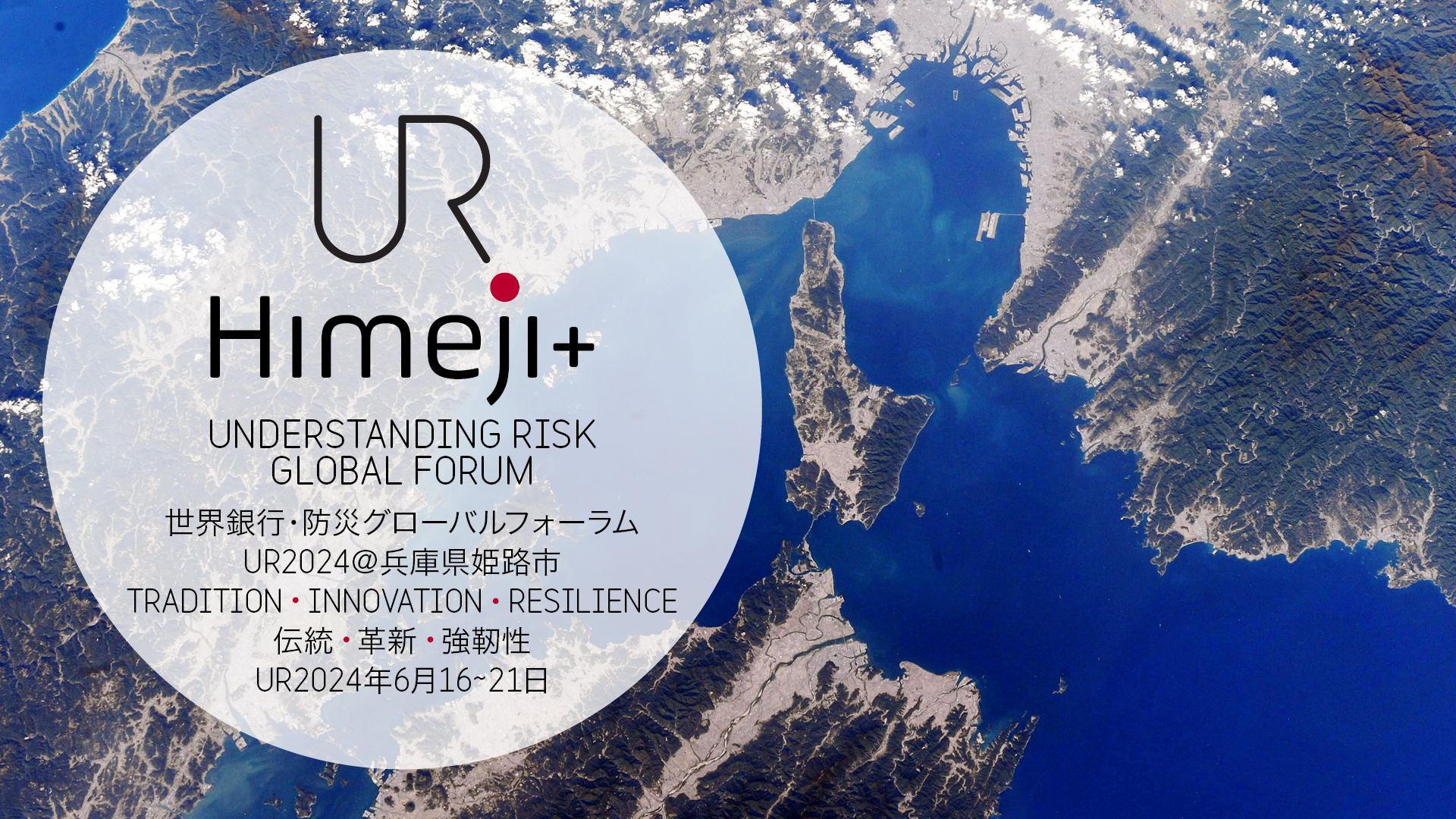
News GEM at UR2024: Pioneering Global Seismic Hazard and Risk Assessment By: May 27, 2024 Share Facebook LinkedIn Photo credit: UR24 The Global Earthquake Model (GEM) Foundation is set to make an impact at the upcoming Understanding Risk Global Forum 2024 (UR24) in Himeji, Japan. As a leader in global seismic hazard and risk assessment, GEM will not only participate but also co-organise technical sessions, underlining the importance of collaborative efforts in enhancing global resilience against geohazards. Highlighting the significance of this forum for GEM, Helen Crowley , GEM Secretary General, remarked, "UR24 provides a unique platform for us to share our latest insights on the modelling of global seismic hazard and risk, and to make those important personal connections with a global community of experts working on risk assessment and mitigation." John Schneider , GEM Senior Advisor, further emphasised this commitment by stating, "By co-organising sessions focused on geohazard risk assessment and building a global community, we aim to drive significant advancements in understanding and mitigating natural hazard risks." GEM's active participation at UR24 includes a series of key sessions that reflect its dedication to strengthening global seismic hazard and risk assessment and building international cooperation. UR24: The GEM-led Sessions June 18, 2024: What About Geohazards? The State of Practice in Risk Assessment and Needs for Improvement at National to Sub-National Level Time: 12:30 - 13:30 Convenors: John Schneider, GEM Senior Advisor, and Malaika Ulmi, Nat. Hazards & Climate Change Geoscience Program Manager, Geological Survey of Canada. June 20, 2024: Building a Global Community for Hazard and Risk Assessment Time: 14:00 - 18:00 Convenors: John Schneider, Senior Advisor, GEM; Malaika Ulmi, Nat. Hazards & Climate Change Geoscience Program Manager, Geo Survey of Canada; Gill Jolly, Chief Science Advisor, MBIE, GNS Science, New Zealand. Key Participation Helen will be participating in several key sessions across June 18th and 19th: On June 18th, she'll join the "Symphony of Tradition and Innovation" panel discussion (9:30 AM - 10:30 AM) convened by ImageCat, Inc. Later that morning, she'll be part of a panel of speakers at the "Richter Resilience: Advancing Seismic Protection Worldwide" plenary session (10:30 AM - 11:15 AM) convened by The World Bank. On June 19th, Helen will be featured as a speaker in the "Can ‘Seeing’ the Future Help us Change it? A Discussion on Future Directions for Disaster Scenarios" session (9:30 AM - 10:30 AM) convened by Janise Rodgers, COO of GeoHazards International. Exhibition Booth Beyond these insightful presentations, attendees can also visit GEM at booth S7 to explore available open seismic hazard and risk resources and engage directly with GEM's earthquake experts, including Marco Pagani, Head of Seismic Hazards. Our team will be there to provide valuable insights into the tools and methodologies used by GEM which help drive global earthquake preparedness and resilience. For more information and to follow GEM's participation at UR24, visit our dedicated event page at https://www.globalquakemodel.org/gemevents/gem-ur2024-japan . No images found. GALLERY 1/0 VIDEO RELATED CONTENTS
- GEM partners with Nasdaq and AIR Worldwide to provide earthquake risk models to the financial risk management sector - GEM Foundation
News GEM partners with Nasdaq and AIR Worldwide to provide earthquake risk models to the financial risk management sector By: Jul 26, 2020 Share Facebook LinkedIn A Nasdaq banner welcomes GEM in Times Square, New York, USA. GEM is pleased to announce its partnerships with Nasdaq and AIR Worldwide, which are expected to pave the way for GEM Foundation’s seismic hazard and risk models to become available via the Nasdaq Risk Modelling for Catastrophes and AIR Touchstone platforms. GEM’s OpenQuake models will be rendered into their respective OASIS LMF format, an open-source format developed by OASIS LMF, and Touchstone format using AIR’s Model Builder. The resulting models will support financial risk analysis including (re)insurance portfolios. Nasdaq and AIR will act as non-exclusive distributors of GEM models to their customers. This is the first time GEM, a non-profit Foundation specializing in seismic hazard and risk assessment, will partner with external risk model platform providers to market and demonstrate models for end user evaluation and distribute licenses for the purpose of modelling catastrophe risk. However, all models will be freely available in OQ for non-commercial, public-good use, and revenue from these partnerships will be used to maintain models and support activities in developing countries. GEM Secretary General, John Schneider, explains GEM’s role in the private and public sector with the signing of its respective agreements with Nasdaq and AIR and emphasizes the Foundation’s interest in diversifying its approach to make the latest risk information as accessible as possible to a broad range of stakeholders. “Fundamental to GEM’s success is the maintenance of the public-private partnership which is at the core of the Foundation’s governance and operational model. Making GEM models available via Nasdaq and AIR platforms can broaden our stakeholder reach and diversify how GEM models can be accessed. We are optimistic that this move will usher in a new chapter in GEM’s pursuit to reduce earthquake risk worldwide.” Nasdaq Risk Modelling for Catastrophes - powered by - enables insurers, reinsurers, brokers and corporates to unlock access to a broad range of catastrophe risk models from multiple vendors through a single service, increasing ease of model accessibility and strengthening risk management programs. Matthew Jones, Head of Catastrophe Risk Product at Nasdaq, said “This agreement means that we can now start providing GEM’s risk models on our service, filling essential gaps in the ability to assess earthquake risk globally. The industry wants choice and GEM is the 10th model developer to join the Nasdaq catastrophe risk modelling community, offering firms the strategic benefits of utilizing industry standards and Software as a Service, including ease of access to a wide choice of models and cost efficiency.” AIR Worldwide is a risk modeling and data analytics company headquartered in Boston, Massachusetts, with customers in insurance, reinsurance, financial services, and government markets. AIR’s Touchstone platform enables real-time decision-making that helps companies to make more informed underwriting, pricing, and risk management decisions; compare different views of risk; investigate the sensitivity of model assumptions; and satisfy regulatory reporting requirements. Jay Guin, Executive Vice President of AIR and Chief Research Officer, says, “This is a milestone for GEM. AIR has been a long-time sponsor of GEM and we are happy to be part of this new journey through AIR’s Touchstone platform. Model Builder enables clients to access additional views of risk while leveraging Touchstone’s financial module, scalability and performance capabilities. We will continue to support GEM’s efforts to promote openly available and accessible risk information.” Click the linked texts for more on and . No images found. GALLERY 1/2 Gallery VIDEO RELATED CONTENTS
- Population and Building Exposure | GEM Foundation
Back to Bangladesh Outcomes Bangladesh Population and Building Exposure Exposure models play a critical role in seismic risk assessment by quantifying the potential exposure of buildings and infrastructure to earthquake hazards. These models are structured databases that catalogue the characteristics of buildings within a specific geographic area, including their location, construction material, age, occupancy type, and structural design. The depth and accuracy of this data directly influence the effectiveness of the seismic risk evaluations, as they allow for a detailed understanding of how different structures are likely to perform during an earthquake. Maps | Profile Data Download Exposure OpenQuake Data Aggregated/ Exposure_Res_Bangladesh.csv Exposure_Res_Bangladesh_Upazila.csv Disaggregated/ Exposure_Com_Bangladesh.csv Exposure_Ind_Bangladesh.csv Exposure_Res_Bangladesh_2011.csv Exposure_Bangladesh.xml taxonomy_mapping_South_Asia.csv
- North America Exposure | GEM Foundation
License Request Form You have chosen to get more information about: North America Exposure Exposure Please check the link below to see if this product already meets your your requirements before submitting your request for a license. Thank you. DOWNLOAD THE OPEN VERSION Summary of steps to obtain a license for the requested product. Fill in the application form below. Click Submit. Please check your email Inbox or Spam folder for the summary of your request. You will then be contacted by the GEM Product Manager with either a request for more information, or a request to sign the license. If you do not hear from us within 2 weeks, please send an email to product@globalquakemodel.org . REQUEST DETAILS A. Requesting party information First Name Last Name Role/Job Email Business type Business type Other business Sector Sector Other sector B. License agreement signatory information The signatory must be someone who is authorised to sign license agreements on your behalf such as your immediate supervisor, manager or legal officer. If you’re a PhD student, the signatory must be your adviser or a university officer in charge of license agreements or similar legal documents. Full Name of Signatory Position Company Email of Signatory Organisation name Complete Address C. Purpose of request GEM is able to offer products for free because of the support of our project partners, national collaborators and institutional sponsors. All of GEM’s products are freely available for public good, non-commercial use, but with different license restrictions. In most cases we release products under an open license (e.g., CC BY-SA or CC BY-NC-SA), which permits (re)distribution. In this case, we are granting access under a more restricted license that forbids distribution or disclosure and requires signing by GEM and the licensee in order to better assure accountability for the confidentiality of the information. In order for GEM to properly assess your request, please answer the following questions below. 1. Explain briefly how will the GEM product be used e.g. project, research including the expected results and the foreseen public benefit. Minimum 60 words. 2. Will you be able to share the results of your work with GEM? YES NO 3. Will you be able to provide feedback to GEM on the quality and usefulness of this product via a survey? YES NO D. Privacy Policy By submitting this form, you consent to the processing of your personal data in accordance with our Privacy Policy and the EU General Data Protection Regulation (GDPR). We are committed to safeguarding your information and ensuring it is only used for the purpose outlined in this form. You have the right to access, rectify, or delete your data at any time. For more information, please refer to our Privacy Policy. I agree Words: 0 Email us at product@globalquakemodel.org if you're experiencing problems submitting your application. Thank you. Submit Thanks for submitting! You will be contacted as soon as possible Incomplete data. Please fill in all required fields. Thank you.
- GEM Provides Impact Estimates for Russia, Afghanistan, and Philippine Earthquakes - GEM Foundation
News GEM Provides Impact Estimates for Russia, Afghanistan, and Philippine Earthquakes By: Oct 6, 2025 Jul 29, 2025 Share Facebook LinkedIn As part of its role in the ARISTOTLE-ENHSP , the Global Earthquake Model (GEM) Foundation provided rapid impact analyses to the European Research Coordination Centre following three recent earthquakes: the magnitude 8.8 earthquake in Russia’s Kamchatka Peninsula on 29 July 2025, the magnitude 6.0 earthquake in Afghanistan’s Kunar and Nangarhar provinces on 31 August 2025, and the magnitude 6.9 earthquake in the Philippines’ Cebu province on 30 September 2025. Assessing the Kamchatka Earthquake The Kamchatka event was classified as a Red alert for economic losses by the USGS PAGER system, thus triggering GEM’s post-event protocol. GEM scientists used the global hazard and risk models in combination with USGS ShakeMap products to generate impact estimates. While the earthquake was very large, evidence suggested lower-than-expected ground shaking, underscoring the challenge of constrained data in remote regions. GEM’s analyses explored different assumptions for ground motion behaviour, providing ranges of possible impacts to inform ongoing evaluations. Supporting Decision-Making in Afghanistan The Afghan earthquake was also classified as a Red alert for fatalities by the USGS PAGER system. GEM used the epicentre from the European-Mediterranean Seismological Centre (EMSC), combined with a rupture generated using its Global EarthquakE ScEnarios (GEESE) algorithm and regional hazard models, to estimate the likely range of consequences. Outputs shared with the European Commission’s Joint Research Centre (JRC) supported satellite mapping operations. In one case, GEM’s estimates confirmed that the most affected areas had been correctly prioritised for imaging, despite damage being difficult to detect from satellite data. This provided responders with confidence in their initial assessments. Delivering Rapid Analysis in the Philippines For the 30 September earthquake in Cebu, GEM applied its oq-impact tool to generate impact estimates for fatalities, injuries, displaced population, economic losses, and building damage. Maps of expected building loss, fatalities, and homelessness were shared with the Philippine Institute of Volcanology and Seismology (PHIVOLCS) to complement national monitoring efforts. These analyses are based on the USGS rupture, GEM’s global ground motion models, and exposure and vulnerability models for the Philippines providing a first-order estimate of expected impacts while more detailed local data are being gathered. Bridging Science and Response Feedback from partners, including JRC, emphasised the value of GEM’s modelling in the immediate aftermath of earthquakes. By providing independent, model-based estimates, GEM helps humanitarian agencies and national authorities allocate resources more confidently, especially when on-the-ground information is scarce or satellite information is unreliable. Towards Greater Collaboration While GEM is not an operational emergency-response organisation, its role as an information provider helps humanitarian agencies, governments, and international partners respond more effectively to disasters. The recent events in Russia, Afghanistan and the Philippines highlight how scientific models can complement field data and satellite imagery in shaping rapid response. GEM continues to encourage open collaboration and data sharing with partners worldwide, recognising that bridging the gap between science and action is essential for strengthening earthquake resilience – and disaster resilience more broadly – across the globe. Contact us at info@globalquakemodel.org for inquiries or collaboration. No images found. GALLERY 1/0 VIDEO RELATED CONTENTS
- OQ Engine certified user Aurora Lambiasse | GEM Foundation
OpenQuake Engine certified user page This is to certify that Aurora Lambiasse has successfully completed the requirements to become a Certified OpenQuake Engine User for Scenario Assessment demonstrating the required knowledge and skills as assessed by the Global Earthquake Model (GEM) Foundation. GEM Foundation Secretary General Helen Crowley (signed) Date of Completion: Valid until: September 12, 2025 September 11, 2028
- Insurance for Natural Perils – A Solution for Nepal? - GEM Foundation
News Insurance for Natural Perils – A Solution for Nepal? By: Jul 12, 2018 Share Facebook LinkedIn The government of Nepal recently conducted its annual RISK2RESILIENCE conference with the theme: International Conference on Experience of Earthquake Risk Management, Preparedness and Reconstruction in Nepal. The event, held from 18-20 June in Kathmandu, was jointly organized by the Ministry of Home Affairs (MOHA), National Reconstruction Authority (NRA), Nepal Academy of Science and Technology (NAST) and National Society for Earthquake Technology - Nepal (NSET). The conference gathered some 240 people comprised of 40 international professionals from 13 different countries and about 200 individuals composed of government officials, DRR experts, practitioners and academia who participated and shared their ideas and views as speakers, presenters and panelists. The event aimed to critically look back at what has been collectively done on Earthquake Risk Reduction and Preparedness in Nepal in the past decades in light of the 2015 Gorkha Earthquake; to critically examine the experience as well as the progress of Earthquake Reconstruction to date; and to help set the Way Forward in the Long Journey of Disaster Risk Management in Nepal. Anselm Smolka, GEM Special Advisor and former Secretary General, participated in the event presenting his insights on how insurance can help Nepal cope with natural perils in the future under the ‘Setting the Future’ keynote session. He also emphasized GEM’s work in promoting earthquake resilience worldwide through high quality open tools and open data. Anselm believes that given the large insurance gap demonstrated by the Gorkha earthquake and Terai Floods, Nepal presents a typical case for non-traditional insurance products. He recommended several options such as microinsurance for rural areas and insurance pool for urban regions. Microinsurance would cover poor or moderately poor people, while insurance pool would cover those residing in the cities and urbanized areas. Anselm added that the end goal of these non-traditional insurance products is disaster relief and recovery. On the last day, Mr. Prem Kumar Rai, Secretary of the Ministry of Home Affairs remarked that, "This 3-day International Conference has come up with important conclusions and way forward for the country to lessen the adverse impacts of disasters in Nepal based on lessons from the past. I assure you all that the Nepal Government highly acknowledges all these recommendations." (source: NSET) The Risk2Resilience Conference culminated with the approval of the Conference Resolution recommendations endorsed by the participants on how to move forward with Earthquake Risk Management, Preparedness and Reconstruction in Nepal. The resolution can be downloaded here. No images found. GALLERY 1/0 VIDEO RELATED CONTENTS
- GEM - Safehub collaboration to monitor earthquake risk of buildings - GEM Foundation
News GEM - Safehub collaboration to monitor earthquake risk of buildings By: Mar 18, 2019 Share Facebook LinkedIn John Schneider with Safehub staff (L to R): John Daniello, Alex Mead, Alessio Vallero, Andy Thompson (Safehub CEO) John Schneider, Doug Frazier (Safehub Co-Founder/Chairman) and Clement Barthes. On February 7th in San Francisco, GEM Secretary General John Schneider and Andy Thompson, Safehub CEO and Co-Founder signed an agreement to model the vulnerability of buildings directly from motion sensors installed in buildings. Safehub is developing and implementing low-cost sensors to monitor building vibrations and the response of buildings to earthquake shaking. The purpose of the project is to demonstrate how the inclusion of sensor data at building and portfolio levels can be used to reduce the uncertainty in estimating building vulnerability, and to use this information to improve model predictions of damage from earthquakes. In turn, the information from sensors and improved vulnerability estimates will be useful to building owners and risk managers for risk transfer and planning purposes (e.g., insurance) or post-earthquake response, including evacuation. The project, which will run to the end of 2019, will be led for GEM by Vitor Silva, GEM Risk Team Leader. Andy Thompson, a former member of the GEM Governing Board (representing Arup), and who was a panelist representing future GEM directions at the release of the global maps last December 2018, said “GEM is an ideal partner for Safehub, not just because of the science-based, flexible and open way in which it operates, but also because it has brought together a community of people that think across a broad spectrum of risk.” He added that Safehub’s technology, a physics-based approach to risk analysis is completely compatible with GEM’s OpenQuake Engine. Safehub provides structural health monitoring for all buildings, connecting real-time building-specific data to portfolio risk analysis. For more information on Safehub, visit their website at https://www.safehub.io . No images found. GALLERY Safehub's building shaking sensor Under the hood: building shaking sensor Safehub's building shaking sensor 1/4 VIDEO RELATED CONTENTS
- From shaking to consequences: GEM to unveil new global earthquake risk products - GEM Foundation
News From shaking to consequences: GEM to unveil new global earthquake risk products By: Jun 15, 2026 Jun 16, 2026 Share Facebook LinkedIn First fully global hazard coverage, including oceans 16 June 2026. Pavia, Italy. At GEM Conference 2026 in Zagreb next week, the Global Earthquake Model (GEM) Foundation will unveil a new generation of global seismic hazard and risk products, marking a major step forward from its first global release in 2018. The 2018 release gave the world one of its first open, globally consistent views of earthquake hazard and risk. The 2026 release goes further. It updates GEM’s core global hazard and risk models while widening the lens of earthquake risk analysis: from ground shaking and building losses to infrastructure disruption, future exposure and the carbon emissions associated with earthquake damage and reconstruction. “Since GEM’s first global release in 2018, both the science and the scope of earthquake risk analysis have advanced,” said Helen Crowley, Secretary General of the GEM Foundation . “The 2026 products are not simply updated maps. They show that earthquake risk is dynamic and multidimensional — affecting the buildings we live in, the roads we rely on, the emissions generated through reconstruction, and the decisions we make today that shape tomorrow’s risk.” The June 2026 release will include updated global seismic hazard and risk products, together with new global analyses of road network exposure to liquefaction, the carbon cost of earthquake damage, and future seismic risk through to 2065. Together, the products address a central question: how is the global picture of earthquake risk changing, and what does this mean for disaster risk reduction, planning and resilience? Fully global hazard coverage, including oceans First global assessment of the carbon cost of earthquakes For advanced coverage , journalists are invited to contact GEM at communication@globalquakemodel.org for approved preview material ahead of the 23 June public release. A broader view of earthquake risk The 2026 release expands global earthquake risk assessment beyond where the ground may shake to show how earthquakes can affect buildings, roads, recovery, emissions and future development. A planetary-scale hazard map - GEM’s 2026 hazard product extends, for the first time, probabilistic seismic hazard coverage across the oceans, providing a more complete global foundation for impact and risk analysis. Earthquakes and infrastructure disruption - The first global analysis of road exposure to liquefaction highlights where earthquake-induced ground failure could disrupt transport corridors, emergency access, logistics and recovery. The carbon cost of earthquakes - GEM’s new embodied-carbon risk model estimates the emissions associated with earthquake damage, repair and reconstruction, adding an environmental dimension to seismic risk assessment. Forward-looking risk scenarios to 2045 and 2065 - exploring how seismic risk may evolve as population, settlements, building stock and construction practices change. A fully global view of seismic hazard A key milestone in the 2026 release is GEM’s new Global Seismic Hazard Map, which extends probabilistic seismic hazard coverage across the oceans. The product builds on GEM’s global hazard mosaic, combining national, regional and GEM-developed models into a consistent global framework for estimating earthquake shaking. “Any credible assessment of earthquake impacts begins with robust earthquake and hazard science,” said Marco Pagani, Head of Seismic Hazard at GEM . “Since 2018, GEM and its partners have continued to improve the global hazard mosaic, integrate new data and models, and move toward a more complete framework that now extends across the oceans.” The 2026 hazard product provides the scientific basis for updated global seismic risk calculations and for new applications that depend on a consistent view of earthquake hazard across land, coastal regions and offshore areas. From building losses to wider consequences Alongside the hazard update, GEM will release updated global seismic risk maps covering exposure, vulnerability, economic losses, fatalities, buildings destroyed, built-up area destroyed, population rendered homeless and embodied-carbon loss. The updated global risk model reflects changes in population, building stock, construction costs, exposure data, vulnerability modelling and the underlying seismic hazard models. It also provides a more detailed understanding of which types of buildings contribute most to different risk metrics, helping users move from identifying where risk is concentrated to understanding why it is concentrated there. The release also introduces a new global analysis of road network exposure to liquefaction. Liquefaction occurs when strong shaking causes saturated soils to lose strength, potentially damaging roads, bridges, buried lifelines and other infrastructure. By identifying where roads are exposed to both high shaking and severe liquefaction hazard, the new product highlights how earthquakes can disrupt transport links, emergency response, logistics and recovery. The carbon cost of earthquakes Another major innovation in the 2026 release is GEM’s Global Seismic Embodied-Carbon Risk Map, which adds an environmental dimension to earthquake impact assessment. Earthquake damage can trigger large-scale repair, demolition, debris management and reconstruction. These processes require materials, transport and construction activities that generate greenhouse gas emissions. GEM’s new global embodied-carbon risk model estimates the carbon footprint of earthquake damage and reconstruction, allowing users to consider seismic risk not only as a human and economic issue, but also as a long-term environmental burden. This work can support more integrated decisions on seismic safety, retrofitting, sustainable construction, post-earthquake recovery and life-cycle carbon assessment. Looking ahead to 2045 and 2065 The 2026 release also points to the next horizon of earthquake risk analysis: how risk may evolve in the decades ahead. Using future socioeconomic pathways, GEM’s forward-looking risk work explores how changes in population, settlements, building stock and construction practices may affect seismic risk through 2045 and 2065. Rather than predicting a single future, the products provide transparent scenarios that can help governments, planners, humanitarian organisations, insurers, researchers and risk analysts explore how today’s choices may influence tomorrow’s earthquake losses. “Uncertainty is inherent in any assessment of future earthquake risk, and also in comparing risk across time,” said Vitor Silva, Head of Risk Engineering at GEM . “What matters is that uncertainty is treated transparently, using the best available science and clearly stated assumptions, so that users can interpret the results responsibly.” GEM emphasises that the products are decision-support tools, not predictions of individual future earthquakes. Built through open and collaborative scientific frameworks using GEM’s OpenQuake Engine, they combine hazard, exposure, vulnerability and related datasets to support more informed decisions on risk reduction, planning and resilience. How to watch the release and access the products GEM Conference 2026 will take place from 23 to 25 June in Zagreb, hosted by the Croatian Centre for Earthquake Engineering at the University of Zagreb. Day 1 will feature the public release of the new products and will be livestreamed. The viewing link will be made available on 23 June 2026 on the conference event page and the GEM homepage. After the release, the products will be available for download from the GEM website’s Products page. Event streaming URL: https://www.globalquakemodel.org/gemevents/gem2026-conference-from-faults-to-future-scenarios Products URL: https://www.globalquakemodel.org/products Media contact: communication@globalquakemodel.org No images found. GALLERY 1/0 VIDEO RELATED CONTENTS
- GEM IT Review 2010 | GEM Foundation
Publications GEM IT Review 2010 Share Facebook LinkedIn Download 2013 | Report The primary (IT) goal of GEM is to extend the scope, but not necessarily the state-of-the-art, of risk and hazard calculation, as related to earthquakes. In order to achieve this, we expect our IT architecture to be: • Open (Data, Source, Protocols, Standards, etc.) • Pluggable (Modular, Loosely-Coupled) • Dynamic (Fault-tolerant, Distributed, Constantly Updated)