Thanks for submitting!
You will be contacted as soon as possible


QUICK LINKS


PROFILES
PUBLICATIONS
EXPOSURE
VULNERABILTY
SOFTWARE
EQ MODELS
Search Results
Search this site
1170 results found with an empty search
- Seismic hazard analysis at the urban scale | GEM Foundation
Publications Seismic hazard analysis at the urban scale Share Facebook LinkedIn Download 2021 | Report We perform seismic hazard analysis for three urban centers (Cali, Colombia; Quito, Ecuador; and Santiago, Dominican Republic) within the TREQ project, explicitly accounting for the local soil response in each city. The two requirements for this analysis are (1) hazard estimates on reference bedrock at each city, for which we use the models described in D2.2.2 and D2.2.3 and (2) soil response models that quantify the amplification (or deamplification) of ground shaking throughout the three urban centers due to the shallow soil layers. In this study, in collaboration with local experts, we develop the soil response models for each city using available local geotechnical and geophysical data. We simulate the soil response using 1D equivalent linear analysis using pySRA, and a large suite of input motions generated from (and therefore fully compatible with) the underlying hazard model, which accounts for uncertainty in the input motions. The computed soil response models consist of a set of soil amplification factors (AF) and their uncertainty (�lnAF), covering the respective urban centers. The AFs are defined for periods relevant for risk analysis (PGA – 2.0 s), as well as for a wide range of bedrock shaking intensity levels (0.05 – ~4 g), and can therefore be readily used for probabilistic hazard and risk analysis. Finally, hazard curves are computed at the surface by convolving the bedrock hazard with the AFs and �lnAF at a set of sites. The results are compared to those computed using the ergodic site terms within the GMPEs, which depend on the shear wave velocity in the upper 30 m (Vs30), for which we find significant differences at some sites. Specifically, using the local soil response models can either increase (up to a factor ~2) or decrease the hazard results compared to when an inferred Vs30 is used. For soft sites at longer return periods, the hazard can be lower (and sometimes lower than the hazard on rock) due to soil nonlinearity. These differences can have a significant impact on the risk results, which are described in Deliverable D2.3.5. This study demonstrates the importance of incorporating local soil response when the goal is to model hazard at the urban scale with a higher level of detail compared to more standard approaches using Vs30.
- Data Interchange Formats for the Global Earthquake Model (GEM) | GEM Foundation
Publications Data Interchange Formats for the Global Earthquake Model (GEM) Share Facebook LinkedIn Download 2010 | Report Sixteen draft data interchange formats and 7 terminology standards (collectively referred to here as DIFs) are proposed here for use in GEM1. This initial draft includes several DIFs for hazard output (to be used as input to risk analyses), exposure (i.e., values exposed to seismic risk), vulnerability, and fragility. Samples are provided of each DIF, and in each case, each parameter is explained, assigned a variable type (e.g., integer, text string, double-precision floating point, etc.) and any constraints are specified (e.g., probabilities between 0 and 1). The proposed data standards in this draft draw primarily on OpenSHA, OpenRisk, PAGER, and to a limited extent HAZUS-MH, EMS-98, and the World Housing Encyclopedia. The DIFs presented in this draft are entirely human-readable, plain-text flat files (commas-and-quotes); no attempt has been made yet to define XML formats. The emphasis in these DIFs is on simplicity and universality over storage efficiency. It is not intended that these DIFs represent a complete or exhaustive set of what GEM1 will require. Later drafts may add XML format and DIFs for other I/O needs. GEM1 participants are encouraged to contact the authors to recommend additions, modifications, and clarification.
- Global Seismic Risk Map | GEM Foundation
License Request Form You have chosen to get more information about: Global Seismic Risk Map Risk Please check the link below to see if this product already meets your your requirements before submitting your request for a license. Thank you. DOWNLOAD THE OPEN VERSION Summary of steps to obtain a license for the requested product. Fill in the application form below. Click Submit. Please check your email Inbox or Spam folder for the summary of your request. You will then be contacted by the GEM Product Manager with either a request for more information, or a request to sign the license. If you do not hear from us within 2 weeks, please send an email to product@globalquakemodel.org . REQUEST DETAILS A. Requesting party information First Name Last Name Role/Job Email Business type Business type Other business Sector Sector Other sector B. License agreement signatory information The signatory must be someone who is authorised to sign license agreements on your behalf such as your immediate supervisor, manager or legal officer. If you’re a PhD student, the signatory must be your adviser or a university officer in charge of license agreements or similar legal documents. Full Name of Signatory Position Company Email of Signatory Organisation name Complete Address C. Purpose of request GEM is able to offer products for free because of the support of our project partners, national collaborators and institutional sponsors. All of GEM’s products are freely available for public good, non-commercial use, but with different license restrictions. In most cases we release products under an open license (e.g., CC BY-SA or CC BY-NC-SA), which permits (re)distribution. In this case, we are granting access under a more restricted license that forbids distribution or disclosure and requires signing by GEM and the licensee in order to better assure accountability for the confidentiality of the information. In order for GEM to properly assess your request, please answer the following questions below. 1. Explain briefly how will the GEM product be used e.g. project, research including the expected results and the foreseen public benefit. Minimum 60 words. 2. Will you be able to share the results of your work with GEM? YES NO 3. Will you be able to provide feedback to GEM on the quality and usefulness of this product via a survey? YES NO D. Privacy Policy By submitting this form, you consent to the processing of your personal data in accordance with our Privacy Policy and the EU General Data Protection Regulation (GDPR). We are committed to safeguarding your information and ensuring it is only used for the purpose outlined in this form. You have the right to access, rectify, or delete your data at any time. For more information, please refer to our Privacy Policy. I agree Words: 0 Email us at product@globalquakemodel.org if you're experiencing problems submitting your application. Thank you. Submit Thanks for submitting! You will be contacted as soon as possible Incomplete data. Please fill in all required fields. Thank you.
- Southeast Asia Exposure | Global EarthQuake Model Foundation
Repository with the inventory of residential, commercial and industrial buildings in Southeast Asia Products Southeast Asia Exposure Repository with the inventory of residential, commercial and industrial buildings in Southeast Asia Share Facebook LinkedIn Description The Global Exposure Model is a mosaic of local and regional models with information regarding the residential, commercial, and industrial building stock at the smallest available administrative division of each country and includes details about the number of buildings, number of occupants, vulnerability characteristics, average built-up area, and average replacement cost. The dataset is developed and maintained by the GEM Foundation, using a bottom-up approach at the global scale, using national statistics, socio-economic data, and local datasets. This model allows the identification of the most common types of construction worldwide, regions with large fractions of informal construction, and areas prone to natural disasters with a high concentration of population and building stock. The Southeast Asia region of the model includes the information pertaining the following countries/territories: Brunei, Cambodia, Indonesia, Laos, Malaysia, Myanmar, Philippines, Singapore, Thailand, Timor_Leste, Vietnam How to cite this work If you make use of this work, please cite both the publication and the data. Publication: Yepes-Estrada, C., Calderon, A., Costa, C., Crowley, H., Dabbeek, J., Hoyos, M., Martins, L., Paul, N., Rao, A., Silva, V. (2023). Global Building Exposure Model for Earthquake Risk Assessment. Earthquake Spectra. doi:10.1177/87552930231194048 Data: Yepes-Estrada, C., Calderon, A., Costa, C., Crowley, H., Rao, A., Paul, N., & Silva, V. (2026). Global Exposure Model (2026.0.0). Zenodo. https://doi.org/10.5281/zenodo.8117363. Available Versions An open version (v2026.1) of the model, agreggated at Administrative Level 1, is available for direct download under a CC BY-NC-SA 4.0 license. Users interested in this version can click the "Open Repository" button in the right panel to access the information. The full version for any country/territory, at the highest resolution available, can be requested by clicking on the "License Request", where a specific license will be provided, depending on the use case. License information The open version is available under a Creative Commons CC BY-NC-SA 4.0 license, which requires: Attribution (you must give appropriate credit, provide a link to the license, and indicate if changes were made) Non-commercial (you may not use the material for commercial purposes) ShareAlike (derivatives created must be made available under the same license as the original) Any deviation from these terms incur in license infringement. For commercial use of the model, a specific license agreement must be made tailored to your use case, in such instance please click on "License Request". Facebook LinkedIn Share Latest Version v2026.0 License CC BY-NC-SA 4.0 Available resources Open Repository License Request text Map View Search Popup title Close Country/Region Available Resources Afghanistan Exposure Africa Exposure Alaska Exposure Country/Region Available Resources Afghanistan Vulnerability Africa Vulnerability Alaska Vulnerability Country/Region Resource Url Afghanistan Risk Profile Africa Risk Profile Alaska Risk Profile Search Found Country/Region Resource Url Afghanistan Exposure Africa Exposure Alaska Exposure Preview Preview is not available. Search Found Country/Region Resource Url Afghanistan Vulnerability Africa Vulnerability Alaska Vulnerability Preview Preview is not available. Search Found Country/Region Resource Url Afghanistan Risk Profile Africa Risk Profile Alaska Risk Profile Preview Preview is not available. Related products GEM Building Taxonomy Global Seismic Embodied Carbon Risk Global Seismic Hazard Map Global Liquefaction Hazard Global Exposure Model Global Vulnerability Model Global Map of Road Exposure to Ground Shaking and Liquefaction Global Seismic Risk Map Country-Territory Seismic Risk Profiles Related publications For downloading or accessing detailed product information like PNG/PDF maps, datasets, license request, shapefiles and more, please switch to a desktop or laptop computer. Thank you for your understanding.
- OQ Engine certified user Genio Lay da Silva | GEM Foundation
OpenQuake Engine certified user page This is to certify that Genio Lay da Silva has successfully completed the requirements to become a Certified OpenQuake Engine User for Scenario Assessment demonstrating the required knowledge and skills as assessed by the Global Earthquake Model (GEM) Foundation. GEM Foundation Secretary General Helen Crowley (signed) Date of Completion: Valid until: September 11, 2026 September 11, 2029
- Earthquake loss assessment of precast RC industrial structures in Tuscany (Italy), Bulletin of Earthquake Engineering | GEM Foundation
Publications Earthquake loss assessment of precast RC industrial structures in Tuscany (Italy), Bulletin of Earthquake Engineering Share Facebook LinkedIn Download 2017 | Peer-reviewed A seismic loss assessment for structural, non-structural, contents and business interruption is presented for precast reinforced concrete industrial buildings located in Italy. The correlation that exists between the performances of such spatially distributed buildings (i.e. spatial correlation) given a seismic event should be considered when estimating losses at a local or regional level. Loss assessment is thus performed herein using the OpenQuake-engine, an open-source tool capable of including the spatial correlation of ground-motion residuals and uncertainty in building vulnerability. The annual probability of structural collapse is employed as an initial risk measure, in which each industrial facility is considered as an individual asset. Then the economic loss for 300 buildings in the province of Arezzo is computed using a probabilistic event-based risk approach and presented in terms of annual average losses and losses at given annual rates of exceedance. The impact of the losses due to business interruption is also explored, and the extent of customer base is used as a prioritization metric for risk mitigation. It is observed that risk reduction should be applied as a priority in the facilities that are compromising the current level of acceptable risk, and the results show that business interruption has a significant contribution for economic losses, whose repercussions go beyond the regional level. Although this application is confined to the province of Arezzo, the same methodology can be used in other regions in Italy with similar building stock.
- Call for Applications - Public Partnership Opportunity with the GEM Foundation | GEM Foundation
Publications Call for Applications - Public Partnership Opportunity with the GEM Foundation Share Facebook LinkedIn Download 2025 | Brochure The Global Earthquake Model (GEM) Foundation is committed to advancing earthquake risk assessment, modelling, and mitigation efforts worldwide. As part of our mission to strengthen global collaboration, we are offering a unique opportunity for public organisations to join GEM’s Governing Board as Public Governors. While GEM’s Public Governors typically contribute annual sponsorship fees, selected public sector partners under this opportunity will instead be granted Public Governor status (for a period of 3 years) based purely on merit, strategic alignment, and contributions to seismic risk reduction. Through this partnership, Public Governors will gain access to GEM’s global network, research, models and tools, thus contributing to and benefiting from the latest advances in earthquake hazard and risk knowledge. We invite interested public organisations to submit a proposal outlining their commitment and potential contributions to GEM’s mission using the template that can be downloaded from the GEM website .
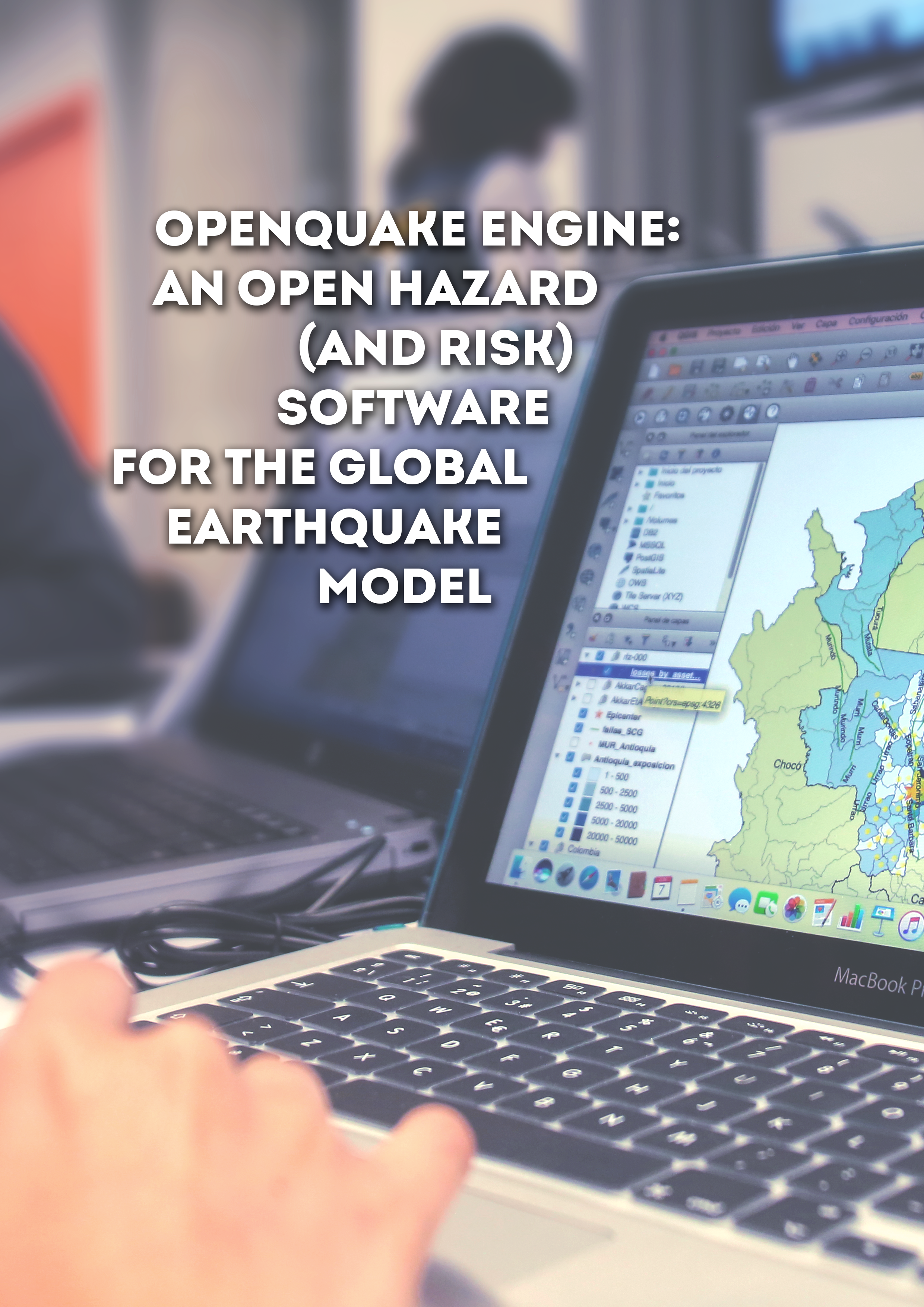
- OpenQuake Engine: An Open Hazard (and Risk) Software for the Global Earthquake Model | GEM Foundation
Publications OpenQuake Engine: An Open Hazard (and Risk) Software for the Global Earthquake Model Share Facebook LinkedIn Download 2014 | Peer-reviewed Since its inception in the 1960s, probabilistic seismic‐hazard analysis (PSHA) (Cornell, 1968; McGuire, 2004, 2008) has emerged as the principal methodology for assessing the potential hazard posed by earthquake ground motion in a broad range of contexts. Seismic‐hazard analysis serves different needs coming from a wide spectrum of users and applications. These may encompass engineering design, assessment of earthquake risk to portfolios of assets within the insurance and reinsurance sectors, engineering seismological research, and effective mitigation via public policy in the form of urban zoning and building design code formulation. End users of seismic‐hazard analyses from...
- Seismic Risk Assessment in Nepal | GEM Foundation
Publications Seismic Risk Assessment in Nepal Share Facebook LinkedIn Download 2015 | Peer-reviewed Seismic risk in the form of impending disaster has been seen from past records that moderate to large earthquakes have caused the loss of life and property in all parts of Nepal. Despite the availability of new data, and methodological improvements, the available seismic hazard map of Nepal is about two decades old. So an updated seismic hazard model at the country level is imperative and logical. The seismic hazard and risk model constitute important tools for framing public policies towards land-use planning, building regulations, insurance, and emergency preparedness. In fact, the reliable estimation of seismic hazard and risk eventually minimizes social and economic disruption caused by earthquakes. In this frame of reference, the seismic risk assessment at a country level is elementary in reducing potential losses stemming from future earthquakes. Thus, this study investigates structural vulnerability, seismic risk, and the resulting possible economic losses owing to future earthquakes in Nepal. To this end, seismic risk assessment in Nepal is done using an existing probabilistic seismic hazard, a newly developed structural vulnerability, and recently released exposure data. The OpenQuake-engine, the open source platform for seismic hazard and risk assessment from the Global Earthquake Model initiative, was used to calculate the seismic hazard and risk in Nepal. The seismic hazard and mean economic loss map were formulated for the 1%, 2%, 5%, and 10% probability of exceedance in 50 years. Finally, the distribution of building damage and corresponding economic losses due to the recurrence of the historical 1934 earthquake was presented in this study.
- Global Ground Motion Flatfile | GEM Foundation
License Request Form You have chosen to get more information about: Global Ground Motion Flatfile Hazard Please check the link below to see if this product already meets your your requirements before submitting your request for a license. Thank you. DOWNLOAD THE OPEN VERSION Summary of steps to obtain a license for the requested product. Fill in the application form below. Click Submit. Please check your email Inbox or Spam folder for the summary of your request. You will then be contacted by the GEM Product Manager with either a request for more information, or a request to sign the license. If you do not hear from us within 2 weeks, please send an email to product@globalquakemodel.org . REQUEST DETAILS A. Requesting party information First Name Last Name Role/Job Email Business type Business type Other business Sector Sector Other sector B. License agreement signatory information The signatory must be someone who is authorised to sign license agreements on your behalf such as your immediate supervisor, manager or legal officer. If you’re a PhD student, the signatory must be your adviser or a university officer in charge of license agreements or similar legal documents. Full Name of Signatory Position Company Email of Signatory Organisation name Complete Address C. Purpose of request GEM is able to offer products for free because of the support of our project partners, national collaborators and institutional sponsors. All of GEM’s products are freely available for public good, non-commercial use, but with different license restrictions. In most cases we release products under an open license (e.g., CC BY-SA or CC BY-NC-SA), which permits (re)distribution. In this case, we are granting access under a more restricted license that forbids distribution or disclosure and requires signing by GEM and the licensee in order to better assure accountability for the confidentiality of the information. In order for GEM to properly assess your request, please answer the following questions below. 1. Explain briefly how will the GEM product be used e.g. project, research including the expected results and the foreseen public benefit. Minimum 60 words. 2. Will you be able to share the results of your work with GEM? YES NO 3. Will you be able to provide feedback to GEM on the quality and usefulness of this product via a survey? YES NO D. Privacy Policy By submitting this form, you consent to the processing of your personal data in accordance with our Privacy Policy and the EU General Data Protection Regulation (GDPR). We are committed to safeguarding your information and ensuring it is only used for the purpose outlined in this form. You have the right to access, rectify, or delete your data at any time. For more information, please refer to our Privacy Policy. I agree Words: 0 Email us at product@globalquakemodel.org if you're experiencing problems submitting your application. Thank you. Submit Thanks for submitting! You will be contacted as soon as possible Incomplete data. Please fill in all required fields. Thank you.