Thanks for submitting!
You will be contacted as soon as possible


Image Credit: UR24 (https://understandrisk.org/ur24/)
OVERVIEW
The Global Earthquake Model (GEM) Foundation is proud to participate in the Understanding Risk Global Forum 2024 (UR24) in Himeji, Hyogo Prefecture, Japan, from June 16th to 21st, 2024. GEM, in collaboration with the World Community of Geological Surveys WCOGS, will be actively involved on June 18th-20th, leading a technical session titled "Building Geohazards Risk Assessment Capacity at the National Level." GEM will also host a focus event on the same topic for more in-depth discussions, allowing for a more interactive exchange of ideas and promoting collaboration among stakeholders.
GEM invites attendees from national governments, disaster risk reduction agencies, academia, and other stakeholders interested in strengthening earthquake risk assessment capacities to:
Participate in our technical session to gain in-depth knowledge of our work.
Attend our side event for focused discussions and networking opportunities.
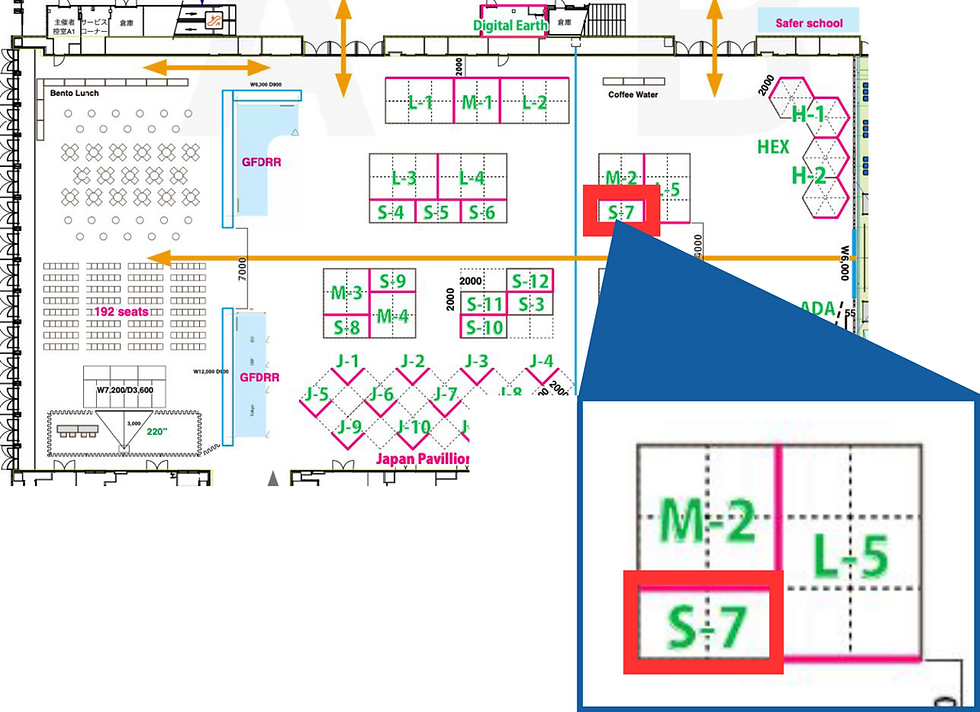
Visit our exhibition booth, in the “friends of NASA” space, to explore our open seismic risk assessment resources.
Convenors/Speakers
The State of Practice in Risk Assessment and Needs for Improvement at National to Sub-National Level

Catarina Costa
GEM

Finn Løvholt
Norwegian Geotechnical Institute
Lana Todorovic
GEM

Vitor Silva
University of Aveiro, GEM

Christopher Brooks
GEM


Karim Aljawhari
GEM
Mukat Lal Sharma
More invited speakers coming soon!
AGENDA
The State of Practice in Risk Assessment and Needs for Improvement at National to Sub-National Level
Geohazards such as earthquakes, volcanic eruptions, tsunamis and landslides represent a significant proportion of the global disaster risk. Yet the capabilities for assessing risk at national to sub-national level are often insufficient. This session will discuss the state of practice and identify the needs for improving hazard and risk assessment capabilities. A complimentary Focus Day event will propose the way forward through the development of a global collaboration network.
Auditorium
Time | Title | Speaker | Organisation |
|---|---|---|---|
14:45 - 15:00 | Future Exposure/Risk to 2065 | Alejandro Calderon | GEM Foundation |
15:00 - 15:15 | Global Exposure of Infrastructure to Liquefaction | Catarina Costa | GEM Foundation |
15:15 - 15:30 | Global Carbon Cost of Earthquakes | Martina Caruso | GEM Foundation |
15:30 - 16:00 | Coffee break + GEM demos + GEM PhD posters | ||
16:00 - 16:30 | Keynote: Advancing Seismic Risk Assessment in El Salvador using GEM Tools Moderator: Lindsay Davis, USGS | Luis Mixco | MARN, El Salvador |
16:30 - 17:00 | Ignite Session for Live Demos Moderator: Iain Stewart, University of Plymouth | ||
Luis Mixco | MARN-El Salvador | ||
Iwan Stalder | Zurich Insurance | ||
Josip Atalic | University of Zagreb | ||
Marzia Santini | European Commission | ||
Trevor Allen | GA | ||
Carmine Galasso | UCL | ||
Vitor Silva | GEM | ||
Marco Pagani | GEM | ||
Helen Crowley | GEM | ||
Carmine Galasso | UCL | ||
Vitor Silva | GEM | ||
Marco Pagani | GEM | ||
Helen Crowley | GEM | ||
Chung-Han Chan | National Central University | ||
Ana Beatriz Acevedo | EAFIT University, Colombia | ||
Jenty Kirsch-Wood | UNDRR | ||
Kirsty Bayliss | GEM | ||
Iain Stewart | GEM, University of Plymouth | ||
Catalina Yepes-Estrada | GEM | ||
Anirudh Rao | GEM | ||
Karim Aljawhari | GEM | ||
Jamal Dabbeek | GEM, An-Najah University | ||
Karim Aljawhari | |||
Fatemeh Jalayer | |||
Maria Durante | |||
Finn Løvholt
| |||
Romeu Vicente | |||
Vitor Silva | GEM | ||
Christopher Brooks | |||
Daniela Di Bucci | DPC Italy | ||
Jamal Dabbeek | GEM | ||
Catalina Yepes | GEM | ||
Helen Crowley | GEM | ||
Christopher Brooks | GEM | ||
Kirsty Bayliss | GEM | ||
Manuela Villani | GEM | ||
Marco Pagani | GEM | ||
Catalina Yepes Estrada | GEM | ||
Anirudh Rao | GEM | ||
Al Mouayed Bellah Nafeh | GEM | ||
Martina Caruso | GEM | ||
Alejandro Calderón | GEM | ||
Marco Baiguera | GEM | ||
16:45-17:00 | Q&A | Moderator | GEM |
Catarina Costa | |||
Meera Raghunandan | |||
Cláudia Pinto | |||
Al Mouayed Nafeh | |||
Christopher Brooks | |||
Maria Durante | |||
Finn Løvholt
| |||
Stavroula Fotopou | |||
Fatemah Jalayer | |||
Romeu Vicente | |||
Vitor Silva | GEM | ||
PSHA models for the oceans (Pacific Region) | |||
Development of the Pacific Islands (PAC) Model | |||
16:20-16:45 | Expansion plans under the FORCE project covering small island communities | Kirsty Bayliss | GEM |
16:00-16:20 | Overview of GEM's Global Seismic Hazard Mosaic | Kendra Johnson | GEM |
Anil Pokhrel | Chief Executive, National Disaster Risk Reduction & Management Authority, Nepal | ||
Nicolas Pondard | Senior Disaster Risk Management Specialist, The World Bank | ||
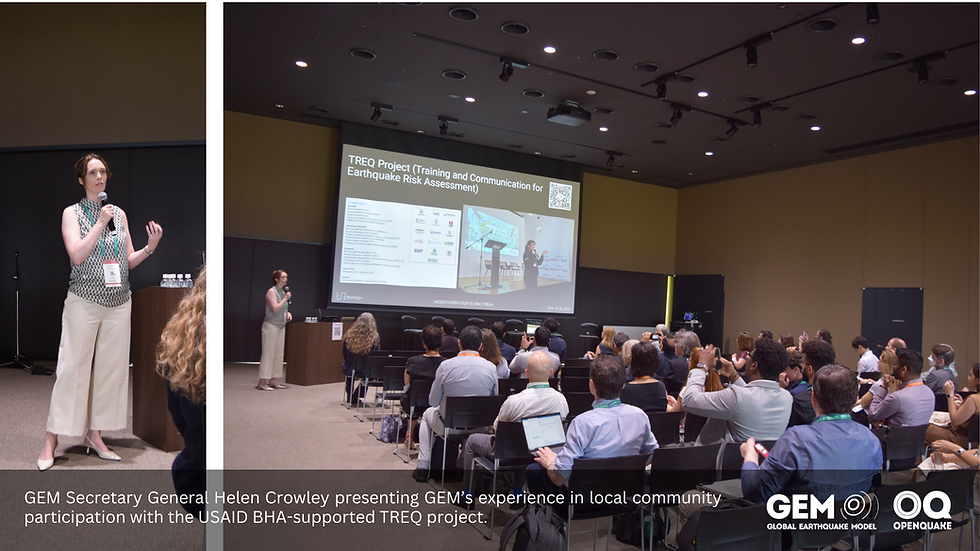
Helen Crowley | Secretary General, GEM | ||
Dominik Lang | Director, Natural Hazards Division, NGI, Norway | ||
Shinji Takarada | Chief Senior Researcher, Geological Survey of Japan | ||
Robert Emberson | Associate Program Manager, NASA Earth Applied Sciences Program | ||
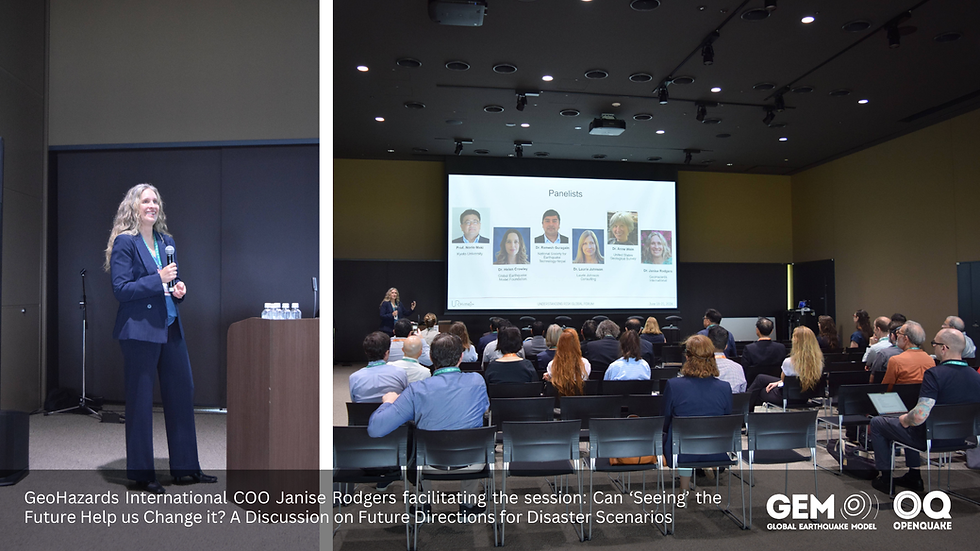
Janise Rodgers | COO, Geohazards International | ||
Ramesh Guragain | Deputy Executive Director, National Society for Earthquake Technology (NSET) Nepal | ||
Discussion: Forming a global geohazards risk assessment network (community of practice) | Malaika Ulmi and John Schneider | GSC and GEM | |
Renato Solidum, Jr. | Secretary, Department of Science & Technology-Philippines | ||
Lindsay Davis | Manager, Global Portfolio-Earthquake Hazard & Risk, USAID/USGS | ||
Christina Magill | Natural Hazard Risk Scientist, GNS Science, NZ | ||
Anselmo Pedrazzi | Executive Coordinator, Applied Geology Division, (LAMESO-SGB), Brazil | ||
Celestin Mahinda | Scientific Director, Research Center of Natural Sciences, Democratic Republic of Congo | ||
Teresito Bacolcol | Director, Phivolcs, Philippines | ||
Mabelline Cahulogan | Supervising Science Research Specialist, -Phivolcs, Philippines | ||
Asaka Iwaki | Chief Researcher, National Research Institute for Earth Science and Disaster Resilience (NIED), Japan | ||
Hendriyawan Djazilus | Head, Ocean Engineering Program, ITB-Indonesia | ||
Takeshi Sato | Senior Engineer, Earthquake and Tsunami Div, Japan Meteorological Agency | ||
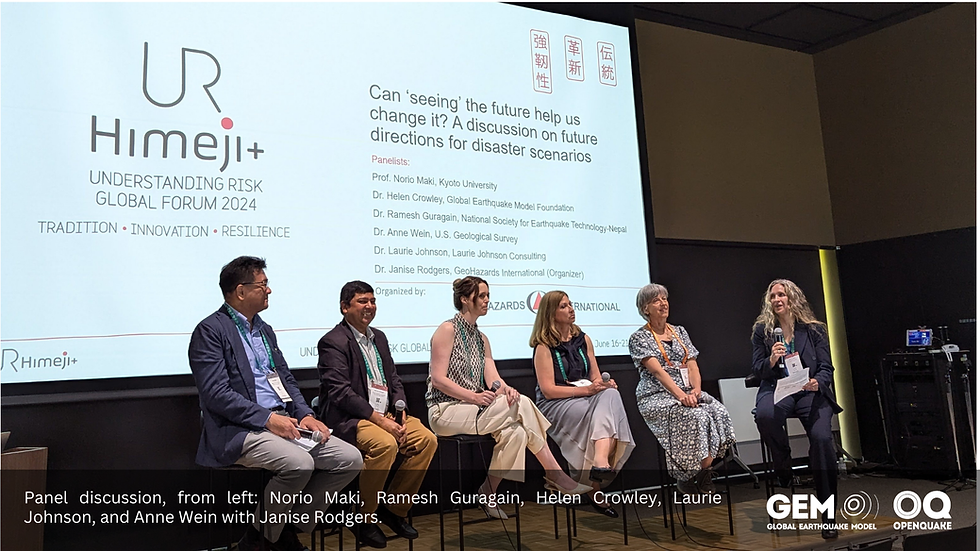
Panel 2: Existing Global Networks | John Schneider | Senior Advisor, GEM | |
Malaika Ulmi | Nat. Hazards & Climate Change Geoscience Program Manager, Geo Survey of Canada | ||
Judith Giblin | Ocean & Coastal Risk Data Analyst, South Pacific (SPC) | ||
Panel 1: Assessing National Capability | John Schneider and Malaika Ulmi | GEM and GSC | |
Gill Jolly | Chief Science Advisor, MBIE, GNS Science, NZ | ||
Malaika Ulmi | Nat. Hazards & Climate Change Geoscience Program Manager, Geo Survey of Canada | ||
Nicolas Pondard | Senior Disaster Risk Management Specialist, The World Bank | ||
Renato Solidum, Jr. | Secretary, Department of Science & Technology-Philippines | ||
Anil Pokharel | Chief Executive, National Disaster Risk Reduction & Management Authority (NSET), Nepal | ||
Shunichi Koshimura | Deputy Director, IRIDes-Tohoku University | ||
Shubharoop Ghosh | Vice President, ImageCat, Inc. | ||
Laurie Johnson | CEO, Laurie Johnson Consulting | ||
Helen Crowley | Secretary General, GEM | ||
Maksud Kamal | Vice Chancellor, Dhaka University | ||
18 June
10:30 - 12:30 (Plenary) | Plenary: Richter Resilience: Advancing Seismic Protection Worldwide | The World Bank | ----- |
Ron Eguchi | CEO, ImageCat, Inc. |
POSTERS & DEMOS
Showcasing GEM Integration, Innovative Tools, and Advanced Data for Enhanced Hazard and Risk Assessment
REGISTRATION
Stay tuned for more details!
We will provide further registration details for GEM's sessions at UR24 in the coming weeks. For inquiries, please contact info@globalquakemodel.org.
Links
EXHIBITION
Visit GEM's booth in the "Friends of NASA" area. Explore open seismic risk resources and chat with our earthquake experts!
 |  |
 |  |
LOCATION
HOTEL
TRANSPORTATION
Taxi
Taxis in Japan are quite expensive and you may prefer other public transportation services. However, in smaller cities or late evening hours, they may be the only solution to get to your destination. Taxi stands may be easily found outside airports and train stations but you also may flag down a taxi in the street. You may also use a taxi app or request the reception of your hotel to call a taxi for you.
A couple of things to know when using a taxi in Japan:
A plate on the dashboard in the lower corner of the windshield indicates whether a taxi is vacant or not, red indicates vacant, green indicates occupied, exactly the other way around you may expect.
When boarding and getting out of the taxi, DON'T touch the door, the left rear door is opened and closed automatically by the driver.
If you don't speak Japanese, the easiest thing to do is to hand over the written address of your destination to the driver - or to show it on a map, if available, as the address system in Japan can be very confusing, even for the taxi driver. Most of the taxis accept credit card payments.
If you use cash, try to avoid using large bills for small amounts as the driver may not have enough change.
Last but not least: Tipping is not expected/done in Japan.
Local buses in Himeji (Shinki Bus)
Using the local bus, Shinki Bus may be the most convenient solution to move in Himeji. You will need cash or a rechargeable IC card https://www.japan-guide.com/e/e2359_003.html before boarding the bus. You may also purchase special fare tickets in advance at the bus station ticket office.
Check the destination on the front and side of the bus. Always board the bus at the rear door and exit at the front door. When paying using cash, take a number from the small box next to the entrance and keep it with you; you will need to drop the number together with your cash in a box near the driver when getting off the bus. When paying with an IC card, hold the card to the reader near the entrance until you hear an acoustic signal. If you purchased a special fare ticket in advance, take a number as if you'd pay with cash; when getting off the bus, drop the number in the ticket box next and show the special ticket to the driver.
A good solution for foreign travelers is the Hyogo Amazing Pass, a prepaid one-day ticket that allows you to use all orange Shinki Buses for 1,000 JYN for one day. You can purchase your Hyogo Amazing Pass online here and only need to show the screenshot of your mobile ticket when getting off the bus.
RESOURCES
Available resources at the GEM Booth S7
Videos
Gallery
Brochures & Maps
Recording
Videos

Gallery


Brochures & Maps
Recording
