Thanks for submitting!
You will be contacted as soon as possible


QUICK LINKS


PROFILES
PUBLICATIONS
EXPOSURE
VULNERABILTY
SOFTWARE
EQ MODELS
Search Results
Search this site
1172 results found with an empty search
- Global Vulnerability Model | GEM Foundation
License Request Form You have chosen to get more information about: Global Vulnerability Model Vulnerability Please check the link below to see if this product already meets your your requirements before submitting your request for a license. Thank you. DOWNLOAD THE OPEN VERSION Summary of steps to obtain a license for the requested product. Fill in the application form below. Click Submit. Please check your email Inbox or Spam folder for the summary of your request. You will then be contacted by the GEM Product Manager with either a request for more information, or a request to sign the license. If you do not hear from us within 2 weeks, please send an email to product@globalquakemodel.org . REQUEST DETAILS A. Requesting party information First Name Last Name Role/Job Email Business type Business type Other business Sector Sector Other sector B. License agreement signatory information The signatory must be someone who is authorised to sign license agreements on your behalf such as your immediate supervisor, manager or legal officer. If you’re a PhD student, the signatory must be your adviser or a university officer in charge of license agreements or similar legal documents. Full Name of Signatory Position Company Email of Signatory Organisation name Complete Address C. Purpose of request GEM is able to offer products for free because of the support of our project partners, national collaborators and institutional sponsors. All of GEM’s products are freely available for public good, non-commercial use, but with different license restrictions. In most cases we release products under an open license (e.g., CC BY-SA or CC BY-NC-SA), which permits (re)distribution. In this case, we are granting access under a more restricted license that forbids distribution or disclosure and requires signing by GEM and the licensee in order to better assure accountability for the confidentiality of the information. In order for GEM to properly assess your request, please answer the following questions below. 1. Explain briefly how will the GEM product be used e.g. project, research including the expected results and the foreseen public benefit. Minimum 60 words. 2. Will you be able to share the results of your work with GEM? YES NO 3. Will you be able to provide feedback to GEM on the quality and usefulness of this product via a survey? YES NO D. Privacy Policy By submitting this form, you consent to the processing of your personal data in accordance with our Privacy Policy and the EU General Data Protection Regulation (GDPR). We are committed to safeguarding your information and ensuring it is only used for the purpose outlined in this form. You have the right to access, rectify, or delete your data at any time. For more information, please refer to our Privacy Policy. I agree Words: 0 Email us at product@globalquakemodel.org if you're experiencing problems submitting your application. Thank you. Submit Thanks for submitting! You will be contacted as soon as possible Incomplete data. Please fill in all required fields. Thank you.
- Build up on trainings - GEM Foundation
News Build up on trainings By: Jul 2, 2018 Share Facebook LinkedIn The workshop organized in Lima in collaboration with the National Center for Disaster Risk Assessment, Prevention and Reduction of Peru (CENEPRED) on May 13-15 2015 represented a great step ahead for GEM both in having our regional partners communicating the progress of their activities and in enhancing their ability to perform calculations with the OpenQuake-Engine. The new GUI (graphical user interface) of the Engine was extremely well received and participants were able to perform risk calculations in about half the usual time. Here below a collapse map for an historical event in Antioquia, the second largest region in Colombia. There are several other projects starting soon in Colombia in which GEM guidelines and tools will be used and similar results were also obtained for Chile and for a few buildings in Venezuela.GEM also implemented a training workshop for CENEPRED staff on the use and applications of the GEM-developed Inventory Data Capture Tools (IDCT), with the aim of enhancing CENEPRED ability to carry out building inventories. Besides the theoretical training, the exercise included actual inventory of building in several areas of Lima. As a result of this effort, CENEPRED is now coordinating the preparation of the exposure model for Lima, which will be utilized to estimate buildings damage and loss for the Peruvian capital. The interest of CENEPRED in establishing a long-term collaboration with GEM was demonstrated by the creation of a working group to carry out a risk assessment for the city of Lima and by their willingness to share existing disaster risk information about Peru with our scientists.It is also worth mentioning that an agreement was advanced with UNESCO-Peru to join forces and coordinate activities within the risk assessment of Lima. With UNESCO-Peru’s assistance, the risk assessment of schools and historical monuments will be incorporated in the risk assessment of Lima adding, in this way, value to the entire project. No images found. GALLERY 1/0 VIDEO RELATED CONTENTS
- Modelling the Residential Building Inventory in South America for Seismic Risk Assessment | GEM Foundation
Publications Modelling the Residential Building Inventory in South America for Seismic Risk Assessment Share Facebook LinkedIn Download 2017 | Peer-reviewed This study presents an open and transparent exposure model for the residential building stock in South America. This model captures the geographical distribution, structural characteristics (including information about construction materials, lateral load resisting system, range of number of stories), average built-up area, replacement cost, expected number of occupants, and number of dwellings and buildings. The methodology utilized to develop this model was based on national population and housing statistics and expert judgment from dozens of local researchers and practitioners. This model has been developed as part of the South America Risk Assessment (SARA) project led by the Global Earthquake Model (GEM), and it can be used to perform earthquake risk analyses. It is available at different geographical scales for seven Andean countries: Argentina, Bolivia, Chile, Colombia, Ecuador, Peru, and Venezuela.
- Event Feedback | Global Earthquake Model Foundation | Italy
Event December 2018 Feedback How the world reacted to the launch of the global maps since Dec 5 2018 Total map downloads 5,173 Total unique map page visits 14,956 Total online referrals/coverage 265 Total countries reached 156 REACTIONS FROM STAKEHOLDERS
- Get Involved | Global Earthquake Model Foundation | Italy
GEM offers flexible mechanisms to enable potential partners to contribute to its ongoing and future work programs. GET INVOLVED GEM offers flexible mechanisms to enable potential partners to contribute to its ongoing and future work programs. Partners and collaborators can enter into sponsorships, project partnerships and service agreements, and can select the level of engagement based on their needs and requirements. GEM’s sponsorship structure and fees have been designed to incentivize the participation of public and private organizations. Share Facebook LinkedIn Projects in Collaboration with Partners ... ... View Public Sponsorship Scheme Private Sponsorship Scheme Partnership Opportunity Application Anchor 2 Partner with GEM: Public Sponsorship Opportunities Collaborate with a global network dedicated to advancing seismic risk assessment and resilience. GEM’s Public Sponsorship Scheme provides public institutions with access to state-of-the-art hazard, exposure, and risk models, as well as opportunities for training, technical collaboration, and participation in strategic initiatives. In addition to leveraging GEM’s expertise and resources, public sponsors gain valuable connections with private sector leaders and academic institutions worldwide, strengthening partnerships and promoting knowledge exchange. By supporting GEM, public institutions can enhance their risk assessment capabilities, contribute to global disaster risk reduction efforts, and help build a more resilient future. Public sponsors can choose from three levels of engagement: Note: the minimum fees in the table below apply only to sponsors who sign up for three years or more. Sponsor Type Annual Minimum Contribution (k EUR) Voting Rights Attends Meetings and Events Other Benefits Governor Plus* 100k Yes Yes Option to assign up to 50% of sponsorship fees to a collaborative project (subject to GB approval) Membership to annual work-plan steering group Governor** 30k Yes Yes Governor*** ( via the Partnership Opportunity Application ) N/A Yes Yes Governor Plus* – A premier sponsorship tier offering full engagement in GEM’s governance and strategic initiatives, with the option to allocate up to 50% the sponsorship fees to a specific collaborative project, and to be a member of the annual work-plan steering group. Governor** – A standard sponsorship level that grants voting rights on the Governing Board, access to GEM’s data, tools, and meetings, and participation in decision-making processes. Governor (via the Partnership Opportunity Application)*** – A merit-based sponsorship awarded to select public institutions based on their contributions to seismic risk reduction. Instead of financial contributions, these organisations provide strategic value through expertise, data sharing, or capacity-building efforts. Application Form Partner with GEM: Private Sponsorship Opportunities Join a global network of industry leaders advancing seismic risk assessment and resilience. Sponsors can choose from different levels of engagement, including Governor, Advisor, and Small Business Advisor Sponsor, each offering unique benefits. Private sponsors can engage with leading public institutions and academic partners worldwide, exchanging knowledge and contributing to meaningful advancements in earthquake risk reduction. By supporting GEM, private companies contribute to a safer, more resilient world. Private Sponsor Types and Contributions: Note: the minimum fees in the table below apply only to sponsors who sign up for three years or more. Sponsor Type Annual Minimum Contribution (k EUR) Voting Rights Attends Meetings and Events Other Benefits Governor 100 Yes Yes Membership to annual work-plan steering group Advisor 75 No Yes Small Business Advisor Sponsor Option 1: Small Business Advisor Sponsor 35 No No Option 2: Start-up Business Advisor Sponsor 25/50/75* No No Option 3: Shared Advisor Sponsor 75 No No Option 1: Small Business Advisor Sponsor - for businesses of <50 employees and gross revenue of < 8M euro per year. The fees are 35k euro per year for a minimum of three years. If the number of employees or revenue exceed the threshold amount in a given year, the fees for subsequent years increase to the Standard Advisor level of 75K euros/year. These criteria must hold for full duration of the sponsorship. Option 2: Start-up Business Advisor Sponsor - for businesses of <50 employees and gross revenue of < 8M euro per year that anticipate growth in subsequent years. The fees are 150K for a three-year commitment, with contributions of 25K, 50K and 75K in respective years. If growth is not realized in the third year (i.e., does not exceed the employee and revenue limit), the fees for the final year revert to those for Small Business Advisor Sponsor (35,000 euro per year). Option 3: Shared Advisor Sponsor - for businesses of <50 employees and gross revenue of < 8M euro per year . The fees are 75K per year for three years pooled between up to three small business organizations. One organization is designated as the focal point for communication with GEM and participation in meetings. These criteria must hold for all partners for the full duration of the sponsorship. Opportunity Public Sector Partnership Opportunity with the GEM Foundation Important Dates Overview The Global Earthquake Model (GEM) Foundation is committed to advancing earthquake risk assessment, modeling, and mitigation efforts worldwide. As part of our mission to strengthen global collaboration, we are offering a unique opportunity for public organizations to join GEM’s Governing Board as Public Governors. While GEM’s Public Governors typically contribute annual sponsorship fees, selected public sector partners under this opportunity will instead be granted Public Governor status (for a period of 3 years) based purely on merit, strategic alignment, and contributions to seismic risk reduction. Through this partnership, Public Governors will gain access to GEM’s global network, research, and tools, contributing to and benefiting from the advancement of earthquake risk knowledge. We invite interested public organizations to submit a proposal outlining their commitment and potential contributions to GEM’s mission using the template provided below. Process Deadline Submission of Application 23:59 CEST, 24th May 2025 Scoring of applications by GEM Selection Committee 15th June 2025 Discussion of ranked applications at the GEM Governing Board Meeting 26th - 27th June 2025 Possible requests for further information Jul - Aug 2025 Selection of winning applicant(s) end of Sept 2025 Approval of winning applicant(s) at GEM Governing Board meeting 4th - 5th Dec 2025 (TBC) Opportunity ID Current and Previous Awardees Deadline Year Instructions PublicGEMOpp-2025 Applications now closed by 23:59 hrs (CEST) on 24th May 2025 2025 - 2028 Download Download the instructions from the table above and click on the row to download the application template, view the FAQs and announcements and updates. Fill in the form below to download the Application Template Applicant Information PublicGEMOpp-2025 Deadline: May 24, 2025 Application Template OK Frequently Asked Questions (FAQs) Important Updates and Announcements Last updated on: March 14, 2025 at 9:44:20 AM A webinar to present Public Partnership Opportunities with the GEM Foundation is set for Thursday April 10, 2025 at 13:00 CEST. This will also be an occasion to ask questions related to the Call for Applications. Why We Support GEM Sibylle Steimen Private Allianz Allianz is committed to apply science to understand, manage and estimate the costs of natural hazards. We see the engagement with GEM as a great opportunity to expand our network of partners with whom we want to push the boundaries of understanding natural perils worldwide Heidi Tremayne Public Earthquake Engineering Research Insitute-EERI As a non-government organization committed to increasing earthquake resilience in communities worldwide, we applaud GEM's efforts to make critical data and tools available to the scientific community and to the public at large. The new global hazard and risk models will undoubtedly help us better understand and prepare for earthquakes, and we look forward to incorporating them into our ongoing advocacy efforts. Daniela Di Bucci Public Civil Protection Department - Italy As a public sponsor of GEM, we are proud to support the development of the new global earthquake hazard and risk models, which will help us better understand and prepare for the impacts of earthquakes on our communities and economies. 1 2 3 4 5 1 ... 1 2 3 4 5 ... 5
- News Briefs: January - March 2025 - GEM Foundation
News News Briefs: January - March 2025 By: Apr 5, 2025 Mar 31, 2025 Share Facebook LinkedIn GEM’s Vitor Silva Receives Prestigious ASCE Award GEM’s Head of Risk Engineering, Vitor E. Silva, has been awarded the Walter L. Huber Civil Engineering Research Prize by the ASCE. The prize recognises his significant contributions to regional seismic risk assessment through collaborations, open data/software, and machine learning. The award ceremony will be held on October 10 at the ASCE Annual Convention in Seattle. New Part-Time Regional Coordinator Joins GEM GEM has welcomed Jamal Dabbeek, former GEM PhD student, as a new part-time collaborator. As the Arab States Regional Coordinator, Jamal will focus on seeking funding and collaboration opportunities, promoting GEM’s software and data, engaging the community in developing the North Africa seismic hazard model, and organising a GEM/OpenQuake training course in Arabic. GEM Secretary General Presents at Aon IF EMEA Team Meeting Helen Crowley, GEM’s Secretary General, delivered a presentation at the Impact Forecasting UK & EMEA Team Meeting in Prague. The session highlighted the fruitful three-year partnership between Aon IF and GEM and explored future areas of collaboration, such as exposure modelling and forecasting. The meeting provided an opportunity to strengthen ties and discuss ongoing partnership initiatives. GEM Reflects on a Milestone Year: 2024 Before moving forward into 2025, the Global Earthquake Model (GEM) Foundation looks back at 2024 - a year of significant achievements, innovations, and strategic collaborations enhancing global earthquake resilience. Discover the key moments and milestones from 2024 in GEM’s Year in Review. Read more: https://www.globalquakemodel.org/GEMNews/gem-2024-year-in-review GEM Experts Lead PSHA Training at METIS Online Course GEM’s Manuela Villani and Kirsty Bayliss led sessions on probabilistic seismic hazard analysis (PSHA) as part of the EURATOM METIS online training. The course, coordinated by SSTC NRS and RPTU Kaiserslautern-Landau, focused on advancing seismic safety assessments for nuclear reactors in Europe. Participants explored the application of OpenQuake and METIS tools in seismic hazard modelling. GEM Celebrates 16 Years of Advancing Earthquake Risk Science The Global Earthquake Model (GEM) Foundation marks 16 years of pioneering open, science-based tools and data to reduce earthquake risk worldwide. Founded on a vision of global resilience, GEM continues to shape policies and collaborations through cutting-edge seismic hazard and risk models. Explore GEM’s journey and future initiatives. Learn more: GEM’s Work – products , projects , and vision to 2030 GEM Develops Embodied Carbon Service with BED (Build Environment Data) GEM has developed a new Embodied Carbon service under the auspices of the Built Environment Data (BED) initiative. The service provides critical data on the embodied carbon linked to seismic damage repair and replacement and is supported by the EPOS-ON project . GEM aims to expand the service to global coverage in the future. Explore the European service: https://maps.eu-risk.eucentre.it/map/european-seismic-embodied-carbon-viewer/#4/52.48/7.34 GEM’s FORCE Project Concludes The FORCE (Forecasting and Communicating Earthquake Hazard and Risk) project has ended due to funding cuts and restructuring at USAID. Funded by USAID’s Bureau for Humanitarian Assistance, FORCE aimed to strengthen seismic risk assessment in El Salvador, Bhutan, Nepal, and the Southwest Pacific. GEM remains committed to advancing earthquake resilience and is actively seeking new funding opportunities. (see LinkedIn message) Learn more: https://www.globalquakemodel.org/proj/force GEM Launches PAPERS Project The Global Earthquake Model (GEM) Foundation has launched the PAPERS project (Piattaforma Analisi Pericolosità E Rischio Sismico), an initiative aimed at developing a new WebGIS platform for scenario hazard and risk assessment in Italy. The project has been funded as one of the cascade grants launched by the High-Performance Computing, Big Data e Quantum Computing Research Centre, one of the five National Centres established by the Italian National Recovery and Resilience Plan (NRRP), under Spoke 5 - Environment and Natural Disasters . The first training workshop of the project related to the use of the OpenQuake engine was successfully conducted online on April 1st, 2025, marking the first in a series of planned training events. This first workshop also served for exploring potential third-party contributions to models that could be integrated into the platform. Learn more: PAPERS webpage - https://www.globalquakemodel.org/proj/papers-gem GEM Joins RENOMIZE Project to Promote Sustainable Renovation GEM has joined the EU-funded RENOMIZE project, which aims to revolutionise renovation practices through automation and optimisation. Supported by CINEA, the project aims to reduce costs and environmental impact by streamlining the renovation process with cutting-edge technologies. GEM’s Physical Vulnerability Lead, Al Mouayed Bellah Nafeh, participated in the kickoff meeting in Klagenfurt, Austria, sharing insights on integrating risk-informed approaches into sustainable renovation. Testing will take place in five countries: Switzerland, Spain, Estonia, France, and Belgium. Learn more: RENOMIZE Project - https://www.globalquakemodel.org/proj/renomize GEM Celebrates UN Women’s Day and Women and Girls in Science In celebration of International Women’s Day and the International Day of Women and Girls in Science, GEM reaffirmed its commitment to gender equality in STEM. Guided by GEM’s Gender Equality Strategy, the foundation strives for inclusivity and equal opportunities, highlighted by a 0% gender pay gap among its scientific staff in 2024. GEM continues to promote diversity through awareness, training, and equitable career growth. Learn more: GEM’s Gender Equality Plan - https://www.globalquakemodel.org/gempublications/gem-foundation-gender-equality-plan No images found. GALLERY 1/0 VIDEO RELATED CONTENTS
- GEM Team | Global Earthquake Model Foundation | Italy
GEM is comprised of the Secretariat, a Governing Board from public, private, academic and non-government organizations worldwide, and an Advisory Board GEM TEAM GEM, comprised of the Secretariat, a diverse Governing Board, and an Advisory Board, strives collectively to enhance earthquake risk reduction globally. Operating from EUCENTRE in Pavia, Italy, our international Secretariat spearheads efforts in data development and hazard and risk assessment. Learn more about our team members below. Share Facebook LinkedIn Organigram Secretariat Management Support Hazard Team Risk Team I.T. Advisory Board Governing Board Anchor 1 Joerg Steffensen Hannover Re Chair Daniela Di Bucci Department of Civil Protection (Italy) Vice Chair Iain Stewart University of Plymouth, UK Advisory Board Vice Chair Laurie Johnson Laurie Johnson Consulting, U.S.A. Advisory Board Chair Marco Pagani Head of Seismic Hazards Helen Crowley Secretary General Vitor Silva Head of Risk Engineering Paul Henshaw Director of Tech. & Devt. Antonio Ettorre Systems Administrator Italy Armando Scarpati Frontend Developer Italy Matteo Nastasi Senior Software Developer Italy Michele Simionato Senior Software Developer Italy Paolo Tormene Senior Software Developer Italy Helen Crowley Secretary General United Kingdom Marco Pagani Head of Seismic Hazards Italy Vitor Silva Head of Risk Engineering Portugal Paul Henshaw Director of Tech. & Devt. United Kingdom Chiara Pigoli Accounting & Administrative Officer Italy Jephraim Oro Communications Coordinator Philippines Jessica Campo Administrative & Social Media Asst. Italy Pratim Parash Kalita Product Manager India Beatrice Giorgi Human Resources Italy Ettore Festa Health and Safety Manager Italy Giuseppe Lombardi Human Resources Italy Jamal Dabbeek Arab States Regional Coordinator Palestine Simone Aliprandi Contracts and Licensing Advisor Italy Amir Taherian University of Aveiro Iran Daniel Gomez University of Aveiro Colombia Fatemeh Alishahiha IUSS Pavia Iran Furkan Narlitepe IUSS Pavia Turkey Julian Montejo University of Chieti-Pescara Colombia Niloofar Kazemiasl IUSS Pavia Iran Salvador Ramos University of Aveiro Mexico Zarin Karim Zadeh University of Aveiro Iran Astha Poudel University of Lisbon Greece Mara Mita University of Porto Portugal Al Mouayed Bellah Nafeh Physical Vulnerability Lead Lebanon Alejandro Calderon Exposure Research Lead Costa Rica Anirudh Rao Seismic Risk Modelling Lead India Catalina Yepes Exposure Development Lead Colombia Catarina Costa Infrastructure Risk Lead Portugal Daniela González González Exposure Analyst Colombia Karim Aljawhari Physical Vulnerability Modeller Palestine Marco Baiguera Exposure Analyst Italy Martina Caruso Seismic Risk Modeller Italy Daniela Charris Exposure Analyst Colombia Jovana Borozan Seismic Risk Modeller Serbia Christopher Brooks Seismic Hazard Scientist United Kingdom Francesco Serafini Seismic Hazard Scientist Italy Kendra Johnson Senior Seismic Hazard Scientist United States Kirsty Bayliss Seismic Hazard Scientist United Kingdom Manuela Villani Senior Seismic Hazard Scientist Italy Richard Styron Senior Active Faults Specialist United States Fahrettin Kuran IUSS Pavia Türkiye Jarod Domenge University of Milano Bicocca France Zainab Asaad IUSS Pavia Lebanon Francesco Serafini Seismic Hazard Scientist Italy Jean-Christophe Garaix Advisor United States Daniela Charris Exposure Analyst Colombia Finn Løvholt Advisory Board Member Norway Flavia G. Bwire Member Taiwan Jovana Borozan Seismic Risk Modeller Serbia Iain Stewart Advisory Board Vice Chair United Kingdom Josip Atalić Member Croatia Niloofar Kazemiasl PhD Student Iran Renato Solidum, Jr. Advisory Board Member Philippines Abderrahim Oulidi Governor Morocco Load more Public Governors Croatian Centre of Earthquake Engineering (UNIZG FCE and IS) Member Public Governor Sponsor. Voting Member Fonds de Solidarité contre les Événements Catastrophiques - FSEC (Morocco) Member Public Governor Sponsor. Voting Member National Research Institute for Earth Science and Disaster Resilience (Japan) Member Public Governor Sponsor. Voting Member State Secretariat for Education, Research and Innovation (Switzerland) Member Public Governor Sponsor. Voting Member Department of Civil Protection (Italy) Member Public Governor Sponsor. Voting Member and Vice-chair GeoScience Australia Member Public Governor Sponsor. Voting Member Natural Environment Research Council (UK) Member Public Governor Sponsor. Voting Member Taiwan Earthquake Model-TEM Member Public Governor Sponsor. Voting Member Earth Sciences New Zealand Member Public Governor Sponsor. Voting Member National Building Review Board (NBRB) of Uganda Member Public Governor Sponsor. Voting Member Natural Resources Canada Member Public Governor Sponsor. Voting Member Private Partners Governors Allianz Sponsor Private Governor Sponsor. Voting Member EUCENTRE Sponsor Private Governor Sponsor. Voting Member Marsh McLennan/Guy Carpenter Sponsor Private Governor Sponsor. Voting Member PartnerRe Sponsor Private Governor Sponsor. Voting Member Verisk Sponsor Private Governor Sponsor. Voting Member Aon Sponsor Private Governor Sponsor. Voting Member Factory Mutual Insurance - FM Sponsor Private Governor Sponsor. Voting Member Moody's RMS Sponsor Private Governor Sponsor. Voting Member Renaissance Re Sponsor Private Governor Sponsor. Voting Member Willis Towers Watson Sponsor Private Governor Sponsor. Voting Member Atlantic Re Sponsor Private Governor Sponsor. Voting Member Hannover Re Sponsor Private Governor Sponsor. Voting Member and Chair Munich Re Sponsor Private Governor Sponsor. Voting Member Swiss Re Sponsor Private Governor Sponsor. Voting Member Zurich Insurance Group Sponsor Private Governor Sponsor. Voting Member Advisors AXA Sponsor Advisor Sponsor. Non-Voting Member Gallagher Re Sponsor Advisor Sponsor. Non-Voting Member CelsiusPro Sponsor Advisor Sponsor. Non-Voting Member Liberty Mutual Reinsurance Sponsor Advisor Sponsor. Non-Voting Member Descartes Underwriting Sponsor Advisor Sponsor. Non-Voting Member Safehub Sponsor Advisor Sponsor. Non-Voting Member Associate Partners APDIM Member Associate. Non-Voting Member IASPEI Member Associate. Non-Voting Member UNESCO Member Associate. Non-Voting Member EERI Member Associate. Non-Voting Member IRDR Member Associate. Non-Voting Member United States Geological Survey (USGS) Member Associate. Non-Voting Member IAEE Member Associate. Non-Voting Member UNDRR Member Associate. Non-Voting Member Load more Francesco Serafini Seismic Hazard Scientist Italy Jean-Christophe Garaix Advisor United States Daniela Charris Exposure Analyst Colombia Finn Løvholt Advisory Board Member Norway Flavia G. Bwire Member Taiwan Jovana Borozan Seismic Risk Modeller Serbia Iain Stewart Advisory Board Vice Chair United Kingdom Josip Atalić Member Croatia Niloofar Kazemiasl PhD Student Iran Renato Solidum, Jr. Advisory Board Member Philippines Abderrahim Oulidi Governor Morocco Load more
- Evaluation of Seismic Risk on UNESCO Cultural Heritage sites in Europe | GEM Foundation
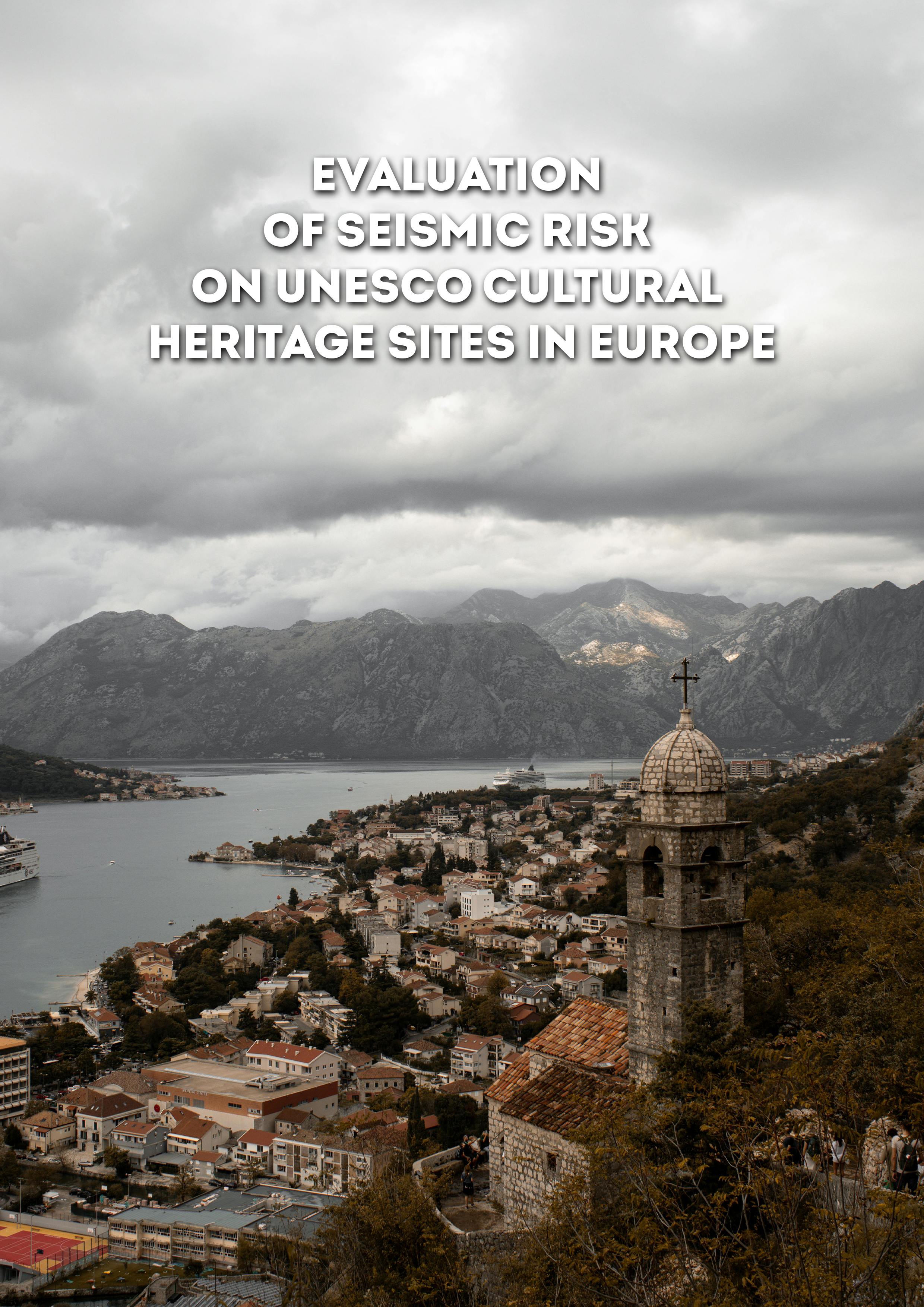
Publications Evaluation of Seismic Risk on UNESCO Cultural Heritage sites in Europe Share Facebook LinkedIn Download 2018 | Peer-reviewed Earthquakes have been responsible for the destruction of hundreds of monuments throughout human history. Due to their size, conservation state, and lack of seismic provisions, monuments are particularly vulnerable to the effects of geological hazards. The first step toward the mitigation of the earthquake threat consists of understanding the existing seismic risk and evaluating possible strategies to reduce it. This study presents a simplified assessment to evaluate the probability of damage due to ground shaking on UNESCO World Heritage cultural sites throughout Europe. The seismic hazard model (SHARE) has been employed to derive hazard curves, which were combined with a fragility model to calculate the annual probability of damage or collapse. These calculations were performed assuming different soil conditions, and the resulting risk metrics can be used for risk awareness, to inform the prioritization of the sites in need of structural interventions, and to support additional risk analysis.
- Arabia Hazard | Global EarthQuake Model Foundation
OpenQuake engine input model to perform hazard calculations for the Arabian Peninsula Products Arabia Hazard OpenQuake engine input model to perform hazard calculations for the Arabian Peninsula Share Facebook LinkedIn Description The 2018.0.0 seismic hazard model was developed by the Saudi Geological Survey (SGS) (Sokolov et al, 2017). The model covers Saudi Arabia, Yemen, Oman, and Qatar. Since the original version, three updates were made to the model by the GEM hazard team, leading to the latest release (v2018.3.0) which includes sources from the latest Middle East v2026.0.0 model. How to cite this work V. Sokolov et al., “Probabilistic seismic hazard assessment for Saudi Arabia using spatially smoothed seismicity and analysis of hazard uncertainty,” Bull Earthquake Eng, vol. 15, no. 7, pp. 2695–2735, Jul. 2017. H. M. Zahran et al., “Preliminary probabilistic seismic hazard assessment for the Kingdom of Saudi Arabia based on combined areal source model: Monte Carlo approach and sensitivity analyses,” Soil Dynamics and Earthquake Engineering, vol. 77, pp. 453–468, Oct. 2015. H. M. Zahran et al., “On the development of a seismic source zonation model for seismic hazard assessment in western Saudi Arabia,” J Seismol, vol. 20, no. 3, pp. 747–769, Jul. 2016. Available Versions The latest version (v2018.3.0) is available for direct download under a CC BY-NC-SA 4.0 license. Users interested in this version can click the "Open Version Download" button in the right panel to access the information. If your use case does not comply with the license terms, a license can be requested by clicking on the "License Request", where a specific agreement will be provided, depending on the use case License information The open version is available under a Creative Commons CC BY-NC-SA 4.0 license, which requires: Attribution (you must give appropriate credit, provide a link to the license, and indicate if changes were made) Non-commercial (you may not use the material for commercial purposes) ShareAlike (derivatives created must be made available under the same license as the original) Any deviation from these terms incur in license infringement. For commercial use of the model, a specific license agreement must be made tailored to your use case, in such instance please click on "License Request". Facebook LinkedIn Share Latest Version v2018.3.0 License CC BY-NC-SA 4.0 Available resources Open Version Download Documentation License Request text Map View Search Popup title Close Country/Region Available Resources Afghanistan Exposure Africa Exposure Alaska Exposure Country/Region Available Resources Afghanistan Vulnerability Africa Vulnerability Alaska Vulnerability Country/Region Resource Url Afghanistan Risk Profile Africa Risk Profile Alaska Risk Profile Search Found Country/Region Resource Url Afghanistan Exposure Africa Exposure Alaska Exposure Preview Preview is not available. Search Found Country/Region Resource Url Afghanistan Vulnerability Africa Vulnerability Alaska Vulnerability Preview Preview is not available. Search Found Country/Region Resource Url Afghanistan Risk Profile Africa Risk Profile Alaska Risk Profile Preview Preview is not available. Related products Global Liquefaction Hazard Global Exposure Model Global Vulnerability Model Global Seismic Embodied Carbon Risk Global Seismic Risk Map Country-Territory Seismic Risk Profiles Model Builder's Toolkit (oq-mbtk) Global Seismic Hazard Map Related publications For downloading or accessing detailed product information like PNG/PDF maps, datasets, license request, shapefiles and more, please switch to a desktop or laptop computer. Thank you for your understanding.
- Calibrating collapse and fatality rates for the assessment of fatalities due to earthquakes | GEM Foundation
Publications Calibrating collapse and fatality rates for the assessment of fatalities due to earthquakes Share Facebook LinkedIn Download 2025 | Peer-reviewed In recent decades, hundreds of studies have covered seismic vulnerability assessment and the derivation of fragility models. However, these studies primarily focus on structural damage and the associated repair costs. Assessing fatalities requires an evaluation of the proportion of damaged buildings that suffer partial or total collapse, as well as the expected fatality rates for occupants inside those collapsed buildings. To support these modeling needs, we reviewed past studies on casualties, existing proposals for collapse and fatality rates, and detailed damage databases that characterize different collapse mechanisms. Based on this review, collapse and fatality rates are proposed relative to a baseline building class. These rates are further calibrated considering reported fatalities since 1950 and the average annual fatalities estimated by the Global Seismic Risk Model of the Global Earthquake Model (GEM) Foundation. Results show that the probability of collapse tends to decrease with the number of stories, while fatality rates have the opposite trend. Furthermore, an open-access database of calibrated collapse and fatality rates is provided and can be used to assess fatalities due to earthquake scenarios or in probabilistic seismic risk analysis.