Thanks for submitting!
You will be contacted as soon as possible


QUICK LINKS


PROFILES
PUBLICATIONS
EXPOSURE
VULNERABILTY
SOFTWARE
EQ MODELS
Search Results
Search this site
1172 results found with an empty search
- GFDRR-DFID Challenge Funds Expert Workshop - GEM Foundation
News GFDRR-DFID Challenge Funds Expert Workshop By: Jul 2, 2018 Share Facebook LinkedIn The Global Facility for Disaster Reduction and Recovery (GFDRR) in collaboration with the Department for International Development of the United Kingdom is supporting the development of an open data schema for hazard, exposure and vulnerability data. This initiative is part of the Challenge Fund program to further the understanding of disaster risk in developing countries through access to risk data. The second round of the Challenge Fund focuses on three pilot projects that address the recommendations made in the recent GFDRR report Solving the Puzzle: Innovating to Reduce Risk - namely, to expand the effort to decrease disaster risk management costs and increase resilience by developing a framework that facilitates a multi-hazard view of risk. This effort is currently underway to develop the first set of open and internally consistent data on multiple hazards, exposure, and vulnerability. This work began last April with a project inception workshop at GEM Headquarters in Pavia. The University College London (UCL) EPICentre and CatLin XL hosted the second workshop held on July 27 in London to collect feedback from a number of partners across the disaster risk reduction (DRR), insurance, academia and CAT modelling communities on the following: the prototype data schemas; approaches to rating different indicators and data sources; and best ways on how to communicate risk information to different stakeholders. The GEM team, which leads Challenge Fund 2 on the development of a global exposure data framework, co-facilitated the physical vulnerability characteristics and exposure taxonomy roundtable discussion, which focused on identifying the most important vulnerability characteristics; ways to account for uncertainties in exposure and vulnerability models; type of assets that should be supported by the vulnerability and exposure database; and the most common and useful intensity measure types. Initial feedbackParticipants generally agreed that the vulnerability characteristics used to classify the building stock are well established, and that the GEM building taxonomy is a good starting point. For the most common or useful intensity measures to define the vulnerability functions for earthquakes, participants suggested ground shaking, landslides, liquefaction, ground failure and fire following. Other workshop sessions covered multihazard characteristics, social vulnerability, vulnerability scoring system and data schema uses and challenges in scaling globally. The expert workshop report is currently being prepared and will be shared with the public soon. GFDRR/DFID Challenge Fund 2The Global Earthquake Model Foundation (GEM) leads the GFDRR/DFID Challenge Fund 2 which to develop a global open exposure data repository framework. GEM is joined in the consortium by ImageCat Inc. and the Humanitarian OpenStreetMap Team to develop an open exposure database for multihazard risk assessment. No images found. GALLERY 1/0 VIDEO RELATED CONTENTS
- OQ Engine certified user Houda Delleci | GEM Foundation
OpenQuake Engine certified user page This is to certify that Houda Delleci has successfully completed the requirements to become a Certified OpenQuake Engine User for Scenario Assessment demonstrating the required knowledge and skills as assessed by the Global Earthquake Model (GEM) Foundation. GEM Foundation Secretary General Helen Crowley (signed) Date of Completion: Valid until: September 12, 2025 September 11, 2028
- Developing indicators for urban resilience - GEM Foundation
News Developing indicators for urban resilience By: Jul 2, 2018 Share Facebook LinkedIn GEM’s Social Vulnerability and Integrated Risk (SVIR) Coordinator, Christopher G. Burton, was called on to assist in the formulation of indicators for the UNISDR Ten Essentials for Making Cities Resilient initiative, to support the implementation of the Sendai Framework for Disaster Risk Reduction (SFDRR) 2015-2030.While UNISDR’s Ten Essentials have been used in disaster preparedness and response activities since 2010, the Sendai conference places greater emphasis on building resilience at local and municipal levels, hence defining ways to measure improvements in resilience has become a pressing priority. Chris Burton’s contributions were drawn from his field work and tools which GEM has already successfully applied in Nepal and Ecuador, with support from our local partners, the National Society for Earthquake Technology (NSET) in Kathmandu and the Secretariat for Security and Governance within the Office of the Municipality of the Metropolitan Area of Quito. These included:- The Resilience Performance Scorecard (RPS) methodology as a way to strengthen institutional capacity and adopt resilience measures from the bottom-up;- The verification of existing hazard and risk assessments at a city level, to inform risk scenarios and develop long-term DRR plans; and- The integration of social vulnerability strategies in mitigation, recovery, and reconstruction plans. The indicators developed are currently being piloted in several cities around the world and we look forward to further collaboration with UNISDR. No images found. GALLERY 1/0 VIDEO RELATED CONTENTS
- A township-level exposure model of residential buildings for mainland China | GEM Foundation
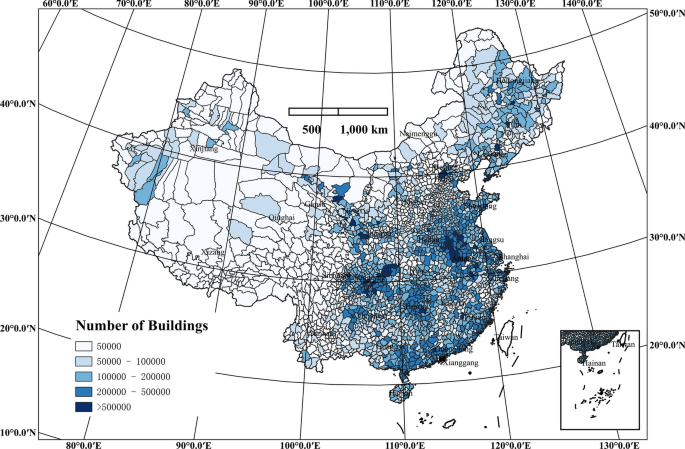
Publications A township-level exposure model of residential buildings for mainland China Share Facebook LinkedIn Download 2021 | Peer-reviewed The exposure model is a key component of a seismic risk model, which captures the spatial distribution of population and built assets along with their structural characteristics and valuation that are required for seismic risk assessment. Current and available exposure models for China have various limitations that make them less suitable for use in risk assessment, including low spatial resolution of building inventory and the limited identification of key structural characteristics. This study describes the development of a residential buildings’ township-level exposure model for mainland China, containing information about the geographical distribution, structural characteristics, age, ductility, number of stories, number of dwellings, average built-up area, and replacement cost at the township level. This exposure model is intended to be used for risk assessment and to support emergency planning, risk management, and decisions. The geographical distribution’s detailed analysis of the building typologies, heights, and construction vintage at the national, regional, and provincial levels is provided to better aid in understanding country exposure. The results indicate that based on the method, flow, and data from the 6th National Population Census of the People's Republic of China, we can generate key information used for seismic risk analysis, representing a significant step toward a better understanding of risk due to seismic hazards in mainland China.
- Zurich Insurance Group Joins GEM Foundation as Private Governor Sponsor - GEM Foundation
News Zurich Insurance Group Joins GEM Foundation as Private Governor Sponsor By: Dec 14, 2023 Dec 19, 2023 Share Facebook LinkedIn December 19, 2023. Pavia, Italy. Zurich Insurance Group has instated its affiliation with the Global Earthquake Model (GEM) Foundation, assuming its role as a private Governor sponsor. Zurich was one of the founding members of GEM at its inception in 2009 and served as a private Governor sponsor until the end of 2018. Following a formal approval during GEM's Governing Board meeting held from November 30th to December 1st, 2023, Iwan Stalder, Head of Accumulation Management, Group Risk Management at Zurich, will be representing the company in this partnership. The core objective of this alliance emphasises a commitment to improving global modelling and understanding of seismic hazard and risk, enhancing risk awareness, and fortifying communities against the repercussions of seismic activities. Zurich's decision to join GEM underscores a shared dedication to global disaster risk resilience. Iwan Stalder, commenting on Zurich's entry, stated, "We are excited to work with GEM, aligning our commitment to global resilience and the pursuit of risk mitigation strategies." Welcoming Zurich to the GEM family, Helen Crowley, GEM Secretary General, expressed, "We extend a warm welcome to Zurich Insurance Group. We look forward to their continued contributions that reinforce an improved understanding of global seismic risk, and that strengthen our shared goal of creating a more resilient world." Zurich's support as a private Governor sponsor signifies an essential step towards reinforcing international efforts in mitigating seismic risks and reducing the protection gap. Furthermore, this partnership highlights the potential impact of Zurich's return in promoting innovative insurance solutions, and strengthening risk assessment methods within the collaborative efforts facilitated by GEM. The GEM Foundation and Zurich Insurance Group remain dedicated to advancing earthquake resilience, fostering innovation, and promoting sustainable solutions worldwide. About Zurich Insurance Group Zurich Insurance Group (Zurich) is a leading multi-line insurer serving people and businesses in more than 200 countries and territories. Founded 150 years ago, Zurich is transforming insurance. In addition to providing insurance protection, Zurich is increasingly offering prevention services such as those that promote wellbeing and enhance climate resilience. Reflecting its purpose to ‘create a brighter future together,’ Zurich aspires to be one of the most responsible and impactful businesses in the world. It is targeting net-zero emissions by 2050 and has the highest-possible ESG rating from MSCI. In 2020, Zurich launched the Zurich Forest project to support reforestation and biodiversity restoration in Brazil. The Group has about 60,000 employees and is headquartered in Zurich, Switzerland. Zurich Insurance Group Ltd (ZURN), is listed on the SIX Swiss Exchange. Further information is available at www.zurich.com . Global Earthquake Model (GEM) Foundation GEM was formed in 2009 as a non-profit foundation in Pavia, Italy, and is funded through a public-private sponsorship with the vision to create a world that is resilient to earthquakes and other natural hazards. GEM is funded by public and private institutions globally, and is advised by many international organisations ( https://www.globalquakemodel.org/partners ). GEM is also recognized by the UN as an NGO, operating under UN guidelines for a humanitarian organisation. Through global partnerships, GEM’s mission is to continue to be the world’s official, most complete source of earthquake risk resources and a globally accepted standard for risk assessment. Further, GEM aims to ensure that its products are applied broadly in disaster risk management/reduction and its services are available and accessible to public, private and academic institutions worldwide. Helen Crowley and Iwan Stalder No images found. GALLERY 1/0 VIDEO RELATED CONTENTS
- Understanding seismic risk in Santiago de Cali (Colombia) for its application in risk management | GEM Foundation
Publications Understanding seismic risk in Santiago de Cali (Colombia) for its application in risk management Share Facebook LinkedIn Download 2025 | Peer-reviewed This study presents the results of the seismic risk assessment for the city of Santiago de Cali (Colombia), a collaborative effort between the Mayor's Office of Santiago de Cali (including the Municipal Planning Office and the Disaster Risk Management Secretariat), the Colombian Geological Survey (SGC), the United States Geological Survey (USGS), EAFIT University and the GEM Foundation. The primary objective was to provide actionable insights for Disaster Risk Management (DRM) across its stages: awareness, risk reduction, and disaster response, and to enable the creation of a risk assessment specifically tailored to the city's needs, ensuring that its results can be effectively integrated into local risk management processes. Early engagement with stakeholders ensured that the models aligned with local needs, facilitating their integration into DRM policies. The seismic risk analysis utilizes the latest hazard model developed for Colombia, advanced non-linear site effects characterization, and a detailed building inventory with local expertise. For the first time, data-driven deterministic and probabilistic seismic risk estimates are presented for the city. The results indicate that destructive events could heavily impact the city, particularly events coming from the Dagua-Calima Fault or Nazca Plate subduction zone. Moreover, probabilistic outcomes show that human casualties and building damage disproportionally affect low-income areas, while almost 50 % of economic losses occur to middle-to high-income areas due to higher asset values. These findings highlight the importance of risk reduction strategies that address simultaneously the physical vulnerability and socio-economic disparities.
- Science for Social Change: A Q&A with Prof. Ana Beatriz Acevedo of EAFIT University, Medellin, Colombia - GEM Foundation
News Science for Social Change: A Q&A with Prof. Ana Beatriz Acevedo of EAFIT University, Medellin, Colombia By: Mar 17, 2020 Share Facebook LinkedIn Prof. Ana Beatriz, second from left, at the OpenQuake workshop in Medellin, 2017. In this pilot story, GEM interviewed Prof. Ana Beatriz Acevedo of Universidad EAFIT to get to know her insights, perspectives and her work in Colombia around earthquake risk awareness, understanding and resilience. The interview focused on how she got involved with GEM, and what inspired her to join the SARA project. Watch an excerpt from her interview entitled: Change can start with one’s self . The full story is available at . If you're a GEM partner and have a story to share that leverages GEM products and expert advice; or concretely showcases GEM impact or use of GEM products in your organization, email us at . We would love to feature your success stories! No images found. GALLERY 1/0 VIDEO RELATED CONTENTS
- Atlas: Seismic Hazard Curves | GEM Foundation
ATLAS 2.0 is GEM’s new hazard data service that allows users to access and interact with the outputs from the GEM Global Mosaic, used to generate the Global Seismic Hazard Maps. Available for public-good and commercial applications, users can now access full sets of hazard curves that describe the intensity of ground-shaking for different soil conditions, at multiple return periods, all over the world. ATLAS 2.0 Ground-shaking intensities at multiple return periods all over the world Watch demo Public Good request ATLAS Map portal Subscribe ATLAS 2.0 is GEM’s new hazard data service that allows users to access and interact with the outputs from the GEM Global Mosaic , used to generate the Global Seismic Hazard Maps. Users can now access full sets of hazard curves that describe the intensity of ground-shaking for different soil conditions, at multiple return periods, all over the world. The platform supports both public-good and commercial applications. While access for public-good use remains available upon request, a new online subscription system enables streamlined access for commercial users. WATCH ATLAS IN ACTION KEY FEATURES Global Coverage Homogeneous coverage of the world with 3.6M sites on a hexagonal grid spaced every ~6.5 km, using Uber’s H3 geospatial indexing system . Multiple Metrics Ground-shaking intensity is available for peak ground acceleration (PGA) and spectral acceleration at periods of 0.2, 0.3, 0.6 and 1.0 seconds. Soil Conditions For each site, two sets of seismic hazard curves are available: for reference rock conditions and for site-specific conditions based on the USGS Global Vs30 Mosaic . Access Available through an interactive web platform allowing users to access the data graphically, or through an API for internal framework integration. READY TO FIT YOUR NEEDS ATLAS 2.0 simplifies the use of GEM Hazard Data for various applications. Whether you are looking for data to support your research, evaluate global portfolios of assets, complement structural design demands or provide your corporate clients with innovative insights; ATLAS is ready to fit your use case. Public good Research Disaster Agencies Humanitarian Commercial Insurance Engineering Corporate ATLAS 2.0 results are calculated using GEM’s state-of-the-art, open-source software the OpenQuake Engine , collating results from regional models based on the best science available for each area. BUILT WITH THE LATEST SCIENCE Check out our comprehensive model documentation FROM LOCAL TO GLOBAL Embracing Collaboration and Credibility as core values, the models that make up the GEM Global Mosaic have been created either in close collaboration with regional experts, contributed by national authorities or implemented by GEM scientists. The outputs are computed consistently for all sites and then assembled at the global scale. See our contributors for each model WHAT'S NEW? ATLAS 1.0 Created with data from the global model released in 2019 Ad-hoc spatial grid with 9-12 km spacing Access through web platform only Three intensity measures (PGA, and spectral accelerations at periods of 0.2 and 1.0 seconds) ATLAS 2.0 Created with data from the global model released in 2023 Uses H3 Geospatial grid with more stable ~6.5 km spacing (2.5X higher resolution) Access through web and API Five intensity measures (PGA, and spectral acceleration at periods of 0.2, 0.3, 0.6 and 1.0 seconds) WANT TO LEARN MORE? Contact us to learn more about ATLAS 2.0 and how it can fit your use case. Document Request for a customised plan Document Request for API access More Products
- OQ Engine certified user S Vishal Gupta | GEM Foundation
OpenQuake Engine certified user page This is to certify that S Vishal Gupta has successfully completed the requirements to become a Certified OpenQuake Engine User for Scenario Assessment demonstrating the required knowledge and skills as assessed by the Global Earthquake Model (GEM) Foundation. GEM Foundation Secretary General Helen Crowley (signed) Date of Completion: Valid until: September 12, 2025 September 11, 2028
- Central Asia Hazard | Global EarthQuake Model Foundation
OpenQuake engine input model to perform hazard calculations for Central Asia Products Central Asia Hazard OpenQuake engine input model to perform hazard calculations for Central Asia Share Facebook LinkedIn Description In 2025, through a collaboration with the Centre for the Observation and Modelling of Earthquakes, Volcanoes and Tectonics (COMET) team in the UK, the GEM hazard team has developed a new v2025.0.0 model. The GEM hazard team is currently developing v2025.1.0 which will soon be available for open release. The previous v2018.1.0 Central Asia (Kazakhstan, Kyrgyzstan, Tajikistan, Uzbekistan, and Turkmenistan) model comes from the Earthquake Model Central Asia (EMCA; Ullah et al., 2013 and www.emca-gem.org), a Global Earthquake Model regional program coordinated by the German Research Centre for Geosciences (GFZ), and was subsequently modified by the GEM hazard team. How to cite this work R. Styron, C. Brooks, M. Villani (2026). PSHA input model documentation for Central Asia (CEA-2025.0.0). GEM Foundation. Available Versions The v2025.1.0 model will be openly released with a CC BY-NC-SA 4.0 license at the end of 2026. In the meantime you can contact us for access to the model by clicking on the "License Request", where a specific agreement will be provided, depending on the use case. Previous versions of this model are listed in the table at the bottom of this page. License information Currently, the model is only available under a restricted license that has to be tailored for each specific use case. Please click on "License Request". Facebook LinkedIn Share Latest Version v2025.1.0 License Custom license Available resources License Request Documentation License Request text Map View Search Popup title Close Country/Region Available Resources Afghanistan Exposure Africa Exposure Alaska Exposure Country/Region Available Resources Afghanistan Vulnerability Africa Vulnerability Alaska Vulnerability Country/Region Resource Url Afghanistan Risk Profile Africa Risk Profile Alaska Risk Profile Search Found Country/Region Resource Url Afghanistan Exposure Africa Exposure Alaska Exposure Preview Preview is not available. Search Found Country/Region Resource Url Afghanistan Vulnerability Africa Vulnerability Alaska Vulnerability Preview Preview is not available. Search Found Country/Region Resource Url Afghanistan Risk Profile Africa Risk Profile Alaska Risk Profile Preview Preview is not available. Previous Product Versions Product Version License Documentation Access Request / Open Repository v2018.1.0 CC BY-SA 4.0 Read https://cloud.openquake.org/s/f75HR79ag2mnpcy Related products Global Liquefaction Hazard Global Exposure Model Global Vulnerability Model Global Seismic Embodied Carbon Risk Global Seismic Risk Map Country-Territory Seismic Risk Profiles Model Builder's Toolkit (oq-mbtk) Global Seismic Hazard Map Related publications For downloading or accessing detailed product information like PNG/PDF maps, datasets, license request, shapefiles and more, please switch to a desktop or laptop computer. Thank you for your understanding.