Thanks for submitting!
You will be contacted as soon as possible


QUICK LINKS


PROFILES
PUBLICATIONS
EXPOSURE
VULNERABILTY
SOFTWARE
EQ MODELS
Search Results
Search this site
1170 results found with an empty search
- Global Recovery Map
Global Earthquake Maps Global Recovery Map VIEWER PDF PNG CONTRIBUTORS DOCUMENTATION References Burton C.G. (2015). A Validation of Metrics for Community Resilience to Natural Hazards and Disasters using the Recovery from Hurricane Katrina as a Case Study. 150(1):67–86. Cutter, S.L., Burton, C.G. and Emrich, C. (2010). Disaster Resilience Indicators for Benchmarking Baseline Conditions. , 7(1): 1-22. Cutter, S.L., Barnes, L., Berry, M., Burton, C.G., Evans, E., Tate, E.C. and Webb, J. (2008). A Place-based Model for Understanding Community Resilience to Natural Disasters. 18: 598-606. Despotaki*, V., Sousa, L., and Burton, C.G., (2018). Using Socio-economic Indicators for Earthquake Recovery Prediction. Earthquake Spectra, 34: 265-282. TECHNICAL DESCRIPTION The Recovery/Reconstruction Potential Map is closely aligned with the concept of disaster resilience. Enhancing a country’s resilience to earthquakes is to improve its capacity to anticipate threats, to reduce its overall vulnerability, and to allow its communities to recover from adverse impacts from earthquakes when they occur. The measurement of recovery and reconstruction potential includes capturing inherent conditions that allow communities within a country to absorb impacts and cope with a damaging earthquake event, such as the density of the built environment, education levels, and political participation. It also encompasses post event processes that facilitate a population’s ability to reorganize, change, and learn in response to a damaging earthquake. Criteria for indicator selection To choose indicators contextually exclusive for use in each map, the starting point was an exhaustive review of the literature on earthquake social vulnerability and resilience. For a variable to be considered appropriate and selected, three equally important criteria were met: - variables were justified based on the literature regarding its relevance to one or more of the indices. - variables needed to be of consistent quality and freely available from sources such as the United Nations and the World Bank; and - variables must be scalable or available at various levels of geography to promote sub-country level analyses. This procedure resulted in a ‘wish list’ of approximately 300 variables of which 78 were available and fit for use based on the three criteria. Process for indicator selection For variables to be allocated to an index, a two-tiered validation procedure was utilized. For the first tier, variables were assigned to each of the respective indices based on how each variable was cited within the literature, i.e., as being part of an index of social vulnerability, economic vulnerability, or recovery/resilience. For the second tier, machine learning and a multivariate ordinal logistic regression modelling procedure was used for external validation. Here, focus was placed on the statistical association between the socio-economic vulnerability indicators and the adverse impacts from historical earthquakes on a country-by country-basis. The Global Significant Earthquake Database provided the external validation metrics that were used as dependent variables in the statistical analysis. To include both severe and moderate earthquakes within the dependent variables, adverse impact data was collected from damaging earthquake events that conformed to at least one of five criteria: 1) caused deaths, 2) caused moderate damage (approximately $1 million USD or more), 3) had a magnitude 7.5 or greater 4) had a Modified Mercalli Intensity (MMI) X or greater, or 5) generated a tsunami. This database was chosen because it considers low magnitude earthquakes that were damaging (e.g., MW >=2.5 & MW<=5.5) and contains socio-economic data such as the total number of fatalities, injuries, houses damaged or destroyed, and dollar loss estimates in $USD. Countries not demonstrating at least a minimal earthquake risk, i.e., seismicity <0.05 PGA (Pagani et al. 2018) and <$10,000 USD in predicted average annual losses (Silva et al. 2018) were eliminated from the analyses so as not to include countries with minimal to no earthquake risk. A total study area consists of 136 countries. The Global Earthquake Model (GEM) Foundation The Global Socio-Economic Vulnerability Maps 2020 is a product of the GEM Foundation’s collaborative work with the Department of Geography at the University of Connecticut, USA. GEM is a non-profit foundation in Pavia, Italy funded through a public-private partnership with a vision to create a world that is resilient to earthquakes. Formed in 2009 through the initiative of the Organization for Economic Co-operation and Development (OECD) Global Science Forum in 2006, GEM participants represent national research and disaster management institutions; private sector companies mainly in insurance, risk financing and engineering; and academic and international organizations. GEM’s OpenQuake Platform website (platform.openquake.org) provides access to all of the data, models, tools and software behind the maps. GEM’s open-source OpenQuake engine enables probabilistic hazard and risk calculations worldwide and at all scales, from global down to regional, national, local, and site-specific applications in a single software package. GEM supports the Sendai Framework for Disaster Risk Reduction (SFDRR) goals by contributing openly accessible products for hazard and risk assessment and capacity development through risk reduction projects. GEM also serves as a baseline or exemplar for the development of a broader multi-hazard framework for risk assessment in support of a holistic and comprehensive approach to disaster risk reduction. Technical details on the development and compilation of the socio-economic vulnerability maps, underlying models and the list of contributors can be found at: https://www.globalquakemodel.org/svrmaps/Reconstruction-and-Recovery-Index-Technical-Description. How to use and cite this work Please cite this work as: C Burton, M. Toquica (September 2020). Global Earthquake Model (GEM) Social Vulnerability Map (version 2020.1) DOI: 10.13117/GEM-RECONSTRUCTION-RECOVERY-MAP. This work is licensed under the terms of the Creative Commons Attribution - Non Commercial-Share Alike 4.0 International License (CC BY-NC-SA). Acknowledgements This map is the result of a collaborative effort and extensively relies on the enthusiasm and commitment of various organisations to openly share and collaborate. The creation of this map would not have been possible without the support provided by several public and private organisations during GEM’s second and third working programmes, 2014-2018 and 2019-2021 respectively. None of this would have been possible without the extensive support of all GEM Secretariat staff. These key contributions are profoundly acknowledged. A complete list of the contributors can be found at: www. globalquakemodel.org/global-social-vulnerability. Legal statements This map is an informational product created by the GEM Foundation for public dissemination purposes. The information included in this map must not be used for the design of seismic socio-economic policies or to support any important decisions involving human life, capital and movable and immovable properties. The values of social vulnerability and risk values used in this map do not constitute an alternative nor do they replace any national government policy or actions defined in national codes or earthquake risk estimates derived nationally. Readers seeking this information should contact the national authorities tasked with socio economic and risk assessment. The socio-economic vulnerability maps are based on the results of an integration process that is solely the responsibility of the GEM Foundation. Contact GEM (Global Earthquake Model) Foundation Via Ferrata, 1 - 27100, Pavia, Italy info@globalquakemodel.org . More information available at: www. globalquakemodel.org/global-social-vulnerability MAJOR SPONSORS Verisk ARUP GEOSCIENCE AUSTRALIA CSSC NRCan EAFIT ETH ZURICH EUCENTRE FM GLOBAL GFZ GIROJ GNS SCIENCE HANNOVER RE MUNICH RE NTU ICRM NEPHILA NERC NIED NSET OYO PARTNER RE DPC SGC SWISS SER SWISS RE FOUNDATION SURAMERICANA TEM RCN USGS USAID WTW ZURICH INSURANCE
- OpenQuake Ground Motion Toolkit - UserGuide | GEM Foundation
Publications OpenQuake Ground Motion Toolkit - UserGuide Share Facebook LinkedIn Download 2014 | User manual This is the web repository of the GMPE Strong Motion Modeller's Toolkit (gmpe-smtk). The gmpe-smtk is a suite of tools developed by Scientists working at the GEM (i.e. Global Earthquake Model) Model Facility. The GMPE Strong Motion Modeller's Toolkit is free software: you can redistribute it and/or modify it under the terms of the GNU Affero General Public License as published by the Free Software Foundation, either version 3 of the License, or (at your option) any later version.
- Enhancing Disaster Resilience: GEM's Role in Malawi's Multi-Hazard Risk Project - GEM Foundation
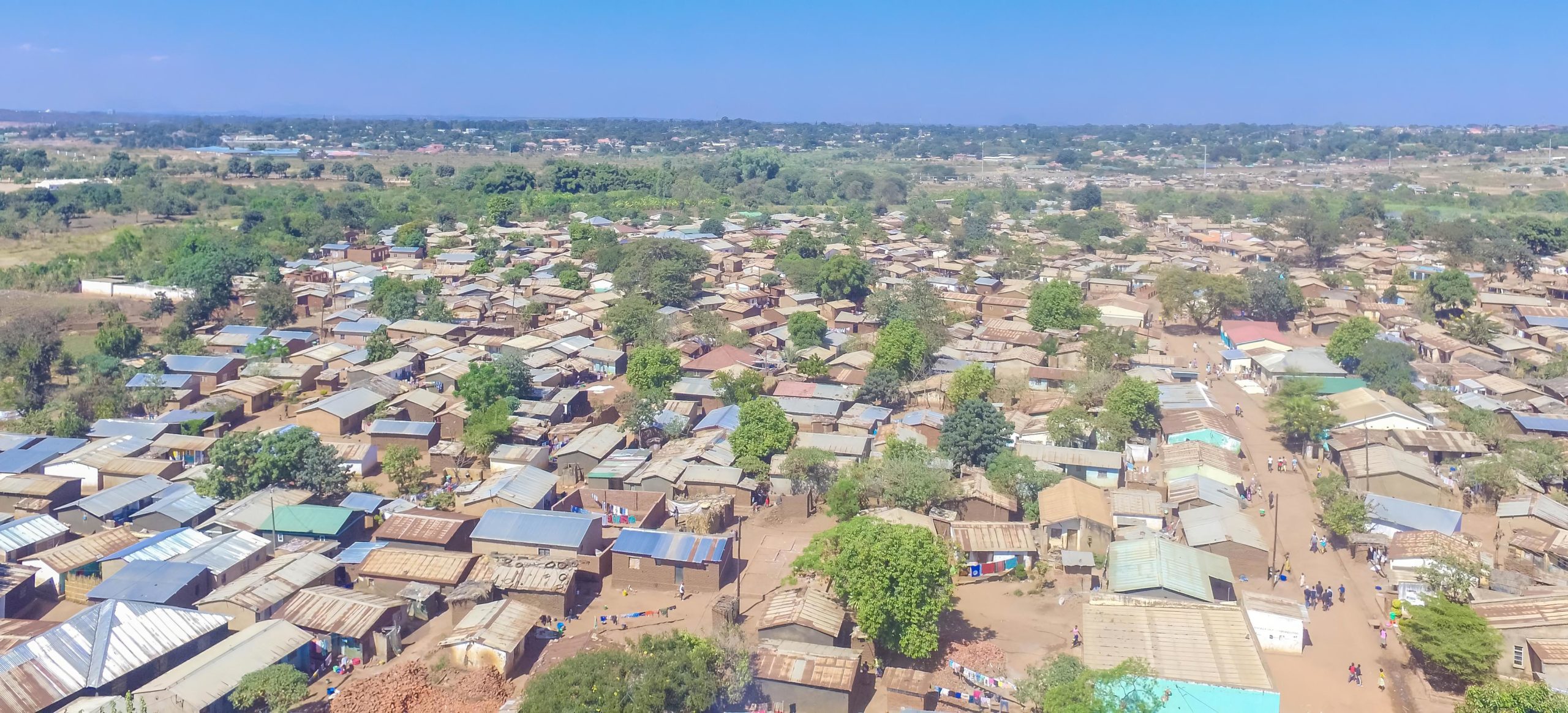
News Enhancing Disaster Resilience: GEM's Role in Malawi's Multi-Hazard Risk Project By: Sep 29, 2023 Share Facebook LinkedIn Malawi has embarked on a critical multi-hazard risk assessment project supported by the World Bank. This initiative seeks to strengthen the nation's disaster resilience by assessing the potential impact of various hazards comprehensively. The project, executed by a consortium of partners, is geared towards enhancing disaster risk management (DRM) in Malawi. The primary objective is clear: to empower Malawi with tools and knowledge to mitigate the diverse risks it faces. To achieve this, the consortium, comprised of GEM, CIMA, BGS and Malawi University of Business and Applied Sciences (MUBAS) emphasizes collaboration and stakeholder engagement. Identifying and integrating stakeholder needs and priorities is central to the project's approach. The challenges are substantial. Malawi's limited hazard and risk assessment capacity can pose significant hurdles. These challenges require concerted efforts to improve risk science and develop the country's capacity in these areas. The project's multi-hazard focus aligns with the Malawi Growth and Development Strategy (MGDS III), aimed at strengthening population resilience and reducing vulnerability. Capacity development plays a pivotal role. The project leverages local institutions and academia to enhance capabilities in the next 2 years. Additionally, it recognizes the link between humanitarian needs and the risk-development nexus. Ensuring youth and gender balance is a priority, promoting their meaningful engagement in DRM efforts. GEM, in close collaboration with Malawian experts, assumes a crucial role in this endeavour. GEM's responsibilities encompass seismic hazard and risk assessment, exposure development, physical vulnerability analysis, and social vulnerability assessment as well as database design and metadata interoperability standards. GEM’s work involves looking into local construction practices and understanding the intricate factors contributing to social vulnerability. Together with local experts, they aim to build a comprehensive risk assessment framework that reinforces Malawi's resilience in the face of a range of hazards. This project signifies Malawi's commitment to proactive disaster risk management, harnessing the consortium’s expertise to fortify the nation's ability to withstand and respond to diverse risks effectively. No images found. GALLERY 1/0 VIDEO RELATED CONTENTS
- Updates from the FORCE Project: Strengthening Resilience in the Southwest Pacific - GEM Foundation
News Updates from the FORCE Project: Strengthening Resilience in the Southwest Pacific By: Dec 18, 2024 Oct 23, 2024 Share Facebook LinkedIn The Global Earthquake Model (GEM) Foundation recently conducted capacity-building activities under the USAID-supported Forecasting and Communicating Earthquake Hazard and Risk (FORCE) Project, aimed at enhancing earthquake preparedness and resilience in the Southwest Pacific. Suva Workshop: Building Capacity for Earthquake Risk Assessment On 18–19 November 2024, GEM conducted a two-day training workshop in Suva, Fiji, bringing together local stakeholders and experts to address the region’s unique seismic challenges. The event, held alongside the STAR Conference, focused on earthquake hazard and risk assessment for one of the regions with the largest seismicity in the world - the Southwest Pacific Islands. Facilitated by GEM’s Catalina Yepes Estrada and Kendra Johnson, the workshop featured interactive sessions on probabilistic seismic hazard and risk analysis using GEM’s OpenQuake Engine. Participants gained hands-on experience with tools and methods to tailor risk models to local needs. Discussions addressed data and resource challenges, emphasising the importance of using advanced models in disaster risk reduction. In addition, participants delivered presentations on earthquake-related activities in their respective countries, providing valuable context and showcasing the need for locally adapted risk reduction strategies. "The workshop’s interactive sessions with the OpenQuake engine and QGIS were invaluable. The hands-on experience allowed me to visualize data, run scenarios, and connect theoretical knowledge with real-world applications. It greatly enhanced my understanding of seismic hazard and risk analysis, showcasing how these tools can be applied to improve disaster preparedness and risk mitigation," said a workshop participant from the Vanuatu Meteorological and Geohazards Department. Local collaboration played a crucial role in the workshop’s success, with contributions from the Mineral Resources Department (MRD) in Fiji, the Pacific Community-SPC, UNESCO IOC, and USAID-Bureau for Humanitarian Assistance. Special thanks to the participating organisations: Fiji - Mineral Resources Department (MRD) and the National Disaster Management Office (NDMO) Solomon Islands - Geology and Survey Division, Ministry of Mines Tonga - Natural Resources Division, Ministry of Lands and Natural Resources (MLNR) Papua New Guinea - Department of Mineral Policy and Geohazards Management Vanuatu - Vanuatu Meteorological and Geohazards Department (VMGD) Samoa - Ministry of Natural Resources and Environment (MNRE) Australia - Geoscience Australia (GA) Expanding Hazard Models to Support Remote Communities As part of the FORCE Project, GEM has extended its Global Seismic Hazard Mosaic to include ocean-based models, covering remote communities in the Pacific. This initiative fills critical gaps in the seismic hazard assessment for small island nations such as Palau, Kiribati, and the Cook Islands. A webinar that Kendra Johnson and Kirsty Bayliss facilitated on 23 October 2024 highlighted these advancements, presenting GEM’s methodologies for developing models in data-scarce regions. Participants explored seismic hazard trends and the practical applications of probabilistic seismic hazard analysis (PSHA) in the Pacific. The webinar recording and slides are available on GEM’s website and YouTube channel for those who missed the session. https://www.youtube.com/watch?v=A2ggb1fg62Q Building on Progress The FORCE Project continues to advance regional resilience through targeted workshops, improved seismic models, and strengthened partnerships. By equipping communities and decision-makers with robust tools and models, GEM aims to support enhanced earthquake risk management and sustainable development across the Pacific. For more information on the FORCE Project and its initiatives, visit the project website: https://www.globalquakemodel.org/proj/force No images found. GALLERY 1/12 VIDEO RELATED CONTENTS
- 11th National Conference on Earthquake Engineering - GEM Foundation
News 11th National Conference on Earthquake Engineering By: Jul 12, 2018 Share Facebook LinkedIn From June 25 to 29, the 11th National Conference on Earthquake Engineering took place in Los Angeles, California. The theme of this year’s conference was integrating science, engineering, & policy. “11NCEE is the U.S. National Conference on Earthquake Engineering. It is hosted by the Earthquake Engineering Research Institute (EERI) every 4 years in conjunction with federal and local partners. This milestone conference brings together professionals from a broad range of disciplines: architecture, civil and structural engineering, seismology, geology, geophysics, geotechnical engineering, business, public policy, the social sciences, regional planning, emergency response, and regulation.” On June 28, GEM’s Vitor Silva, Seismic Risk Coordinator, was awarded the 2017 Shah Family Innovation Prize by EERI, which “rewards younger professionals and academics for creativity, innovation and entrepreneurial spirit in the field of earthquake risk mitigation and management.” No images found. GALLERY 1/0 VIDEO RELATED CONTENTS
- Canada Hazard | GEM Foundation
License Request Form You have chosen to get more information about: Canada Hazard Hazard Please check the link below to see if this product already meets your your requirements before submitting your request for a license. Thank you. DOWNLOAD THE OPEN VERSION Summary of steps to obtain a license for the requested product. Fill in the application form below. Click Submit. Please check your email Inbox or Spam folder for the summary of your request. You will then be contacted by the GEM Product Manager with either a request for more information, or a request to sign the license. If you do not hear from us within 2 weeks, please send an email to product@globalquakemodel.org . REQUEST DETAILS A. Requesting party information First Name Last Name Role/Job Email Business type Business type Other business Sector Sector Other sector B. License agreement signatory information The signatory must be someone who is authorised to sign license agreements on your behalf such as your immediate supervisor, manager or legal officer. If you’re a PhD student, the signatory must be your adviser or a university officer in charge of license agreements or similar legal documents. Full Name of Signatory Position Company Email of Signatory Organisation name Complete Address C. Purpose of request GEM is able to offer products for free because of the support of our project partners, national collaborators and institutional sponsors. All of GEM’s products are freely available for public good, non-commercial use, but with different license restrictions. In most cases we release products under an open license (e.g., CC BY-SA or CC BY-NC-SA), which permits (re)distribution. In this case, we are granting access under a more restricted license that forbids distribution or disclosure and requires signing by GEM and the licensee in order to better assure accountability for the confidentiality of the information. In order for GEM to properly assess your request, please answer the following questions below. 1. Explain briefly how will the GEM product be used e.g. project, research including the expected results and the foreseen public benefit. Minimum 60 words. 2. Will you be able to share the results of your work with GEM? YES NO 3. Will you be able to provide feedback to GEM on the quality and usefulness of this product via a survey? YES NO D. Privacy Policy By submitting this form, you consent to the processing of your personal data in accordance with our Privacy Policy and the EU General Data Protection Regulation (GDPR). We are committed to safeguarding your information and ensuring it is only used for the purpose outlined in this form. You have the right to access, rectify, or delete your data at any time. For more information, please refer to our Privacy Policy. I agree Words: 0 Email us at product@globalquakemodel.org if you're experiencing problems submitting your application. Thank you. Submit Thanks for submitting! You will be contacted as soon as possible Incomplete data. Please fill in all required fields. Thank you.
- Mexico Hazard | Global EarthQuake Model Foundation
OpenQuake engine input model to perform hazard calculations for Mexico Products Mexico Hazard OpenQuake engine input model to perform hazard calculations for Mexico Share Facebook LinkedIn Description The original Mexico seismic hazard model (v2018.1.0) was developed by the GEM hazard team through an initial project funded by Suramericana (Sura), and the v2025.0.0 model includes updates to sources and ground motion models following the develpment of the new model in Central America and the Caribbean (as part of the USAID funded FORCE project). How to cite this work K. Johnson, R. Styron, C. Brooks, M. Villani, J. Garcia-Pelaez, R. Gee (2026). PSHA input model documentation for Mexico (MEX-2025.0.0). GEM Foundation. Available Versions The open version (v2025.0.0) is available for direct download under a CC BY-NC-SA 4.0 license. Users interested in this version can click the "Open Version Download" button in the right panel to access the information. If your use case does not comply with the license terms, a license can be requested by clicking on the "License Request", where a specific agreement will be provided, depending on the use case. Previous versions of this model are listed in the table at the bottom of this page. License information The open version is available under a Creative Commons CC BY-NC-SA 4.0 license, which requires: Attribution (you must give appropriate credit, provide a link to the license, and indicate if changes were made) Non-commercial (you may not use the material for commercial purposes) ShareAlike (derivatives created must be made available under the same license as the original) Any deviation from these terms incur in license infringement. For commercial use of the model, a specific license agreement must be made tailored to your use case, in such instance please click on "License Request". Facebook LinkedIn Share Latest Version v2025.0.0 License CC BY-NC-SA 4.0 Available resources Open Version Download Documentation License Request text Map View Search Popup title Close Country/Region Available Resources Afghanistan Exposure Africa Exposure Alaska Exposure Country/Region Available Resources Afghanistan Vulnerability Africa Vulnerability Alaska Vulnerability Country/Region Resource Url Afghanistan Risk Profile Africa Risk Profile Alaska Risk Profile Search Found Country/Region Resource Url Afghanistan Exposure Africa Exposure Alaska Exposure Preview Preview is not available. Search Found Country/Region Resource Url Afghanistan Vulnerability Africa Vulnerability Alaska Vulnerability Preview Preview is not available. Search Found Country/Region Resource Url Afghanistan Risk Profile Africa Risk Profile Alaska Risk Profile Preview Preview is not available. Previous Product Versions Product Version License Documentation Access Request / Open Repository v2018.1.0 CC BY-NC-SA 4.0 Read https://cloud.openquake.org/s/2FwypC5ntxGAYii Related products Global Liquefaction Hazard Global Exposure Model Global Vulnerability Model Global Seismic Embodied Carbon Risk Global Seismic Risk Map Country-Territory Seismic Risk Profiles Model Builder's Toolkit (oq-mbtk) Global Seismic Hazard Map Related publications For downloading or accessing detailed product information like PNG/PDF maps, datasets, license request, shapefiles and more, please switch to a desktop or laptop computer. Thank you for your understanding.
- Indian Ocean Hazard | GEM Foundation
License Request Form You have chosen to get more information about: Indian Ocean Hazard Hazard Please check the link below to see if this product already meets your your requirements before submitting your request for a license. Thank you. DOWNLOAD THE OPEN VERSION Summary of steps to obtain a license for the requested product. Fill in the application form below. Click Submit. Please check your email Inbox or Spam folder for the summary of your request. You will then be contacted by the GEM Product Manager with either a request for more information, or a request to sign the license. If you do not hear from us within 2 weeks, please send an email to product@globalquakemodel.org . REQUEST DETAILS A. Requesting party information First Name Last Name Role/Job Email Business type Business type Other business Sector Sector Other sector B. License agreement signatory information The signatory must be someone who is authorised to sign license agreements on your behalf such as your immediate supervisor, manager or legal officer. If you’re a PhD student, the signatory must be your adviser or a university officer in charge of license agreements or similar legal documents. Full Name of Signatory Position Company Email of Signatory Organisation name Complete Address C. Purpose of request GEM is able to offer products for free because of the support of our project partners, national collaborators and institutional sponsors. All of GEM’s products are freely available for public good, non-commercial use, but with different license restrictions. In most cases we release products under an open license (e.g., CC BY-SA or CC BY-NC-SA), which permits (re)distribution. In this case, we are granting access under a more restricted license that forbids distribution or disclosure and requires signing by GEM and the licensee in order to better assure accountability for the confidentiality of the information. In order for GEM to properly assess your request, please answer the following questions below. 1. Explain briefly how will the GEM product be used e.g. project, research including the expected results and the foreseen public benefit. Minimum 60 words. 2. Will you be able to share the results of your work with GEM? YES NO 3. Will you be able to provide feedback to GEM on the quality and usefulness of this product via a survey? YES NO D. Privacy Policy By submitting this form, you consent to the processing of your personal data in accordance with our Privacy Policy and the EU General Data Protection Regulation (GDPR). We are committed to safeguarding your information and ensuring it is only used for the purpose outlined in this form. You have the right to access, rectify, or delete your data at any time. For more information, please refer to our Privacy Policy. I agree Words: 0 Email us at product@globalquakemodel.org if you're experiencing problems submitting your application. Thank you. Submit Thanks for submitting! You will be contacted as soon as possible Incomplete data. Please fill in all required fields. Thank you.
- Calculation of National Seismic Hazard Models with Large Logic Trees: Application to the NZ NSHM 2022 | GEM Foundation
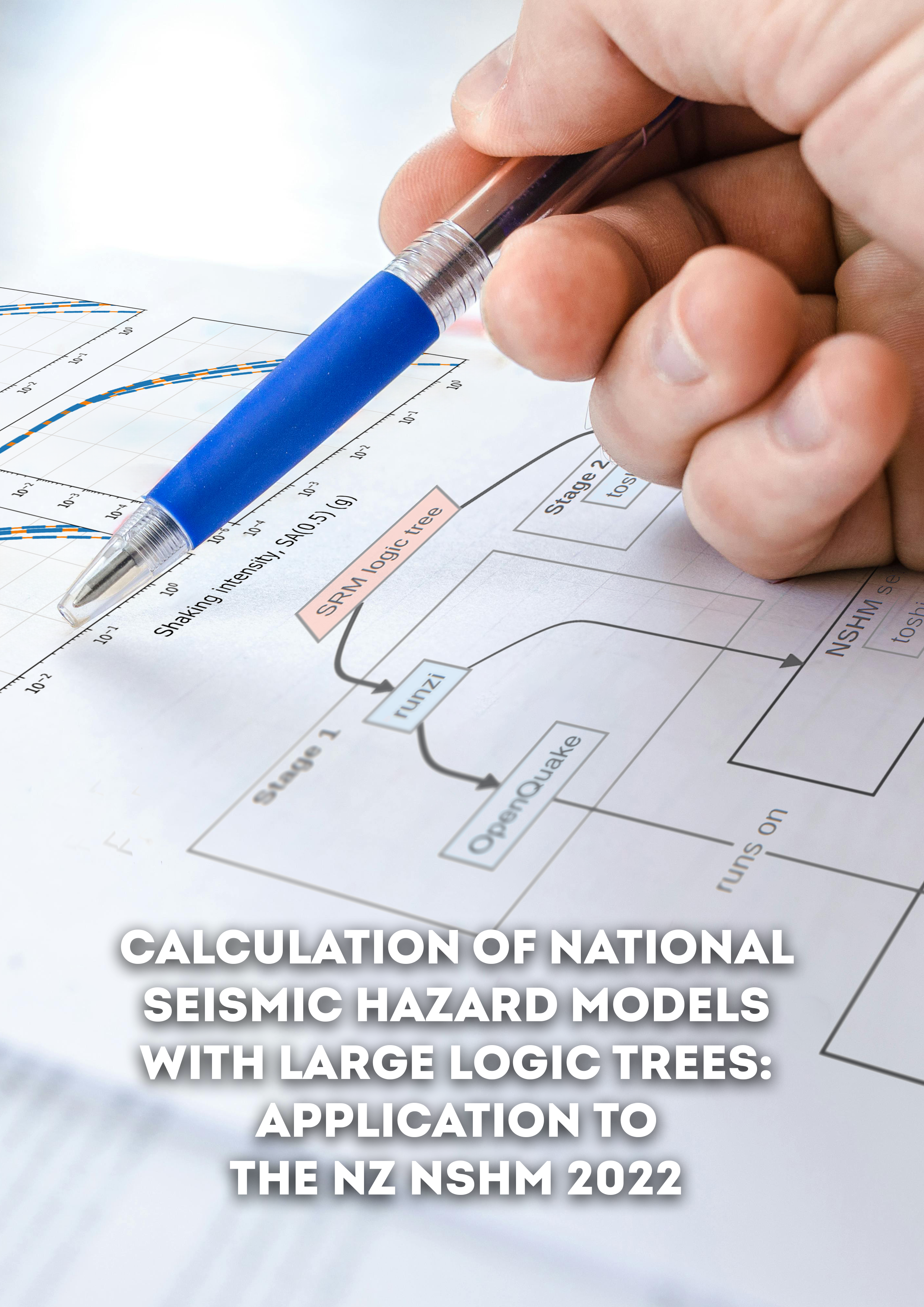
Publications Calculation of National Seismic Hazard Models with Large Logic Trees: Application to the NZ NSHM 2022 Share Facebook LinkedIn Download 2023 | Peer-reviewed National‐scale seismic hazard models with large logic trees can be difficult to calculate using traditional seismic hazard software. To calculate the complete 2022 revision of the New Zealand National Seismic Hazard Model—Te Tauira Matapae Pūmate Rū i Aotearoa, including epistemic uncertainty, we have developed a method in which the calculation is broken into two separate stages. This method takes advantage of logic tree structures that comprise multiple, independent logic trees from which complete realizations are formed by combination. In the first stage, we precalculate the independent realizations of the logic trees. In the second stage, we assemble the full ensemble of logic tree realizations by combining components from the first stage. Once all realizations of the full logic tree have been calculated, we can compute aggregate statistics for the model. This method benefits both from the reduction in the amount of computation necessary and its parallelism. In addition to facilitating the computation of a large seismic hazard model, the method described can also be used for sensitivity testing of model components and to speed up experimentation with logic tree structure and weights.
- OQ Engine certified user Jarod Domenge | GEM Foundation
OpenQuake Engine certified user page This is to certify that Jarod Domenge has successfully completed the requirements to become a Certified OpenQuake Engine User for Scenario Assessment demonstrating the required knowledge and skills as assessed by the Global Earthquake Model (GEM) Foundation. GEM Foundation Secretary General Helen Crowley (signed) Date of Completion: Valid until: September 12, 2025 September 11, 2028