Thanks for submitting!
You will be contacted as soon as possible


QUICK LINKS


PROFILES
PUBLICATIONS
EXPOSURE
VULNERABILTY
SOFTWARE
EQ MODELS
Search Results
Search this site
1170 results found with an empty search
- GEM1 Seismic Risk Report | GEM Foundation
Publications GEM1 Seismic Risk Report Share Facebook LinkedIn Download 2010 | Report This report provides a summary of the GEM1 Risk activities; it is divided into two parts, the first relating to a study of existing seismic risk software and previous global risk initiatives, and the second concentrating on the development of a computational engine for global risk assessment, based on those lessons learned.
- OQ Engine certified user Onur Ulku | GEM Foundation
OpenQuake Engine certified user page This is to certify that Onur Ulku has successfully completed the requirements to become a Certified OpenQuake Engine User for Scenario Assessment demonstrating the required knowledge and skills as assessed by the Global Earthquake Model (GEM) Foundation. GEM Foundation Secretary General Helen Crowley (signed) Date of Completion: Valid until: September 11, 2026 September 11, 2029
- Canada Hazard | GEM Foundation
License Request Form You have chosen to get more information about: Canada Hazard Hazard Please check the link below to see if this product already meets your your requirements before submitting your request for a license. Thank you. DOWNLOAD THE OPEN VERSION Summary of steps to obtain a license for the requested product. Fill in the application form below. Click Submit. Please check your email Inbox or Spam folder for the summary of your request. You will then be contacted by the GEM Product Manager with either a request for more information, or a request to sign the license. If you do not hear from us within 2 weeks, please send an email to product@globalquakemodel.org . REQUEST DETAILS A. Requesting party information First Name Last Name Role/Job Email Business type Business type Other business Sector Sector Other sector B. License agreement signatory information The signatory must be someone who is authorised to sign license agreements on your behalf such as your immediate supervisor, manager or legal officer. If you’re a PhD student, the signatory must be your adviser or a university officer in charge of license agreements or similar legal documents. Full Name of Signatory Position Company Email of Signatory Organisation name Complete Address C. Purpose of request GEM is able to offer products for free because of the support of our project partners, national collaborators and institutional sponsors. All of GEM’s products are freely available for public good, non-commercial use, but with different license restrictions. In most cases we release products under an open license (e.g., CC BY-SA or CC BY-NC-SA), which permits (re)distribution. In this case, we are granting access under a more restricted license that forbids distribution or disclosure and requires signing by GEM and the licensee in order to better assure accountability for the confidentiality of the information. In order for GEM to properly assess your request, please answer the following questions below. 1. Explain briefly how will the GEM product be used e.g. project, research including the expected results and the foreseen public benefit. Minimum 60 words. 2. Will you be able to share the results of your work with GEM? YES NO 3. Will you be able to provide feedback to GEM on the quality and usefulness of this product via a survey? YES NO D. Privacy Policy By submitting this form, you consent to the processing of your personal data in accordance with our Privacy Policy and the EU General Data Protection Regulation (GDPR). We are committed to safeguarding your information and ensuring it is only used for the purpose outlined in this form. You have the right to access, rectify, or delete your data at any time. For more information, please refer to our Privacy Policy. I agree Words: 0 Email us at product@globalquakemodel.org if you're experiencing problems submitting your application. Thank you. Submit Thanks for submitting! You will be contacted as soon as possible Incomplete data. Please fill in all required fields. Thank you.
- Mexico Hazard | Global EarthQuake Model Foundation
OpenQuake engine input model to perform hazard calculations for Mexico Products Mexico Hazard OpenQuake engine input model to perform hazard calculations for Mexico Share Facebook LinkedIn Description The original Mexico seismic hazard model (v2018.1.0) was developed by the GEM hazard team through an initial project funded by Suramericana (Sura), and the v2025.0.0 model includes updates to sources and ground motion models following the develpment of the new model in Central America and the Caribbean (as part of the USAID funded FORCE project). How to cite this work K. Johnson, R. Styron, C. Brooks, M. Villani, J. Garcia-Pelaez, R. Gee (2026). PSHA input model documentation for Mexico (MEX-2025.0.0). GEM Foundation. Available Versions The open version (v2025.0.0) is available for direct download under a CC BY-NC-SA 4.0 license. Users interested in this version can click the "Open Version Download" button in the right panel to access the information. If your use case does not comply with the license terms, a license can be requested by clicking on the "License Request", where a specific agreement will be provided, depending on the use case. Previous versions of this model are listed in the table at the bottom of this page. License information The open version is available under a Creative Commons CC BY-NC-SA 4.0 license, which requires: Attribution (you must give appropriate credit, provide a link to the license, and indicate if changes were made) Non-commercial (you may not use the material for commercial purposes) ShareAlike (derivatives created must be made available under the same license as the original) Any deviation from these terms incur in license infringement. For commercial use of the model, a specific license agreement must be made tailored to your use case, in such instance please click on "License Request". Facebook LinkedIn Share Latest Version v2025.0.0 License CC BY-NC-SA 4.0 Available resources Open Version Download Documentation License Request text Map View Search Popup title Close Country/Region Available Resources Afghanistan Exposure Africa Exposure Alaska Exposure Country/Region Available Resources Afghanistan Vulnerability Africa Vulnerability Alaska Vulnerability Country/Region Resource Url Afghanistan Risk Profile Africa Risk Profile Alaska Risk Profile Search Found Country/Region Resource Url Afghanistan Exposure Africa Exposure Alaska Exposure Preview Preview is not available. Search Found Country/Region Resource Url Afghanistan Vulnerability Africa Vulnerability Alaska Vulnerability Preview Preview is not available. Search Found Country/Region Resource Url Afghanistan Risk Profile Africa Risk Profile Alaska Risk Profile Preview Preview is not available. Previous Product Versions Product Version License Documentation Access Request / Open Repository v2018.1.0 CC BY-NC-SA 4.0 Read https://cloud.openquake.org/s/2FwypC5ntxGAYii Related products Global Liquefaction Hazard Global Exposure Model Global Vulnerability Model Global Seismic Embodied Carbon Risk Global Seismic Risk Map Country-Territory Seismic Risk Profiles Model Builder's Toolkit (oq-mbtk) Global Seismic Hazard Map Related publications For downloading or accessing detailed product information like PNG/PDF maps, datasets, license request, shapefiles and more, please switch to a desktop or laptop computer. Thank you for your understanding.
- Indian Ocean Hazard | GEM Foundation
License Request Form You have chosen to get more information about: Indian Ocean Hazard Hazard Please check the link below to see if this product already meets your your requirements before submitting your request for a license. Thank you. DOWNLOAD THE OPEN VERSION Summary of steps to obtain a license for the requested product. Fill in the application form below. Click Submit. Please check your email Inbox or Spam folder for the summary of your request. You will then be contacted by the GEM Product Manager with either a request for more information, or a request to sign the license. If you do not hear from us within 2 weeks, please send an email to product@globalquakemodel.org . REQUEST DETAILS A. Requesting party information First Name Last Name Role/Job Email Business type Business type Other business Sector Sector Other sector B. License agreement signatory information The signatory must be someone who is authorised to sign license agreements on your behalf such as your immediate supervisor, manager or legal officer. If you’re a PhD student, the signatory must be your adviser or a university officer in charge of license agreements or similar legal documents. Full Name of Signatory Position Company Email of Signatory Organisation name Complete Address C. Purpose of request GEM is able to offer products for free because of the support of our project partners, national collaborators and institutional sponsors. All of GEM’s products are freely available for public good, non-commercial use, but with different license restrictions. In most cases we release products under an open license (e.g., CC BY-SA or CC BY-NC-SA), which permits (re)distribution. In this case, we are granting access under a more restricted license that forbids distribution or disclosure and requires signing by GEM and the licensee in order to better assure accountability for the confidentiality of the information. In order for GEM to properly assess your request, please answer the following questions below. 1. Explain briefly how will the GEM product be used e.g. project, research including the expected results and the foreseen public benefit. Minimum 60 words. 2. Will you be able to share the results of your work with GEM? YES NO 3. Will you be able to provide feedback to GEM on the quality and usefulness of this product via a survey? YES NO D. Privacy Policy By submitting this form, you consent to the processing of your personal data in accordance with our Privacy Policy and the EU General Data Protection Regulation (GDPR). We are committed to safeguarding your information and ensuring it is only used for the purpose outlined in this form. You have the right to access, rectify, or delete your data at any time. For more information, please refer to our Privacy Policy. I agree Words: 0 Email us at product@globalquakemodel.org if you're experiencing problems submitting your application. Thank you. Submit Thanks for submitting! You will be contacted as soon as possible Incomplete data. Please fill in all required fields. Thank you.
- Calculation of National Seismic Hazard Models with Large Logic Trees: Application to the NZ NSHM 2022 | GEM Foundation
Publications Calculation of National Seismic Hazard Models with Large Logic Trees: Application to the NZ NSHM 2022 Share Facebook LinkedIn Download 2023 | Peer-reviewed National‐scale seismic hazard models with large logic trees can be difficult to calculate using traditional seismic hazard software. To calculate the complete 2022 revision of the New Zealand National Seismic Hazard Model—Te Tauira Matapae Pūmate Rū i Aotearoa, including epistemic uncertainty, we have developed a method in which the calculation is broken into two separate stages. This method takes advantage of logic tree structures that comprise multiple, independent logic trees from which complete realizations are formed by combination. In the first stage, we precalculate the independent realizations of the logic trees. In the second stage, we assemble the full ensemble of logic tree realizations by combining components from the first stage. Once all realizations of the full logic tree have been calculated, we can compute aggregate statistics for the model. This method benefits both from the reduction in the amount of computation necessary and its parallelism. In addition to facilitating the computation of a large seismic hazard model, the method described can also be used for sensitivity testing of model components and to speed up experimentation with logic tree structure and weights.
- OQ Engine certified user Jarod Domenge | GEM Foundation
OpenQuake Engine certified user page This is to certify that Jarod Domenge has successfully completed the requirements to become a Certified OpenQuake Engine User for Scenario Assessment demonstrating the required knowledge and skills as assessed by the Global Earthquake Model (GEM) Foundation. GEM Foundation Secretary General Helen Crowley (signed) Date of Completion: Valid until: September 12, 2025 September 11, 2028
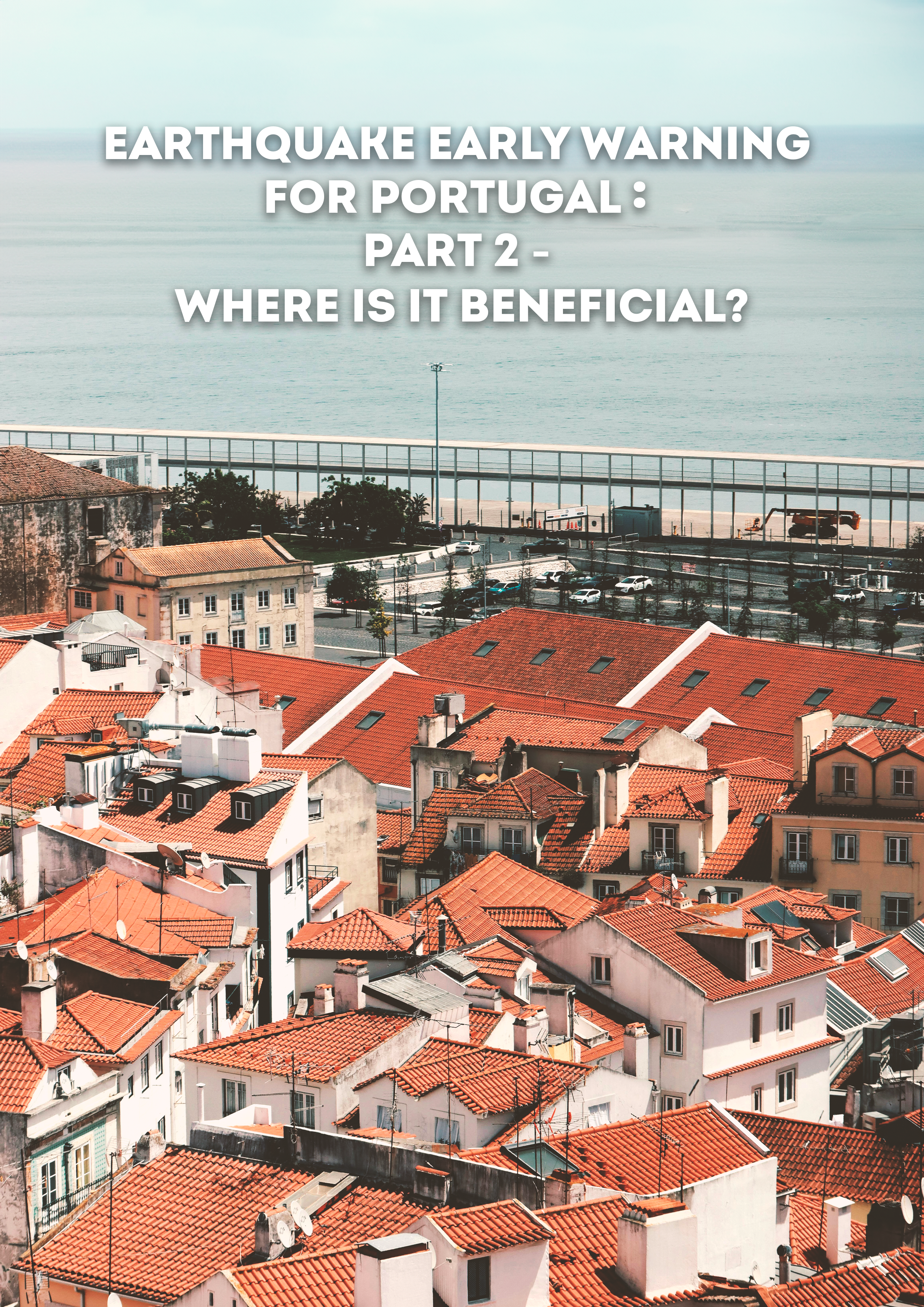
- Earthquake early warning for Portugal: part 2 – where is it beneficial? | GEM Foundation
Publications Earthquake early warning for Portugal: part 2 – where is it beneficial? Share Facebook LinkedIn Download 2023 | Peer-reviewed An earthquake early warning system (EEWS) can provide valuable alerts before the destructive seismic waves arrive. This warning time can allow the adoption of protective measures by the population, which can translate into reduced casualties and economic savings. In the last centuries, Portugal was struck by several strong earthquakes (e.g., 1755 M ~ 8.5 Lisbon, 1969 M7.8 Algarve), whose magnitude and epicentre might allow large warning times. In this study, a probabilistic seismic hazard analysis (PSHA) model was used to generate a large stochastic event set for mainland Portugal, and the expected human impact (i.e., fatalities and injured) were estimated for each seismic event with and without the consideration of an EEWS. We evaluated different options for the reduction in the casualties considering the duration of the warning time, human reaction time, and the size of the buildings. The potential reduction in the human impact was converted into an economic benefit considering hospitalization costs and the statistical value of a human life in Portugal. The results indicate that such a system could significantly reduce the human and related economic losses in the Southwest of the country.
- Impact of population spatiotemporal patterns on earthquake human losses | GEM Foundation
Publications Impact of population spatiotemporal patterns on earthquake human losses Share Facebook LinkedIn Download 2025 | Peer-reviewed Occupancy patterns are known to strongly affect the number of people killed by earthquakes. Existing exposure models for Europe based on housing census do not account for the daily movement of the population between the place of residence (residential occupancy) and places of economic activity (non-residential occupancy), or the seasonal patterns due to tourism. This study presents a framework to upgrade exposure models from static to 'dynamic', i.e., allowing the input population to change in time and space based on daily and monthly population movement patterns. Open-source population data is used to disaggregate and rescale occupants inside residential, commercial and industrial buildings of 28 European countries, resulting in 24 occupancy categories: two times (i.e., day and night) x 12 months at 30 arc-seconds resolution. The static vs dynamic exposure models are compared using the number and distribution of fatalities resulting from loss calculations for a stochastic set of earthquakes generated from the European Seismic Hazard model (ESHM20). The results demonstrate that the spatiotemporal patterns of population can significantly impact earthquake mortality rates and should not be neglected in scenario loss assessment. The results also demonstrate that the worst occurrence time depends on both the distribution of indoor population between building occupancies and the earthquake rupture characteristics. The ability to capture population distribution during the day and night or seasonal changes (e.g., winter vs summer) is a feature that can advance the ongoing rapid damage/loss assessment services in Europe and consequently support emergency response planning.
- Middle East Exposure | Global EarthQuake Model Foundation
Repository with the inventory of residential, commercial and industrial buildings in Middle East Products Middle East Exposure Repository with the inventory of residential, commercial and industrial buildings in Middle East Share Facebook LinkedIn Description The Global Exposure Model is a mosaic of local and regional models with information regarding the residential, commercial, and industrial building stock at the smallest available administrative division of each country and includes details about the number of buildings, number of occupants, vulnerability characteristics, average built-up area, and average replacement cost. The dataset is developed and maintained by the GEM Foundation, using a bottom-up approach at the global scale, using national statistics, socio-economic data, and local datasets. This model allows the identification of the most common types of construction worldwide, regions with large fractions of informal construction, and areas prone to natural disasters with a high concentration of population and building stock. The Middle East region of the model includes the information pertaining the following countries/territories: Afghanistan, Armenia, Azerbaijan, Bahrain, Georgia, Iran, Iraq, Israel, Jordan, Kuwait, Lebanon, Oman, Pakistan, Palestine, Qatar, Saudi_Arabia, Syria, United_Arab_Emirates, Yemen How to cite this work If you make use of this work, please cite both the publication and the data. Publication: Yepes-Estrada, C., Calderon, A., Costa, C., Crowley, H., Dabbeek, J., Hoyos, M., Martins, L., Paul, N., Rao, A., Silva, V. (2023). Global Building Exposure Model for Earthquake Risk Assessment. Earthquake Spectra. doi:10.1177/87552930231194048 Data: Yepes-Estrada, C., Calderon, A., Costa, C., Crowley, H., Rao, A., Paul, N., & Silva, V. (2026). Global Exposure Model (2026.0.0). Zenodo. https://doi.org/10.5281/zenodo.8117363. Available Versions An open version (v2026.1) of the model, agreggated at Administrative Level 1, is available for direct download under a CC BY-NC-SA 4.0 license. Users interested in this version can click the "Open Repository" button in the right panel to access the information. The full version for any country/territory, at the highest resolution available, can be requested by clicking on the "License Request", where a specific license will be provided, depending on the use case. License information The open version is available under a Creative Commons CC BY-NC-SA 4.0 license, which requires: Attribution (you must give appropriate credit, provide a link to the license, and indicate if changes were made) Non-commercial (you may not use the material for commercial purposes) ShareAlike (derivatives created must be made available under the same license as the original) Any deviation from these terms incur in license infringement. For commercial use of the model, a specific license agreement must be made tailored to your use case, in such instance please click on "License Request". Facebook LinkedIn Share Latest Version v2026.0 License CC BY-NC-SA 4.0 Available resources Open Repository License Request text Map View Search Popup title Close Country/Region Available Resources Afghanistan Exposure Africa Exposure Alaska Exposure Country/Region Available Resources Afghanistan Vulnerability Africa Vulnerability Alaska Vulnerability Country/Region Resource Url Afghanistan Risk Profile Africa Risk Profile Alaska Risk Profile Search Found Country/Region Resource Url Afghanistan Exposure Africa Exposure Alaska Exposure Preview Preview is not available. Search Found Country/Region Resource Url Afghanistan Vulnerability Africa Vulnerability Alaska Vulnerability Preview Preview is not available. Search Found Country/Region Resource Url Afghanistan Risk Profile Africa Risk Profile Alaska Risk Profile Preview Preview is not available. Related products GEM Building Taxonomy Global Seismic Embodied Carbon Risk Global Seismic Hazard Map Global Liquefaction Hazard Global Exposure Model Global Vulnerability Model Global Map of Road Exposure to Ground Shaking and Liquefaction Global Seismic Risk Map Country-Territory Seismic Risk Profiles Related publications Development of a Probabilistic Earthquake Loss Model for Iran Read More For downloading or accessing detailed product information like PNG/PDF maps, datasets, license request, shapefiles and more, please switch to a desktop or laptop computer. Thank you for your understanding.