Thanks for submitting!
You will be contacted as soon as possible


QUICK LINKS


PROFILES
PUBLICATIONS
EXPOSURE
VULNERABILTY
SOFTWARE
EQ MODELS
Search Results
Search this site
1170 results found with an empty search
- Sub-Saharan Africa Geodetic Strain Rate Model 1.0 | GEM Foundation
Publications Sub-Saharan Africa Geodetic Strain Rate Model 1.0 Share Facebook LinkedIn Download 2015 | Report InthisreportwedescribetheSub-SaharanAfricaGeodeticStrainRateModel1.0,whichisacontributionto theGlobalEarthquakeModelFoundation(GEM)StrainRateProject.Theobjectiveofthisworkistoimprove the latest GEM geodetic strain rate model with an updated strain rate field of sub-Saharan Africa. SubSaharan Africa encompasses the East African Rift System (EARS), the active divergent plate boundary between the Nubian and Somalian plates, which accommodates strain along the boundaries of at least 3 microplates.ThecurrentversionoftheGEMgeodeticstrainratemodelisconstrainedbypublishedgeodetic data along the EARS and includes microplates between the Nubian and Somalian plates. In this work we developedan improved strain rate field for sub-Saharan Africa that incorporates 1)anexpandedgeodetic velocity fieldwithin theNubia-Somaliaplatesystemandalong theEARS2) redefined regionsofdeforming zones guided by seismicity distribution, and 3) updated constraints on block rotations from the recent publicationofSariaetal.(2014).TheSub-SaharanAfricaGeodeticStrainRateModel1.0spanslongitudes22 to55.5andlatitudes-52to20with0.5°(longitude)by0.4°(latitude)spacing,whichincludespartorallofthe following platesand/or sub-plates: Somalia,Nubia, Rovuma, Lwandle, Victoria, Antarctica,and Arabia. For theseplates/sub-platesweassignrigidblockrotationsasboundaryconstraintsonthestrainratecalculation thatisdeterminedusingtheHainesandHoltmethodof fittingsplinestogeodeticdata foraninterpolated velocitygradienttensorfield.Wederivestrainrates,velocities,andvorticityratesfromthevelocitygradient tensorfield.FollowingtheworkofKreemeretal.2014fortheGEMgeodeticstrainratefieldwealsoprovide estimates of model uncertainties, velocities, vorticity, and strain rates in a Nubia-fixed reference frame relativetothelowermantlefora0.1°x0.1°mesh.
- GEM releases five national and three regional earthquake models for public good application - GEM Foundation
News GEM releases five national and three regional earthquake models for public good application By: Jan 23, 2021 Share Facebook LinkedIn January 25th 2021, Pavia. Today, in line with GEM’s mission to support disaster risk reduction efforts toward a world that is safe from earthquakes, the GEM Foundation released 11 hazard and risk models covering five countries and three regions in Asia and the Pacific for public-good, non-commercial use. The models are for Canada , Japan , Mexico , Northeast Asia , Northwest Asia , South Pacific Islands , the Philippines , Alaska , Hawaii , California (based on UCERF3) and the rest of the conterminous United States . ( download the brochure ) The updated models, which includes hazard, exposure and vulnerability data are part of the Global Earthquake Hazard and Risk Models mosaic launched in December 2018. All of these products are available from GEM’s Products page ( https://www.globalquakemodel.org/products ), with the majority of the models available by application for a free license for non-commercial or public-good use. Increasing exposure of critical infrastructure and economic assets has been the major cause of long-term increases in economic loss from disasters and shows that the economic incentives for building in many hazard-prone areas continue to outweigh the perceived disaster risks. Four of the countries in this release - United States, Japan, Mexico and the Philippines - are in the Top 15 countries globally in terms of the total number of buildings and in terms of average annual economic losses from earthquakes, which means that there are residential, commercial and industrial buildings in these countries that are concentrated in areas susceptible to mid-high probability of ground shaking due to earthquakes. However, it must be noted that even though Japan and the US have put in place some mitigation measures to lower the vulnerability of their building stock, they still appear in the top 15 list due to the higher asset valuations in the two countries; whereas Mexico and the Philippines appear in the top 15 even though the valuation of their building stock is relatively much lower because their building stocks are more vulnerable to earthquakes. “Today, the overall potential risk around the world is substantially underestimated, in part because we lack fundamental information about hazard and risk, and in part because current models do not fully capture the complexities and cascading impacts, exacerbating the effect of events at all scales. We hope that making GEM’s earthquake models available will lead to insights into how to improve models and motivate others to use them to mitigate and reduce future earthquake risk worldwide.”- John Schneider, GEM Secretary General. The seismic hazard, exposure, vulnerability and risk data can be used by risk managers, urban planners, emergency responders and humanitarian agencies for input to a wide range of disaster risk reduction activities including monitoring of the Sendai Framework indicators. Most models were developed in collaboration with various public and private institutions, national governments, and individual experts, using GEM’s OpenQuake engine. The models being released for the US, Canada, and Japan are translations of national or subnational models developed by the USGS and FEMA, Natural Resources Canada (NRCan), and the Headquarters for Earthquake Research Promotion (HERP), respectively, which have been translated into GEM’s OpenQuake format. An earlier batch of earthquake models was released on October 13th, 2020 in the observance of UNDRR’s International Day for Disaster Risk Reduction, and are available here . Open and free distribution of data, models and tools will continue to be at the core of GEM’s work, and will further strengthen its efforts to broaden their availability and accessibility. ----- Editor’s Notes: For a complete list of available products, visit the GEM Products webpage . Download the brochure for the models in this release here . Interview opportunities: John Schneider, GEM Secretary General Marco Pagani, Hazard Team Leader Vitor Silva, Risk Team Leader Paul Henshaw, IT Team Leader Press contact: Jephraim Oro: jephraim.oro@globalquakemodel.org (English) Sandra Giacomini: sandra.giacomini@globalquakemodel.org (Italian/English) No images found. GALLERY 1/11 Gallery VIDEO RELATED CONTENTS
- GEM renews its commitment to help achieve the goals of the Sendai Framework by 2030 - GEM Foundation
News GEM renews its commitment to help achieve the goals of the Sendai Framework by 2030 By: Jul 31, 2019 Share Facebook LinkedIn The Global Earthquake Model (GEM) Foundation has renewed its Sendai Framework Voluntary Commitment (VC) to increase earthquake risk understanding and resilience globally. Under the Sendai Framework VC, GEM is committed to continue developing, communicating and facilitating the use of earthquake hazard, risk and social vulnerability tools and information to contribute to the achievement of the four priorities of action of the UNDRR’s Sendai Framework by 2030 . The Voluntary Commitments initiative, was developed in response to the UN General Assembly resolution 68/211 (2013) and launched in the lead-up to the World Conference for Disaster Risk Reduction (WCDRR) in March 2015 to support the development of partnerships at all levels to implement the Sendai Framework. GEM made its first commitment during the WCDRR in Sendai City, Miyagi Prefecture, Japan. UNDRR has established an online platform as a mechanism to mobilize, monitor and take stock of commitments from multi-stakeholders for the implementation of the Sendai Framework until 2030. Since its launch in December 2018, a number of stakeholders have already showcased their efforts to build resilient societies by publishing and monitoring Voluntary Commitments (VCs) in support of the implementation of the Sendai Framework through the SFVC online platform. To learn more on how to participate in this initiative, visit https://sendaicommitments.unisdr.org . No images found. GALLERY 1/0 VIDEO RELATED CONTENTS
- Celebrating achievements and way forward | GEM Foundation
Publications Celebrating achievements and way forward Share Facebook LinkedIn Download 2013 | Brochure GEM achievements would not be possible if we had not first laid cornerstones of earthquake resilience. Our guiding principles define who we are and what we do and ultimately serve as a measure of GEM’s success.
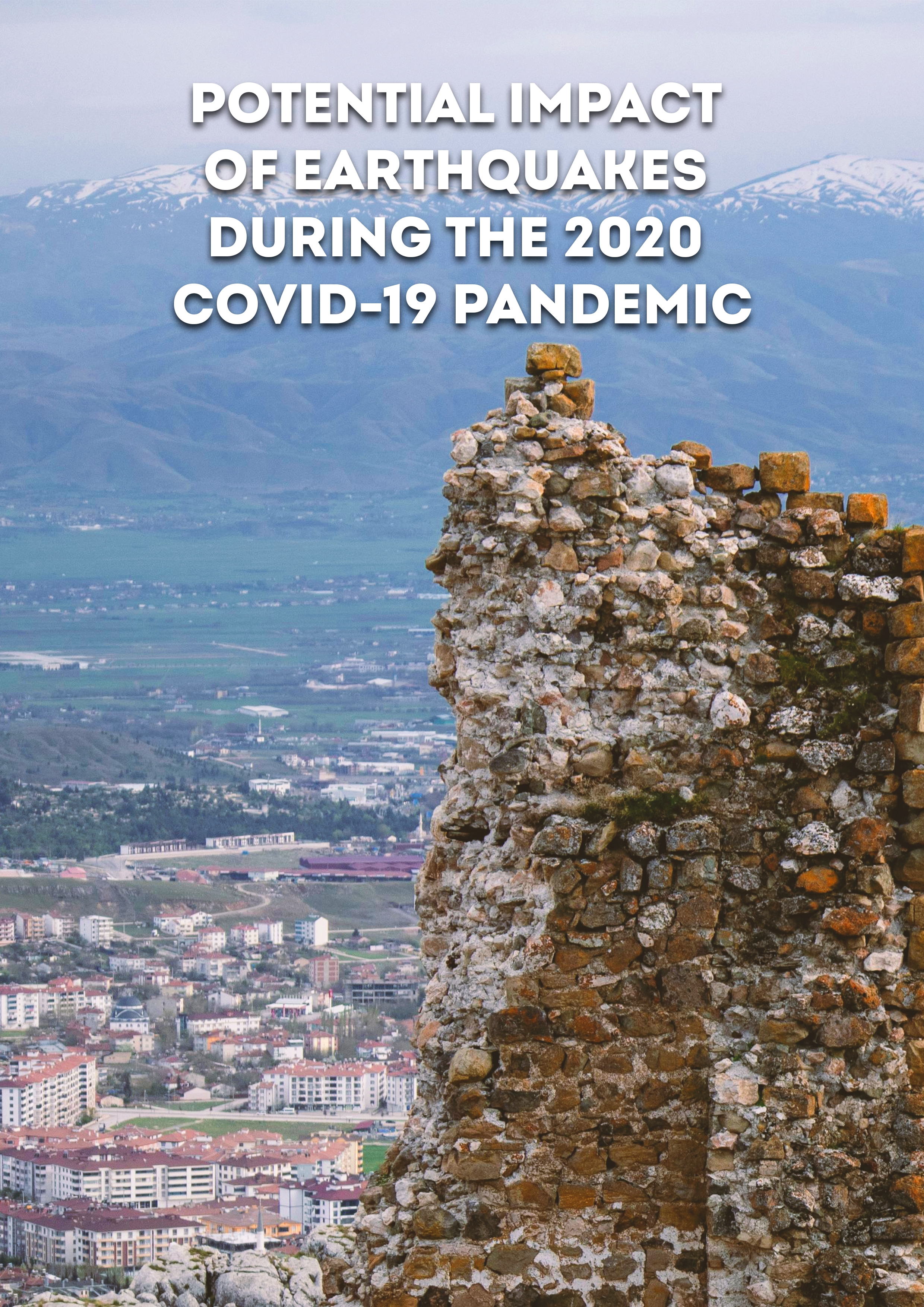
- Potential impact of earthquakes during the 2020 COVID-19 pandemic | GEM Foundation
Publications Potential impact of earthquakes during the 2020 COVID-19 pandemic Share Facebook LinkedIn Download 2020 | Peer-reviewed The 2020 COVID-19 pandemic caused a human and economic impact of unprecedented magnitude in contemporary history. In an effort to reduce the rate of infection, most governments implemented measures to increase social distancing and to strengthen the capacity of the healthcare system. The occurrence of earthquakes coincident with the pandemic may prevent the effective practice of such measures, and consequently cause an increase in the virus spread. This study analyzes the potential impact that seismic events may have on the infection rate within regions afflicted by both epidemics and earthquakes and explores open software packages that can be employed to simulate the impact of future destructive earthquakes on the spread of an emerging virus. Recent data on the number of confirmed cases at the national or subnational level were combined with a global seismic hazard and risk map to produce a combined index. This index highlights regions where preparedness and contingency plans should be developed to account for the possibility of COVID-19 outbreaks due to the earthquake impact.
- Earthquake Risk Modeling in Canada: From Knowledge to Action - GEM Foundation
News Earthquake Risk Modeling in Canada: From Knowledge to Action By: Dec 18, 2019 Share Facebook LinkedIn OpenQuake workshop participants, London, Ontario, Canada 2019 A total of 78 individuals, 28 of whom joined online, participated in the OpenQuake workshop held in London, Ontario, Canada from November 6th to 7th. Western University hosted the event in collaboration with Natural Resources Canada (NRCan), the GEM Foundation, the UWO Good Vibrations and Excitations Research Facility and the Institute for Catastrophic Loss Reduction (ICLR). The 2-day modeling training workshop, led by GEM’s Catalina Yepes and Anirudh Rao, and NRCan’s Murray Journeay and Tiegan Hobbs, explored analytic capabilities and use of the OpenQuake suite for the analysis of earthquake risk and the evaluation of risk reduction strategies. GEM risk scientists introduced OpenQuake and guided the group in setting up and running earthquake risk scenarios for the Charleevoix and Montreal regions, followed by probabilistic risk assessment for the Quebec Metropolitan Community. Michal Kolaj from NRCan presented the scientific updates proposed in the forthcoming National Seismic Hazard Model for the 2020 National Building Code of Canada (NBCC), and its implementation in OpenQuake. Murray Journeay presented the national earthquake risk model for Canada which is slated for public release in Spring 2020. Murray also touched on how NRCan Science is implementing socio-economic vulnerability and resilience indicators in Canada’s risk models. Participants expressed overwhelming satisfaction on the training contents and approach. Hema Shandeep Sharma of UWO said, “In just one day, we’ve already learned so much about seismic hazard assessment using OpenQuake”. The training sessions were designed for risk modelers working in areas of both fundamental and applied science - and practitioners who are interested in using the outputs of risk assessments to inform disaster resilience planning at local and regional scales in Canada. The OpenQuake training workshop in Western University is the fifth this year, reaching a total of more than 250 individuals. The four other training workshops were conducted in Nepal, India, Turkey and Serbia. GEM conducts regular training on OpenQuake for seismic hazard and risk assessments. For more information on GEM’s OpenQuake training workshops, please contact marco.pagani@globalquakemodel.org and vitor.silva@globalquakemodel.org. Insights gained through quantitative earthquake risk modeling are foundational to seismic design and disaster risk reduction planning at all levels of decision making. OpenQuake is a collaborative earthquake hazard and risk-modeling suite developed by the Global Earthquake Model (GEM) Foundation used during workshop exercises. Canada joined the GEM Foundation as a public sector partner in 2017 and is working with researchers and practitioners from across the public, academic and private sectors to advance capabilities for catastrophic risk modeling and to co-develop a National Earthquake Risk Profile that will establish a base of evidence to help inform and empower disaster resilience planning initiatives in the public domain. No images found. GALLERY img_9364jpg img_9355jpg oqcanada2019-group-picture-3jpeg img_9364jpg 1/43 Gallery VIDEO RELATED CONTENTS
- Calibrating collapse and fatality rates for the assessment of fatalities due to earthquakes | GEM Foundation
Publications Calibrating collapse and fatality rates for the assessment of fatalities due to earthquakes Share Facebook LinkedIn Download 2025 | Peer-reviewed In recent decades, hundreds of studies have covered seismic vulnerability assessment and the derivation of fragility models. However, these studies primarily focus on structural damage and the associated repair costs. Assessing fatalities requires an evaluation of the proportion of damaged buildings that suffer partial or total collapse, as well as the expected fatality rates for occupants inside those collapsed buildings. To support these modeling needs, we reviewed past studies on casualties, existing proposals for collapse and fatality rates, and detailed damage databases that characterize different collapse mechanisms. Based on this review, collapse and fatality rates are proposed relative to a baseline building class. These rates are further calibrated considering reported fatalities since 1950 and the average annual fatalities estimated by the Global Seismic Risk Model of the Global Earthquake Model (GEM) Foundation. Results show that the probability of collapse tends to decrease with the number of stories, while fatality rates have the opposite trend. Furthermore, an open-access database of calibrated collapse and fatality rates is provided and can be used to assess fatalities due to earthquake scenarios or in probabilistic seismic risk analysis.
- GEM Global Maps and Products survey - GEM Foundation
News GEM Global Maps and Products survey By: May 21, 2020 Share Facebook LinkedIn GEM is conducting a survey in the weeks ahead. The objectives of the GEM survey are: to understand how GEM global maps and other products have been used by different stakeholders and to feed the results into GEM’s strategy for developing, improving and disseminating products. The survey also aims to understand what’s in demand and what products are being sought after by GEM stakeholders. The survey questionnaire will be sent to close to 1500 individuals who have downloaded the GEM global earthquake hazard and risk maps as well as the OpenQuake engine since September 2019 through the GEM website. The survey form will be sent next week. For the subscribers who are interested to provide feedback to the GEM global maps and other products, feel free to just send us an email with your feedback on the maps or other products. It is important to us to know how our products are being used and how they could be improved. For more information on the survey or to provide your feedback directly, please contact . No images found. GALLERY 1/0 Gallery VIDEO RELATED CONTENTS
- North and South Korea Hazard | GEM Foundation
License Request Form You have chosen to get more information about: North and South Korea Hazard Hazard Please check the link below to see if this product already meets your your requirements before submitting your request for a license. Thank you. DOWNLOAD THE OPEN VERSION Summary of steps to obtain a license for the requested product. Fill in the application form below. Click Submit. Please check your email Inbox or Spam folder for the summary of your request. You will then be contacted by the GEM Product Manager with either a request for more information, or a request to sign the license. If you do not hear from us within 2 weeks, please send an email to product@globalquakemodel.org . REQUEST DETAILS A. Requesting party information First Name Last Name Role/Job Email Business type Business type Other business Sector Sector Other sector B. License agreement signatory information The signatory must be someone who is authorised to sign license agreements on your behalf such as your immediate supervisor, manager or legal officer. If you’re a PhD student, the signatory must be your adviser or a university officer in charge of license agreements or similar legal documents. Full Name of Signatory Position Company Email of Signatory Organisation name Complete Address C. Purpose of request GEM is able to offer products for free because of the support of our project partners, national collaborators and institutional sponsors. All of GEM’s products are freely available for public good, non-commercial use, but with different license restrictions. In most cases we release products under an open license (e.g., CC BY-SA or CC BY-NC-SA), which permits (re)distribution. In this case, we are granting access under a more restricted license that forbids distribution or disclosure and requires signing by GEM and the licensee in order to better assure accountability for the confidentiality of the information. In order for GEM to properly assess your request, please answer the following questions below. 1. Explain briefly how will the GEM product be used e.g. project, research including the expected results and the foreseen public benefit. Minimum 60 words. 2. Will you be able to share the results of your work with GEM? YES NO 3. Will you be able to provide feedback to GEM on the quality and usefulness of this product via a survey? YES NO D. Privacy Policy By submitting this form, you consent to the processing of your personal data in accordance with our Privacy Policy and the EU General Data Protection Regulation (GDPR). We are committed to safeguarding your information and ensuring it is only used for the purpose outlined in this form. You have the right to access, rectify, or delete your data at any time. For more information, please refer to our Privacy Policy. I agree Words: 0 Email us at product@globalquakemodel.org if you're experiencing problems submitting your application. Thank you. Submit Thanks for submitting! You will be contacted as soon as possible Incomplete data. Please fill in all required fields. Thank you.
- OQ Engine certified user Binaya Kumar Lamichhane | GEM Foundation
OpenQuake Engine certified user page This is to certify that Binaya Kumar Lamichhane has successfully completed the requirements to become a Certified OpenQuake Engine User for Scenario Assessment demonstrating the required knowledge and skills as assessed by the Global Earthquake Model (GEM) Foundation. GEM Foundation Secretary General Helen Crowley (signed) Date of Completion: Valid until: September 12, 2025 September 11, 2028