Thanks for submitting!
You will be contacted as soon as possible


QUICK LINKS


PROFILES
PUBLICATIONS
EXPOSURE
VULNERABILTY
SOFTWARE
EQ MODELS
Search Results
Search this site
1170 results found with an empty search
- From Volcanic Hazard to Risk Assessment - GEM Foundation
News From Volcanic Hazard to Risk Assessment By: Jul 12, 2018 Share Facebook LinkedIn The University of Geneva hosted the inaugural International Association of Volcanology and Chemistry of the Earth's Interior (IAVCEI) - Global Volcano Model Network (GVM) Workshop in Geneva, Switzerland from June 27-29. More than 30 international experts in the field of volcanic hazard, exposure, vulnerability and risk assessment participated in the workshop to evaluate the state of the art of risk assessment in volcanology, investigate current gaps and identify research priorities. The workshop tackled three thematic areas: i) current perspectives in volcanic risk assessment, ii) how to analyze volcanic vulnerability and iii) how to combine volcanic hazard and risk. Luis Martins, GEM Physical Risk Engineer presented and discussed the differences and similarities between earthquake and volcanic impact assessment. He shared key vulnerability aspects that need to be assessed for a comprehensive and efficient risk assessment based on the recently completed GEM’s global earthquake vulnerability database project, which he led from 2017-2018. “Earthquake risk assessment and volcano risk assessment share many key aspects, and it is clear that close collaboration between both communities can greatly improve the understanding of both hazards,” Luis concludes at the end of his presentation. GEM is actively pursuing collaboration with other peril groups in particular the volcano hazard and risk assessment community through the CRAVE and the GED4ALL projects (global exposure database), to share its long experience in developing ‘open data and open tools’ to promote global risk information sharing. GEM’s participation in this first international workshop further strengthens its commitment to contribute and lead the global efforts to make risk information across perils accessible to the DRR community and its stakeholders. No images found. GALLERY 1/0 VIDEO RELATED CONTENTS
- GEM Risk Maps Featured in UNDRR’s Global Assessment Report 2025 - GEM Foundation
News GEM Risk Maps Featured in UNDRR’s Global Assessment Report 2025 By: Jul 7, 2025 Jun 9, 2025 Share Facebook LinkedIn The Global Earthquake Model (GEM) Foundation contributed a set of seismic risk maps to the United Nations Office for Disaster Risk Reduction (UNDRR) for the newly released Global Assessment Report on Disaster Risk Reduction (GAR2025). The maps are part of the seismic risk analysis featured in Chapters 3, 4 and 5 of the report, titled “The path to resilience in a volatile world”, “What disasters really cost and why building resilience is worth it”, and “Future risk and the choices ahead”, respectively. Drawing from GEM’s 2023 global seismic risk model, the maps include estimates of average annual losses (AAL) and fatalities, risk projections to 2050 under future exposure scenarios, and a new metric assessing the embodied carbon associated with earthquake-related damage. These data expand the understanding of seismic risk beyond economic and human losses by also considering long-term environmental consequences. The report underscores how systemic risk continues to evolve due to demographic shifts, exposure growth, and climate-related changes. In this context, GEM’s data offer a science-based foundation for risk-informed investment strategies, especially in urban areas expected to expand rapidly over the coming decades. The inclusion of embodied carbon metrics in seismic risk analysis aligns with GAR2025’s broader theme of sustainability, encouraging integration of resilience and climate goals in infrastructure design and planning. GEM’s contributions were also highlighted at the Global Platform for Disaster Risk Reduction (GPDRR) 2025, held in Geneva from 27–30 May. During a UNDRR-hosted Learning Lab, GEM Secretary General Helen Crowley presented the seismic risk maps and spoke on how open, accessible data can support public-sector investment decisions that prioritise both resilience and equity. GAR2025 is UNDRR’s flagship biennial report and serves as a critical reference for governments, donors, and practitioners engaged in disaster risk reduction and sustainable development. GEM’s participation reflects its ongoing commitment to making earthquake risk data actionable across sectors. Explore the GAR2025 report: https://www.undrr.org/gar/gar2025 No images found. GALLERY gpdrr 1.jpg gpdrr 3.jpg gpdrr-gar-2025.jpg gpdrr 1.jpg 1/5 VIDEO RELATED CONTENTS
- Caribbean & Central America Hazard | GEM Foundation
License Request Form You have chosen to get more information about: Caribbean & Central America Hazard Hazard Please check the link below to see if this product already meets your your requirements before submitting your request for a license. Thank you. DOWNLOAD THE OPEN VERSION Summary of steps to obtain a license for the requested product. Fill in the application form below. Click Submit. Please check your email Inbox or Spam folder for the summary of your request. You will then be contacted by the GEM Product Manager with either a request for more information, or a request to sign the license. If you do not hear from us within 2 weeks, please send an email to product@globalquakemodel.org . REQUEST DETAILS A. Requesting party information First Name Last Name Role/Job Email Business type Business type Other business Sector Sector Other sector B. License agreement signatory information The signatory must be someone who is authorised to sign license agreements on your behalf such as your immediate supervisor, manager or legal officer. If you’re a PhD student, the signatory must be your adviser or a university officer in charge of license agreements or similar legal documents. Full Name of Signatory Position Company Email of Signatory Organisation name Complete Address C. Purpose of request GEM is able to offer products for free because of the support of our project partners, national collaborators and institutional sponsors. All of GEM’s products are freely available for public good, non-commercial use, but with different license restrictions. In most cases we release products under an open license (e.g., CC BY-SA or CC BY-NC-SA), which permits (re)distribution. In this case, we are granting access under a more restricted license that forbids distribution or disclosure and requires signing by GEM and the licensee in order to better assure accountability for the confidentiality of the information. In order for GEM to properly assess your request, please answer the following questions below. 1. Explain briefly how will the GEM product be used e.g. project, research including the expected results and the foreseen public benefit. Minimum 60 words. 2. Will you be able to share the results of your work with GEM? YES NO 3. Will you be able to provide feedback to GEM on the quality and usefulness of this product via a survey? YES NO D. Privacy Policy By submitting this form, you consent to the processing of your personal data in accordance with our Privacy Policy and the EU General Data Protection Regulation (GDPR). We are committed to safeguarding your information and ensuring it is only used for the purpose outlined in this form. You have the right to access, rectify, or delete your data at any time. For more information, please refer to our Privacy Policy. I agree Words: 0 Email us at product@globalquakemodel.org if you're experiencing problems submitting your application. Thank you. Submit Thanks for submitting! You will be contacted as soon as possible Incomplete data. Please fill in all required fields. Thank you.
- Malaysian delegates visit GEM to explore future seismic hazard and risk assessment collaboration - GEM Foundation
News Malaysian delegates visit GEM to explore future seismic hazard and risk assessment collaboration By: Apr 26, 2018 Share Facebook LinkedIn Malaysian delegates from the University of Technology Malaysia, University of Malaya and the Malaysia National Energy Company visited GEM’s headquarters in Pavia, Italy on 20th April to learn more about GEM’s earthquake analysis tools – OpenQuake/hazard and risk toolkits, current projects, and future plans and to explore potential areas for collaboration. Dr. Azlan Adnan of the University of Technology Malaysia led the delegation composed of Dr. Mohd Zamri, Dr. Hanafi Yusop, Dr. Zainul Mamat, Dr. Mushairry Mustaffar, Dr. Ramli Nazir and Dr. Mohd Nadzari Ismail. They expressed interest to learn more about GEM’s earthquake studies and to discuss further collaboration work. The delegates were also joined by Dr. Masyhur Irsyam of Indonesia Bandung University. GEM Secretary General, John Schneider and team leaders from hazard, risk, social vulnerability and information technology and development welcomed the delegates. Presentation of the OpenQuake features, current projects, and future plans highlighted the half-day meeting. No images found. GALLERY 1dcea4_6fa337c7682b4e4089cc659368c8e594~mv2.jpg 1dcea4_6fa337c7682b4e4089cc659368c8e594~mv2.jpg 1/1 VIDEO RELATED CONTENTS
- Selection of a Global Set of GMPEs for the GEM-PEER Global GMPEs Project | GEM Foundation
Publications Selection of a Global Set of GMPEs for the GEM-PEER Global GMPEs Project Share Facebook LinkedIn Download 2012 | Peer-reviewed Ground-motion prediction equations (GMPEs) relate a ground-motion parameter (e.g. peak ground acceleration) to a set of explanatory variables describing the source, wave propagation path and site conditions. In the past five decades many hundreds of GMPEs for the prediction of PGA and linear elastic response spectral ordinates have been published. An accompanying paper discusses the pre-selection of GMPEs undertaken within the framework of the Global Earthquake Model (GEM) Global GMPEs project, coordinated by the Pacific Earthquake Engineering Research Center (PEER). Here, we discuss the following step undertaken to reduce the long list of pre-selected models down to a more manageable number for global hazard assessments. The procedure followed, consisting of an examination of the multidimensional (e.g. magnitude, distance and structural period) predicted ground-motion space in various ways and published quantitative tests of the GMPEs against observational data not used for their derivation, is discussed and illustrated for subduction zones.
- Earthquake early warning for Portugal: part 1 - Where does it matter? | GEM Foundation
Publications Earthquake early warning for Portugal: part 1 - Where does it matter? Share Facebook LinkedIn Download 2023 | Peer-reviewed In the last five centuries, Portugal was affected by several earthquakes of strong magnitude (M > 7) that caused widespread destruction and a significant death toll. Due to the geographical distribution of moderate-to-strong magnitude events along the Tagus Valley and Southwest of the country, an earthquake early warning system might potentially provide precious warning time ahead of the arrival of the destructive seismic waves. We used a probabilistic seismic hazard model to generate a large stochastic event set for the country, and evaluated the probability of triggering correct and false alerts considering different ground shaking thresholds. We propagated the aleatory variability related to the estimation of the location and event magnitude, as well as the variability in the ground shaking across the Portuguese territory. For the events for which a correct alert would be expected, we estimated the warning time for each district, considering various sources of latency. These analyses were performed considering the current seismic network of the country, as well as the potential installation of submarine sensors as part of the forthcoming renewal of the communication cables between mainland Portugal and the archipelagos of Azores and Madeira. The results indicate that for the districts located in the Southwest of the country, an earthquake early warning system might provide sufficient warning time for risk mitigation measures to be followed.
- USGS has joined the TREQ initiative for urban earthquake scenarios - GEM Foundation
News USGS has joined the TREQ initiative for urban earthquake scenarios By: Feb 19, 2021 Share Facebook LinkedIn The USGS has recently joined the GEM TREQ project: Training and Communication for Earthquake Risk Assessment to undertake research that aims to deliver a suite of USGS’s National Earthquake Information Center’s (NEIC) real-time shaking, impact, and aftershock forecast products for the TREQ earthquake scenarios. In addition, the collaboration also aims to compare USGS PAGER and GEM loss model estimates for earthquake scenarios in the three identified urban centers under the TREQ project: Quito (Ecuador), Cali (Colombia), and Santiago de los Caballeros (Dominican Republic). This exploratory analysis will help in understanding and scoping of future research and development needs for the PAGER team and could serve as the foundation for the next phase of the PAGER research project. The expected outputs from the research and development project are: (i) ShakeMaps for real time assessment, impact, and aftershock forecast products for the earthquake scenarios considered under the GEM TREQ project for the three urban centers for operational response planning; (ii) comparisons between USGS PAGER and GEM loss estimates for the TREQ scenario earthquakes using OpenQuake. The activities are also geared at further fostering continued research collaboration between the USGS PAGER team and the GEM Foundation on science and engineering, and will leverage GEM's effort in collecting data for scenario development to explore the development of more detailed PAGER products. It is expected that there will be synergy built in from the beginning in terms of GEM’s OpenQuake engine and PAGER modeling results since the damage and impact estimates from each scenario will be generated based on the same underlying data and vulnerability/fragility models. This will also give an opportunity for GEM’s TREQ modelling outputs using OpenQuake engine to be validated by events produced in a ‘real operational’ environment from using the USGS PAGER methodologies. The availability of NEIC’s real-time products will enable decision makers (e.g., emergency responders from city/county/metropolitan jurisdiction) to aim for operational readiness similar to what is being practiced in the U.S. under FEMA led ‘National Level Exercises (NLEs)’ to improve operational response capacity. No images found. GALLERY 1/2 Gallery VIDEO RELATED CONTENTS
- Inaugural meeting of the EFEHR consortium: 2020 European Seismic Hazard and Risk Models: Current Status and Next Steps towards the Final Release - GEM Foundation
News Inaugural meeting of the EFEHR consortium: 2020 European Seismic Hazard and Risk Models: Current Status and Next Steps towards the Final Release By: Sep 21, 2020 Share Facebook LinkedIn EFEHR webinar participants GEM participated in the inaugural meeting of the EFEHR consortium held virtually on September 10, 2020. The inaugural meeting deliberated the current status and next steps toward the final release of the 2020 European Seismic Hazard and Risk Models. Several other GEM scientists who have been supporting the development of the risk model also participated. “As an Observer member of the consortium and as a global institution, GEM is able to support the mission of EFEHR by providing the OpenQuake Engine and accompanying databases and libraries, and by providing technical assistance in developing advanced hazard and risk models for Europe. GEM’s role is also as an interface between the European scientific community and public and private organizations worldwide that have an interest in earthquake hazard and risk models and the earthquake hazard/risk research community in Europe.” John Schneider, GEM Secretary General. GEM has provided expert input into the new Seismic Risk Model for Europe, and the analysis software developed and maintained by GEM – OpenQuake – has been a cornerstone for this regional work. The Consortium is expected to help bring European organizations together to coordinate earthquake hazard and risk research and its applications. The GFZ in partnership with ETH has worked together in bringing this collaboration into fruition. The Consortium also benefits from the involvement of a number of organizations that, in addition to GEM, play an observer role in the General Assembly: these currently include the European Association for Earthquake Engineering (EAEE), European-Mediterranean Seismological Centre (EMSC), Observatories and Research Facilities for European Seismology (ORFEUS), and European Seismological Commission (ESC). European Facilities for Earthquake Hazard and Risk or EFEHR is a non-profit network of organizations and community resources aimed at advancing earthquake hazard and risk assessment in the European-Mediterranean area. EFEHR supports local and national efforts in one of the three service domains in the Thematic Core Service (TCS) Seismology within the European Plate Observatory System (EPOS). The two others are ORFEUS (waveform services) and CSEM-EMSC (seismological products services). Visit for more information. No images found. GALLERY 1/0 Gallery VIDEO RELATED CONTENTS
- The adolescent years of seismic risk assessment | GEM Foundation
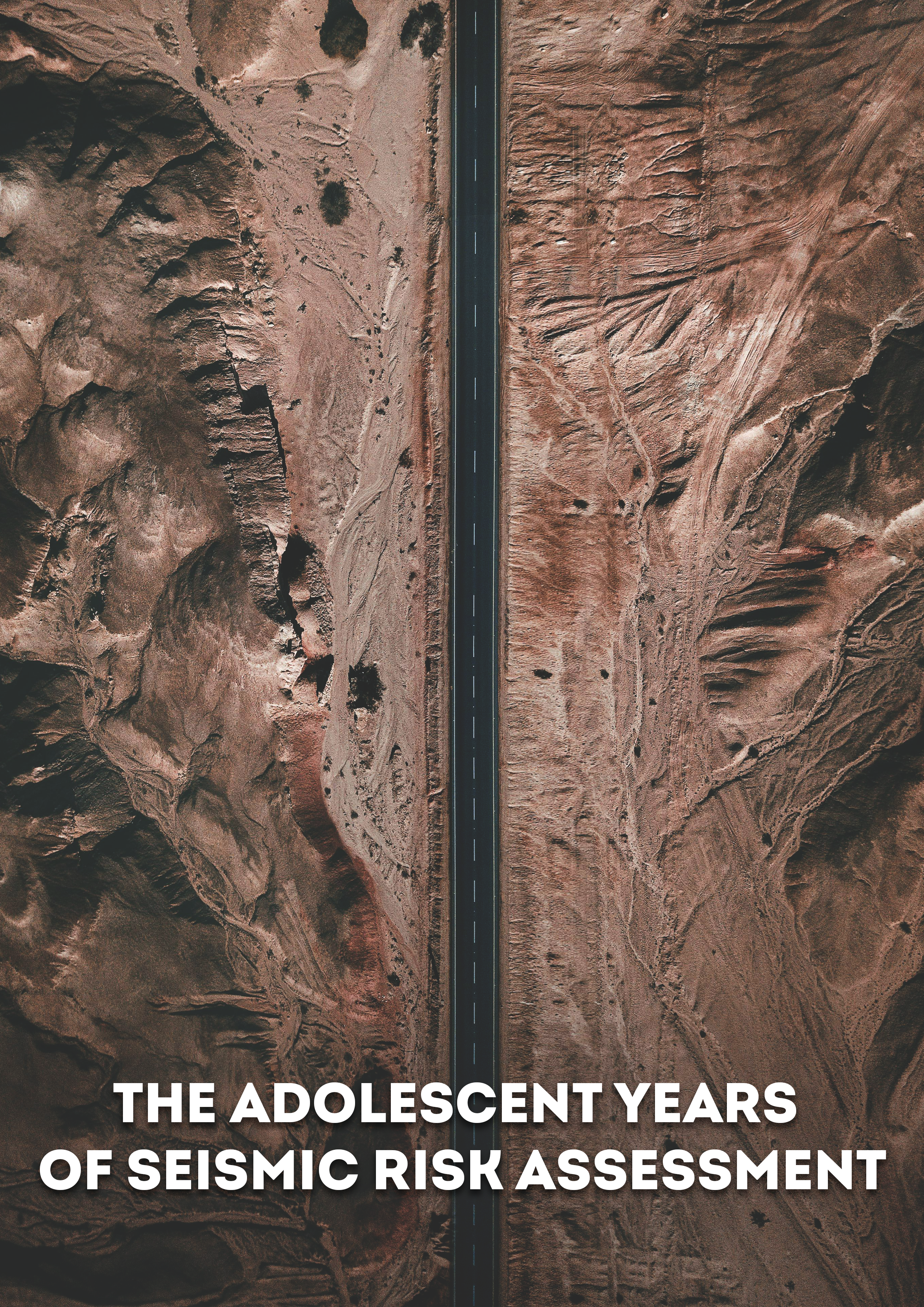
Publications The adolescent years of seismic risk assessment Share Facebook LinkedIn Download 2022 | Peer-reviewed Vitor Silva reflects on the current position of seismic risk assessment compared to its hazard counterpart, and posits that this discipline is expected to become common practice in disaster risk management, providing decision makers with valuable information not just about the current threat, but also how the impact of future disasters is expected to evolve. The growth of seismic risk assessment into its adult years will allow a more efficient design and implementation of risk mitigation measures. ultimately contributing to its main and only goal: the reduction of the human and economic losses caused by earthquakes.
- GEM Outstanding Contributor award: Peter Pazak - Aon Impact Forecasting - GEM Foundation
News GEM Outstanding Contributor award: Peter Pazak - Aon Impact Forecasting By: Sep 15, 2022 Share Facebook LinkedIn Peter Pazak is this year’s recipient of the GEM Outstanding Contributor award. The award is given to individuals who have demonstrated exemplary contributions to GEM’s work. Peter is given this award for his dedicated participation in the OpenQuake user forum and contributions to significant improvements of the OpenQuake software. Peter is one of the most active members of the OpenQuake user forum with over 100 posts providing assistance and offering friendly advice with clarity and professionalism. As one of the early adopters of the universal installer for the OpenQuake engine, his feedback contributed to significant improvements to the installer, particularly on the Windows platform. Peter has contributed to making the OpenEngine a better tool and has helped make the OpenQuake user forum a more collaborative support tool. He has worked with GEM and other stakeholders, demonstrating GEM’s core values. For this reason, the GEM Foundation recognised Peter Pažák with the 2022 Outstanding Contribution award. Congratulations Peter! Read Peter’s story and learn how he began his passion for catastrophe modelling. No images found. GALLERY 1/0 VIDEO RELATED CONTENTS