Thanks for submitting!
You will be contacted as soon as possible


QUICK LINKS


PROFILES
PUBLICATIONS
EXPOSURE
VULNERABILTY
SOFTWARE
EQ MODELS
Search Results
Search this site
1170 results found with an empty search
- Seismic Risk Assessment | GEM Foundation
Back to Bangladesh Outcomes Bangladesh Seismic Risk Assessment The project estimated seismic risk metrics utilising the OpenQuake-engine's stochastic event-based risk assessment calculator. A probabilistic seismic hazard analysis model was employed to generate earthquake rupture forecasts, forming a stochastic event set over a 100,000-year span. Economic and human losses were computed for each event, producing event loss tables and year loss tables. Risk metrics included exceedance probability curves and average annualized losses. Fatality and injury estimates relied on vulnerability models informed by global earthquake data, with a focus on South Asian building characteristics. Results were tabulated nationally and regionally by the project. The assessment also considers the exposure and risk of healthcare facilities, educational facilities, and the national road network to seismic hazards. Maps set 1 | Maps set 2 | Profile Data Download Risk OpenQuake Data job_risk_250ky.ini job_ses_10ky.ini job_ses_1ky.ini summary_risk.xlsx ebr-250ky/ aggcurves-NAME_1_99956600.csv aggcurves-_99956600.csv aggrisk-NAME_1_99956600.csv aggrisk-_99956600.csv avg_losses-Zila_99956600.csv avg_losses-rlz-000_99956600.csv events_99956600.csv realizations_99956600.csv report_99956600.rst risk_by_event_99956600.csv ebr-upazila-250ky/ aggcurves-NAME_1_99956602.csv aggcurves-_99956602.csv aggrisk-NAME_1_99956602.csv aggrisk-_99956602.csv realizations_99956602.csv report_99956602.rst
- Development of the OpenQuake engine, the Global Earthquake Model's open-source software for seismic risk assessment | GEM Foundation
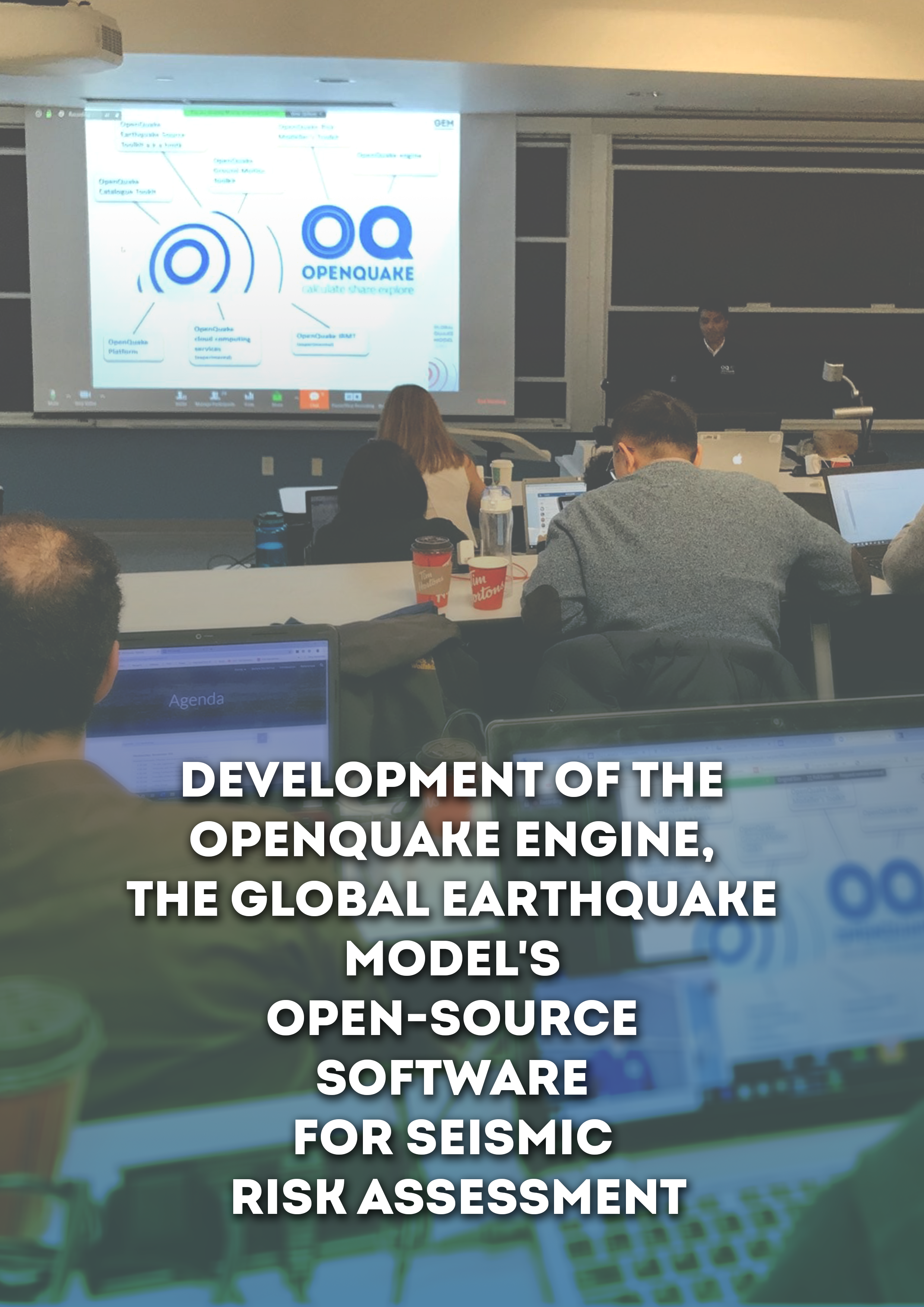
Publications Development of the OpenQuake engine, the Global Earthquake Model's open-source software for seismic risk assessment Share Facebook LinkedIn Download 2013 | Peer-reviewed The Global Earthquake Model aims to combine the main features of state-of-the-art science, global collaboration and buy-in, transparency and openness in an initiative to calculate and communicate earthquake risk worldwide. One of the first steps towards this objective has been the open-source development and release of software for seismic hazard and risk assessment called the OpenQuake engine. This software comprises a set of calculators capable of computing human or economic losses for a collection of assets, caused by a given scenario event, or by considering the probability of all possible events that might happen within a region within a certain time span. This paper provides an insight into the current status of the development of this tool and presents a comprehensive description of each calculator, with example results.
- GEM's 2018 global hazard and risk models | GEM Foundation
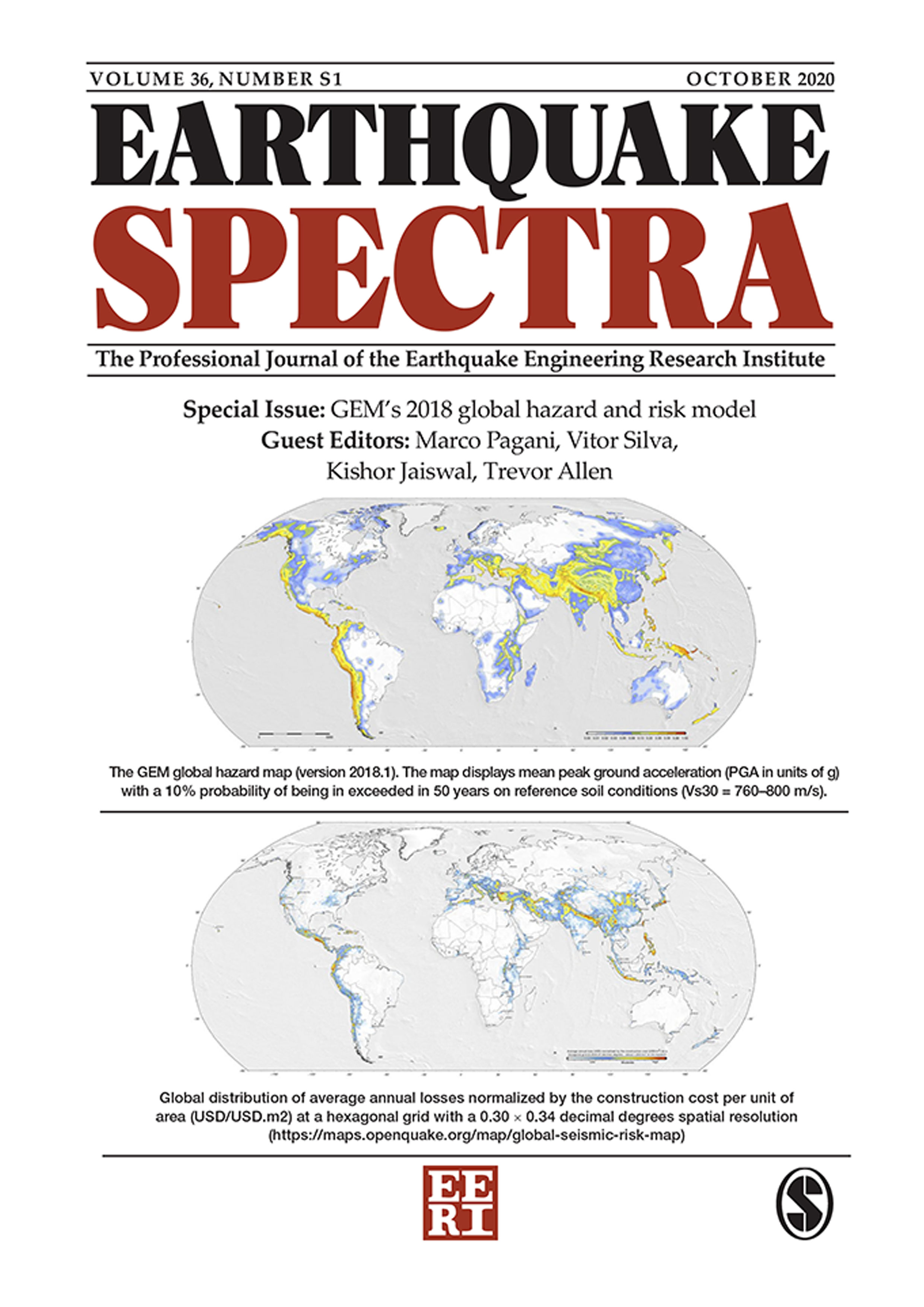
Publications GEM's 2018 global hazard and risk models Share Facebook LinkedIn Download 2020 | Peer-reviewed This special issue of Earthquake Spectra documents the supporting research critical to the development of the Global Seismic Hazard and Risk models by the GEM (Global Earthquake Model) Foundation, representing a major step in understanding earthquake risk globally. Seismic hazard and risk models are needed for accurate assessment of risks in order to promote risk reduction and mitigating actions, such as the improvement of building codes and construction practices, sustainable land use, emergency response, and protection of critical infrastructures, as well as risk transfer through insurance. GEM’s Global Seismic Hazard Model comprises a mosaic of 30 probabilistic seismic hazard models. Using this collection of hazard models as input, GEM computed a Global Seismic Risk Model depicting the average Annual Economic Losses (AEL) caused by ground shaking on the residential, commercial, and industrial building stock. Additional results were successively compiled including global maps for different intensity measure types, soil conditions and return periods. This collection of papers is intended for scientists and researchers in the hazard and risk modeling sector, and risk professionals for application to disaster risk reduction around the globe. This issue is made possible with partial support by the Global Earthquake Model (GEM) Foundation. Founded in Pavia, Italy in 2009, GEM is a non-profit public-private partnership that drives global collaborative efforts to develop scientific and high-quality resources for transparent assessment of earthquake risk and to facilitate their application for risk management around the globe. Learn more at www.globalquakemodel.org.
- European Seismic Risk Model 2020: Focus on Croatia | GEM Foundation
Publications European Seismic Risk Model 2020: Focus on Croatia Share Facebook LinkedIn Download 2020 | Report This paper summarises the development of the European seismic risk model that is being undertaken within the Horizon 2020 SERA project in collaboration with the Global Earthquake Model (GEM) Foundation. The main innovation of the current effort with respect to previous initiatives relates to the extension of seismic risk to 46 countries within Europe, the use of a fully probabilistic methodology, the consideration of socio-economic aspects, and the involvement of the local scientific community in the development of the models. Some specific details of the European risk model for Croatia are also presented, together with some preliminary results.
- Strengthening Global Earthquake Resilience: GEM’s Role at 3CroCEE 2025 - GEM Foundation
News Strengthening Global Earthquake Resilience: GEM’s Role at 3CroCEE 2025 By: Apr 5, 2025 Mar 31, 2025 Share Facebook LinkedIn The Third Croatian Conference on Earthquake Engineering (3CroCEE) recently concluded in Split, Croatia, reaffirming the importance of international collaboration in advancing seismic risk reduction. This year’s event brought together a community of researchers, engineers, and policymakers from the Balkans and beyond - both as keynote speakers and participants - to address challenges in seismic hazard assessment and promote strategies for protecting vulnerable and culturally significant areas such as Split. As a platform dedicated to seismic risk awareness, 3CroCEE played a vital role in encouraging dialogue on integrating research findings into practical measures. The conference highlighted the need for risk-informed planning and innovative engineering solutions, particularly in regions prone to seismic activity. GEM’s participation at 3CroCEE reflected its commitment to advancing earthquake resilience through collaboration and knowledge sharing. Helen Crowley, GEM Secretary General, delivered a keynote lecture titled “Why Seismic Hazard Modelling Has Become a Risky Business.” In her presentation, Crowley explored the evolving challenges in updates to seismic hazard models and their implications for risk reduction efforts. The conference also featured a dynamic session led by Vitor Silva, GEM Head of Risk Engineering, who co-chaired the “Risk Uncertainty Brawl” with Paolo Bazzurro and Dimitrios Vamvatsikos. This interactive session included a debate between the three experts regarding the main driver of uncertainty in risk. The session’s engaging format encouraged participants to critically examine the assumptions behind risk models, provoking a deeper understanding of their application in real-world scenarios. In the end, future directions and new developments in seismic risk modelling were also presented. Helen Crowley’s keynote and Vitor Silva’s session demonstrated GEM’s proactive approach to addressing the evolving nature of seismic risk assessment. Their participation not only contributed to the technical discourse but also reinforced the value of global cooperation in enhancing earthquake resilience. GEM’s involvement at 3CroCEE underscores the foundation’s ongoing dedication to improving earthquake risk understanding and promoting resilient practices worldwide. No images found. GALLERY 1/7 VIDEO RELATED CONTENTS
- GEM Secretary General delivers keynote lectures at national earthquake engineering conferences - GEM Foundation
News GEM Secretary General delivers keynote lectures at national earthquake engineering conferences By: Dec 16, 2025 Nov 1, 2025 Share Facebook LinkedIn Helen Crowley, Secretary General of the Global Earthquake Model (GEM) Foundation, continued in this last quarter to deliver her keynote lecture “Engineering the Future: How Seismic Risk Models Can Build More Resilient Societies” at national earthquake engineering research conferences across Europe and the eastern Mediterranean. The invitations reflect GEM’s standing as a recognised partner in advancing seismic hazard and risk research and its engagement with the engineering and scientific community. She first presented at the 10th Turkish Conference on Earthquake Engineering, held in Istanbul from 8 to 10 October and organised by the Turkish Earthquake Foundation and the Chamber of Civil Engineers. The conference brought together researchers and practitioners to discuss advances in earthquake engineering, disaster management and policy integration. Later in the month, Helen was invited to deliver the keynote at the 6th Pan-Hellenic Conference on Earthquake Engineering and Technical Seismology, held in Athens from 30 October to 1 November. Through these engagements, GEM continued its outreach to share its vision for a more resilient world and to support dialogue between science, engineering and practice. ## No images found. GALLERY 20251008_151604.jpg 20251008_151017.jpg hc athens conf.jpeg 20251008_151604.jpg 1/10 VIDEO RELATED CONTENTS
- Nepal seeking self-sufficiency in Integrated Risk analysis - GEM Foundation
News Nepal seeking self-sufficiency in Integrated Risk analysis By: Jul 2, 2018 Share Facebook LinkedIn It is time for bold thinking in Nepal and a greater understanding of the importance of resilience is making its way. In a country where the recent Gorkha earthquake had a significant impact on GDP leaving 2.8 million people displaced and more than 8,000 dead, and where the possibility of a fast economic recovery is not high, the only way out is to build a long-lasting resilience. "Nepal developed the Building Code in 1994 with assistance from the international community” – remembers Surya Shrestha from the National Society of Earthquake Technology, NSET-Nepal, one of GEM’s public sponsors – “and even after more than 15 years, in 2009, the Code had found organized enforcement only in 3 out of 58 municipalities. Local governments at the time were unable to generate consensus on the use of the Code, nor the implementation of compliance mechanisms. Also, the population didn’t have a clear understanding of the benefits of prevention. Today, I believe the conditions are ripe for a wider collaboration among all stakeholders of disaster risk reduction actions, and I am convinced that the idea of building resilience has started to include concepts like local desire and indigenous knowledge, institutional commitment and international scientific expertise."After the April 2015 Gorkha earthquake, GEM’s Governing Board allocated priority to activities in Nepal, with early discussions on collaboration resulting in a one-month visit to GEM headquarters by a four-member Nepali delegation: two Nepali governmental officers from the Department of Mines and Geology and the Department of Urban Development and Building Construction (DUDBC) and two senior professionals of NSET. An outcome of the visit was the drafting of a long-term plan for GEM-Nepal collaboration that was presented to – and endorsed by – the GEM Governing Board, and officially presented to the Nepali government agencies on December 6-12, 2015 in Kathmandu. The plan envisages updating and consolidating the current knowledge on seismic hazard, risk and social vulnerabilities utilizing frontier scientific knowledge and implementing scientific analyses, with NSET providing coordination, in close collaboration with the Nepali Government agencies. Training and capacity development remain fundamental factors in GEM’s collaboration and the agreed plan includes bringing three Nepali PhD students to work in Pavia on the development of the national hazard model and other components. "We would like to see Nepali tertiary institutions involved as much as possible on the use of OpenQuake, with the aim of adapting GEM tools to local needs, testing their applicability and replicability, and incorporating them in the education of new local professionals. Having some students collaborating with us would not only allow them to learn the methodology and application of GEM tools, but it would also teach GEM scientists about the local needs and priorities in Nepal”, says Carlos Villacis, GEM Regional Programme Manager and Strategy Coordinator. "Before coming to visit GEM I didn’t know much about OpenQuake.” – says Monika Jha, Senior Geologist from Nepal’s Department of Mines and Geology – "We used to rely on external consultancies for data collection and we didn’t know much about open data and open source technologies, but now I see the potential of GEM for building up our own scientific and technical autonomy, and I hope we can soon initiate our collaboration." No images found. GALLERY 1/0 VIDEO RELATED CONTENTS
- bridging science and society: reflections of a geophysicist's impact on global seismic understanding
A Geophysicist's Mission to Understand Earthquakes and Reduce their Risks GEM Impact Story Series Childhood love for nature and a fateful journey along the San Andreas Fault Some say my destiny as an earthquake scientist was formed as a result of being driven 50 km along the San Andreas Fault in the early morning before my birth in San Francisco. In any case, as a child, I was in love with nature, which was enhanced by camping and hiking in the hills and mountains of California. My parents inspired me, especially my mom, who became an accomplished artist/painter after raising 4 children and was a huge supporter of everything I ever did. Finding Passion: Geology Course Sparks Career Path I was pretty good at math in school, so some combination of math and science seemed like a logical career path. Out of curiosity, I took a geology course in my second year at university, and that was it; I found my passion! I ended up with a combined degree in math and earth science, and went on to study geophysics in graduate school. Chasing Earthquakes in South America As a graduate student and post-doctoral researcher, I had many opportunities to satisfy my curiosities about the inner workings of the Earth as well as to explore remote areas of the planet. I travelled extensively to South America, particularly Colombia and Peru, where I chased earthquakes with portable seismographs from the Andes to the Amazon jungle, and contributed to our understanding of earthquakes and the behavior of subducting plates beneath the continent. Applying Science to Real-World Problems My interest shifted to the application of science to real-world problems when I began studying earthquakes as a hazard in the context of the nuclear power industry and later in the new field of catastrophe risk modelling in the US in the late 1980s and 1990s. Leading the Development of Risk Research Group in Australia We started with earthquakes and released the first open earthquake risk modelling code (EQRM) in 2004. Over the next decade or so, we worked with local governments in Australia and, in the aftermath of terrorist bombings, and disasters from tsunamis, tropical cyclones, volcanic eruptions, bushfires, and floods in Australia and surrounding regions, we expanded our risk modelling capabilities and extended our assistance to help the governments of Indonesia, the Philippines, Papua New Guinea and several other South Pacific islands. A New Chapter in Australia In 2000, my wife Jill, our children, Bennet and Margot, and I left the US bound for Australia. I accepted a job with the Australian government to lead the development of a risk research group, which was created with the ambition to do multi-hazard risk assessments for urban centers in Australia. GEM: Uniting the World in Global Seismic Understanding When I first heard about the GEM concept in about 2006, I immediately recognized it as a great opportunity to bring the work we were doing regionally to a global scale. Geoscience Australia hosted the GEM kick-off meeting in Canberra, Australia in March 2009 and the following year we succeeded in securing the sponsorship of the Australian Government to join GEM as a public Governor, and I happily began to represent Australia on the Governing Board. Leading the Charge: From Governing Board to Secretary General I later served as Vice Chair and Chair of the Governing Board, and in 2015, I had the opportunity to apply for the role of Secretary General. For me, this represented the opportunity to combine my interests in understanding earthquake risks together with the application to public and private sectors, and to do it globally. It brought most of what I had been working on over the previous 40 years together into one job! Mapping Earth's Perils: Unveiling Global Earthquake Risks Now, 7-1/2 years later, what have we done? We released the first global earthquake hazard and risk maps in 2018 and just completed the second major release in June 2023. The new maps have higher resolution and include the measurement of the risk to buildings, but also human mortality and displaced persons. Unwavering Partnership: Nurturing My Career and Mission with Jill I especially look forward to having more time with my wife Jill, who has been with me every step of the way since we met in 1985, and has encouraged me to pursue my career/mission. Jill has been a dear friend to GEM staff, especially those that have lived with us at CAR College in Pavia over the years, including surviving the pandemic together. Embracing the Next Chapter: Time with Family, Friends and Future Plans I look forward to spending more time with our grown children in Australia, Bennett (29) and Margot (26), who have become productive professionals in wind engineering and environmental science, respectively. And then there are my siblings and their families in the U.S, dear friends scattered across the globe, and a few places on the map that we would dearly love to visit! Enhancing Resilience and Global Reach: GEM's Growth and Strategic Initiatives Partly as a result of Covid, GEM expanded its training and capacity development in the use of OpenQuake worldwide through online seminars/workshops, and improved communications outreach and product dissemination. GEM also expanded sponsorships, particularly with the private sector, which contributed substantially to GEM’s overall financial sustainability. GEM matured as an organisation, deepening its collaborations with many project and product partners, including UN agencies, development banks, and the insurance industry. Critical to GEM’s long-term sustainability and mission, GEM developed a Product Development policy and issued a Strategic Plan and Roadmap to 2030, which includes a broadening of its work to contribute to multi-hazard risk assessments and resilience planning over the remainder of the decade. A Privileged Journey: Commitment to GEM's Principles and Continued Service "It is impossible for me to describe how privileged I feel to have been able to be a part of the GEM journey. So much work by so many people and so much support from so many institutions that share the GEM principles of collaboration, openness, credibility, and public good have made all this possible. I look forward to continuing to serve the GEM mission in an advisory capacity and to helping other initiatives in disaster risk management and climate change adaptation." - John F. Schneider Related Contents GEM Strategic Plan and Roadmap to 2030 John's Interview Bridging Science and Society: A Geophysicist's Mission to Understand Earthquakes and Reduce their Risks
- New blood: Meet GEM’s new team members from Costa Rica, Italy, France and the United States - GEM Foundation
News New blood: Meet GEM’s new team members from Costa Rica, Italy, France and the United States By: Mar 17, 2020 Share Facebook LinkedIn The GEM Secretariat is proud to welcome its newest members: Sandra Giacomini, Nicole Paul, Alejandro Calderon, Thomas Chartier and Antonio Ettorre. Sandra joined the Support Services team as Administration and Secretarial Officer working on various accounting tasks, event planning and coordination. She also works closely with the communications unit and helps in maintaining GEM’s social media up-to-date, in particular Facebook and LinkedIn. Sandra is from Italy and previously worked at a labour consultancy company for about 10 years while, for the last 6 years, she was in charge of the Understanding and Managing Extremes (UME) Master and Doctoral programmes at the Post Graduate Office of Scuola Universitaria Superiore IUSS Pavia. Nicole joined the Risk Team as an Earthquake Risk Modeller. She is currently involved in the propagation of uncertainty within the METEOR project, which is funded by the UK Space Agency and aims to develop innovative application of Earth Observation (EO) technologies to improve understanding of exposure with a specific focus on the countries of Nepal and Tanzania. She will also contribute to improvement, validation, verification, and documentation of the Global Risk Model. She brings to GEM 5 years of experience in earthquake engineering and risk analysis from her former role with Arup San Francisco. Her degrees are an MS in Structural Engineering from Stanford University and a BS in Civil Engineering from UC Berkeley. Alejandro joined the Risk Team as Physical Risk Engineer. He is currently involved in the implementation of the GEM and USAID-OFDA Project: Training and Communication for Earthquake Risk Assessment (TREQ) in Quito, Ecuador and Cali, Colombia. He is also the lead of the seismic risk model development and maintenance for Central America and the Caribbean region. Ale is from Costa Rica, having just completed his PhD on “Towards a Uniform Earthquake Loss Model across Central America” in the Risk & Emergency Management Program of the Institute for Advanced Studies in Pavia. Ale also interned with GEM as part of his PhD program and contributed to GEM projects in Central America. Thomas joined the Hazard Team as Seismic Hazard Scientist. His role will focus on the development of open-source tools and software for probabilistic seismic hazard and risk assessment, in collaboration with the IT team. Thomas will also provide support for the creation of national, regional and global PSHA hazard models, in close collaboration with scientists working in different parts of the world. Thomas is from France, having recently completed a PhD at the Ecole Normale Superiore in Paris on “Modeling Active Faults for Seismic Hazard and Risk Assessment” and also bringing several years of work experience including on earthquake hazard modelling for application to nuclear power plant safety with IRSN in France. Antonio joined the Information Technology Team as Systems Administrator. His role is to ensure that GEM’s networks and services are working 24/7 especially the computer clusters that run complex OpenQuake-engine calculations. He is also in charge of maintaining all GEM hardware such as workstations and servers. Antonio is from Italy, having graduated in Physics from the University of Pavia and bringing two decades of work experience as a senior systems engineer. For a complete list of GEM Secretariat members, visit https://www.globalquakemodel.org/our-team. No images found. GALLERY 1/4 VIDEO RELATED CONTENTS
- Risk Starts with Buildings: Why GEM Supports Overture - GEM Foundation
News Risk Starts with Buildings: Why GEM Supports Overture By: Jul 11, 2026 Jul 13, 2026 Share Facebook LinkedIn Image Credit: Overture Maps Foundation When an earthquake strikes, the question is never only where the ground shook or how large the magnitude was. The deeper question is: who and what was in harm’s way? For the Global Earthquake Model (GEM) Foundation, that question begins with the built environment, and primarily with buildings. To better understand earthquake risk, we need to know where buildings are, how many people may be inside them, what they are made of, how they were constructed, and how they are likely to behave when exposed to strong ground shaking. And to answer those questions, we need to be able to combine geospatial datasets from various sources. This is why GEM is pleased to join Overture Maps Foundation in celebrating its milestone of reaching 50 members. Overture’s growing community reflects something GEM has believed for many years: open geospatial data becomes far more powerful when it is consistent, interoperable and designed to be used by many different communities. As GEM Secretary General Helen Crowley notes: “Reducing disaster risk depends on reliable, consistent geospatial data about the built environment and the communities it supports. The Global Earthquake Model (GEM) Foundation is proud to contribute to Overture Maps because this growing community is helping make open map data easier to combine, compare and use for resilience planning and risk-informed decision-making worldwide.” GEM develops open software, tools, models and data for earthquake hazard and risk assessment around the world. A central part of this work is exposure modelling: representing the people, buildings, infrastructure and assets that may be affected by earthquakes and other hazards. Traditionally, exposure models rely heavily on housing census and official statistical data. These sources are indispensable, but they often come with limitations. They may be available only at coarse administrative levels, updated infrequently, or missing precise information on where buildings are actually located. For seismic risk analysis, that missing location detail is crucial. It can affect how we estimate the number of buildings exposed to different levels of hazard, how we distribute people and assets, and how we assess possible damage and losses. GEM at the Overture Summit in April in Florence, Italy This is where Overture data helps change the starting point. The availability of open building footprints allows GEM and the wider risk community to place buildings closer to where they actually are. They support risk analysis at a much higher spatial resolution and can also help us understand how damage to buildings may affect surrounding systems, such as road networks and access routes after an earthquake. But building footprints are only the beginning. For earthquake risk analysis, we also need to understand the attributes of those buildings: construction material, number of storeys, age, occupancy, structural system and other features that influence vulnerability to earthquakes and other natural hazards. GEM has been working on these questions for many years, from earlier earthquake exposure initiatives such as the GED4GEM to GED4ALL and its current global exposure modelling efforts . GEM’s exposure development work has not been an isolated technical exercise, but a deliberate investment in making exposure information more reusable across hazards, places, users and decision contexts. That broader vision is closely aligned with Overture’s work. Open map data is not just about making data available. It is about making data easier to connect, compare, improve and apply. For risk reduction, this is important. The same building, road or community may be relevant to earthquake risk, flood risk, wildfire risk, emergency response, urban planning and climate adaptation. Interoperability is what allows these different use cases to speak to one another. Overture’s Global Entity Reference System ( GERS ) offers a powerful way for GEM to link its exposure information to global building footprint datasets through stable, shared identifiers. There are still important challenges. Global building data must be consistent, scientifically robust and reproducible. It must also handle questions of licensing, privacy, sensitive information and uneven coverage across regions. No single organisation can solve these issues alone. That is why Overture’s 50-member milestone matters. It represents not only growth, but collaboration around a shared foundation for open geospatial data. For GEM, contributing to Overture is part of a larger commitment: to help turn open map data into practical risk information, and practical risk information into better decisions for safer, more resilient communities. For more information, please check Overture's press materials and posts below. Press materials: Press Release Member quotes Social media posts: LinkedIn X Bsky No images found. GALLERY overture logo.png overture logo.png 1/1 VIDEO RELATED CONTENTS