Thanks for submitting!
You will be contacted as soon as possible


QUICK LINKS


PROFILES
PUBLICATIONS
EXPOSURE
VULNERABILTY
SOFTWARE
EQ MODELS
Search Results
Search this site
1170 results found with an empty search
- GEM Honours El Salvador’s Luis Ernesto Mixco Duran - GEM Foundation
News GEM Honours El Salvador’s Luis Ernesto Mixco Duran By: Jul 7, 2025 Jun 26, 2025 Share Facebook LinkedIn GEM’s Outstanding Contribution Award was presented this year to Luis Ernesto Mixco Duran, seismologist at El Salvador’s Ministry of Environment and Natural Resources (MARN), in recognition of his long-standing commitment to earthquake risk reduction and his exemplary dedication to openness, collaboration and the public good. The award was given on 26 June during the GEM Governing Board dinner in Pavia, Italy, attended by close to 50 participants including GEM staff, Board members, and Luis’ family. In an emotional speech, Luis described his journey from growing up in a disaster-affected community to becoming a public sector scientist committed to building a safer future for all Salvadorans. “I grew up afraid of earthquakes. But through science and collaboration, I’ve found not only understanding, but also hope,” he said. Luis has worked closely with GEM over the past two years through the Forecasting and Communicating Earthquake Hazard and Risk (FORCE) project, where El Salvador is one of the pilot countries. As the main national collaborator, he has played a central role in enabling access to hazard data, organising technical meetings, and coordinating with stakeholders from government, academia and civil society. GEM Secretary General Helen Crowley, who presented the award, highlighted Luis’ impact: “He represents the kind of leadership GEM values most – grounded in humility, scientific rigour and an unwavering commitment to public service.” The Outstanding Contribution Award, which GEM started to give out in 2012, is not presented annually, but only when an individual’s efforts stand out in a way that exemplifies GEM’s mission. Luis joins a small group of previous recipients whose work has meaningfully advanced the global understanding and communication of earthquake risk. Read more about Luis’ story on the GEM website: From Fear to Resilience . No images found. GALLERY IMG_0340.JPG IMG_0328.JPG IMG_0322.JPG IMG_0340.JPG 1/8 VIDEO RELATED CONTENTS
- GEM Stakeholder Engagement in South America - GEM Foundation
News GEM Stakeholder Engagement in South America By: Jul 2, 2018 Share Facebook LinkedIn GEM Secretary General John Schneider and Physical Risk Engineer Catalina Yepes visited stakeholders in South America from 16-25 October to discuss earthquake risk assessment activities in the region. Meetings were held in Quito, Ecuador; Bogota and Medellin, Colombia; and Santiago, Chile. The stakeholder visits were highlighted by meetings on various earthquake risk assessment topics as well as an earthquake risk workshop in Santiago, Chile. GEM met with regional and national public and private institutions with critical roles in public infrastructure development and disaster risk reduction. A key highlight was a meeting between SURAMERICANA and GEM together with Chile’s insurance regulator SVS (Superintendencia de Valores y Seguros de Chile) to discuss the collaboration between GEM and SURAMERICANA on the use of GEM’s OpenQuake and the development of improved risk models for application to insurance underwriting. The GEM-SURAMERICANA collaboration is important in demonstrating SURAMERICANA’s commitment to developing and using the highest quality data and expertise in its insurance practice in Chile. GEM and SURAMERICANA also discussed progress on its current project to extend the results of the South America Risk Assessment project (SARA). Ongoing work includes improvements to the GEM Taxonomy and inventory data capture tools (IDCT) and development of building vulnerability models from lessons learned from the recent earthquakes in Mexico. In addition to the meetings, CIGIDEN (Centro de Investigación para la Gestión del Riesgo de Desastres) (http://cigiden.cl/en/) and GEM ogranized a workshop on GEM’s OpenQuake engine for the Universidad Catolica de Chile and partners in Santiago, Chile. With the introduction of GEM’s OpenQuake engine and analysis tools for hazard and risk assessments, CIGIDEN plans to continue collaboration activities with GEM. Topics of interest include extending current capabilities into the vulnerability of infrastructure systems, earthquake-triggered tsunami, and social vulnerability & resilience. GEM also met ONEMI (Ministerio del Interior y Seguridad Publica, http://www.onemi.cl/), Chile’s civil protection agency, whose representatives expressed interest in using GEM tools for emergency response planning. In Quito, Ecuador, John and Catalina met officials from Ecuador-Quito Municipality and professors from Universidad Católica to discuss interests in collaborating on OQ training, and the development of an earthquake risk assessment study of Quito. They also participated in a workshop on natural hazard risks as part of the one-year anniversary of the World Habitat III conference held last year in Quito. As a result of this association, GEM is also collaborating with the 100 Resilient Cities Program in Quito. In Bogota, Colombia, John and Catalina discussed current and potential collaborations with the SGC (Colombian Geological Survey) and UNGRD (Colombian National Disaster Unit for Disaster Risk Management). GEM is currently working with the SGC on the development of a new national earthquake hazard model. GEM also plans to work with the SGC on the USAID funded CRAVE project (Collaborative Risk Assessment for Volcanoes and Earthquakes) to develop a probabilistic risk assessment approach for volcanic eruptions that can be incorporated into OQ. GEM, SGC and UNGRD also discussed mutual interests in extending current work to include capacity building workshops on risk assessment and the development of a risk assessment program to assess earthquake risk at the municipal level across Colombia. In Medellin, Colombia, the discussion focused on interest in a case study on multi-hazard urban risk (earthquake, landslides and floods) using GEM tools in collaboration with AMVA (Municipality of Medellin and the Metropolitan region for the Aburra Valley); SIATA (Early Warning System of Medellin and the Aburra Valley); and EAFIT University. GEM also discussed opportunities for risk assessment of critical lifelines from a major earthquake impact with EPM (Empresa de Servicios Püblicos de Colombia), and ISA (Interconexión Eléctrica S.A. E.S.P ISA). EPM is a public company owned by the Municipality of Medellin that provides electricity, gas, water, sanitation and telecommunications services; and ISA is a private company that provides services for electric power transmission, road concessions, telecommunication, and management of real-time systems for Colombia, Brazil, Peru, Bolivia, Ecuador, Argentina, Panama and Central America. EPM and ISA both expressed interest in working with GEM to develop better understanding of infrastructure system impacts from earthquakes and, in turn, the impacts of major system failures on the communities that depend on their services. In a meeting also in Medellin, GEM met with representatives of the Municipality of Cali (Departamento Administrativo de Planeación Municipal) and earthquake experts from Corporación Osso (http://www.osso.org.co/). OSSO is a non-profit and public benefit organization dedicated to developing methodologies and technologies for earth sciences and disaster prevention. Currently OSSO is using GEM’s tools in a pilot project for a detailed urban risk assessment of a district in Cali. They expressed interest in providing IT support for GEM IDCT tools development, and in working with GEM to develop a comprehensive risk assessment project for Cali. In summary, the SARA project resulted in improved hazard and risk assessment information and analysis capabilities in the Andean countries of South America. The project resulted in collaborations between experts in different countries, between national, sub-national and local governments, and between the public, private and academic sectors. There is now a clear interest across these sectors to improve the resolution and accuracy of risk assessments at national to local scales, and, in particular, to work with GEM and to use OpenQuake to better understand earthquake risk at urban scale. With the success of the stakeholders visits in Colombia, Ecuador and Chile, GEM is now preparing and planning the next steps towards strengthening its partnerships and collaborations on earthquake risk assessment with public, private and academic partners in the coming months. No images found. GALLERY 1/0 VIDEO RELATED CONTENTS
- Fostering Collaboration: Uniting Public and Private Sectors for Global Seismic Risk Reduction - GEM Foundation
News Fostering Collaboration: Uniting Public and Private Sectors for Global Seismic Risk Reduction By: Dec 14, 2023 Dec 1, 2023 Share Facebook LinkedIn November 30, 2023. Pavia, Italy. The GEM Foundation recently received a significant boost to its public-private alliance through a series of membership renewals and upgrades from both sectors. Emphasising the fundamental role that collaboration plays in global disaster risk reduction, these partnerships assert GEM’s commitment to developing synergistic relationships between the public and private sectors. These renewals and upgraded memberships highlight appreciation for GEM's efforts to pioneer innovation, share knowledge, and drive concerted efforts for global seismic risk mitigation. As GEM welcomes both returning and new members, it reaffirms its pledge to catalysing advancements in seismic hazard and risk research and reinforcing global resilience against seismic risks. Public Sector Commitments Renewed and Extended Geoscience Australia and SERI (Switzerland) restated their dedication to worldwide disaster resilience and seismic risk reduction through extended support as public Governor sponsors for the Global Earthquake Model (GEM) Foundation. Represented by Mark Edwards, Geoscience Australia renewed its sponsorship for an additional five years, extending from 2024 to 2028. Edwards emphasised their commitment to a risk-resilient world saying: “Our commitment to extending our partnership with the Global Earthquake Model (GEM) Foundation for five more years embodies our organisation's vision of more resilient communities in Australia and in assisting regional neighbours to achieve the same across all natural hazards. By contributing our expertise, we aim to align activities within Australia with global initiatives that mitigate risks to earthquakes and other natural hazards, ensuring communities thrive even in the face of adversity.” Simultaneously, Switzerland, represented by SERI, renewed for a one-year extension effective from January 1st, 2024, with plans for further collaboration from 2025 to 2028. Martin Kern from SERI stated: "At SERI, we are very happy about the opportunity to support GEM's mission to promote global disaster resilience strategies. Our decision to renew the Swiss partnership reflects the Swiss seismology community’s dedication to advancing seismic risk reduction initiatives globally through close international collaboration. The collaboration of the Swiss Seismological Service (SED at ETHZ) with GEM is an excellent example for this spirit.” Private Sector Collaborations Step Up Support In the private sector, in addition to the new sponsorship from Zurich Insurance Group , major reinsurance players PartnerRe and Gallagher Re strengthened their partnerships with the GEM Foundation, advancing efforts not only towards global resilience against seismic risks but also towards bridging the insurance gap in vulnerable regions prone to seismic events. PartnerRe has renewed and upgraded its role within GEM from an Advisor to a Private Governor Sponsor, stepping into a voting position effective January 1st, 2024. Paul Della Marta, representing PartnerRe, highlighted the significance of this advancement: “As a world leader in reinsurance, PartnerRe helps insurers create risk transfer solutions that provide financial protection from the devastating effects of earthquakes. By combining GEM’s scientific expertise, tools and data with our own deep understanding of earthquake risk, we can help our clients create more relevant, sustainable and impactful reinsurance solutions that enable earthquake-hit areas to recover more quickly.” “Our continued partnership with GEM speaks to our fruitful collaboration. We are particularly impressed by GEM’s collaborative, interactive approach in working with its stakeholders, and are proud to support GEM in their goal of worldwide earthquake resilience”. Gallagher Re, another key player in the reinsurance industry, has initiated its collaboration as a new Private Advisor Sponsor for GEM, commencing from December 1st, 2023. Iain Willis, representing Gallagher Re, shared his outlook: "Gallagher Re's collaboration with GEM as a new Private Advisor Sponsor embodies our organisational philosophy of fostering innovation and collaboration to mitigate global seismic risks. Our involvement also signifies a strategic step towards greater shared knowledge and expertise in risk management and disaster resilience. Gallagher Re are proud to partner with GEM in the shared mission of further safeguarding communities from seismic threats and improved societal well-being." GEM's Acknowledgement and Commitment Helen Crowley, GEM's Secretary General, emphasised GEM's key role in merging the public and private sectors, stating, "Since the incorporation of the GEM Foundation almost 15 years ago, the focus has always been on ensuring a strong and balanced public-private partnership. GEM has clearly contributed to the convergence of these sectors within the field of disaster risk assessment, demonstrating the benefits of integrating risk-based decisions into planning and sustainable development. The commitment from our public partners, coupled with the enthusiasm and expertise of our private partners, underscores our progress in fortifying global seismic risk resilience." In summary, the renewed commitments and new partnerships reflect a joint effort from both public and private sectors to strengthen global resilience against seismic risks. GEM continues to play an essential role in this field, fostering collaborations that drive innovative solutions, and reinforcing the world's ability to withstand seismic challenges. No images found. GALLERY 1/0 VIDEO RELATED CONTENTS
- ISC - GEM Global Instrumental Earthquake Catalogue | GEM Foundation
License Request Form You have chosen to get more information about: ISC - GEM Global Instrumental Earthquake Catalogue Hazard Please check the link below to see if this product already meets your your requirements before submitting your request for a license. Thank you. DOWNLOAD THE OPEN VERSION Summary of steps to obtain a license for the requested product. Fill in the application form below. Click Submit. Please check your email Inbox or Spam folder for the summary of your request. You will then be contacted by the GEM Product Manager with either a request for more information, or a request to sign the license. If you do not hear from us within 2 weeks, please send an email to product@globalquakemodel.org . REQUEST DETAILS A. Requesting party information First Name Last Name Role/Job Email Business type Business type Other business Sector Sector Other sector B. License agreement signatory information The signatory must be someone who is authorised to sign license agreements on your behalf such as your immediate supervisor, manager or legal officer. If you’re a PhD student, the signatory must be your adviser or a university officer in charge of license agreements or similar legal documents. Full Name of Signatory Position Company Email of Signatory Organisation name Complete Address C. Purpose of request GEM is able to offer products for free because of the support of our project partners, national collaborators and institutional sponsors. All of GEM’s products are freely available for public good, non-commercial use, but with different license restrictions. In most cases we release products under an open license (e.g., CC BY-SA or CC BY-NC-SA), which permits (re)distribution. In this case, we are granting access under a more restricted license that forbids distribution or disclosure and requires signing by GEM and the licensee in order to better assure accountability for the confidentiality of the information. In order for GEM to properly assess your request, please answer the following questions below. 1. Explain briefly how will the GEM product be used e.g. project, research including the expected results and the foreseen public benefit. Minimum 60 words. 2. Will you be able to share the results of your work with GEM? YES NO 3. Will you be able to provide feedback to GEM on the quality and usefulness of this product via a survey? YES NO D. Privacy Policy By submitting this form, you consent to the processing of your personal data in accordance with our Privacy Policy and the EU General Data Protection Regulation (GDPR). We are committed to safeguarding your information and ensuring it is only used for the purpose outlined in this form. You have the right to access, rectify, or delete your data at any time. For more information, please refer to our Privacy Policy. I agree Words: 0 Email us at product@globalquakemodel.org if you're experiencing problems submitting your application. Thank you. Submit Thanks for submitting! You will be contacted as soon as possible Incomplete data. Please fill in all required fields. Thank you.
- New Frontiers in Seismic Risk Modelling: Using AI and Google Street View for Detailed Exposure Models - GEM Foundation
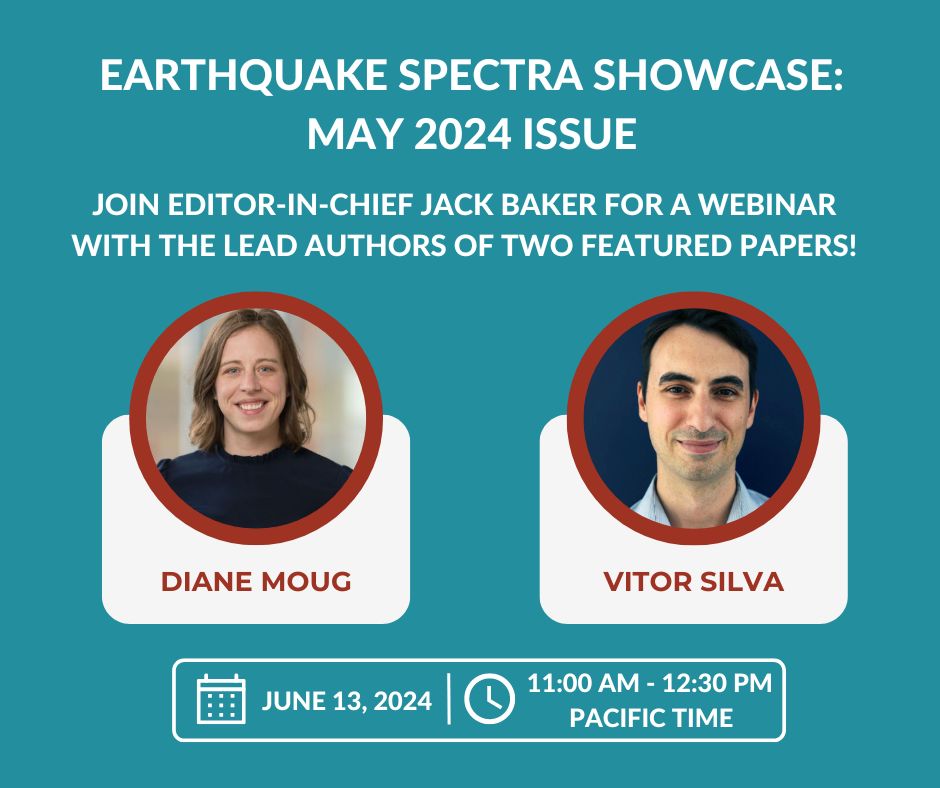
News New Frontiers in Seismic Risk Modelling: Using AI and Google Street View for Detailed Exposure Models By: Jul 8, 2024 Jun 13, 2024 Share Facebook LinkedIn In a recent webinar focused on the May 2024 issue of Earthquake Spectra, Vitor Silva presented a promising solution to a longstanding frustration in seismic risk assessment: acquiring detailed building data. Traditionally, modellers have relied on limited datasets like housing census information, which lack the granularity needed for accurate risk assessments. Vitor highlighted the potential of combining artificial intelligence with Google Street View imagery to automatically generate detailed exposure models for entire cities. However, a major hurdle lies in the scarcity of open-source, labelled building image datasets for training these machine learning algorithms. To address this gap, Vitor presented his research on creating a database of geo-located building photos specifically designed for this purpose. This database allows researchers to train algorithms that can automatically assign vulnerability classes to buildings based on their visual characteristics. During the webinar, Vitor walked through the creation process of the database of building photos and explained how it was used to calibrate machine learning models for classifying the vulnerability of 3,000 buildings in Lisbon, Portugal. This research holds significant promise for enhancing the accuracy and level of detail in exposure models, leading to more robust seismic risk assessments. To learn more about Vitor’s paper “A building imagery database for the calibration of machine learning algorithms” : https://doi.org/10.1177/87552930241229103 . No images found. GALLERY 1/0 VIDEO RELATED CONTENTS
- PartnerRe - GEM renew commitment to deliver innovative tools and products for improved seismic risk assessment - GEM Foundation
News PartnerRe - GEM renew commitment to deliver innovative tools and products for improved seismic risk assessment By: Nov 25, 2020 Share Facebook LinkedIn World leading reinsurer PartnerRe has renewed its partnership with GEM as Advisor Sponsor for the next three years (2021-2023). The renewal came on the heels of a successful collaboration from 2018-2020 that mutually enhanced the capabilities of both organizations to assess and manage risk through open, transparent and collaborative seismic risk assessment at global, regional and national scales. “GEM has really appreciated the strong participation of PartnerRe since 2018 and is looking forward to further strengthening this relationship over the next three years through the development of open models useful for the insurance industry. PartnerRe has been very active in working with GEM’s technical teams and in promoting collaboration as a vital input to the development of GEM’s software and models,” John Schneider, GEM Secretary General. With this renewed collaboration, GEM’s OpenQuake engine and its associated toolkits will continue to be at the forefront of Partner Re’s evaluation of earthquake risk for its insurance clients worldwide. Like GEM, PartnerRe values open, transparent tools and models, which are important in better understanding of the assumptions and sources of uncertainty that are essential in the evaluation and quantification of risks. Paul Della-Marta, Head of Catastrophe Research at PartnerRe said, “PartnerRe remains committed to helping insurers create risk transfer solutions that provide financial protection from the devastating effects of earthquakes. Our partnership with GEM from 2018-2020 has resulted in better understanding of earthquake hazard and risk in South and Central America, helping our clients create more relevant and impactful reinsurance solutions that enable earthquake-hit areas to recover more quickly. This new partnership with GEM will continue to strengthen our ability to fulfill that role. We are proud to support GEM in their goal of worldwide earthquake resilience”. No images found. GALLERY 1/3 Gallery VIDEO RELATED CONTENTS
- Development of a Fragility Model for the Residential Building Stock in South America | GEM Foundation
Publications Development of a Fragility Model for the Residential Building Stock in South America Share Facebook LinkedIn Download 2016 | Peer-reviewed South America—in particular, the Andean countries—are exposed to high levels of seismic hazard, which, when combined with the elevated concentration of population and properties, has led to an alarming potential for human and economic losses. Although several fragility models have been developed in recent decades for South America, and occasionally used in probabilistic risk analysis, these models have been developed using distinct methodologies and assumptions, which renders any direct comparison of the results across countries questionable, and thus application at a regional level unreliable. This publication aims at obtaining a uniform fragility model for the most representative building classes in the Andean region, for large-scale risk analysis. To this end, sets of single-degree-of-freedom oscillators were created and subjected to a series of ground motion records using nonlinear time history analyses, and the resulting damage distributions were used to derive sets of fragility functions.
- Earthquake scenarios for building portfolios using artificial neural networks: Part II – Damage and loss assessment | GEM Foundation
Publications Earthquake scenarios for building portfolios using artificial neural networks: Part II – Damage and loss assessment Share Facebook LinkedIn Download 2022 | Peer-reviewed Seismic risk assessment of building portfolios has been traditionally performed using empirical ground motion models, and scalar fragility and vulnerability functions. The advent of machine learning algorithms in earthquake engineering and ground motion modelling has demonstrated promising advantages. The aim of the present study is to explore the benefits of employing artificial neural networks (ANNs) in earthquake scenarios for spatially-distributed building portfolios. To this end, several recent major seismic events in the Balkan region were selected to assess damage and economic losses, considering different modelling approaches. For the assessment of the seismic demand, the ANN developed in the companion study and common ground motion models for Europe were adopted. For the vulnerability component, recent ANN models and existing scalar fragility and vulnerability functions for the Balkans were used. The estimates of all modelling cases were compared against the aggregated damage and economic loss data observed in the aftermath of these events. The findings of this study suggest that overall, the ANNs led to damage and economic loss estimates closer to the observations.
- GEM Hazard Modeling Tools Workshop - GEM Foundation
News GEM Hazard Modeling Tools Workshop By: Jul 2, 2018 Share Facebook LinkedIn The workshop, held at GEM’s Headquarters in Pavia, Italy from March 15-17, 2017 gathered more than 20 experts and scientists from different parts of the world – Europe, Nepal, China, Thailand and Japan – representing public and private sectors. Speaking on behalf of the Chinese Earthquake Administration participants, Mengtan Gao, Deputy Director of the Institute of Geophysics, underscores the importance of the workshop saying, “This workshop is important for China Earthquake Administration because we learned new techniques and methodologies in seismic hazard assessment, particularly those being used here in Europe”. He adds further, “Our young seismologists can take these learnings back to China and apply them to the next generation of seismic hazard maps that China plans to develop next year”. Mengtan Gao (R) has served the China Earthquake Administration for 36 years. He hopes to build the capacity of his young colleagues in seismic assessment through GEM’s OpenQuake engine. While other participants are just beginning to understand and appreciate OpenQuake Engine, the General Insurance Rating Organization of Japan (GIROJ) has started translating the users’ manual into Japanese. Mr. Suguru of GIROJ says, “GEM’s OpenQuake engine is the global standard tool for seismic hazard and risk analyses. We are translating the manual so more of our partners and colleagues can use the engine.” Mr. Suguru has a background in applied mathematics and is leading the translation of GEM’s OpenQuake engine manual into Japanese in GIROJ. Capacity development is one of the major activities of GEM to help build national and local technical capacities in hazard and risk assessment around the world. Being at the cusp of completing Work Programme 2, GEM is gearing up to implement a training program on how to use various tools freely available at OpenQuake platform for its various partners and stakeholders at national and regional levels. Participants from NSET Nepal discuss with John Schneider, GEM Secretary General, plans to re-echo what they have learned from the workshop at national level. Sujan Raj and Kapil believe that translating the OpenQuake manual would help their colleagues in adapting the tool for analyzing seismic hazard and risk data of Nepal.Maria del Puy of ZAMG, “We are a small organization and just starting up. We participated in this workshop because of OpenQuake engine’s open and transparent development approach. This is what attracted us to use and try it. So far this workshop has given us a good idea of what the engine can do.” No images found. GALLERY 1/0 VIDEO RELATED CONTENTS
- OpenQuake Workshops in Nepal and India - GEM Foundation
News OpenQuake Workshops in Nepal and India By: May 23, 2019 Share Facebook LinkedIn Surya Shrestha, NSET Executive Director gives the opening remarks for the Nepal workshop. Photo credit: NSET Nepal More than 20 people representing government, academic institutions and civil society organizations in Nepal participated in the interactive seminar on "Potential Applicability of Global Earthquake Hazard and Risk Models in Nepal" held at NSET auditorium hall in Lalitpur on March 22, 2019. The seminar was jointly organized by The Global Earthquake Model (GEM) Foundation and National Society for Earthquake Technology (NSET) - Nepal. Vitor Silva, GEM Risk Coordinator, and Anirudh Rao, Physical Risk Engineer, presented GEM and demonstrated OpenQuake and related tools, highlighting their specific applicability to improving earthquake risk assessment in Nepal. Participants of the seminar included the Ministry of Home Affairs (MoHA), Department of Urban Development and Building Construction (DUDBC), Institute of Engineering (IOE), Nepal Geological Society, Society of Nepalese Architects (SoNA), Department of Geology at Tribhuvan University, Nepal Government, Survey Department, Department of Mines and Geology, Kathmandu Metropolitan City, Lalitpur Metropolitan City, Build Change, and NSET among others. Prior to the seminar, Vitor and Anirudh met with the Ministry of Home Affairs, and the Building Division of the DUDBC to discuss the potential applicability of the national earthquake risk model for informing ongoing risk mitigation efforts in Nepal. Anirudh also participated in an "Earthquake Vulnerability Walking Tour" of Kathmandu organized by NSET structural engineers, which involved visual inspection and qualitative identification of the various factors contributing to the high vulnerability of buildings in the dense neighborhoods of the city centre. In Gujarat, India, GEM conducted its first OpenQuake training workshop of 2019, co-organized with the support of Indian Institute of Technology Gandhinagar (IITGN) professors Svetlana Brzev and Manish Kumar. About 20 faculty members and graduate students from IIT Bombay, IIT Madras, and IIT Gandhinagar participated in the workshop held at IIT Gandhinagar from 18-19 March 2019. More details here . No images found. GALLERY OQ workshop Nepal 2019 OQ workshop Nepal 2019 OQ workshop Nepal 2019 OQ workshop Nepal 2019 1/9 OpenQuake workshop in Nepal. Photo credit: NSET Nepal VIDEO RELATED CONTENTS