Thanks for submitting!
You will be contacted as soon as possible


QUICK LINKS


PROFILES
PUBLICATIONS
EXPOSURE
VULNERABILTY
SOFTWARE
EQ MODELS
Search Results
Search this site
1170 results found with an empty search
- Communicating Risk: How we respond to risk and what that means for communication - GEM Foundation
News Communicating Risk: How we respond to risk and what that means for communication By: May 21, 2020 Share Facebook LinkedIn GEM participated recently in a UNDRR Geneva-sponsored webinar facilitated by Jeanette Elsworth, UNDRR Senior Public Information Officer. The webinar explores the emotive way people respond to risk, why even if armed with all the facts, we may still have trouble persuading people to do the right thing. The webinar also touched on what behavioral economics can teach us about the way we respond to risk, and how we apply this to policy making and public-facing media communications. Speakers include experts from behavioral economics and communications with introductory remarks from Mami Mizutori, Special Representative of the UN for Disaster Risk Reduction and Head of UNDRR. Kate Orkin, Senior Research Fellow in Behavioral Economics at the University of Oxford talked about ‘Incorporating how we behave under risk into COVID-19 communications’. She proposed that key messages must: speak socially, invoke the future and use every touch point you can to be effective in changing the intended audience’s behavior. Lisa Robinson, Head of Advisory, BBC Media Action presented the ‘3 common mistakes in designing risk communication’. She said that failure of risk communication strategies is due to the following: skimping on audience research, creating a snazzy product without a strategy for change, and avoiding conversation about risks. Ranil Dissanayake, adviser to the UK Department for International Development added that key messages and how they are designed are important in behavioral change but he also pointed out that key messages alone cannot be effective if the target demographic is faced by more immediate problems such as joblessness, poverty and hunger. However, he agreed with Kate and Lisa on the importance of understanding the intended audience in order to be effective in communicating risk. During the discussion, a trending topic focused on the importance of risk communication in changing behaviors, but participants also recognized the fact that it’s expensive and requires a lot of sustained work. Stephanie Speck, Head of Communications, Advocacy, Knowledge Management and IT, UNDRR gave the closing remarks, highlighting the possibility of a follow up webinar focusing on how to develop and implement a communication strategy when financial, material and human resources are limited. For the latest in risk communication online training and workshops, visit . No images found. GALLERY 1/0 Gallery VIDEO RELATED CONTENTS
- Scenario impact assessment for volcanoes using the OpenQuake engine | GEM Foundation
Publications Scenario impact assessment for volcanoes using the OpenQuake engine Share Facebook LinkedIn Download 2025 | Peer-reviewed This study introduces a unified framework for evaluating the physical impacts of earthquakes and volcanic eruptions on buildings, leveraging upon the existing capabilities of the OpenQuake engine for earthquake risk assessment and various existing packages for computing volcanic hazard footprints. We illustrate the capabilities of the new OpenQuake volcanic scenario module using two case studies: a VEI (Volcanic Explosivity Index) 3-4 eruption of Nevado del Ruiz volcano in Colombia and a VEI 6 eruption of Mount Pinatubo in the Philippines, employing various methods for simulating hazard footprints for tephra fall, lava flows, pyroclastic density currents, and lahars. The findings demonstrate the versatility of OpenQuake in managing diverse geohazards and its potential for further extension to other hazards, while this integration advances our ability to assess and manage disaster risk.
- Request demo for GEM Global Historical Earthquake Archive (GHEA) | GEM Foundation
You have chosen to request a demo on: GEM Global Historical Earthquake Archive (GHEA) First Name Last Name Email Company or Institution Name Country Sector Provide Details I accept the license terms and the conditions of products use. Email us at product@globalquakemodel.org if you're experiencing problems submitting this form or if you have any inquiries. Thank you. Request Thanks for submitting! You will be contacted as soon as possible Add answer here
- Using the lessons from COVID19: Getting ready for earthquakes in the future - GEM Foundation
News Using the lessons from COVID19: Getting ready for earthquakes in the future By: May 21, 2020 Share Facebook LinkedIn Even though the COVID19 pandemic is not over yet, this catastrophic event has already taught us a lot; so, we tried to reflect on the lessons that could be drawn and carried into the future to reduce earthquake risk. Recently, GEM has completed a short social media campaign on the lessons learned from the COVID-19 that can be used in dealing with future earthquake risk. In case you missed it, here they are: 1) There is a need to strengthen open and transparent cooperation among the scientific community, businesses and political leaders. Especially in our field of work, dealing with an earthquake disaster that encompasses nations and regions, implementing science-based solutions will need economic and political will. 2) There is a need to develop a stronger system that can quickly translate scientific knowledge into practical and workable mitigation and emergency response strategy at the local and community level. 3) There is a need for governments and institutions to provide the population with simple, clear and understandable information and to take active actions against fake news and misinformation. 4) There is a need to reorganize, restructure, refocus, and ‘retrofit’, so to speak, our global institutions to become more efficient and readier in dealing with future risks such as earthquakes, pandemics and any disaster that can endanger human lives. 5) There is a need to urgently finance research and development before the next global crisis occurs. Investing in scientific research and development plays a critical role in addressing the challenges in understanding, assessing and responding to the time-dependent nature of disaster risk. Moreover, sustained preparedness and awareness are pivotal for reducing risk from natural hazard events and for ensuring that people can act on warning in timely and appropriate ways. However, in order to achieve them, significant financial, human and material resources are needed at the national, regional and international levels before, during and after disasters. To sum it all up, before the next global disaster or crisis occurs, greater efforts are still needed in order to clearly communicate: science-based disaster risk assessments, socio-economic impacts, evaluations of mechanisms for risk reduction, and prescriptive options for translating scientific findings into practice. Here at GEM we will always work to do our part and give our contribution with openness, collaboration, commitment to science and a special focus on serving the public good. No images found. GALLERY 1/5 Gallery VIDEO RELATED CONTENTS
- Careers | Global Earthquake Model Foundation
GEM is an equal opportunity employer, and we do not discriminate in hiring or employment on the basis of any characteristic protected by law. WORK WITH US GEM is an equal opportunity employer, and we do not discriminate in hiring or employment on the basis of any characteristic protected by law. We offer a safe and comfortable working environment with competitive salaries based on a non-profit scale and commensurate with experience and qualifications. We offer a young, innovative and stimulating international working environment in Pavia, a university town in the North of Italy (35kms from Milan). Share Facebook LinkedIn Anchor 1 List of Vacancies Go Position Description Deadline Apply online Entry-Level Seismic Hazard Modeller The position involves developing probabilistic seismic hazard models, conducting research, and supporting scientific training. Open until a suitable candidate has been identified Geotechnical Earthquake Risk Modeller - Liquefaction and Landslides To help develop earthquake-triggered hazards and their integration into regional and global seismic risk assessment. Open until a suitable candidate has been identified Search
- Request demo for Sub-Saharan Africa Hazard | GEM Foundation
You have chosen to request a demo on: Sub-Saharan Africa Hazard First Name Last Name Email Company or Institution Name Country Sector Provide Details I accept the license terms and the conditions of products use. Email us at product@globalquakemodel.org if you're experiencing problems submitting this form or if you have any inquiries. Thank you. Request Thanks for submitting! You will be contacted as soon as possible Add answer here
- UNDRR Grant Boosts Seismic Risk Assessment in Bangladesh - GEM Foundation
News UNDRR Grant Boosts Seismic Risk Assessment in Bangladesh By: Sep 29, 2023 Share Facebook LinkedIn The United Nations Office for Disaster Risk Reduction (UNDRR) has granted support to the Global Earthquake Model Foundation (GEM) for a fundamental initiative aimed at earthquake risk assessment in Bangladesh. This project, running from August 2023 to March 2024, primarily focuses on generating sub-national earthquake risk analyses for Bangladesh. Closing the Knowledge Gap Bangladesh faces substantial seismic risks due to its diverse geography, from the active Himalayan belt in the north to seismic-prone southern regions. Vulnerable building typologies, rapid urbanization, liquefiable soils, non-engineered structures, and inadequate code enforcement contribute to high seismic risk. Earthquakes not only result in human and economic losses but also disrupt society and businesses for extended periods. To address this, this project aims to develop an open seismic risk model for Bangladesh, offering valuable insights for informed decision-making in disaster risk management. Expanding Collaborations with MoDMR Bangladesh's Ministry of Disaster Management and Relief (MoDMR), since 1972, has partnered with national and international entities for disaster risk assessment and mitigation. Collaborations with the United Nations Development Programme (UNDP) led to the Comprehensive Disaster Management Plan (CDMP) in 2004. The Bangladesh Urban Earthquake Resilience Project (BUERP) by the World Bank, in tandem with the Earthquakes and Megacities Initiative (EMI), commenced in 2012. More recent efforts include a localized Index for Risk Management (INFORM) and various academic studies. However, there is a gap signaled by the absence of an open seismic risk model for Bangladesh that may undermine the efficacy of earthquake risk management policies, programs, and investments. Within the scope of this project, we aim to bridge this gap to develop an open-source probabilistic seismic risk model for Bangladesh and transfer key insights from the risk assessment to decision-makers in the government and other key stakeholders in the disaster risk mitigation community in the country. Data Integration and Validation The main objective of this project is to develop a detailed, open, sub-national earthquake risk model and evaluate seismic risk for Bangladesh at the zila (district) and upazila (subdistrict) level. The project incorporates certain key updates to the probabilistic seismic hazard model for the Indian subcontinent in GEM’s Global Hazard mosaic, and integrates the hazard with updated high-resolution exposure and vulnerability data for Bangladesh, ensuring context-specific risk assessment. GEM's prior division-level maps for Bangladesh will be enhanced to upazila (subdistrict) level in this endeavor. Data sources include the Bangladesh Bureau of Statistics (BBS), Comprehensive Disaster Management Programme (CDMP), Ministry of Disaster Management and Relief (MoDMR), and others. A Collaborative Effort Kazi Shahidur Rahman, Humanitarian Affairs Specialist at the UN Resident Coordinator’s Office in Bangladesh, expressed his enthusiasm, acknowledging the project's alignment with government and stakeholder risk assessment activities. He conveyed gratitude to the Ministry of Disaster Management and Relief (MoDMR) for their enduring partnership with the Humanitarian Coordination Task Team (HCTT), underscoring their commitment to this crucial endeavor. Additional notes: Expert Panel Composition The technical panel steering this seismic risk assessment initiative is a collaborative assembly of key stakeholders and experts. Led by the Additional Secretary of Bangladesh's Ministry of Disaster Management and Relief (MoDMR), it comprises representatives from vital entities, including the Department Of Disaster Management (DDM), the Fire Service and Civil Defence of Bangladesh, the Ministry of Housing & Public Works (MoHPW), and the Statistics and Informatics Division (SID) of the Bangladesh Bureau of Statistics (BBS). In addition, the panel includes the participation of seasoned national experts specializing in seismic hazard and risk assessment from institutions such as the University of Dhaka (DU), Bangladesh University of Engineering and Technology (BUET), and Jahangirnagar University (JU). Further enriching the panel's knowledge base are contributions from the Geological Survey of Bangladesh, the Centre for Urban Studies (CUS), and the United Nations Development Programme (UNDP), Bangladesh. This diverse and multidisciplinary collaboration underscores the commitment to ensuring the project's success in bolstering earthquake preparedness and resilience across Bangladesh. No images found. GALLERY 1/0 VIDEO RELATED CONTENTS
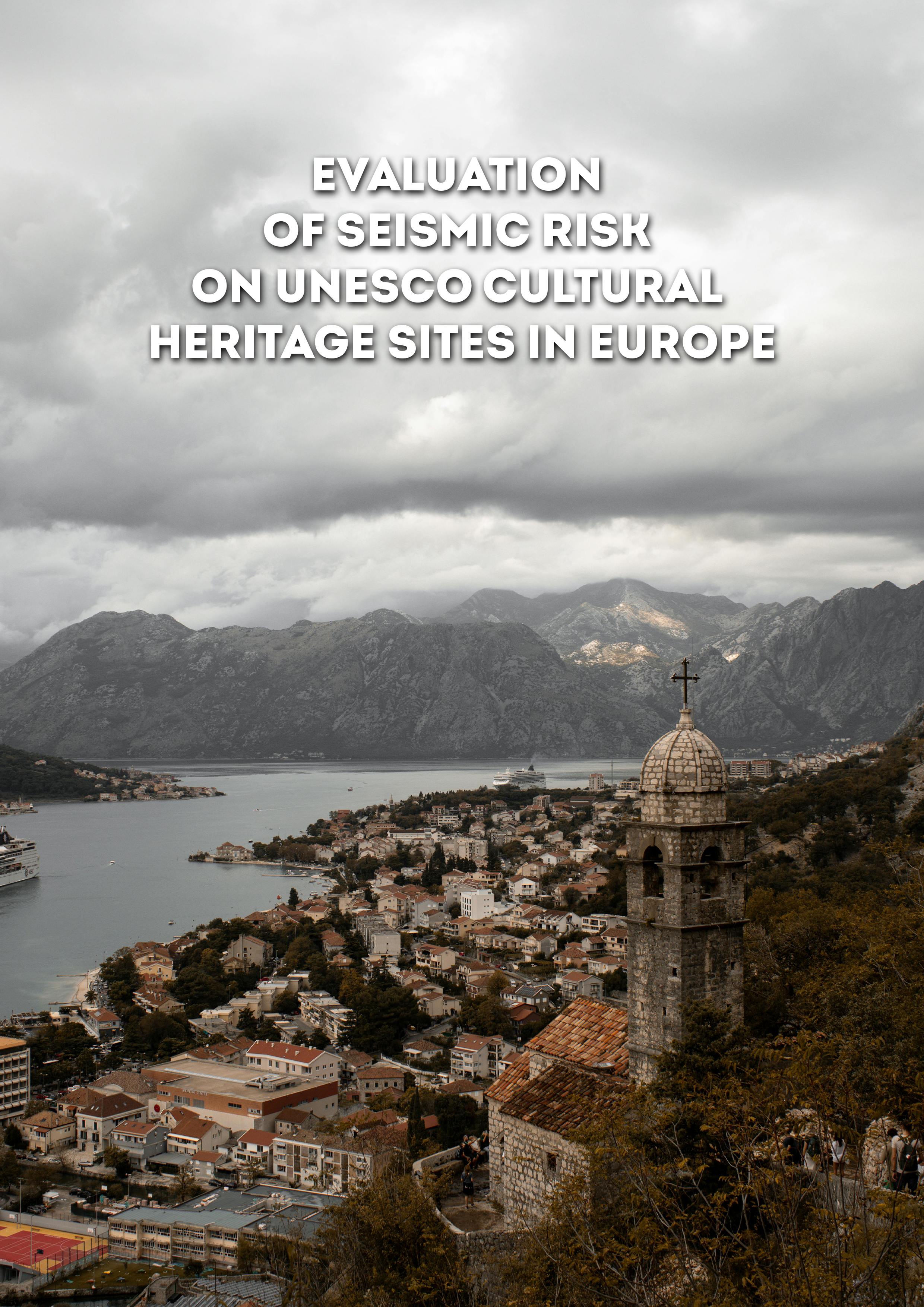
- Evaluation of Seismic Risk on UNESCO Cultural Heritage sites in Europe | GEM Foundation
Publications Evaluation of Seismic Risk on UNESCO Cultural Heritage sites in Europe Share Facebook LinkedIn Download 2018 | Peer-reviewed Earthquakes have been responsible for the destruction of hundreds of monuments throughout human history. Due to their size, conservation state, and lack of seismic provisions, monuments are particularly vulnerable to the effects of geological hazards. The first step toward the mitigation of the earthquake threat consists of understanding the existing seismic risk and evaluating possible strategies to reduce it. This study presents a simplified assessment to evaluate the probability of damage due to ground shaking on UNESCO World Heritage cultural sites throughout Europe. The seismic hazard model (SHARE) has been employed to derive hazard curves, which were combined with a fragility model to calculate the annual probability of damage or collapse. These calculations were performed assuming different soil conditions, and the resulting risk metrics can be used for risk awareness, to inform the prioritization of the sites in need of structural interventions, and to support additional risk analysis.
- OpenQuake | Global Earthquake Model Foundation
OpenQuake (OQ) - comprised of the engine, platform and tools - caters to a variety of users, from modellers and researchers to emergency planners openquake OpenQuake (OQ) - comprised of the engine, platform and tools - caters to a variety of users, from modellers and researchers to emergency planners - OpenQuake is used for a wide range of purposes for disaster risk reduction and management. OQ Data & Tools OQ Training OQ Tutorials OQ Engine OQ Platform Anchor 1 Get started with the OQ Engine: read on below or visit our OQ GitHub website . The OpenQuake Engine is the Global Earthquake Model Foundation’s (GEM) state-of-the-art, open-source software collaboratively developed for earthquake hazard and risk modelling. It runs on operating systems such as Linux, macOS and Windows; and can be deployed on laptops, desktops, standalone servers and multi-node clusters. The functionality to analyze hazard and risks at specific site, city, country or regional level makes the OpenQuake Engine a powerful and dynamic tool for assessing the potential impacts of earthquakes at any location in the world. Instructions For modellers, researchers, scientists and engineers 01 Download the latest user manual . 02 Download the latest version of the 03 Follow the installation guide here . OpenQuake Engine Related Documentation Aunt Bette's Homemade Pecan Pie Rockin’ Rocky Road Ice Cream Tom’s Heavenly Apple Strudel Joe’s Divine Butter Tarts For developers 01 Follow the instructions here . Join the OpenQuake Forum Check OQ Engine's Project Status here. OpenQuake Engine Key Features HAZARD Classical PSHA*: hazard curves, hazard maps, uniform hazard spectra (UHS), disaggregation Event-based hazard : stochastic earthquake event sets and ground motion fields, hazard curves, hazard maps Scenario hazard: single event - stochastically generated ground motion fields Additional features: 5 typologies for modeling seismic sources 100+ GMPEs implemented and tested Tools for harmonizing catalogs, creating seismogenic input files, analyzing strong motions and GMPEs PHYSICAL RISK Classical PSHA-based: asset-specific loss exceedance curves, average annual loss, loss maps, building typology disaggregation Event-based risk: event loss tables, loss exceedance curves - asset specific and aggregated, average annual loss, loss maps, loss disaggregation Scenario hazard: loss statistics, loss maps Scenario damage: collapse maps, damage distribution per asset and building typology Single software Combines hazard and risk in a single software Compatibility Compatible with various existing hazard, vulnerability and exposure models Calculations Calculates scenario and probabilistic hazard and risk analysis Different Scales Supports calculations at different scales Uncertainties Accounts for wide spectrum of uncertainties Typologies Large set of source typologies for modelling faults as well as distributed seismicity Logic Tree Logic tree support (representing epistemic uncertainty) Explicit Uncertainty Explicit representation of uncertainty, including separation of epistemic from aleatory Pre-computed data Runs risk calculations for precomputed hazard curves and ground motion fields OQ Engine Calculators and Outputs OQ Platform The OpenQuake Platform is a website that allows the community to explore, manipulate and visualize the datasets and models and to use tools that GEM produces. The platform also allows users to contribute, share and discuss new findings and results with the GEM community. Share your outputs - datasets, maps, models - to the GEM OpenQuake community through the Platform. The OpenQuake Platform hosts a number of national, regional and global models. Follow the instructions below to access data from GEM and the OQ community. For users who only need outputs such as datasets, layers or maps, you can simply register for free and browse the Platform for the data that you need. To start sharing your data, follow the instructions below. Sign in or register here . Click Layers > Upload Layers Create maps based on GEM’s existing datasets or create one based on your uploaded Layer. Click Maps > Create Maps Save and Publish your map to share with the OpenQuake community. To start browsing and downloading data, follow the instructions below. Sign in or register here . In the Search box, type the name of the map or dataset you’re looking for. Look for your item from the search results, click to Download. To customize or create your own maps, click Maps > Create Maps Click the Add Layer icon and select from the available layers from the dropdown list. Save and Publish your map. Download your map. Sign in Register Openquake: Tools and Data GEM works on a wide range of open-source source (software) tools to allow you to calculate, share and explore earthquake risk. Most of these are already embedded in the platform , but others are released as stand-alone applications. All 0 Small Title BUSINESS NEWS License type: License type License type: License type Collapsible text is great for longer section titles and descriptions. It gives people access to all the info they need, while keeping your layout clean. Link your text to anything, or set your text box to expand on click. Write your text here... Product Group Sub Product Group Product Type License Type Sort by Order by View: Table Blocks 1 2 3 4 5 1 ... 1 2 3 4 5 6 7 8 9 10 11 12 13 14 15 16 17 18 19 20 21 22 23 24 25 26 27 28 29 30 31 32 33 34 35 36 37 38 39 40 41 42 43 44 45 46 47 48 49 50 51 52 53 54 55 56 57 58 59 60 61 62 63 64 65 66 67 68 69 70 71 72 73 74 75 76 77 78 79 80 81 82 83 84 85 86 87 88 89 90 91 92 93 94 95 96 97 98 99 100 ... 100 Openquake: Training The OpenQuake online training is designed for an audience with a diverse background and expertise and covers the main concepts of earthquake risk assessment, along with the basic features of the engine. The training activities have been tailored for beginner users, and are divided into four modules that cover different types of calculations using the OpenQuake-engine. Each module is approached from a technical and practical perspective. It includes a theoretical introduction, followed by step-by-step examples that help to consolidate the concepts, as well as exploring the OpenQuake tools for each type of calculation. Modules Module I: OpenQuake introduction https://www.training.openquake.org/oq-introduction Module II: Earthquake scenarios https://www.training.openquake.org/eq-scenarios Module III: Classical PSHA https://www.training.openquake.org/psha Module IV: Event-based analysis https://www.training.openquake.org/event-based Openquake: Tutorials OQ Engine Video Tutorials on seismic hazard and risk analysis available in English and Spanish. English https://www.youtube.com/watch?v=J46boursIRc&list=PL08aqbvcszvQxT_HMoSk0XisLw1twc3V4 Español https://www.youtube.com/watch?v=2rbDm-wiwbw&list=PL08aqbvcszvT6YG353CnIyL9d7gdZblBX OpenQuake - Software Installation and Demos OpenQuake Introduction - A software for Seismic Hazard and Risk Assessment OpenQuake - Ground Motion Fields: Theoretical Background OpenQuake - Scenario Damage and Loss: Theoretical Background OpenQuake - Scenario Damage and Loss: Hands-on exercise OpenQuake - Classical PSHA: Theoretical Background OpenQuake - Classical PSHA: Hands-on Exercise OpenQuake - Event-based Risk: Theoretical Background OpenQuake - Event-Based Risk: Hands-on Exercise OpenQuake - Volcanic Risk Scenarios: Theory and Hands-On Exercise https://www.youtube.com/watch?v=leF4aQXGdjk&t=1013s Learn the basics to perform volcanic risk scenarios using the OpenQuake engine. In this video we cover the main components of a seismic risk model and discuss how their modelling assumptions and products may be useful for volcanic risk assessment. We include a hands-on exercise using the software to calculate volcanic risk and the QGIS OpenQuake plug-in to export and visualize results, like total losses and loss maps for the El Ruiz Volcano.
- 10th Anniversary of OpenQuake | GEM Foundation
October 22, 2020 1600-1730 CEST the openquake 10 year anniversary webinar Read article Background The OpenQuake Engine is at the foundation of GEM’s hazard and risk assessment capability and is a hallmark of GEM’s open framework and global collaboration network. Since its first release 10 years ago, the OQ Engine has become the primary analysis tool used by a wide range of scientists and engineers worldwide for the analysis of earthquake hazard and risk at scales from site-specific and urban through to national, regional and global. Purpose To celebrate GEM’s and the OQ communities’ achievements in developing OQ and applying it to analyze seismic hazard and risk worldwide. To explore current capabilities and future directions in the development of the software and its applications. speakers John Schneider GEM Secretary General Marco Pagani GEM Hazard Laurentiu Danciu ETH Zurich Yufang Rong FM Global, USA Vitor Silva GEM Risk Murray Journeay NRCan, Canada Ana Beatriz Acevedo EAFIT Univ, Colombia agenda October 22, 2020 1600-1730 CEST topic speaker Introduction and brief history OQ Engine Hazard: past, present and future Working with the OQ Engine for site-specific, national and regional hazard assessment Seismic hazard analysis for engineering-based insurance applications OQ Engine Risk: past, present and future Building a national risk model for Canada Urban Risk Assessment in Colombia Questions and Answers, wrap-up John Schneider Marco Pagani Laurentiu Danciu Yufang Rong Vitor Silva Murray Journeay Ana Beatriz Acevedo John Schneider brochures presentations video a decade of serving oq engine to analize seismic hazard & risk to reduce losS of lives and properties for a safer and resilient future.