Thanks for submitting!
You will be contacted as soon as possible


QUICK LINKS


PROFILES
PUBLICATIONS
EXPOSURE
VULNERABILTY
SOFTWARE
EQ MODELS
Search Results
Search this site
1170 results found with an empty search
- PAPERS project advances scenario-based seismic hazard and risk assessment - GEM Foundation
News PAPERS project advances scenario-based seismic hazard and risk assessment By: Apr 24, 2026 Feb 13, 2026 Share Facebook LinkedIn GEM recently concluded the PAPERS project – Piattaforma Analisi Pericolosità E Rischio Sismico – an initiative to strengthen scenario-based seismic hazard and risk assessment through a single operational framework that combines open models, high-performance computing, the OpenQuake Engine and a WebGIS environment. The project is designed to support more integrated analysis of scenario hazard, exposure and risk, while also creating a platform structure that could be extended to any national context where the underlying data are available. The initiative is organised around three main components: building the operational platform around the OpenQuake Engine, preloading the system with hazard, exposure and vulnerability models together with earthquake scenarios (including historical events and events from a stochastic catalogue) and building the capability for user-defined models to replace the preloaded models. A key strength of the platform is the way it brings different types of information into a single environment. As shown in the project demonstration (see video below), users can explore multiple layers of exposure data at different administrative levels, including building counts, material types, occupancies, replacement costs, occupants and selected road infrastructure indicators. The platform also supports the selection of hypothetical earthquake events, the running of calculations and the creation of interactive maps showing outputs such as buildings beyond repair, economic losses and fatalities. https://www.youtube.com/watch?v=ulNSKR-nBJY These features are intended to support a more operational and exploratory approach to seismic risk analysis. Rather than working only with static outputs, users can interact with the platform to examine how losses and impacts are distributed geographically and across different exposure categories. The project was funded through a cascade grant under Italy’s High-Performance Computing, Big Data e Quantum Computing Research Centre. GEM considers the PAPERS computational infrastructure as a foundation that can support future applications in many other partner countries. No images found. GALLERY 1/0 VIDEO RELATED CONTENTS
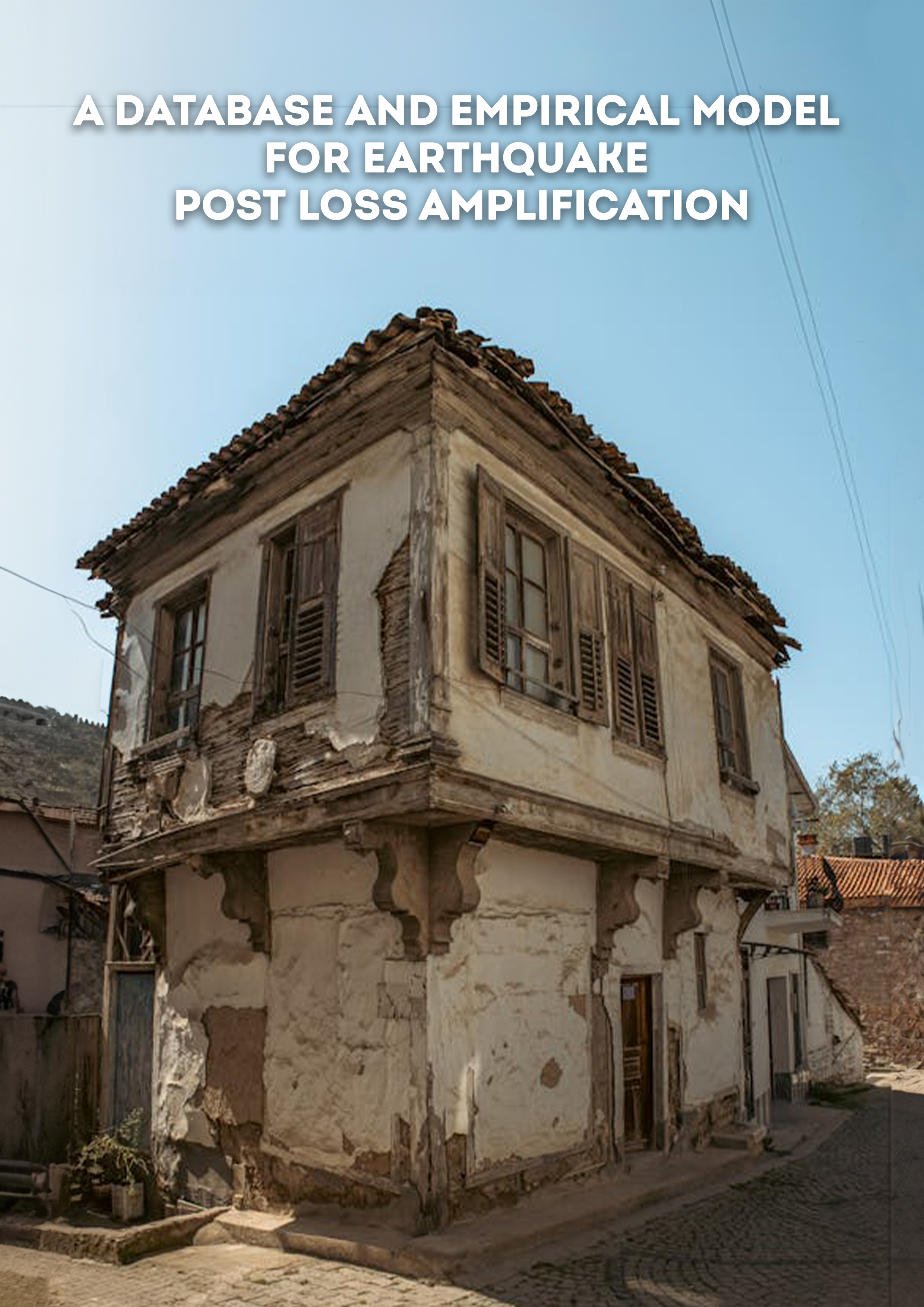
- A Database and Empirical Model for Earthquake Post Loss Amplification | GEM Foundation
Publications A Database and Empirical Model for Earthquake Post Loss Amplification Share Facebook LinkedIn Download 2024 | Peer-reviewed The impact of destructive earthquakes might exceed the local capacity to cope with disasters and lead to an increase in the reconstruction costs. This phenomenon is commonly termed as post-loss amplification, and its main causes include the increase in the cost of construction materials and labor due to the sudden demand, the need to reconstruct following higher standards, or other unexpected costs. We reviewed 70 past earthquakes to identify events where post-loss amplification was observed, and collected a set of seismogenic, socio-economic, geographical, and impact variables for those events. Using this database, we developed two models to predict post-loss amplification, using a composite indicator that reflects the level of destruction in the region, or a parameter that characterizes the frequency of the event. This study indicates increased costs (>10%) for events where the economic losses exceed 1% of the regional gross domestic product, or for events with an estimated return period of at least 10 years. These models can be applied directly in the amplification of economic losses in earthquake scenarios or in probabilistic seismic risk assessment.
- Canada’s new earthquake science: Learning from loss models - GEM Foundation
News Canada’s new earthquake science: Learning from loss models By: Mar 26, 2021 Share Facebook LinkedIn The Institute for Catastrophic Loss Reduction (ICLR) recently organized a webinar and invited leaders from the loss modeling community to present and discuss their views about seismic risk in Canada. Participants from RMS, AIR, CoreLogic and NRCan presented their estimates of the expected consequences of a catastrophic earthquake and participated in a discussion about the differences in the findings between the models. More than 200 participants with an interest in Canadian catastrophe risk participated from across sectors including insurance and risk finance, government, and academia. This workshop really brought together insurers, government policy makers and researchers to look at what the latest earthquake risk science is telling us about Canada, and to determine how to manage it from public and private perspectives." Paul Kovacs, ICLR Director. The webinar tackled three current issues – preparedness for extreme earthquake hazards, new science anticipating increased shaking, and analysis of the risk of fire following a major earthquake. For the first time, Canadian earthquake modelers across public and private sectors came together to discuss how models support action to manage and address these issues. In a panel led by ICLR Director Paul Kovacs, Lori Medders (Professor of Insurance, Appalachian State University in Boone, North Carolina, USA) and GEM Secretary General John Schneider closed the meeting with a conversation about the importance of loss models in serving the public interest and how important transparent and open models and methodologies are to gaining trust and managing risk. “For GEM, I think the open approach has been fundamental in developing partnerships, and in developing the capacity to do hazard and risk assessments across sectors and stakeholder groups.” John said. He added that “Ultimately it has greatly accelerated the transition from research to application and has broadened the scope of applications. We're fast tracking research directly into models and their use. As we've seen in the presentations today on the development of Canadian earthquake risk models, information is being taken up and digested very quickly if it's openly available.” About ICLR The Institute for Catastrophic Loss Reduction (ICLR), is a world-class center for multi-disciplinary disaster prevention research and communication. ICLR was established by Canada’s property and casualty (p&c) insurance industry as an independent, not-for-profit research institute affiliated with Western University. ICLR has been leading a conversation about the new science about earthquakes in Canada. The 2020 Canadian seismic hazard model predicts much stronger shaking than the 2015 model and ICLR research shows that the risk of extensive fire damage following an earthquake also increases. Models help insurers and other decision makers understand the evolving knowledge about earthquakes. For more information about ICLR, visit https://www.iclr.org . No images found. GALLERY 1/0 Gallery VIDEO RELATED CONTENTS
- Albania’s Institute of Geosciences (IGEO) and GEM collaborate to update the national seismic hazard model - GEM Foundation
News Albania’s Institute of Geosciences (IGEO) and GEM collaborate to update the national seismic hazard model By: Apr 11, 2023 Share Facebook LinkedIn GEM and IGEO-Albania are currently implementing a 1-year project funded by the Central European Initiative (CEI - https://www.cei.int/ ) and the Albanian Electricity Corporation (KESH - https://www.kesh.al/en/ ) to update Albania’s probabilistic seismic hazard model through a series of technical workshops. The first and second workshops, which took place in Pavia, Italy from January 23-27 and March 21-24, focused on analyzing and converting earthquake catalogs and databases into GEM’s OpenQuake database format - NRML (Natural Hazard Risk Markup Language); and the selection of Ground Motion Prediction Equations (GMPEs) respectively. The third and fourth workshops will focus on running and calibrating the model in the OpenQuake engine based on the results of the previous workshops. The expert supervisor from the Albanian Team was Prof. Dr. Neki Kuka who brings extensive knowledge in this area. The IGEO contingent was composed of Anila Xhahysa, Edmond Dushi, Damiano Koxhaj, Klajdi Qoshi, Besian Rama, Migena Ceyhan and Kristina Matraku. In the first workshop held in January, GEM had the opportunity to chat with Edmond Dushi, Seismologist and Vice Director of the Institute of Geosciences, (IGEO); and Anila Xhahysa, Structural Engineer and Head of the Seismology Department (IGEO). Below are some of the excerpts from the interview. On the motivation of IGEO-Albania to partner with GEM “Our building code is quite old and outdated, dating back to 1989 and it’s based on a macroseismic intensity map, hence with the adoption of the Eurocode normative, we are hoping that this partnership would help us update the probabilistic seismic hazard model for Albania, in order to support the national annex of this new Design Code”, Anila said. Anila further added, “We already have a seismic hazard model which is substantially good. However, there are features that we would like to improve like the ground motion prediction equations and adaptive smoothing, being dynamically updated with recent research”. Edmond said, “The partnership is also an opportunity to share the institute’s experience with earthquake cataloging and what we’ve learned about earthquake faults based on our studies in the past. Our institute is the main institution on geosciences and we are working mainly on recording earthquake events and building the database. We also need to have more detailed models of faults and the ability to link together these two classes of information”. Interview with IGEO's Edmond Dushi (R), Seismologist and Vice Director, and Anila Xhahysa, Structural Engineer and Head of the Seismology Department. OpenQuake – Bridging IGEO and GEM Anila joined an online OpenQuake training in 2022. It was the first time that she used the software and found it a great platform for building PSHA as well as stochastic models. This led her to request in-person training, which started the discussion about IGEO’s hazard modelling needs. The project was developed with Marco Pagani, GEM Hazard Team Coordinator, which was eventually funded by the European Investment Fund. From the institutional side, Edmond added that IGEO has been working to connect with groups or organizations that use the latest or most advanced methods working in the field of seismic hazard modelling. As a small institution with limited resources to develop its own advanced tools, Edmond added that IGEO saw an opportunity to partner with GEM to address the current gaps. On the importance of the GEM partnership Edmond and Anila expect that the partnership will significantly improve the quality of future seismic hazard model development. Both also expected that the partnership would extend from the current focus on hazard to the development of seismic risk models. They summarized the importance of the partnership into three key areas: -Improvement of public and private seismic risk reduction strategy- By dynamically updating Albania’s seismic hazard model using GEM tools and methodologies, national risk reduction strategies will improve and move toward modernization. On the private sector side, both foresee that insurance companies will be able to develop tailor-fit products for their clients. -Better emergency response planning- Since Albania’s civil protection uses IGEO’S data and tools for emergency response planning, an improved seismic hazard model based on the latest science would lead to a better warning system and emergency response in the country. -Modernization of seismic hazard modelling- Both agreed that the partnership would help in IGEO’s journey towards modernization and could even influence the current institute’s philosophy and practices in developing future seismic hazard maps in favor of an open and more robust hazard modelling framework. On their impression of the workshop “The presentation of the modeling workflow was good and I believe it can be adopted by many organizations as a framework for improving the processing of future hazard models. Within this context, I see that there are some parameters within this framework that can lead us to improve our data and actual model for future needs,” said Edmond. Anila found the workshop “great, substantive and concise. The workshop had sound theoretical information and I think that made it beneficial for us”. Parting words “We hope that this local project will serve as an example for other government agencies in other fields of studies in Albania to open up their codes and their products, to start sharing to improve our systems and hopefully make Albania a better and more disaster resilient country.” – Anila and Edmond, IGEO. No images found. GALLERY 1/10 VIDEO RELATED CONTENTS
- New blood: Meet GEM’s new team members from Costa Rica and United Kingdom - GEM Foundation
News New blood: Meet GEM’s new team members from Costa Rica and United Kingdom By: Sep 15, 2022 Share Facebook LinkedIn The GEM Secretariat is proud to welcome its newest members: Kirsty Bayliss and Andres Abarca. Kirsty Bayliss is from Scotland, United Kingdom and specialises in statistical seismology. She joined the Hazard Team on September 7th as a seismic hazard scientist. She completed her PhD studying earthquake clustering at the University of Edinburgh and worked on development and testing for novel earthquake forecasting methods during her time as a postdoctoral researcher. Kirsty joined GEM because she is passionate about tackling earthquake problems and enthusiastic about open science. She will contribute her expertise to earthquake occurrence modelling. Andres Abarca will join the team as Product Engineer working directly under the Secretary General. Andres is from Costa Rica and specialises in structural engineering and risk analysis, with a strong background in teaching and science communication. Andres has a PhD in regional risk assessment from the Understanding and Managing Extremes (UME) program of the University School of Advanced Studies in Pavia (IUSS Pavia). He has over 10-year experience as a structural engineer, university professor and researcher. He joined GEM because of his interest in the fields of risk assessment and communication, finding GEM to be a great opportunity to utilise his technical and communication aptitudes, in the service of increasing awareness to the risk of natural disasters. His role will focus on the evaluation and maintenance of GEM products, mainly serving as a link between the technical product development teams and current (as well as prospective) users. He will also serve as an ambassador for GEM’s goals and capabilities, representing the Foundation in multiple forums to promote GEM products, services and information. Welcome to the GEM family Kirsty and Andres! For a complete list of GEM Secretariat members, visit: https://www.globalquakemodel.org/our-team . No images found. GALLERY Kirsty Bayliss GEM seismic hazard scientist Andres Abarca GEM Product Engineer Kirsty Bayliss GEM seismic hazard scientist 1/2 VIDEO RELATED CONTENTS
- News Briefs: December 2021 Topiqs Newsletter - GEM Foundation
News News Briefs: December 2021 Topiqs Newsletter By: Dec 13, 2021 Share Facebook LinkedIn Nasdaq Risk Modelling for Catastrophes London Market event On September 16th, Nasdaq featured a video of John Schneider presenting GEM’s open, transparent and collaborative modeling approach, not-for-profit status and global capabilities in earthquake modelling. John also presented models that were already available in Oasis format and the work done to ensure the model results, global maps and the underlying models and databases utilized the best available and publicly accessible information, including from hundreds of local and regional experts. Watch the video at https://drive.google.com/file/d/1xhwfImSqlDBGSH2r3N994aGDffmLXpO4/view . More information about GEM models available on the platform at https://www.nasdaq.com/solutions/global-earthquake-model-gem . 2nd International Virtual Workshop on Global Seismology & Tectonics In September, GEM’s Kendra Johnson, Shreyasvi Chandrasekhar and Marco Pagani participated in the 2nd International Virtual Workshop on Global Seismology and Tectonics (IVWGST‐2021). Kendra presented an Introduction to Probabilistic Seismic Hazard Analysis (PSHA) on September 23rd, and Probabilistic Seismic Hazard Analysis (PSHA) input model on September 24th with Shreyasvi. Marco presented an Introduction to the OpenQuake Engine on September 28th. The lecture sessions aim to impart important information on emergent and impending topics of Seismology and Tectonics, involving case studies from seismically active zones of the world. The Webinar Series, held from 20-30 September 2021 was organized by the Geoscience & Technology Division North East Institute of Science & Technology (Council of Scientific & Industrial Research) Jorhat, Assam, India. Participants came from diverse geoscience disciplines and institutes across the world, including the United States Geological Survey, Norwegian Seismic Array (NORSAR), National Center for Seismology, Geological Survey of India, Wadia Institute of Himalayan Geology, CSIR-National Geophysical Research Institute, CSIR – North East Institute of Science and Technology, University of Bristol, University of Malta, Australian National University, Tohoku University, King Abdullah University, University of Ljubljana, Boston College, Indian Institute of Technology – Guwahati and National Institute of Technology, Agartala, India. World Conference on Earthquake Engineering (17WCEE) At the 17th World Conference on Earthquake Engineering (17WCEE) held on September 28th , Vitor Silva presented GEM and participated in the special session on safer and earthquake-resistant housing organized by EERI and IAEE's World Housing Encyclopedia. The session featured a panel discussion and five other presentations from Svetlana Brzev (Univ of BC), Amit Kumar (AKAH), Manuel A. Lopez Menjivar (Univ de El Salvador), Lars Abrahamczyk (Bauhaus-Univ Weimar) and Dominic Lang (NGI). EPICentre University College London webinar On September 25th , GEM's Vitor Silva and Anirudh Rao participated in an EPICentre UCL webinar. They presented the use of rapid earthquake damage evaluation based on earth observation data and machine learning. They concluded that synthetic aperture radar (SAR)-derived damage proxy maps (DPMs) can form a valuable input for a rapid post-earthquake damage assessment framework, and that combining optical-EO imagery and SAR in a workflow could improve prediction accuracy in the future. Watch the recording at https://www.youtube.com/watch?v=5RJOYhBU3Bo&t=4s . ImageCat Inhance Data Partner Technical webinar On November 4th, GEM presented an overview of GEM's earthquake hazard and risk models, with a focus on earthquake hazard and risk data that is being made available through Inhance. John Schneider provided a brief introduction to GEM and its collaborative and open approach to building models for the disaster risk reduction community. Marco Pagani described how the global mosaic of hazard models was developed and described the various layers of hazard information that are available. Vitor Silva gave an overview of GEM's global risk model - comprising hazard, exposure and vulnerability layers - and described the exposure and loss information that is available through Inhance. Watch the recording at https://drive.google.com/file/d/1UqVnDCkT-AJzB2tOYpuuMeM1vIxNUox4/view?usp=sharing . More information at http://www.inhancedata.com/ . European Forum for Disaster Risk Reduction: How can science and technology help us in better assessing disaster impacts? On November 26th, Vitor Silva presented the ‘Common terminology for exposure and vulnerability data applied to disaster loss data’ at this year’s virtual European Forum for Disaster Risk Reduction . The presentation was part of the topic “How can science and technology help us in better assessing disaster impacts?”. Vitor emphasized that defining a common taxonomy would enhance the standardization and the interoperability of disaster risk reduction datasets avoiding redundant and expensive data collection activities. Vitor further added that this common taxonomy could also be used to collect and store data from past events. The event was held from 24 - 26 November in Matosinhos, Portugal, organised by the United Nations Office for Disaster Risk Reduction - Regional Office for Europe and Central Asia; Portuguese National Authority for Civil Protection; and European Commission Council of Europe. GEM Governing Board meeting The GEM Secretariat successfully held the Governing Board meeting on 29 November and from 2-3 December 2021. The meeting, held virtually via Zoom, was highlighted by the presentation of the GEM Strategic Plan and Roadmap to 2030 (more about the Strategic Plan and Roadmap to 2030 in the InFocus section), GEM accomplishments over the last six months and updates from GEM partners and collaborators. The Earthquake Engineering Research Institute (EERI) also formally awarded the Outstanding Earthquake Spectra Paper for 2020 to GEM during the meeting (more on this story in the Top Story section). GEM products availability South Africa and Colombia models on Nasdaq Risk Catastrophe Modelling platform The GEM Colombia model is based upon GEM’s regional model for South America first developed from 2013 to 2015 within the South America Risk Assessment (SARA) project funded by the Swiss Re Foundation and updated in 2018. This model has been further improved with local information, such as local construction practices, replacement costs and level of enforcement of the seismic regulations. GEM’s South Africa earthquake risk model was generated using the hazard model for South Africa developed by the South Africa Council for Geoscience as the national hazard model, and for input to South Africa building design regulations. The vulnerability and exposure models and data were developed by GEM and cover the residential, commercial and industrial building stock. The risk model may be used to assess potential financial losses to commercial, industrial and residential buildings due to earthquake ground shaking. For more details, visit https://www.nasdaq.com/solutions/global-earthquake-model-gem . Global Simplified Earthquake Hazard Data on Oasis Hub GEM’s global simplified earthquake hazard map is now available on Oasis Hub. The Simplified map is a version of the full Global Earthquake Hazard Map intended for applications where quantitative analysis of hazard or risk is not required. For more details, visit: https://oasishub.co/dataset/global-simplified-seismic-hazard-map . Download the brochure here . GEM staff movement Our heartfelt thanks to Robin Gee for her contributions to GEM and we wish her continued success at Partner Re, where she will liaise with GEM as a GEM sponsor. Robin was a member of the Hazard Team for more than five years. She will be replaced by Manuela Villani as a hazard modeller. Manuela comes to GEM as the earthquake hazard team leader at Arup in London, where she will continue to work on a part time basis. Manuela joined the hazard team in November. Welcome to the family Manuela! No images found. GALLERY 1/6 Gallery VIDEO RELATED CONTENTS
- Indonesia Hazard | GEM Foundation
License Request Form You have chosen to get more information about: Indonesia Hazard Hazard Please check the link below to see if this product already meets your your requirements before submitting your request for a license. Thank you. DOWNLOAD THE OPEN VERSION Summary of steps to obtain a license for the requested product. Fill in the application form below. Click Submit. Please check your email Inbox or Spam folder for the summary of your request. You will then be contacted by the GEM Product Manager with either a request for more information, or a request to sign the license. If you do not hear from us within 2 weeks, please send an email to product@globalquakemodel.org . REQUEST DETAILS A. Requesting party information First Name Last Name Role/Job Email Business type Business type Other business Sector Sector Other sector B. License agreement signatory information The signatory must be someone who is authorised to sign license agreements on your behalf such as your immediate supervisor, manager or legal officer. If you’re a PhD student, the signatory must be your adviser or a university officer in charge of license agreements or similar legal documents. Full Name of Signatory Position Company Email of Signatory Organisation name Complete Address C. Purpose of request GEM is able to offer products for free because of the support of our project partners, national collaborators and institutional sponsors. All of GEM’s products are freely available for public good, non-commercial use, but with different license restrictions. In most cases we release products under an open license (e.g., CC BY-SA or CC BY-NC-SA), which permits (re)distribution. In this case, we are granting access under a more restricted license that forbids distribution or disclosure and requires signing by GEM and the licensee in order to better assure accountability for the confidentiality of the information. In order for GEM to properly assess your request, please answer the following questions below. 1. Explain briefly how will the GEM product be used e.g. project, research including the expected results and the foreseen public benefit. Minimum 60 words. 2. Will you be able to share the results of your work with GEM? YES NO 3. Will you be able to provide feedback to GEM on the quality and usefulness of this product via a survey? YES NO D. Privacy Policy By submitting this form, you consent to the processing of your personal data in accordance with our Privacy Policy and the EU General Data Protection Regulation (GDPR). We are committed to safeguarding your information and ensuring it is only used for the purpose outlined in this form. You have the right to access, rectify, or delete your data at any time. For more information, please refer to our Privacy Policy. I agree Words: 0 Email us at product@globalquakemodel.org if you're experiencing problems submitting your application. Thank you. Submit Thanks for submitting! You will be contacted as soon as possible Incomplete data. Please fill in all required fields. Thank you.
- FORCE project: Groundwork activities gain strong support from local and national stakeholders in Nepal - GEM Foundation
News FORCE project: Groundwork activities gain strong support from local and national stakeholders in Nepal By: Apr 11, 2023 Share Facebook LinkedIn FORCE project: Groundwork activities gain strong support from local and national stakeholders in Nepa l GEM’s USAID-supported Forecasting and Communicating Earthquake Hazard and Risk (FORCE) project kicked off in Kathmandu, Nepal from February 20th to 24th by meeting local and national partners involved in disaster risk reduction activities in the country. A half-day introductory workshop for key project stakeholders on February 24th capped the groundwork activities. GEM, represented by Catalina Yepes and Alejandro Calderon, and GEM public sponsor - the National Society for Earthquake Technology (NSET), represented by Executive Director Surya Shrestha and its key officers, coordinated and participated in the kick-off activities. Discussions with different stakeholders focused on the following project goals in the country: to improve earthquake risk assessment practices; to introduce a temporal component in the global exposure model that would enable the quantification of future disaster losses, including those associated with climate change; and to develop communication and dissemination tools to maximize the uptake of disaster risk information in policy making. The discussions also highlighted the following priorities and challenges: need to unify numerous studies available in the country; need for an inter-governmental strategy to share, use and maintain information; need for a centralized system of open and transparent models (NDRRMA indicated the mandate to create a platform for this purpose); Importance of social vulnerability data for decision-makers and stakeholders, which the project must explore with the Statistical Office of Nepal. Discussions also focused on the challenges and the need to clearly communicate the outputs and results of the project to the relevant authorities and the general audience. The National Disaster Risk Reduction and Management Authority (NDRRMA), Nepal’s governmental institution with the mandate to provide information on earthquake risk in the country, sees three main areas of collaboration for the project that could address some of the challenges discussed: 1) technical training; 2) unifying and updating the existing risk information and models; and 3) using FORCE outcomes for current and future risk forecasts at the municipal level. Moving forward NDRRMA will be the main governmental institution for coordinating the project activities and will lead in facilitating access to existing data and surveys in the country, as well as the maintenance, distribution and communication of project outcomes to the relevant government offices and the public at large. NSET and GEM will be the main technical support for developing and updating the models, in close collaboration with academic institutions where possible. For more information about the FORCE project and the Nepal meetings, please visit the project website at: https://www.globalquakemodel.org/proj/force . No images found. GALLERY 1/37 VIDEO RELATED CONTENTS
- New tech could help engineers monitor how buildings withstand human-induced tremors: European Geosciences Union (EGU) Conference 2018 - GEM Foundation
News New tech could help engineers monitor how buildings withstand human-induced tremors: European Geosciences Union (EGU) Conference 2018 By: Jun 27, 2018 Share Facebook LinkedIn GEM’s Hazard Scientist, Kendra Johnson recently participated in the EGU General Assembly that took place in Vienna, Austria last April. The event drew more than 15,000 participants from 106 countries and featured 4,776 oral, 11,128 poster, and 1,419 PICO presentations as well as more than 600 unique scientific sessions together with 68 short courses and 294 side events. GEM participates in this yearly event to keep abreast of the latest development and advancements in European geoscience. This year, EGU shares an interesting technology that uses seismometers to record how humans make cities shake. The project, initiated by Jordi Diaz and colleagues at the Institute of Earth Sciences Jaume Almera in Barcelona, Spain first began as an outreach campaign to teach the general public about seismometers. (source: Geolog Seismicity of Life article written by Olivia Trani) After successfully picking up the seismic signals of major football games and rock concerts, Diaz and his colleagues are now exploring other applications such as monitoring how buildings withstand human-induced tremors and tracking traffic. “This new field of urban seismology aims to detect the vibrations caused by road traffic, subway trains, and even cultural activities,” reports EGU General Assembly Press Assistant Tim Middleton on GeoLog. (source: Geolog Seismicity of Life article written by Olivia Trani) The next EGU General Assembly is scheduled from 7-12 April 2019, Vienna, Austria. The European Geosciences Union (EGU) is Europe’s premier geosciences union, dedicated to the pursuit of excellence in the Earth, planetary, and space sciences for the benefit of humanity, worldwide. No images found. GALLERY 1/0 VIDEO RELATED CONTENTS
- Vitor Silva et al. receive the 2020 Outstanding Paper Award for Development of a Global Seismic Risk Model from Earthquake Engineering Research Institute - GEM Foundation
News Vitor Silva et al. receive the 2020 Outstanding Paper Award for Development of a Global Seismic Risk Model from Earthquake Engineering Research Institute By: Dec 13, 2021 Share Facebook LinkedIn The paper which describes the Global Earthquake Hazard and Risk maps released by GEM in December 2018, was a result of a long and extensive collaboration with local, national, regional and international institutions worldwide. Download link: https://doi.org/10.1177%2F8755293019899953 Authors: Vitor Silva, Desmond Amo-Oduro, Alejandro Calderon Carpio, Catarina Costa, Jamal Dabbeek, Venetia Despotaki, Luis Martins, Marco Pagani, Anirudh Rao, Michele Simionato, Daniele Viganò, Catalina Yepes Estrada, Ana Beatriz Acevedo, Helen Crowley, Nick Horspool, Kishor Jaiswal, Murray Journeay, Massimiliano Pittore. EERI official announcement: https://www.eeri.org/about-eeri/news/11477-vitor-silva-et-al-receive-2020-outstanding-paper-award-for-development-of-a-global-seismic-risk-model David Wald, Editor-in-Chief, Earthquake Spectra: “This is a wonderful recognition for GEM as a milestone - the global risk model was just a vision—an aspiration—when GEM started. Now it's a reality, that is well summarized by this paper. GEM has really accomplished great things, and this recognition is so well deserved. I think this is going to be a highly cited paper. So for the journal, this is a great paper to have and we're proud to publish it. I congratulate all of you.” EERI citation for the award: The Development of a Global Seismic Risk Model was a mammoth undertaking that involved hundreds of people and for the first time presented a detailed view of seismic risk at the global scale. For some developing countries, this was the first time that a seismic risk map was produced, and the associated country profiles are being used by the local authorities. The development and delivery of a modern global seismic risk model required unprecedented technical, algorithmic, coding, databasing, and collaborative research and development - all well documented by Silva et al. Noting its importance, all three reviewers recommended this seminal paper for an award. Vitor Silva, lead author and GEM Risk Team Coordinator: “On behalf of all the co-authors, I would like to thank all our partners and collaborators for your invaluable contributions. Without your support, this would not have been possible. The collaboration across public, private and academic sectors worldwide has been truly exceptional. We share this award and honor with you.” John Schneider, GEM Secretary General: “It has been more than a decade now since GEM started this initiative. Hundreds of collaborators from diverse organizations around the world worked together for many years to produce the global maps. This award from EERI is another testament to the impact of GEM’s work in the global earthquake hazard and risk assessment space.” This paper was released as a part of the 2020 Earthquake Spectra Special Issue titled GEM's 2018 global hazard and risk models. “Although the paper was released only last year, it has already garnered 44 citations and 1,800 views on the Earthquake Spectra SAGE portal.” - David Wald on the paper’s online performance to date. For more information about the Outstanding Paper Award, visit the EERI awards page . No images found. GALLERY 1/1 Gallery VIDEO RELATED CONTENTS