Thanks for submitting!
You will be contacted as soon as possible


QUICK LINKS


PROFILES
PUBLICATIONS
EXPOSURE
VULNERABILTY
SOFTWARE
EQ MODELS
Search Results
Search this site
1170 results found with an empty search
- GEM’s Post-Event Information Page Activated for Major Earthquake Events - GEM Foundation
News GEM’s Post-Event Information Page Activated for Major Earthquake Events By: Apr 5, 2025 Mar 28, 2025 Share Facebook LinkedIn In response to recent devastating earthquakes in Tibet and Myanmar, the Global Earthquake Model (GEM) Foundation has activated a dedicated Post-Event Information page on its website. This page serves as a public resource, providing seismic hazard and risk context awareness and downloadable information related to major earthquake events based on USGS PAGER alerts . The primary aim of the Post-Event Information page is to support researchers, loss modellers, emergency responders, and disaster risk reduction professionals by offering relevant data and models that enhance the understanding of seismic hazard and risk in regions that have experienced recent damaging earthquake events. This initiative aligns with GEM’s mission to promote the sharing of seismic hazard and risk information, promoting better-informed strategies for earthquake resilience. Recent Devastating Earthquakes So far in 2025, two significant earthquakes have prompted updates on GEM’s Post-Event Information page: 7th January 2025: M7.1 Southern Tibetan Plateau Earthquake 28th March 2025: M7.7 Sagaing Region Earthquake, Myanmar Providing Essential Data for Risk Reduction GEM’s Post-Event Information initiative, including a dedicated webpage for seismic hazard and risk resources related to areas recently impacted by earthquakes, is part of a wider strategy to support disaster response and enhance preparedness. This includes ensuring that GEM’s data and models are readily available to support real-world response efforts. For instance, following the Sagaing Region earthquake in Myanmar, GEM’s seismic data and models were used together with the latest USGS ShakeMap products, to support the ARISTOTLE system that provided emergency reports to the EU Emergency Response Coordination Centre (ERCC). The ARISTOTLE reports provided critical insights into areas with the highest expected impact. This information enables the ERCC to make rapid and informed decisions regarding the allocation of humanitarian aid and the deployment of experts to support the response efforts—particularly vital when satellite imagery is not yet available and communication lines are down. Such practical applications underscore the value of GEM’s work in disaster preparedness and risk reduction. By integrating scientific data with real-time response needs, GEM demonstrates its commitment to bridging the gap between research and action. A Resource for the Global Community The page is regularly updated to include data from recent red alert events, providing insights into areas affected by major seismic activity. GEM encourages visitors to make use of this resource while also consulting local authorities for official emergency response guidance. To explore GEM’s Post-Event Information page and access data from recent earthquakes, visit the official website: https://www.globalquakemodel.org/ . No images found. GALLERY 1/0 VIDEO RELATED CONTENTS
- OpenQuake Engine 3.25 improves performance ahead of GEM’s 2026 global model release - GEM Foundation
News OpenQuake Engine 3.25 improves performance ahead of GEM’s 2026 global model release By: Apr 24, 2026 Mar 3, 2026 Share Facebook LinkedIn GEM has released OpenQuake Engine 3.25, a new version of its open-source seismic hazard and risk software designed to improve performance, reduce memory use and support increasingly large and complex computations. The update marks an important step toward the 2026 release of GEM’s next global hazard and risk models, strengthening the computational foundation needed for work on a global scale. OpenQuake Engine is the software framework that underpins GEM’s hazard and risk calculations. In version 3.25, the focus is on making those calculations more efficient and scalable, particularly for workflows involving large stochastic event sets and global hazard modelling. One of the main changes is a new default workflow that generates ground-motion fields on the fly rather than storing large intermediate datasets, helping reduce storage demands and improve processing efficiency. The release also introduces major optimisations in rupture filtering and classical probabilistic seismic hazard analysis workflows, improving performance on multi-core systems and permitting the use of a common Stochastic Event Set (SES) to calculate risk in multiple countries/regions, thus facilitating comparisons. Other updates reduce disk usage through dataset compression, improve post-processing performance, and add new aggregated risk outputs. The new version also strengthens the handling of secondary perils, expands hazard library capabilities, and adds support for Python 3.13. For users, these changes mean that OpenQuake is better equipped to handle large and data-intensive modelling tasks while remaining flexible for research and applied risk analysis. Users prioritising long-term stability may remain on the 3.23.x long-term support branch, while version 3.25 provides the newer capabilities needed for forthcoming global model development. As GEM prepares to present updated global hazard and risk products in 2026, OpenQuake Engine 3.25 represents part of the technical groundwork behind those releases. The scientific and computational advances supporting this next phase will also form part of the wider discussion at GEM Conference 2026 – From Faults to Future Scenarios. Further details on the release and related conference information are available through the links below. What’s New: https://docs.openquake.org/oq-engine/master/manual/release-notes/whats-new-3.25.html Changelog: https://github.com/gem/oq-engine/blob/engine-3.25/debian/changelog Download OpenQuake 3.25: https://github.com/gem/oq-engine/#openquake-engine GEM Conference 2026 programme: https://www.globalquakemodel.org/gemevents/gem2026-conference-from-faults-to-future-scenarios No images found. GALLERY 1/0 VIDEO RELATED CONTENTS
- TREQ updates: OpenQuake online training, a success - GEM Foundation
News TREQ updates: OpenQuake online training, a success By: May 21, 2020 Share Facebook LinkedIn OpenQuake online training Thanks to the evolving tools for remote work, we have been adapting the activities of collaborative work from on site meetings and workshops to online video calls and trainings. The TREQ Project successfully conducted the first two OpenQuake online training for more than 50 participants from Ecuador, Dominican Republic, Colombia, Costa Rica, Mexico and El Salvador during April and May, 2020. The online OpenQuake training aimed to introduce and train educators in the use of the tool for scenario earthquake risk assessment. The workshops helped to identify and adjust online tools required to teach OQ remotely and maintain collaborations in the project. The results have now been used to design and customize upcoming OQ trainings for a wider audience, including students, professors and government officials in Latin America. The TREQ project team, Catalina Yepes, Alejandro Calderon, Ana Beatriz Acevedo and Daniela Gonzalez organized the online demo. The participants got the opportunity to use the OQ engine in their own laptops, and to review the basics and necessary tools for calculating seismic risk for scenarios. No images found. GALLERY 1/6 Gallery VIDEO RELATED CONTENTS
- Hawaii Hazard | Global EarthQuake Model Foundation
OpenQuake engine input model to perform hazard calculations for Hawaii Products Hawaii Hazard OpenQuake engine input model to perform hazard calculations for Hawaii Share Facebook LinkedIn Description The Global Hazard Mosaic coverage of Hawaii is based on the 1998 United States Geological Survey (USGS) model of Klein et al., (2001). The GEM implementation relies on the best judgement of the GEM hazard team in converting the documented model into the OpenQuake engine format from the NSHMP input files provided by the USGS. How to cite this work Klein, F. W., Frankel, A. D., Mueller, C. S., Wesson, R. L., & Okubo, P. G. (2001). Seismic hazard in Hawaii: High rate of large earthquakes and probabilistic ground-motion maps. Bulletin of the Seismological Society of America, 91(3), 479-498. Available Versions The latest version (v1998.1.1) translated from its original format into the OpenQuake engine by GEM can be requested by clicking on the "License Request", where a specific license will be provided, depending on the use case. License information Currently, the model is only available under a restricted license that has to be tailored for each specific use case. Please click on "License Request". Facebook LinkedIn Share Latest Version v1998.1.1 License Custom license Available resources Documentation License Request text Map View Search Popup title Close Country/Region Available Resources Afghanistan Exposure Africa Exposure Alaska Exposure Country/Region Available Resources Afghanistan Vulnerability Africa Vulnerability Alaska Vulnerability Country/Region Resource Url Afghanistan Risk Profile Africa Risk Profile Alaska Risk Profile Search Found Country/Region Resource Url Afghanistan Exposure Africa Exposure Alaska Exposure Preview Preview is not available. Search Found Country/Region Resource Url Afghanistan Vulnerability Africa Vulnerability Alaska Vulnerability Preview Preview is not available. Search Found Country/Region Resource Url Afghanistan Risk Profile Africa Risk Profile Alaska Risk Profile Preview Preview is not available. Related products Global Liquefaction Hazard California UCERF3 Global Exposure Model Global Vulnerability Model Global Seismic Embodied Carbon Risk Alaska Hazard Global Seismic Risk Map Country-Territory Seismic Risk Profiles Model Builder's Toolkit (oq-mbtk) Conterminous US Hazard Global Seismic Hazard Map Related publications For downloading or accessing detailed product information like PNG/PDF maps, datasets, license request, shapefiles and more, please switch to a desktop or laptop computer. Thank you for your understanding.
- GEM | Who We Are
MISSION The GEM Foundation is a non-profit, public-private partnership that drives a global collaborative effort to develop scientific and high-quality resources for transparent assessment of earthquake risk and to facilitate their application for risk management around the globe. Assisted by an initiative of the OECD's Global Science Forum, GEM was formed in 2009 as a non-profit foundation in Pavia, Italy, funded through a public-private sponsorship with the vision to create a world that is resilient to earthquakes and other natural hazards. Through global partnerships, GEM’s mission is to: continue to be the world’s official, most complete source of earthquake risk resources and a globally accepted standard for risk assessment; ensure that GEM products find application in catastrophe risk management worldwide; become a global leader in integrated, multi-hazard risk assessment and resilience planning. Share Facebook LinkedIn GEM builds capacity to assess and manage risk through open, transparent and collaborative seismic risk assessment at local, national, regional and global scales. Using state-of-the-art tools, GEM is committed to share and advocate open, reliable earthquake risk information to support sound disaster risk-reduction planning at various levels. Openness Open data, open software, transparent processes, freely accessible to the public Collaboration Public-private partnership, inclusiveness, working together across geographies and disciplines Credibility Commitment to scientific credibility, trusted by local and global partners and peers Public Good Motivated by the welfare of the public, works to serve the public good Core Values
- Event Feedback | Global Earthquake Model Foundation | Italy
Event December 2018 Feedback How the world reacted to the launch of the global maps since Dec 5 2018 Total map downloads 5,173 Total unique map page visits 14,956 Total online referrals/coverage 265 Total countries reached 156 REACTIONS FROM STAKEHOLDERS
- Advancing Earthquake Resilience: GEM Set to Unveil Cutting-Edge Global Seismic Hazard and Risk Products on the International Day for Disaster Risk Reduction - GEM Foundation
News Advancing Earthquake Resilience: GEM Set to Unveil Cutting-Edge Global Seismic Hazard and Risk Products on the International Day for Disaster Risk Reduction By: Sep 29, 2023 Share Facebook LinkedIn Pavia, Italy, September 30, 2023 - The Global Earthquake Model (GEM) Foundation is poised to mark a significant milestone as it readies to openly release a number of cutting-edge global earthquake products on the International Day for Disaster Risk Reduction, slated for October 13th, from 10 a.m. to 12 p.m. CEST. The 2023 global earthquake products were first presented during the highly successful GEM Conference: "Are we making a difference?" held in June in Bergamo, and with this release event they will become available for use by a wide range of stakeholders, from academics to engineers to disaster risk managers. This landmark online event signifies a momentous stride toward raising global seismic risk awareness and enhancing preparedness and contributes to the international day’s theme of eliminating disaster vulnerabilities that exacerbate inequality around the world. What products and resources will be released? GEM will introduce an extensive array of openly downloadable seismic risk assessment products and resources in various formats, all released with either a CC BY-SA or CC BY-NC-SA license , including: Global Seismic Hazard: raster map, models, interactive viewer, high-resolution image files, B1 size poster Global Seismic Risk: interactive viewer, high-resolution image files, B1 size poster Global Exposure: data and models, interactive viewer, high-resolution image files Global Building Vulnerability Models Country Seismic Risk Profiles Advancing Disaster Risk Resilience Helen Crowley, Secretary General of GEM, underscores the core event objectives: “Our primary mission is to widely disseminate the latest global seismic hazard and risk maps, together with an array of resources that illustrate GEM’s collaborative approach towards open standards, data, software, and tools. We are committed to elevating the awareness of seismic risk among government agencies, insurance entities, and academic communities engaged in Disaster Risk Reduction (DRR), so that measures can be taken to address the disparities in disaster vulnerability that exacerbate inequality around the world.” These maps and data are poised to catalyze more robust building codes, sophisticated land use planning, enhanced emergency response and recovery strategies, safeguarding of critical infrastructure, and improved access to comprehensive insurance coverage. GEM firmly believes that by making this information accessible, it can initiate a paradigm shift in disaster preparedness and response strategies, ultimately narrowing the gap in disaster impact between different social and economic groups. Mami Mizutori, Head of the UN Office for Disaster Risk Reduction (UNDRR), adds, "These resources are pivotal in advancing the objectives outlined in the Sendai Framework. Providing communities with actionable information is the cornerstone of disaster risk reduction, and these maps represent a monumental leap in achieving that objective while helping to address the glaring issue of disaster-induced inequality." Scientific Innovation at the Core: Values and Benefits The Global Earthquake Hazard and Risk Maps represent a quantum leap in our ability to comprehend and mitigate seismic risks, particularly in earthquake-prone regions. John Schneider, former GEM’s Secretary General, now Senior Advisor elaborates, "These updated tools offer accuracy, resolution, and coverage, complemented by novel risk indicators, building vulnerability assessments, and comprehensive country profiles. By incorporating the latest scientific advancements, these resources equip policymakers, practitioners, researchers, and communities with indispensable insights to drive decision-making and disaster preparedness while contributing to a more equitable distribution of resilience resources." By facilitating an in-depth understanding of seismic hazards and their potential ramifications, these tools play an indispensable role in minimizing seismic risk, nurturing resilient societies, and safeguarding public welfare on a global scale with a keen eye on reducing inequality in disaster impact. Answering the Call: A Call to Action Join us on October 13th as we explore GEM's innovative earthquake hazard and risk products, with a commitment to reducing the disproportionate burden of disasters on vulnerable populations. Together, let's strive for a safer, more resilient future in the face of seismic challenges while addressing the issue of inequality. Mami Mizutori adds, "This undertaking transcends beyond data; it's the forging of resilience and equity. Let it be a unifying call to action for all stakeholders working and engaged in the science of disaster risk reduction." Targeting a Global Audience These resources, methodologies, and tools hold substantial worth to a wide spectrum of stakeholders. This includes engineering firms, academic institutions, insurance and reinsurance companies, brokers, technology firms specializing in risk analysis and modeling, GEM's Governing Board members, end-users of the products, and the expansive GEM stakeholder network. All share a common dedication to fostering resilience and equity in disaster risk management. To obtain additional information and to complete your registration for the event, please visit the following link: https://www.globalquakemodel.org/gemevents/gem-global-products-release-2023 . For product inquiries, please contact: product@globalquakemodel.org For media inquiries, please contact: communication@globalquakemodel.org About GEM: The Global Earthquake Model Foundation (GEM) is a public-private partnership that provides state-of-the-art resources and tools for assessing seismic risk worldwide. GEM is dedicated to promoting resilient societies through improved understanding and management of earthquake risk. About UNDRR: The United Nations Office for Disaster Risk Reduction (UNDRR) is the United Nations' focal point for disaster risk reduction. UNDRR supports the implementation of the Sendai Framework for Disaster Risk Reduction, working towards resilient communities and nations. No images found. GALLERY 1.1 helen quote.png 1.1. mami quote undrr.png 1.1 john quote.png 1.1 helen quote.png 1/3 VIDEO RELATED CONTENTS
- North America Exposure | Global EarthQuake Model Foundation
Repository with the inventory of residential, commercial and industrial buildings in North America Products North America Exposure Repository with the inventory of residential, commercial and industrial buildings in North America Share Facebook LinkedIn Description The Global Exposure Model is a mosaic of local and regional models with information regarding the residential, commercial, and industrial building stock at the smallest available administrative division of each country and includes details about the number of buildings, number of occupants, vulnerability characteristics, average built-up area, and average replacement cost. The dataset is developed and maintained by the GEM Foundation, using a bottom-up approach at the global scale, using national statistics, socio-economic data, and local datasets. This model allows the identification of the most common types of construction worldwide, regions with large fractions of informal construction, and areas prone to natural disasters with a high concentration of population and building stock. The North America region of the model includes the information pertaining to Canada, Mexico and the United States of America. For the cases of the United States and Canada, the exposure model is built upon datasets obtained with collaboration from our partnerships with the United States Geological Service (USGS) and Natural Resources Canada (NRCan). Information about the original data sources can be found in the [documentation](https://docs.openquake.org/global_risk_model/north_america/exposure/data_sources.html) How to cite this work If you make use of this work, please cite both the publication and the data. Publication: Yepes-Estrada, C., Calderon, A., Costa, C., Crowley, H., Dabbeek, J., Hoyos, M., Martins, L., Paul, N., Rao, A., Silva, V. (2023). Global Building Exposure Model for Earthquake Risk Assessment. Earthquake Spectra. doi:10.1177/87552930231194048 Data: Yepes-Estrada, C., Calderon, A., Costa, C., Crowley, H., Rao, A., Paul, N., & Silva, V. (2026). Global Exposure Model (2026.0.0). Zenodo. https://doi.org/10.5281/zenodo.8117363. Available Versions An open version (v2026.1) of the model, agreggated at Administrative Level 1, is available for direct download under a CC BY-NC-SA 4.0 license. Users interested in this version can click the "Open Repository" button in the right panel to access the information. The full version for any country/territory, at the highest resolution available, can be requested by clicking on the "License Request", where a specific license will be provided, depending on the use case. License information The open version is available under a Creative Commons CC BY-NC-SA 4.0 license, which requires: Attribution (you must give appropriate credit, provide a link to the license, and indicate if changes were made) Non-commercial (you may not use the material for commercial purposes) ShareAlike (derivatives created must be made available under the same license as the original) Any deviation from these terms incur in license infringement. For commercial use of the model, a specific license agreement must be made tailored to your use case, in such instance please click on "License Request". Facebook LinkedIn Share Latest Version v2026.0 License CC BY-NC-SA 4.0 Available resources Open Repository License Request text Map View Search Popup title Close Country/Region Available Resources Afghanistan Exposure Africa Exposure Alaska Exposure Country/Region Available Resources Afghanistan Vulnerability Africa Vulnerability Alaska Vulnerability Country/Region Resource Url Afghanistan Risk Profile Africa Risk Profile Alaska Risk Profile Search Found Country/Region Resource Url Afghanistan Exposure Africa Exposure Alaska Exposure Preview Preview is not available. Search Found Country/Region Resource Url Afghanistan Vulnerability Africa Vulnerability Alaska Vulnerability Preview Preview is not available. Search Found Country/Region Resource Url Afghanistan Risk Profile Africa Risk Profile Alaska Risk Profile Preview Preview is not available. Related products GEM Building Taxonomy Global Seismic Embodied Carbon Risk Global Seismic Hazard Map Global Liquefaction Hazard Global Exposure Model Global Vulnerability Model Global Map of Road Exposure to Ground Shaking and Liquefaction Global Seismic Risk Map Country-Territory Seismic Risk Profiles Related publications For downloading or accessing detailed product information like PNG/PDF maps, datasets, license request, shapefiles and more, please switch to a desktop or laptop computer. Thank you for your understanding.
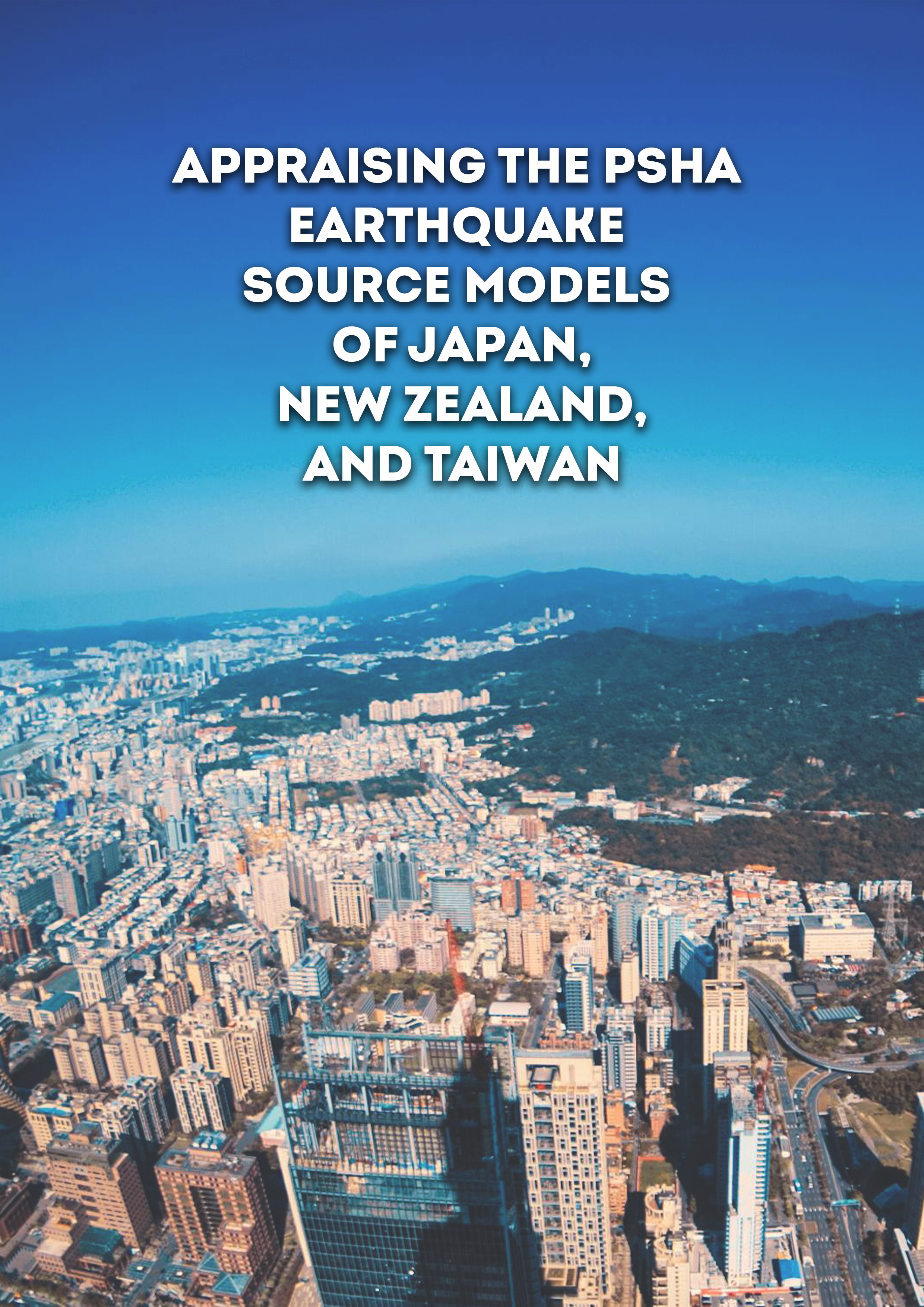
- Appraising the PSHA earthquake source models of Japan, New Zealand, and Taiwan | GEM Foundation
Publications Appraising the PSHA earthquake source models of Japan, New Zealand, and Taiwan Share Facebook LinkedIn Download 2016 | Peer-reviewed Earthquake‐hazard models are one of the major contributions provided by the seismological community to tangibly support disaster risk reduction policies at a national level. Although the societal impact of hazard analyses can be huge, the development of models remains a scientific activity developed within frameworks that have a strong national emphasis and partial international recognition. However, broad acceptability of hazard models is a key aspect for achieving authoritativeness and a prerequisite for warranting that their construction is completed using well‐recognized methodologies. As part of an enduring international collaboration between leading organizations operating in the hazard and risk fields in Japan, New Zealand, Taiwan, and the Global Earthquake Model initiative, we discuss the main characteristic of the earthquake source models—as implemented for the OpenQuake engine—used for the calculation of the most recent national seismic‐hazard maps of these three countries. Particular emphasis is placed on comparing the various modeling options adopted in the different tectonic regions, on emphasizing commonalities, and on discussing the most controversial modeling solutions. Despite the many connections from a seismotectonic point of view between the three countries, the comparison highlights different modeling choices for the various tectonic regions, which constitute a spectrum of possible epistemic uncertainties, as well as modeling issues that could be collectively explored in future phases of this international collaboration.
- FAQ | Global Earthquake Model Foundation
FAQ of GEM Foundation Frequently Asked Questions Welcome to GEM's FAQ section, offering insights on sponsorship, participation, intellectual property rights, licensing, and trademarks. This resource aims to address common queries and assist in better understanding GEM's operations and engagement opportunities. Explore our FAQs for clear guidance on various aspects of involvement with us. Share Facebook LinkedIn How to sponsor and participate 1. What kind of institution is GEM? The GEM Foundation (Italian registered name “Fondazione GEM”) is a non-profit foundation regulated by Italian law and based in Pavia (hosted by EUCENTRE). 2. How can my company or institution collaborate with GEM? The first and most complete option is to become a GEM sponsor (for more details, please see the following FAQ). If this is not possible for any reason, you can consider starting a specific project and then signing an institutional collaboration agreement. “Institutional” means that the object of the collaboration must fall within the institutional aims of the GEM Foundation, which are described in detail in art. 2 of the statute. Our legal team can provide you with an agreement template for institutional collaborations. 3. How can my company or institution become a sponsor of GEM? As provided in art. 3 of GEM Statute, to become a GEM sponsor you should submit your application to the GEM Governing Board, specifying the sponsorship category, the Sponsorship duration, and the name of the designated member of the Governing Board. Should the Governing Board accept the new sponsorship application, the candidate will have to sign a sponsorship agreement through which they commit to: respect the Statute and the GEM Foundation rules and regulations; disburse the annual contribution in support of the Foundation’s activities set by the Governing Board for the specific participant category to which they belong. Our legal team can provide you with a sponsorship agreement for your specific category. 4. Can GEM support my company or institution just as a consultant or a service provider? Yes, it is possible but is not our preferred approach. Italian law does not prohibit non-profit organizations from doing business as a commercial entity. However, this approach is less in line with our core values and mission. Commercial activities are also more expensive for GEM to carry out due to increased administrative overheads and taxes. For these reasons, GEM undertakes commercial activities only where doing so benefits the community as a whole. GEM reinvests any surplus revenue from commercial projects for use in institutional activities, with a focus on supporting the Global South. 5. Which categories of sponsors are available? The GEM Statute includes three macro-categories of sponsors: a. Governor: they are voting sponsors and need to pay a financial contribution … b. Advisor: they are non-voting sponsors and need to pay a financial contribution … c. Associates: they are non-voting sponsors and do not need to pay any financial contribution; they may nominate a delegate to attend Governing Board meetings (without voting right). How to use intellectual property rights and licensing 6. What are the main GEM Foundation intellectual products? As part of its institutional activities, the GEM Foundation produces software, datasets, hazard models, scientific and informative articles, research reports, slides presentation, infographics, maps and pictures. As is well known, these types of materials are protected by intellectual property rights and, except where otherwise specified, the GEM Foundation is the sole rights holder. 7. What is GEM's approach to product rights and licensing? The GEM Foundation adopts an open approach to the management of rights on its products and supports the spread of phenomena such as free software/open source software, open access, open data. With a few limited exceptions, all intellectual products by the GEM Foundation are released with open licenses, such as the Free Software Foundation licenses for software and the Creative Commons licenses for creative contents, datasets and models. Every file that is released on our websites is accompanied by the corresponding license. From time to time, please check the license applied. If in doubt, you can contact licensing@globalquakemodel.org . 8. How to use GEM intellectual products? What types of licenses can be applied? In order to perform analyses using the OpenQuake engine, one needs both the engine software and a model. In order to use a model one must respect both software and data licenses. a. Software, AGPL The software license used by GEM, the GNU AGPL, allows users to use the software for any purpose, including commercial purposes, without having to request a specific permission and without needing to become active supporters of our projects. The AGPL does restrict (re)distribution and integration of the software - in particular it is not permitted to link AGPL software with closed-source software systems, even if this linkage is performed via a network. Users are permitted to modify AGPL software, however, users must remember to release any derived/modified versions openly under the terms of the AGPL. In essence this means that GEM software must remain open and cannot be made into closed products without permission. b. Data and Models The Creative Commons licenses applied to our creative contents, datasets and models, allow users to freely use and modify (by making derivative works) our products and require that the authorship of GEM Foundation is always correctly attributed and in some cases impose some additional restrictions on use. GEM models and datasets are distributed with either the CC BY-SA license which allows commercial use or the CC BY-NC-SA license which prohibits commercial use. Both are Share-Alike licenses; this means that the product and any modified or derived products may only be (re)distributed under the terms of the same license. In essence this means that GEM models must remain open and cannot be made into closed products without permission. c. Other content (slides, images, articles) Some content is distributed under the terms of the CC BY-NC-ND license which prohibits both commercial use and the creation of derived products; this means that you are free to redistribute the content but you may not modify or make commercial use of the content. Content published in peer-reviewed journals, conference proceedings or other publications may have a different license, please check before using. GEM Foundation registered trademarks The GEM Foundation has two registered trademarks: GEM Global Earthquake Model (see graphics) and OQ OpenQuake (see graphics). They have been registered in the following countries: European Union, United States, Switzerland, Australia, Turkey, Japan. More details about the usage of our trademarks are available below. 9. What are the rules and policies applicable to Marks owned by GEM Foundation? In addition to the generally applicable rules, there are a few specific rules that we ask everyone to follow when using trademarks owned by GEM Foundation. Use the full form of any trademarks (e.g., “GEM Global Earthquake Model”) in the first reference in all documents of mass communication, including marketing collateral and web pages. You may then use any abbreviated or short form references (e.g. “GEM”) within the same the document where the full form has already been used. Do not use GEM Foundation trademarks in a manner that would disparage GEM Foundation or its projects (e.g., untruthful advertising, false/misleading promotional materials, etc.). Do not use a GEM Foundation logo on the cover of a book or magazine without written permission from GEM Foundation. Do not use GEM Foundation trademarks more prominently than your own company, product or service name. Do not use a logo of GEM Foundation on posters, brochures, signs, websites, or other marketing materials to promote your events, products or services without written permission from GEM Foundation. Do not attempt to claim or assert any ownership rights in any mark of GEM Foundation and do not attempt to register any GEM Foundation trademark as a trademark, trade name, domain name, or “doing business as” name, alone or (unless specifically licensed) in combination with your own trademarks. DOs and DON'Ts on the use of GEM logos and links GEM Foundation marks have been created and their use is expressly permitted for a specific purpose. DON'T : Do not use logos or names of GEM Foundation in any commercial or marketing context other than as expressly permitted in this policy unless you have obtained explicit written permission from GEM Foundation to do so. DO : Do use our trademarks for private and personal use to make t-shirts, stickers, and caps for yourself and your friends (meaning people from whom you don’t receive anything of value in return) in a manner that is consistent with the preservation of the goodwill and value of the mark. DO : You are also allowed to use a trademark or logo of GEM Foundation as a link to the home page of the applicable project or to a web page on GEM Foundation web site that is relevant to the reference so long as the link is in a manner that is consistent with the preservation of the goodwill and value of the mark. DO : The link and all other usage of a logo of GEM Foundation shall be done using the official versions of GEM Foundation logos obtained from GEM Foundation or its projects.