Thanks for submitting!
You will be contacted as soon as possible


QUICK LINKS


PROFILES
PUBLICATIONS
EXPOSURE
VULNERABILTY
SOFTWARE
EQ MODELS
Search Results
Search this site
1170 results found with an empty search
- OpenQuake engine on Oregon State University Open Source Lab (OSL) - GEM Foundation
News OpenQuake engine on Oregon State University Open Source Lab (OSL) By: Jul 2, 2018 Share Facebook LinkedIn The Oregon State University Open Source Lab (OSL), a nonprofit organization working for the advancement of open source technologies, in partnership with the School of Electrical Engineering and Computer Science at Oregon State University, has provided GEM free access to a powerful virtual machine which will be integrated with our current Continuous Integration system to extend the testing of the OpenQuake Engine, both for long running tests and numerical convergence, on a different CPU architecture (IBM Power CPU) widely used in some of the biggest supercomputers in the world. Aside from OpenQuake, OSL also hosts 160 other projects including worldwide leaders in open source technologies like the Apache Software Foundation, the Linux Foundation and Drupal content management system. The generosity of OS will not only help advance GEM’s ‘open data, open access’ advocacy in risk assessment but will also benefit users and testers of the OpenQuake engine, making it more widely available to broader stakeholders. “The whole GEM family is extending its deepest gratitude to Oregon State University’s OSL team for making their resources available to GEM. This is definitely a significant boost to the accessibility of OpenQuake engine,” John Schneider - GEM Secretary General. For the complete list of projects hosted by OSL Powerdev initiative, please visit: http://osuosl.org/services/powerdev/current-projects/ For more information about OSL, please visit http://osuosl.org . You can also help OSL by donating through their crowdfunding page. No images found. GALLERY 1/0 VIDEO RELATED CONTENTS
- Exposure model for European seismic risk assessment | GEM Foundation
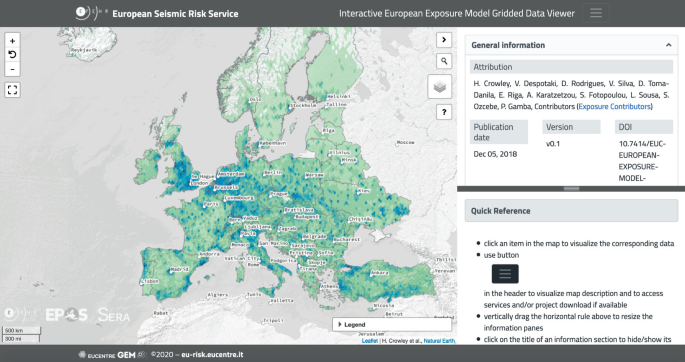
Publications Exposure model for European seismic risk assessment Share Facebook LinkedIn Download 2020 | Peer-reviewed Building exposure and vulnerability models for seismic risk assessment have been the focus of a number of European projects in recent years, but there has never been a concerted effort among the research community to produce a uniform European risk model. The European Commission’s Horizon 2020 SERA project has a work package that is dedicated to that objective, through the development of an exposure model, an associated set of fragility/vulnerability models, and a database of socioeconomic indicators in order to calculate probabilistic integrated seismic risk at a European scale. This article provides details of the development of the first versions of the European exposure model that describe the distribution of the main residential, industrial and commercial building classes across all countries in Europe, as well as their occupants and replacement costs. The v0.1 of the European exposure model has been integrated within the Global Earthquake Model’s global exposure and risk maps. Preliminary analyses using the model show that almost 35% of the residential population in Europe is exposed to a 475-year return period peak ground acceleration (PGA) hazard of at least 0.1 g, thus highlighting the importance of European seismic risk modeling and mitigation.
- GEM Highlights Key Advances in Earthquake Risk Assessment at Geoscience Australia webinar - GEM Foundation
News GEM Highlights Key Advances in Earthquake Risk Assessment at Geoscience Australia webinar By: Mar 27, 2024 Mar 7, 2024 Share Facebook LinkedIn February 7, 2024. At a webinar hosted by Geoscience Australia's Public Talks series, John Schneider, Senior Advisor at the Global Earthquake Model (GEM) Foundation, shared significant updates in earthquake risk assessment and mitigation strategies. John outlined several key developments in his presentation: Firstly, he introduced the launch of second-generation earthquake maps, which offered enhanced accuracy and detail. These maps not only estimate losses and building damage but also factor in human impact, providing a comprehensive view of seismic risk. Moreover, GEM is broadening its focus beyond earthquakes to include secondary hazards such as tsunamis and liquefaction. This expansion aims for multi-hazard and systemic risk assessment, ensuring a more holistic approach to disaster preparedness. John also discussed the potential development of a global tsunami model, highlighting GEM's efforts to establish partnerships with existing networks to advance this initiative within the tsunami modelling community. Furthermore, GEM is expanding its capabilities in various areas, including multi-hazard assessment, future exposure modelling, and building carbon footprint assessment, demonstrating a commitment to innovation in disaster risk reduction. Lastly, John emphasised collaboration opportunities for partners interested in post-disaster analysis, tsunami risk assessment, infrastructure risk, and integration of hazard models with climate change impacts. The webinar provided valuable insights into GEM's strategic aims for the future, offering opportunities for collaboration in multi-hazard risk assessment and disaster preparedness efforts worldwide. For those interested in earthquake preparedness and disaster mitigation, GEM actively seeks partners across various sectors, offering opportunities for researchers, government agencies, and NGOs to contribute. The full webinar recording can be viewed here for further insights into GEM's pioneering work. https://www.youtube.com/watch?v=SL8ueJSWyKw No images found. GALLERY 1/0 VIDEO RELATED CONTENTS
- A brief overview of the past, present and future of the Global Earthquake Model (GEM) Foundation | GEM Foundation
Publications A brief overview of the past, present and future of the Global Earthquake Model (GEM) Foundation Share Facebook LinkedIn Download 2024 | Peer-reviewed The Global Earthquake Model (GEM) is an initiative that originally emerged from discussions and proposals made by the Global Science Forum of the Organization for Economic Co-operation and Development (OECD) in the early 2000’s. In 2009, GEM established itself as a non-profit legal entity, the GEM Foundation, and 15 years later, it continues to operate globally with a mission to provide transparent resources for seismic hazard and risk assessment, as well as to support disaster risk reduction for a wide range of natural hazards. This paper highlights the main milestones from the past 15 years and the vision of the foundation to 2030. An overview is also provided of the status of GEM products and services, all of which are made available for the benefit of society, under a strategy that aims to assure the continued financial sustainability of the organization.
- GEM Highlights Open Science Benefits and Challenges at OECD Forum - GEM Foundation
News GEM Highlights Open Science Benefits and Challenges at OECD Forum By: Apr 23, 2024 Apr 23, 2024 Share Facebook LinkedIn Photo credit: Gemma Volpicelli GEM Highlights Open Science Benefits and Challenges at OECD Forum Paris, France - April 23, 2024 - The Global Earthquake Model (GEM) Foundation underlined the importance of open science collaboration and future directions at the 50th meeting of the OECD Global Science Forum (GSF) this week, a key platform for discussing international scientific collaboration on global challenges. John Schneider, Senior Advisor at GEM, participated in two key discussions, the evolution of international scientific collaboration on April 22nd, and the importance of Open Science for societal benefit on April 23rd. Shifting Landscape of Collaboration A roundtable discussion at the GSF on April 22nd, focused on research infrastructures and their evolution over time, featured John alongside former GSF chairs. “GEM's experience over the past 15 years exemplifies a significant shift," John noted. "The private sector is actively collaborating and increasingly values open frameworks," he said. This shift reinforces collaboration between public and private entities on resolving common challenges for the public good. John presented the history of GEM as a public-private partnership and non-profit foundation, conceived at one of the OECD GSF workshops in 2004. He presented the importance of its collaboration framework and open approach, and the issues GEM faces in operating in an open framework. Underscoring GEM's contribution, Jerry Sheehan, Director of the OECD Directorate for Science, Technology and Innovation, highlighted it as a success story during the 50th meeting closing summary. This was an excellent acknowledgment of the value of the GSF's work in fostering collaborative research infrastructures. Open Science: Benefits and Actions Needed In a separate Multi-Stakeholder High-Level Dialogue on Open Science on April 23rd, John presented GEM's work in open science, using the OpenQuake Engine, an open-source software for earthquake hazard and risk assessment, as a prime example of successful Open Science practices. "OpenQuake has been essential to developing a shared understanding of earthquake hazard and risk across complex and multi-disciplinary fields," he highlighted. The benefits extend beyond technical aspects including fostering the development of local capabilities to assess earthquake risk, strengthening trust in scientific results, and facilitating risk reduction actions. At the same time, challenges include balancing the availability of free and open data and information with the need to have sustained financial support for the organisation, and developing better legal frameworks and communication surrounding data sharing is needed to encourage more participation in open science. The Multi-Stakeholder High-Level Dialogue on Open Science is part of a larger discussion to strengthen international scientific collaboration. This forum, convened during a meeting of Science and Technology Ministers from around the world, addressed challenges and opportunities for the future of science and international scientific collaboration. Open science, along with other themes like biodiversity, climate change, artificial intelligence, and engaging communities in science, were key topics of discussion. Moving Forward with Open Science John underscored the need for concrete actions to promote Open Science. "We need to provide scientists and legal professionals with better tools and resources to understand and implement open licensing," he said. Developing clear guidelines and promoting successful Open Science projects were also highlighted as ways to encourage broader adoption. Finally, John called for a shift in scientific reward systems, placing greater value on the development and maintenance of open software and data alongside traditional publications. The GEM Foundation sees continued collaboration and open data sharing as essential for advancing earthquake risk assessment. GEM's open data-sharing initiatives have allowed researchers and policymakers around the world to access critical earthquake hazard and risk information. This has facilitated the development of more accurate seismic hazard maps, improved building codes, and enhanced disaster preparedness measures in earthquake-prone regions. By making this data openly available, GEM has played a crucial role in enabling local scientists and researchers and collaborating with communities to better understand and mitigate earthquake risk, ultimately saving lives. Stay tuned for the event recording. To learn more, please visit www.globalquakemodel.org or email product@globalquakemodel.org . No images found. GALLERY OECD Science and Technology Policy Ministerial_Day 1.jpg OECD Science and Technology Policy Ministerial_Day 2.jpg OECD Science and Technology Policy Ministerial_Day 1(1).jpg OECD Science and Technology Policy Ministerial_Day 1.jpg 1/12 Photo credit: OECD VIDEO RELATED CONTENTS
- CelsiusPro and GEM partnership aims to expand earthquake and climate risk financing options through parametric insurance - GEM Foundation
News CelsiusPro and GEM partnership aims to expand earthquake and climate risk financing options through parametric insurance By: Nov 10, 2022 Share Facebook LinkedIn CelsiusPro, a pioneering parametric insurance solutions provider in climate and NatCat risk protection, has established a partnership with the Global Earthquake Model (GEM) Foundation, an international public-private organisation that is improving the state of practice of earthquake hazard and risk assessment through the development of open global databases and models, the OpenQuake software, and stakeholder capacity for risk assessment globally. The partnership aims to help communities worldwide mitigate the economic impacts of earthquakes by leveraging the state-of-the-art technology behind CelsiusPro’s end-to-end system for digital parametric insurance solutions, and GEM’s advanced earthquake models and data and commitment to an open, transparent, and collaborative approach at the global, regional, national and local levels. “Our organizations are bound by a shared vision for a safe and disaster-resilient world. For GEM, this partnership provides an excellent opportunity to apply GEM’s models and data for new risk financing opportunities that will contribute to risk reduction objectives. At the same time, we also see this as an opportunity for sharing and exchanging scientific knowledge in processing and analysing risk data and modelling approaches with CelsiusPro in the years ahead,” John Schneider, GEM Secretary General. “Our partnership with GEM will further enhance our risk modeling capabilities for earthquakes allowing us to better serve our clients with risk analysis and product solutions. Providing a fast and efficient payout to bridge the first weeks following natural disasters such as earthquakes, is critical for the survival and future economic prosperity of companies in the affected areas,” says Mark Rueegg, CEO of CelsiusPro. ----- About CelsiusPro CelsiusPro, the Swiss boutique InsurTech company, has been pioneering parametric insurance solutions since 2008, helping its clients mitigate the effects of extreme weather and natural catastrophes worldwide. CelsiusPro provides customized and comprehensive White Label Platform (WLP) solutions to insurers to offer parametric hurricane, earthquake, and agriculture insurance products to its clients. The WLP solutions are turn-key technology solutions for end-to-end management of insurance policies including but not limited to risk modeling, pricing, offer and policy generation, risk monitoring and payout calculation. For information about further products and services, please visit www.celsiuspro.com . About GEM Foundation GEM was formed in 2009 as a non-profit foundation in Pavia, Italy, funded through a public-private sponsorship with the vision to create a world that is resilient to earthquakes. GEM is funded by public and private institutions globally, and is advised by many international organizations ( https://www.globalquakemodel.org/partners ). GEM is also recognized by the UN as an NGO, operating under UN guidelines for a humanitarian organization. GEM’s mission is to become one of the world’s most complete sources of risk resources and a globally accepted standard for earthquake risk assessment. Further, GEM aims to ensure that its products are applied broadly in disaster risk management/reduction and its services are available and accessible to public, private and academic institutions worldwide. No images found. GALLERY 1/0 Gallery VIDEO RELATED CONTENTS
- Papua New Guinea Hazard | Global EarthQuake Model Foundation
OpenQuake engine input model to perform hazard calculations for Papua New Guinea Products Papua New Guinea Hazard OpenQuake engine input model to perform hazard calculations for Papua New Guinea Share Facebook LinkedIn Description The model covering Papua New Guinea was developed within a collaboration between the Port Moresby Geophysical Observatory and Geoscience Australia; see Ghasemi et al. (2016). The original construction of the model is compatible with the OpenQuake engine. How to cite this work Ghasemi, Hadi, Chris McKee, Mark Leonard, Phil Cummins, Mathew Moihoi, Spiliopoulos Spiro, Felix Taranu, and Eric Buri. "Probabilistic seismic hazard map of Papua New Guinea." Natural Hazards 81, no. 2 (2016): 1003-1025. Available Versions An open version (2020.0.0) is available for direct download under a CC BY 4.0 license. Users interested in this version can click the "Open Version Download" button in the right panel to access the information. License information The open version is available under a Creative Commons CC BY 4.0 license, which requires: Attribution (you must give appropriate credit, provide a link to the license, and indicate if changes were made) Any deviation from these terms incur in license infringement. Facebook LinkedIn Share Latest Version v2020.0.0 License CC BY 4.0 Available resources Open Repository Documentation License Request text Map View Search Popup title Close Country/Region Available Resources Afghanistan Exposure Africa Exposure Alaska Exposure Country/Region Available Resources Afghanistan Vulnerability Africa Vulnerability Alaska Vulnerability Country/Region Resource Url Afghanistan Risk Profile Africa Risk Profile Alaska Risk Profile Search Found Country/Region Resource Url Afghanistan Exposure Africa Exposure Alaska Exposure Preview Preview is not available. Search Found Country/Region Resource Url Afghanistan Vulnerability Africa Vulnerability Alaska Vulnerability Preview Preview is not available. Search Found Country/Region Resource Url Afghanistan Risk Profile Africa Risk Profile Alaska Risk Profile Preview Preview is not available. Related products Global Liquefaction Hazard Global Exposure Model Global Vulnerability Model Global Seismic Embodied Carbon Risk Global Seismic Risk Map Country-Territory Seismic Risk Profiles Model Builder's Toolkit (oq-mbtk) Global Seismic Hazard Map Related publications For downloading or accessing detailed product information like PNG/PDF maps, datasets, license request, shapefiles and more, please switch to a desktop or laptop computer. Thank you for your understanding.
- GEM supports new multi-stakeholder initiative on open data sharing between finance, policy and climate sectors - GEM Foundation
News GEM supports new multi-stakeholder initiative on open data sharing between finance, policy and climate sectors By: Oct 9, 2019 Share Facebook LinkedIn Icebreaker One, launched on September 23 at the recent UN Climate Action Summit in New York, is a new independent, non-partisan, global non-profit that is developing shared principles, practices and open standards in order to unlock information that is vital to informing the kinds of large-scale financial decisions that are needed to minimize carbon and environmental impact. “GEM is pleased to support the Icebreaker One initiative and its activities to help bridge data gaps between finance, assets, policy and science to deliver not only a zero-carbon future, but also a safer and more disaster resilient future.” – John Schneider, Secretary General. GEM supports Icebreaker One as Strategic and Founding Partner, and will contribute to case studies demonstrating global public-private partnerships, data sharing, and associated impact in the disaster risk reduction (DRR) space. GEM has developed global exposure and vulnerability data that can be used to help Icebreaker One leverage for more open data exchange within an appropriate governance and data-sharing framework. According to Gavin Starks, founder of Icebreaker One, “The lack of good data-flow is leading to misallocation of resources, missed opportunities and is creating catastrophic risks on our global balance sheets.” “Building multi-disciplinary partnerships, based on decades of experience with open standards, data governance, mass collaboration, and public-private partnerships, Icebreaker One will unlock the exchange of decision-critical data to enable a multi-trillion dollar shift in investment.” Over the remainder of 2019 Icebreaker One will be narrowing its focus on the following options as test cases: shipping, agriculture, aviation, water and energy infrastructure. If you would like to get involved, please visit: https://icebreakerone.org/join/ No images found. GALLERY 1/0 VIDEO RELATED CONTENTS
- A Seismogenic Slab Source Model for Aotearoa New Zealand | GEM Foundation
Publications A Seismogenic Slab Source Model for Aotearoa New Zealand Share Facebook LinkedIn Download 2023 | Peer-reviewed Intraslab seismicity within the Hikurangi and Puysegur subduction zones constitutes >50% of recorded (Mw _> 4.0 events) earthquakes in Aotearoa New Zealand. Here, we develop a source model for intraslab seismicity using recently augmented datasets including models of subduction interface geometries, an earthquake catalog, and a regional moment tensor catalog. For the areal zones of uniform seismicity, we consider the whole of each slab, as well as demarcations between shallower (depth ≤40 km) and deeper regions. Thereafter, we evaluate the magnitude–frequency distributions in each zone. To compute smoothed seismicity distributions, we apply a novel quasi‐3D approach that involve: (1) delineation of midslab surfaces (defined by regions of maximum earthquake density), (2) orthogonal projections of hypocenters onto the midslab profiles, (3) uniform gridding of 0.1° down‐dip on the midslab, and (4) application of smoothing kernel on the projected hypocenters. We also develop a model to characterize the focal mechanisms of the intraslab earthquakes using the regional moment tensor catalog. This model has median strike angles subparallel to subduction trenches and median dip angles ≥60° in both the subduction zones. The distribution of rake angles suggests that the Hikurangi slab has an extensional regime in the shallower parts but a compressional regime in the deeper parts, indicative of slab flexure. In contrast, the Puysegur slab predominantly exhibits a compressional regime.
- Request demo for Western Africa Hazard | GEM Foundation
You have chosen to request a demo on: Western Africa Hazard First Name Last Name Email Company or Institution Name Country Sector Provide Details I accept the license terms and the conditions of products use. Email us at product@globalquakemodel.org if you're experiencing problems submitting this form or if you have any inquiries. Thank you. Request Thanks for submitting! You will be contacted as soon as possible Add answer here