Thanks for submitting!
You will be contacted as soon as possible


QUICK LINKS


PROFILES
PUBLICATIONS
EXPOSURE
VULNERABILTY
SOFTWARE
EQ MODELS
Search Results
Search this site
1170 results found with an empty search
- Analytics matters: the bedrock of resilience - open source data, risk modelling measurement as a global public good - GEM Foundation
News Analytics matters: the bedrock of resilience - open source data, risk modelling measurement as a global public good By: Dec 13, 2021 Share Facebook LinkedIn John Schneider participated in the COP26 Resilience Hub Event: Analytics matters: the bedrock of resilience - open source data, risk modelling measurement as a global public good on November 8th . John shared GEM’s insights on where the provision of open source data can make the most impact to support global resilience and how this can be best delivered to stakeholders. John reiterated that the keys to GEM success to this day is remaining true to its guiding principles of collaboration, credibility, openness and public good. He added, “We believe strongly in thinking globally with respect to the science, the methodology and the tools, but very much acting locally sharing those methodologies, standards and tools and involving local experts to tailor solutions to their situation.” The event featured subject experts from across the public and private sectors, and discussed the state of the art and future of public and private sector physical climate risk modelling and data, including practical examples of how open data sources and models were being, or could be, used to improve climate risk and resilience. The event organized by Willis aimed to promote the benefits of public and private sector collaboration in the development and augmentation of data and models towards specific end user goals, including those aligned to increasing resilience against current and future climate risks at local, subnational, national and regional scales, whether through physical, social, financial or economic mechanisms, or in combination. Global Resilience Index Initiative (GRII) launched The Global Resilience Index Initiative, with GEM as a partner, was officially launched before the main session. The launch included presentations of case studies of practical uses of global physical hazard models as well as the importance of hazard, exposure and risk metrics and standards. This approach will enable consistent approaches to the integration of data and models at different scales, to inform and guide decision makers towards effective risk reduction strategies. Rowan Douglas, who heads the Climate & Resilience Hub at Willis Towers Watson and is the Chair of IDF Operating Committee and Ex-Officio Member of IDF Steering Committee, gave the launch statement and acknowledged the role of GEM and UNDRR’s GAR (Global Assessment Report) as the building blocks in the creation of GRII, saying that the initiative is not starting from scratch, but heavily leverages what GAR and GEM have already started. Rowan further added GEM’s significant contributions to the creation of GRII, emphasizing that GEM may be focused on earthquakes, but so much of its remaining work is the same with other perils such as the data on the built environment, human systems, fragility and vulnerability, that are important to physical climate risk resilience. Website: https://www.cgfi.ac.uk/global-resilience-index-initiative/ Press release: https://www.cgfi.ac.uk/2021/11/global-resilience-index-initiative-launched/ GRII Intro Video: https://youtu.be/NdJruGmEVw4 No images found. GALLERY 1/1 Gallery VIDEO RELATED CONTENTS
- Global Tsunami Model (GTM) Association e.V. Formed to Advance Tsunami Science and Promote International Cooperation on Tsunami Risk - GEM Foundation
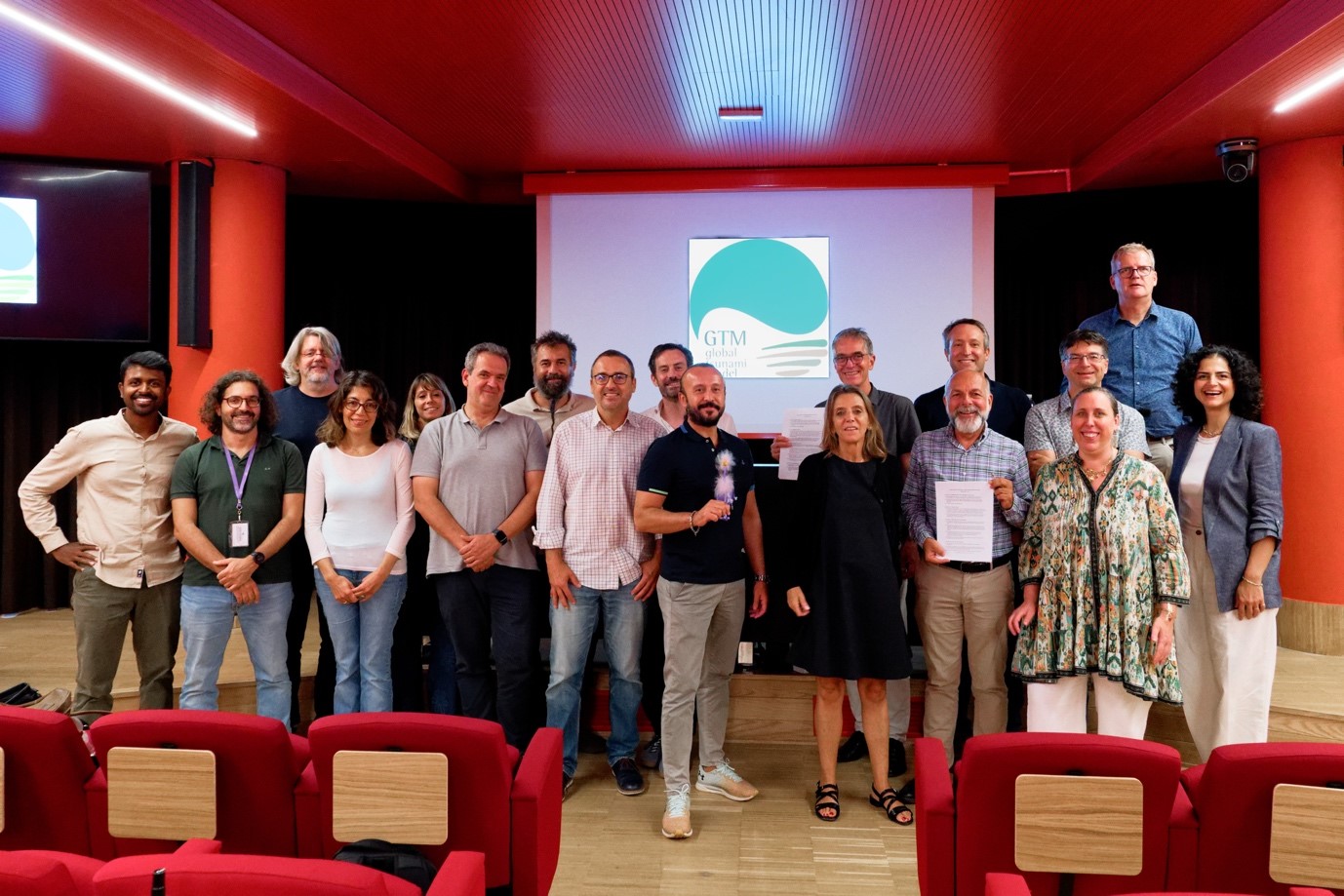
News Global Tsunami Model (GTM) Association e.V. Formed to Advance Tsunami Science and Promote International Cooperation on Tsunami Risk By: Oct 9, 2024 Sep 26, 2024 Share Facebook LinkedIn Rome, Italy. September 26, 2024. After nearly 10 years of preparatory activities, funded over the last four years by the EU Cost Association through AGITHAR, the Global Tsunami Model (GTM) Association e.V. has been formally established with the signing of the Articles of Association by 18 founding experts from Croatia, Italy, France, Germany, Norway, Portugal, Spain, Turkiye, and UK. Chaired by Jörn Behrens, Professor of Numerical Methods in Geosciences at Universität Hamburg, this international organisation unites leading experts in tsunami hazard modelling and risk assessment, and training programs. The GTM founding partners, along with their scientific networks, including Universität Hamburg, GFZ-Potsdam, National Institute of Geophysics and Volcanology (INGV), University of Málaga, Norwegian Geotechnical Institute (NGI), University College London, University of Lisbon, University "Federico II" of Naples, Gebze Technical University-MARTEST, Kandilli Observatory and Earthquake Research Institute (KOERI), Ruđer Bošković Institute, and French National Institute for Ocean Science and Technology (Ifremer) bring decades of expertise in disaster risk reduction and mitigation strategies. GTM is officially registered in Bremen, Germany. Many additional partners from around the globe (e.g. from Japan, Chile, USA, Australia) have provided letters of interest and are expected to join soon. Founding experts of GTM Association e.V. , Rome, Italy Through collaboration with global institutions like the Global Earthquake Model (GEM) Foundation, GTM will promote scientific research, particularly in advancing tsunami knowledge and strategies to mitigate tsunami risks and provide tailored products and training programs depending on users’ requirements. The association aims to enhance science through research, education, knowledge transfer, and outreach, ensuring a broader understanding and application of tsunami hazard mitigation techniques. The Lisbon Workshop and the GTM PTHA model A key milestone in formalising the GTM Association was the two-day workshop held in Lisbon earlier this year. Similar to previous meetings, experts from around the world gathered to discuss essential aspects of tsunami hazard modelling, data sharing, and collaboration. However, this workshop also laid the groundwork for GTM's structure and mission, with contributions from key global partners, including GEM, which shared insights from its experience in governance, and product development focused on seismic hazard and risk modelling. One key outcome of the Lisbon workshop was the endorsement of the new Global Probabilistic Tsunami Hazard Assessment (PTHA) as the flagship GTM product. The GTM PTHA is being realised within the framework of the European project ChEESE, and it is expected to become a reference for tsunami risk management. The formation of the GTM Association marks an exciting new phase in global disaster risk management, recognising the complexities of tsunami hazards and their interconnections with other natural hazards, such as earthquakes and landslides. Collaborations for a Safer Future The GTM Association welcomes global partnerships from individuals and institutions and remains committed to building on the strengths of its founding members. Positioned to lead international efforts, the association aims to enhance the accuracy and accessibility of tsunami hazard and risk models, driving forward a safer, more resilient future for vulnerable coastal communities worldwide. For more information, please visit www.globaltsunamimodel.org . ## No images found. GALLERY 1/0 VIDEO RELATED CONTENTS
- GEM 13th anniversary: launch of Atlas 1.0 - a new and easier way of accessing seismic hazard and risk information - GEM Foundation
News GEM 13th anniversary: launch of Atlas 1.0 - a new and easier way of accessing seismic hazard and risk information By: Mar 16, 2022 Share Facebook LinkedIn GEM is proud to commemorate its 13th year anniversary with the launch of Atlas 1.0 - a subscription-based dynamic web portal that allows subscribers to view information in a GIS style map viewer featuring instant display and download of hazard curves, high resolution exposure data and vulnerability curves for any selected point on the map. GEM’s Global Seismic Hazard Map (GSHM) version 2019.1 with associated hazard curves, will be the first dataset that will be made available through this platform. This service gives clients a pay-as-you-go alternative to licensing the GSHM data layers directly. About GSHM 2019.1 In 2018, GEM released its first version of the GSHM. The GEM GSHM was the first of its kind since the GSHAP was presented in 1999. The GEM GSHM was created by collating maps computed using national and regional probabilistic seismic hazard models developed by various institutions and projects, and by GEM Foundation scientists. The OpenQuake Engine, an open-source seismic hazard and risk calculation software developed principally by the GEM Foundation, was used to calculate the hazard values. A smoothing methodology was applied to homogenize hazard values along the model borders. Meeting the existing and future needs of the DRR community As part of GEM’s products and services strategy, GEM is offering value-added products for a fee such as the Atlas 1.0. These value-added products will also be available for free for public-good, non-commercial applications. In turn, the revenue generated from product or services fees will be reinvested to maintain GEM’s core capabilities, with an emphasis on providing support to developing countries. Visit the Atlas product page to subscribe or request a demo. No images found. GALLERY 1/0 Gallery VIDEO RELATED CONTENTS
- OpenQuake at 15: Powering Resilience in a Risk-Prone World - GEM Foundation
News OpenQuake at 15: Powering Resilience in a Risk-Prone World By: Oct 6, 2025 Sep 30, 2025 Share Facebook LinkedIn This year marks the 15th anniversary of the OpenQuake Engine, GEM’s open-source software for seismic hazard and risk assessment. Since the start of open source development in 2010 and the release of the first version in 2014, the Engine has grown into a globally recognised platform used by scientists, engineers, insurers, and policymakers across continents. Its evolution reflects not only advances in modelling but also the growing need to translate science into tools that strengthen resilience in communities at risk. REGISTER HERE From Science to Society Over the past decade, the OpenQuake Engine has expanded well beyond modelling the hazard and risk to buildings due to earthquake ground shaking. It now includes modules for earthquake-triggered landslides and liquefaction, infrastructure risk and network connectivity, post-event loss amplification, and financial loss calculations for insurance and reinsurance. Other enhancements include site amplification analysis, the ability to condition ground motion fields on station data, and probabilistic damage calculators that can be applied to both the hazards from earthquakes and volcanoes. Behind these technical features lies a clear purpose: to enable decision-makers at global, regional, national, and local levels to anticipate the consequences of earthquakes and to plan accordingly. At the scale of a city, the OpenQuake Engine can estimate how a single earthquake might disrupt schools, hospitals, or transport networks. At national and regional levels, it informs seismic building codes, risk financing, prioritisation of retrofitting solutions and preparedness strategies. Globally, it harmonises models into a shared framework, enabling comparisons and cooperation across borders. In everyday terms, these capabilities support safer housing policies, better-informed insurance products, more resilient infrastructure investments, and, ultimately, lives saved when earthquakes strike. A Call for Resilience The 2025 International Day for Disaster Risk Reduction (IDDRR) carries the theme “Fund Resilience, Not Disasters.” The message is simple but urgent: the escalating costs of disasters demand a shift from reactive aid to proactive investment in disaster risk reduction. The OpenQuake Engine embodies this principle. It equips governments and organisations with the evidence needed to allocate budgets wisely, ensure that development is risk-informed, and channel private sector investment toward resilience rather than recovery. Its open-source nature and broad adoption – documented in more than 100 peer-reviewed journal publications worldwide – make it a shared resource that amplifies collective capacity to manage seismic risk. Invitation to Learn More To mark the OpenQuake Engine’s 15th anniversary and IDDRR 2025, GEM will host a webinar showcasing the Engine’s evolution, real-world applications, and plans for the future. Participants will hear from GEM experts and practitioners who are applying OpenQuake to build resilience at multiple scales. We invite you to join this conversation on October 13, 2025, 15:00 – 16:00 CEST, and see first-hand how open science tools can help bridge the gap between seismic modelling and safer, more resilient societies. Register for the webinar here: https://www.globalquakemodel.org/gemevents/oq-engine-15-iddrr2025 No images found. GALLERY OQ15yrs LinkedIn Post.png OQ15yrs LinkedIn Post.png 1/1 VIDEO RELATED CONTENTS
- Natural Catastrophe Risks workshops with ICRM-NTU Singapore and GEM - GEM Foundation
News Natural Catastrophe Risks workshops with ICRM-NTU Singapore and GEM By: Oct 7, 2019 Share Facebook LinkedIn Anirudh Rao presents the Myanmar residential exposure model. The GEM Hazard and Risk teams represented by Marco Pagani, Vitor Silva, Anirudh Rao and Robin Gee visited China and Singapore from September 26 to October 1 to participate in Nat Cat Risks Workshops co-organized by GEM and the Institute of Catastrophe Risk Management, Nanyang Technological University ( ICRM-NTU ), Singapore. The first leg of the natcat risks workshop was held in Guangzhou, China from September 26-27. Robin and Marco of Hazard Team presented the seismic hazard for the Pearl River Delta Region. They also presented the OpenQuake suite - engine, hazard library and model building toolkits, and presented fragility and vulnerability models, with a focus on the PRD. In addition, Jian Ma of Beijing Normal University (BNU) presented GEM's work on exposure modelling for the Pearl River Delta in China with assistance from GEM’s Anirudh and Robin. The Pearl River Delta also known as the Golden Delta of Guangdong, is formed by three major rivers, the Xi Jiang (West River), Bei Jiang (North River), and Dong Jiang (East River). It is considered as a megalopolis with an estimated population of 120 million people, and rapidly urbanizing.( Wiki ) The high population, rapid urbanization and other socio-economic factors underpin the interest in assessing the changing nature of earthquake and flood risk of the river delta. In the second leg of the journey, GEM Hazard and Risk teams had productive discussions on seismic risk assessment for the ASEAN countries at the Nanyang Technological University, Singapore from September 30-October 1. Anirudh presented the development of exposure models for the ASEAN countries, and Vitor presented GEM’s seismic risk assessment for the same countries. Vitor and Anirudh also presented fragility and vulnerability models for the ASEAN countries with a focus on Indonesia, the Philippines, and Thailand. Colleagues from Singapore, Lao PDR, Malaysia, Indonesia, Vietnam, Thailand, and the Philippines participated in the two-day event. The NATCAT risks workshops aimed to share and improve on Asia’s catastrophe insurance and reinsurance through data exchange; and how the ASEAN Disaster Risk Financing and Insurance – Phase 2 (ADRFI-2) program can help equip Member States with risk management and risk transfer capabilities that will enable them to overcome financial burdens caused by disasters. ( asean.org ) No images found. GALLERY Anirudh Rao presents the Myanmar residential exposure model. Vitor Silva presents the exposure model for Southeast Asia against seimic hazard. Robin Gee presents the seismic hazard for PRD region, China. Anirudh Rao presents the Myanmar residential exposure model. 1/5 VIDEO RELATED CONTENTS
- GEM's IDDRR Event Recap - Unveiling Global Earthquake Hazard and Risk Products - GEM Foundation
News GEM's IDDRR Event Recap - Unveiling Global Earthquake Hazard and Risk Products By: Dec 14, 2023 Oct 13, 2023 Share Facebook LinkedIn October 13, 2023. In a time when disaster risks are inextricably linked with inequalities, the Global Earthquake Model (GEM) Foundation continues to make strides in addressing this critical issue. GEM’s global earthquake hazard and risk products, introduced on International Day for Disaster Risk Reduction 2023, are expected to contribute to disaster risk management efforts globally, helping reduce vulnerabilities, and promoting equity. Highlighting Inequality and Disaster Risk The UN’s International Day for Disaster Risk Reduction (IDDRR) for 2023 focused on the nexus between disaster risks and inequality. It emphasised how unequal access to resources and insurance often leaves the most vulnerable communities exposed to catastrophe. Additionally, disasters tend to exacerbate disparities, plunging marginalised communities further into poverty. GEM's Contribution to Risk Reduction GEM's newly released global earthquake hazard and risk products are key contributors to addressing this challenge. They provide vital insights into the world's varying risk landscape. This, in turn, equips risk managers, insurers, engineers, building regulators, and community planners with the data they need to formulate effective risk reduction strategies. These strategies encompass improving building safety and land use, enhancing earthquake preparedness, and incentivising risk transfer mechanisms such as insurance. IDDRR 2023 Event Highlights The GEM event featured several presentations from the secretariat team with Helen Crowley, GEM's Secretary General, leading the event and providing an introductory address, setting the stage for discussions on global earthquake hazard and risk. Innovative global flagship products were unveiled, including global seismic hazard and risk mosaics; over 200 updated national exposure and vulnerability models, and country seismic profiles; interactive geoviewers, and downloadable high-resolution image files of the global maps, promising to transform disaster risk management on a global scale. About 250 attendees from 52 countries were guided through accessing and effectively utilising GEM's new and improved products page. Link to the event page . https://www.youtube.com/watch?v=F1z9NplcGTs Towards a more equitable future GEM's IDDRR 2023 event celebrated the release of its new global earthquake hazard and risk products. These data and tools are poised to make a difference in disaster risk management, empowering a more equitable and resilient world. GEM remains at the forefront of disaster risk reduction, bringing us one step closer to a safer, more equitable future. Q&A and Discussion The event was interactive, featuring a lively question-and-answer session led by John Schneider, former Secretary General and currently Senior Advisor at GEM. The engaging interactions between the GEM presenters and participants encouraged an insightful exchange of ideas and perspectives. The summary of these discussions, along with the comprehensive list of questions and answers, are now available below. Hazard The following slides feature questions and answers regarding hazards discussed during the launch of GEM's global products, which took place on the International Day for Disaster Risk Reduction in 2023. Fragility & Vulnerability The following slides feature questions and answers regarding fragility and vulnerability discussed during the launch of GEM's global products, which took place on the International Day for Disaster Risk Reduction in 2023. Exposure The following slides feature questions and answers regarding exposure discussed during the launch of GEM's global products, which took place on the International Day for Disaster Risk Reduction in 2023. Risk Assessment The following slides feature questions and answers regarding risk assessment discussed during the launch of GEM's global products, which took place on the International Day for Disaster Risk Reduction in 2023. Future Activities The following slides feature questions and answers regarding GEM’s future activities discussed during the launch of GEM's global products, which took place on the International Day for Disaster Risk Reduction in 2023. Resources The following slides feature questions and answers regarding the availability of various resources discussed during the launch of GEM's global products, which took place on the International Day for Disaster Risk Reduction in 2023. No images found. GALLERY 1/0 VIDEO RELATED CONTENTS
- End-to-end demonstration of the inventory data capture tools (IDCT) | GEM Foundation
Publications End-to-end demonstration of the inventory data capture tools (IDCT) Share Facebook LinkedIn Download 2014 | User manual TheGlobalEarthquakeModel(GEM)aimstoprovideasetoftoolsandmodelsforhazardandriskanalysis. ThefundamentalaimoftheGEMInventoryDataCaptureTools(IDCT)riskglobalcomponentistoprovidea set of software and accompanying user protocols toenable users to collect andmodify buildingexposure information, which can be input into the Global Exposure Database (GED) and the Global Earthquake ConsequencesDatabase.
- Modeling distributed seismicity for probabilistic seismic_hazard analysis: Implementation and insights with the OpenQuake engine | GEM Foundation
Publications Modeling distributed seismicity for probabilistic seismic_hazard analysis: Implementation and insights with the OpenQuake engine Share Facebook LinkedIn Download 2014 | Peer-reviewed In any probabilistic seismic‐hazard model, the earthquake activity that cannot be associated with well‐characterized fault structures is taken into account as seismicity distributed over a geographical region. Ground‐motion prediction equations (GMPEs) are generally based on predictor variables describing the spatial extension of a rupture. The approach taken to model rupture finiteness can therefore bias the estimation of seismic hazard. We study the effect of rupture finiteness in modeling distributed seismicity using the OpenQuake (OQ) engine, the open‐source software for seismic hazard and risk assessment promoted by the Global Earthquake Model initiative. For a simple test case we show how the inclusion of rupture finiteness, with respect to the point‐rupture approximation, leads to a significant increase in the probabilities of exceedance for a given level of motion. We then compare the OQ engine with the calculation software developed by the U.S. Geological Survey‐National Seismic Hazard Mapping Project. By considering a gridded seismicity model for California, we show how different approaches for modeling finite ruptures affect seismic‐hazard estimates. We show how sensitivity to rupture finiteness depends not only on the spatial distribution of activity rates but also on the GMPE model. Considering two sites in Los Angeles and San Francisco, we show that for a return period of 475 years, the percent difference in the associated ground‐motion levels when using point and finite ruptures ranges from 19% to 46%; for a return period of 2475 years the difference ranges from 29% to 58%.
- Colombia Financial Loss Model | GEM Foundation
License Request Form You have chosen to get more information about: Colombia Financial Loss Model Financial Loss Please check the link below to see if this product already meets your your requirements before submitting your request for a license. Thank you. DOWNLOAD THE OPEN VERSION Summary of steps to obtain a license for the requested product. Fill in the application form below. Click Submit. Please check your email Inbox or Spam folder for the summary of your request. You will then be contacted by the GEM Product Manager with either a request for more information, or a request to sign the license. If you do not hear from us within 2 weeks, please send an email to product@globalquakemodel.org . REQUEST DETAILS A. Requesting party information First Name Last Name Role/Job Email Business type Business type Other business Sector Sector Other sector B. License agreement signatory information The signatory must be someone who is authorised to sign license agreements on your behalf such as your immediate supervisor, manager or legal officer. If you’re a PhD student, the signatory must be your adviser or a university officer in charge of license agreements or similar legal documents. Full Name of Signatory Position Company Email of Signatory Organisation name Complete Address C. Purpose of request GEM is able to offer products for free because of the support of our project partners, national collaborators and institutional sponsors. All of GEM’s products are freely available for public good, non-commercial use, but with different license restrictions. In most cases we release products under an open license (e.g., CC BY-SA or CC BY-NC-SA), which permits (re)distribution. In this case, we are granting access under a more restricted license that forbids distribution or disclosure and requires signing by GEM and the licensee in order to better assure accountability for the confidentiality of the information. In order for GEM to properly assess your request, please answer the following questions below. 1. Explain briefly how will the GEM product be used e.g. project, research including the expected results and the foreseen public benefit. Minimum 60 words. 2. Will you be able to share the results of your work with GEM? YES NO 3. Will you be able to provide feedback to GEM on the quality and usefulness of this product via a survey? YES NO D. Privacy Policy By submitting this form, you consent to the processing of your personal data in accordance with our Privacy Policy and the EU General Data Protection Regulation (GDPR). We are committed to safeguarding your information and ensuring it is only used for the purpose outlined in this form. You have the right to access, rectify, or delete your data at any time. For more information, please refer to our Privacy Policy. I agree Words: 0 Email us at product@globalquakemodel.org if you're experiencing problems submitting your application. Thank you. Submit Thanks for submitting! You will be contacted as soon as possible Incomplete data. Please fill in all required fields. Thank you.
- Model Builder's Toolkit (oq-mbtk) | Global EarthQuake Model Foundation
A toolkit for developing PSHA models for the OpenQuake Engine Products Model Builder's Toolkit (oq-mbtk) A toolkit for developing PSHA models for the OpenQuake Engine Share Facebook LinkedIn Description The OpenQuake Model Building Toolkit (oq-mbt) is a suite of tools for the construction of components of a Probabilistic Seismic Hazard (PSH) model that is hosted on a GitHub Repository. The main contributors to this suite of tools are GEM Hazard Team members. Contribution from extenal users are very welcome! How to cite this work If you use this work, please cite both the publication and the software. Publication: Pagani, M., Bayliss, K., Brooks, C., Johnson, K., Styron, R., Villani, M., & Rong, Y. (2026). The OpenQuake Model Building Toolkit: A suite of tools for building components of a seismic hazard model. Seismica, 5(1). https://doi.org/10.26443/seismica.v5i1.1677 Software: Pagani, M., Johnson, K., Bayliss, K., Brooks, C., Styron, R., & Villani, M. (2025). OpenQuake Model Building Toolkit (MBTK) v0.9.0 (0.9.0). Zenodo. https://doi.org/10.5281/zenodo.15111998 Available Versions The Open Repository can be accessed by clicking on the link on the right. License information There are no restrictions on the use (commercial or otherwise) of the Model Builder's Toolkit (oq-mbtk). The source code of the software is available under a GNU Affero General Public License v3.0 license, which requires: Permissions of this strongest copyleft license are conditioned on making available complete source code of licensed works and modifications, which include larger works using a licensed work, under the same license. Copyright and license notices must be preserved. Contributors provide an express grant of patent rights. When a modified version is used to provide a service over a network, the completed modified version must be made available. Any deviation from these terms incur in license infringement. Facebook LinkedIn Share Latest Version v0.9 License AGPL v3.0 Available resources Open Repository Documentation License Request text Map View Search Popup title Close Country/Region Available Resources Afghanistan Exposure Africa Exposure Alaska Exposure Country/Region Available Resources Afghanistan Vulnerability Africa Vulnerability Alaska Vulnerability Country/Region Resource Url Afghanistan Risk Profile Africa Risk Profile Alaska Risk Profile Search Found Country/Region Resource Url Afghanistan Exposure Africa Exposure Alaska Exposure Preview Preview is not available. Search Found Country/Region Resource Url Afghanistan Vulnerability Africa Vulnerability Alaska Vulnerability Preview Preview is not available. Search Found Country/Region Resource Url Afghanistan Risk Profile Africa Risk Profile Alaska Risk Profile Preview Preview is not available. Related products Related publications For downloading or accessing detailed product information like PNG/PDF maps, datasets, license request, shapefiles and more, please switch to a desktop or laptop computer. Thank you for your understanding.