Thanks for submitting!
You will be contacted as soon as possible


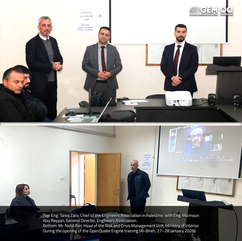
A national training course held on 27–28 January 2026 in Al-Bireh brought together 18 professionals from key Palestinian institutions to strengthen technical capacity in earthquake scenario hazard and risk assessment using the OpenQuake Engine. Organised by the GEM Foundation in collaboration with An Najah National University, the Risk and Crisis Management Unit of the Ministry of Interior, and the Engineers Association, the course supported work to strengthen disaster risk management and advance Palestine’s multi-hazard risk platform under the Integrated Resilience initiative.
Led by Jamal Dabbeek, Arab States Regional Coordinator at GEM, and Karim Aljawhari, Physical Vulnerability Modeller at GEM, who joined virtually, the programme combined scientific foundations with hands-on applications. The aim was to help participants connect seismic risk modelling with practical tools for analysis and decision support, while building a shared technical understanding across institutions involved in disaster risk management.

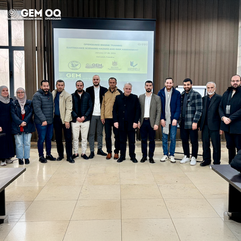

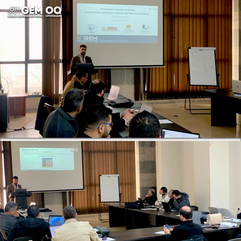


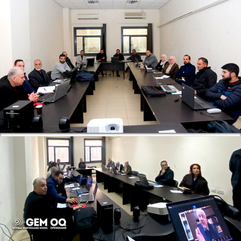
The training included both theoretical and practical components covering earthquake modelling, seismic fault analysis, estimation of ground-motion intensity, simulation of historical earthquake scenarios using the OpenQuake Engine, and the preparation of hazard maps based on geographic information systems. It also addressed the assessment of potential economic losses from earthquakes and the analysis of scenarios linked to the recurrence of historical events.
Alongside the technical sessions, participants were introduced to the Disaster Risk Maps platform developed through the Integrated Resilience project, which is intended to support decision-making by improving access to hazard information and strengthening data exchange among relevant institutions. The course also reviewed internationally used databases and models for seismic risk assessment.
Speakers from the partner institutions framed the training as part of a broader national effort to strengthen preparedness and coordination. Dr. Jamal Dabbeek highlighted the importance of cooperation among institutions working on disaster risk reduction, while Prof. Jalal Al-Dabbeek described risk assessment as a necessary first step in reducing disaster impacts and protecting lives and property through planning and advance preparation. Representatives from the Palestinian Ministry of Interior and the Engineers Syndicate also stressed the value of continued capacity building and institutional cooperation.
The programme also featured remarks from Helen Crowley, GEM’s Secretary General, who outlined the foundation’s vision for strengthening community resilience through open scientific tools that can support decision-makers and inform mitigation and response planning.
At the close of the course, participants affirmed the importance of continuing cooperation between An Najah National University and partner institutions, including further training for national teams to manage the platform and apply its outputs in support of preparedness and disaster risk reduction.
No images found.
GALLERY
VIDEO

RELATED CONTENTS
