Thanks for submitting!
You will be contacted as soon as possible


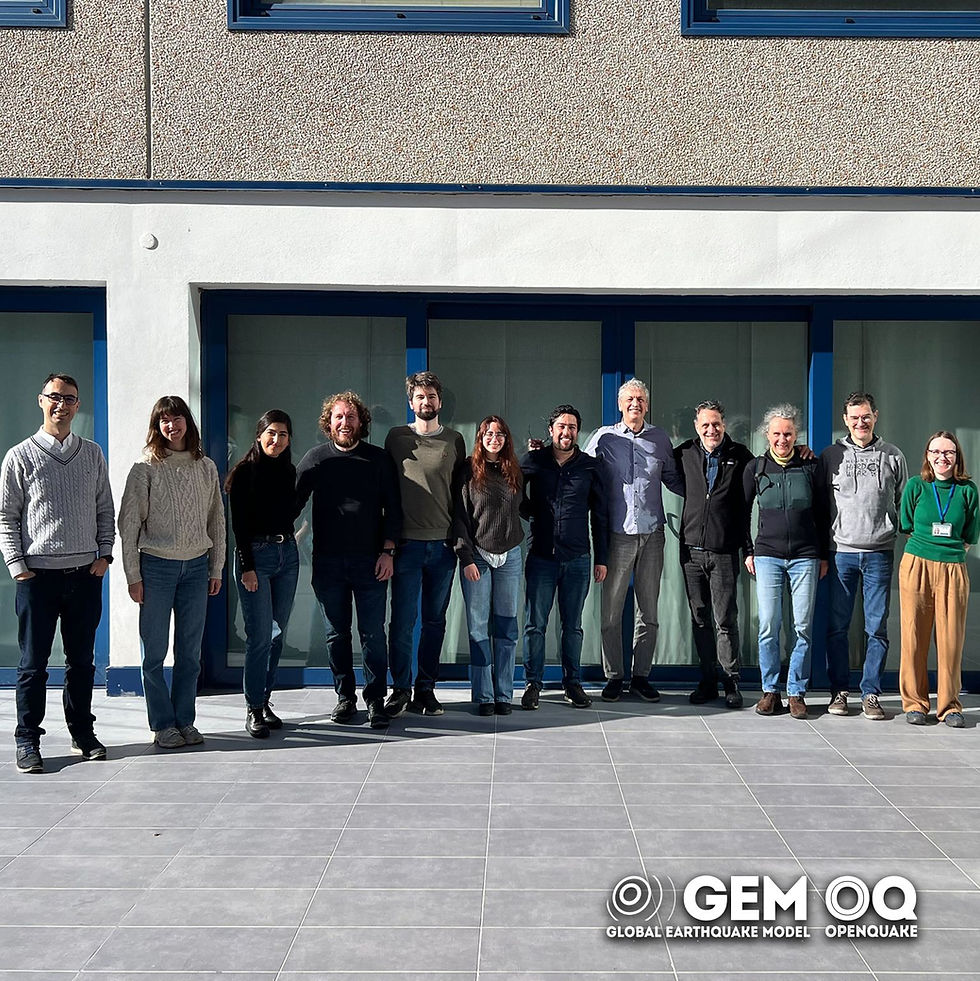
Annual TREAD meeting brings doctoral researchers and senior scientists to Pavia
1. Science, tools and technical development
New study examines the environmental impact of earthquakes in Europe
GEM highlighted a new study examining the embodied carbon associated with earthquake damage across Europe. The research estimates that repair, debris management and reconstruction generate an average of 6.6 million tonnes of CO2e each year, adding an environmental dimension to conventional measures of seismic risk. The work broadens how earthquake impacts are evaluated and supports growing links between risk reduction and sustainability analysis.
Paper: https://doi.org/10.1038/s41467-025-68120-6
Platform: https://embodiedcarbon.builtenvdata.eu/
Data/code: https://github.com/gem/global_embodied_carbon_model
Early action session highlights seismic impact workflow in GDACS
At Humanitarian Networks and Partnerships Week 2026, Catarina Costa contributed to a session led by the European Commission’s Joint Research Centre on strengthening regional early action systems. The contribution highlighted GEM’s work with JRC on an automated seismic impact workflow integrated into GDACS - Global Disaster Awareness and Coordination System and built on the OpenQuake Engine, supporting faster impact estimation and stronger links between scientific modelling and operational humanitarian response.
Link: https://vosocc.unocha.org/Report.aspx?page=o0t9pExuBwMwml9Wkc49cgxxxequalxxxequal
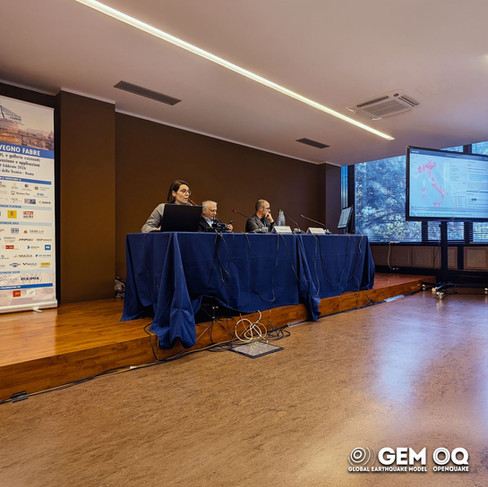
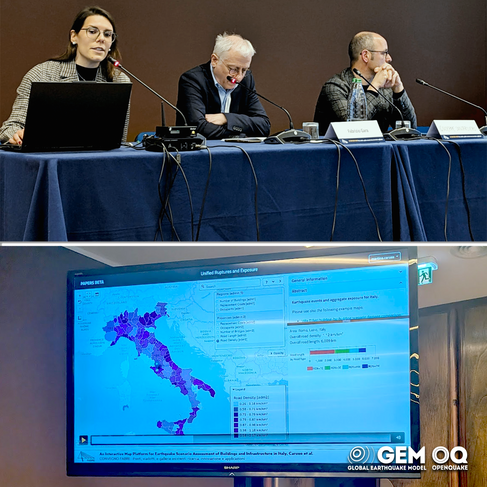
PAPERS platform featured at FABRE 2026
At the III FABRE Conference, GEM presented recent work on the PAPERS project and its operational WebGIS platform for scenario-based seismic hazard and risk assessment. Presented by Martina Caruso and Paul Henshaw, the contribution showed how modelling tools developed through PAPERS can support more practical infrastructure assessment and long-term resilience planning, linking seismic risk science with infrastructure management and engineering decision-making.


PAPERS Project: https://www.globalquakemodel.org/proj/papers-gem
Conference: https://eventi.consorziofabre.it/eventi/a683b607-5057-47ed-afc6-f332193102f4
Tsunami preparedness workshop links hazard maps with local action
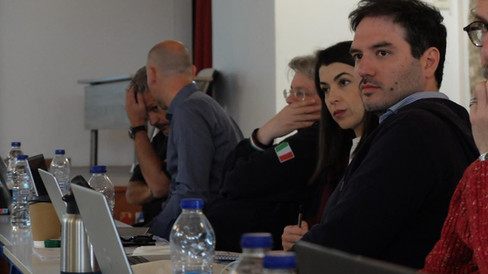
As part of the EU co-funded NEAM-COMMITMENT project, workshops in Athens and Methoni advanced tsunami preparedness by connecting national inundation mapping with local evacuation planning. GEM contributed to the Methoni workshop, where Marco Baiguera presented a methodology for considering prior earthquake damage in tsunami evacuation analysis. The discussions highlighted how science-based tools and local coordination can strengthen coastal preparedness and implementation.


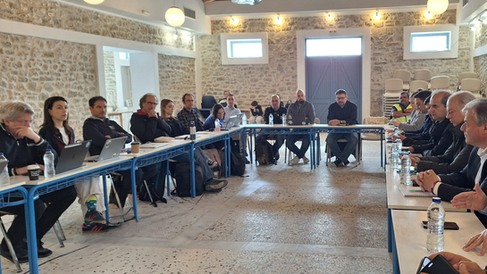
Link: https://www.globalquakemodel.org/proj/neam-commitment
Open lecture explores earthquake risk in the age of new technology
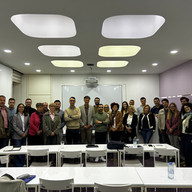
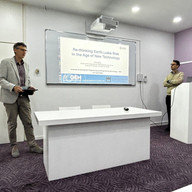
On 21 April, Vitor Silva contributed to the Open Lectures hosted by the Institute of Earthquake Engineering and Engineering Seismology, IZIIS, in North Macedonia, with a talk on how advances in modelling, data integration and computation are reshaping seismic risk assessment. The session highlighted how new technologies are expanding the way earthquake risk is analysed and applied, while supporting more effective decisions on the built environment.

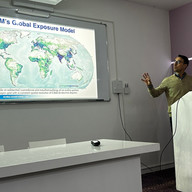

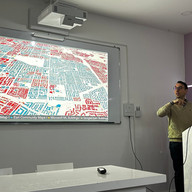

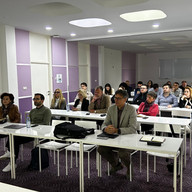


Link: https://www.iziis.ukim.edu.mk/en/
Webinar highlights OpenQuake applications for earthquake-triggered hazards
A webinar organised by the Costa Rican Geotechnical Association examined how OpenQuake can be applied to earthquake-triggered hazards such as liquefaction and landslides. Presented by Vitor Silva and Lana Todorović, the session outlined GEM’s integrated risk framework and ongoing developments in secondary hazard modelling, helping extend risk assessment beyond ground shaking and support more comprehensive analysis in different regional contexts.
Overture Summit discussions connect mapping data with exposure modelling needs
In April, Paul Henshaw and Marco Baiguera represented GEM at the Overture Summit in Florence, where participants explored the development of open, interoperable geospatial data for global applications. The event was relevant to GEM’s ongoing work in exposure modelling, where consistent building and mapping data are increasingly important for strengthening global risk assessment tools and supporting more detailed, comparable analyses across regions.

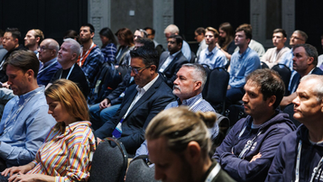

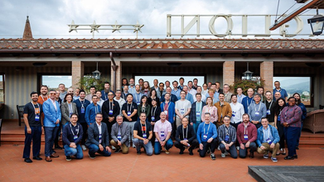

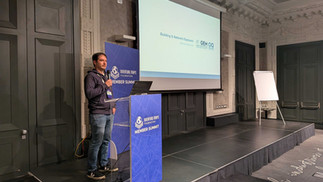


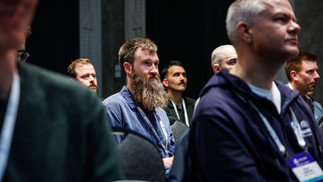
Photo Credit: Overture Maps Foundation (except for the 3rd photo, top row)
Link: https://overturemaps.org/event/overture-member-summit-2026/
2. Events, speaking engagements and visibility
From Data to Inclusion: GEM at ESCAP 82
On 24 April, GEM Secretary General Helen Crowley contributed remotely to a side event organised by APDIM (GEM Associate Partner) at the 82nd session of the United Nations Economic and Social Commission for Asia and the Pacific in Bangkok. Her presentation highlighted how GEM’s open-source models and software, the OpenQuake Engine, and AI can help accelerate model development under a rapidly changing urban environment, which will lead to more accessible and actionable public goods, supporting inclusive disaster risk decision-making across Asia and the Pacific.
Link: https://www.unescap.org/events/commission82
Uncertainty and collaboration in focus at EPOS Days 2026
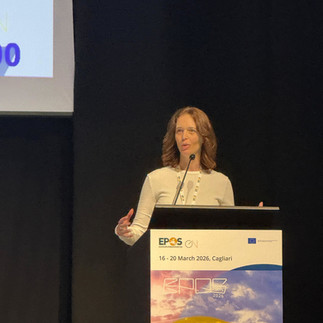
At EPOS Days March 2026 in Cagliari, Helen Crowley presented on rapid earthquake impact assessment, focusing on how uncertainty affects early estimates of damage and losses. She also joined a discussion with Finn Løvholt of the Norwegian Geotechnical Institute on collaboration between the Global Earthquake Model and the Global Tsunami Model, highlighting shared approaches that can strengthen the use of scientific services in research and operational settings.

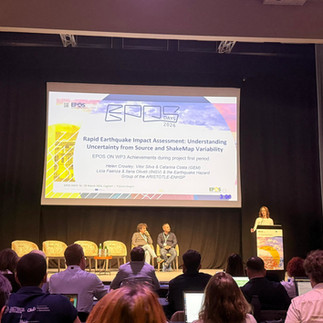

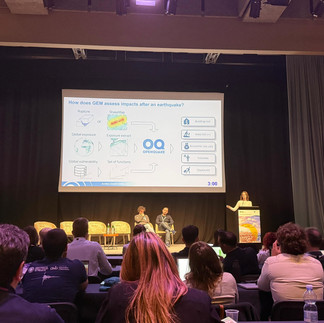

Link: https://events.epos-eu.org/event/30/
Earthquake risk perspective featured at Exponential Risk London 2026
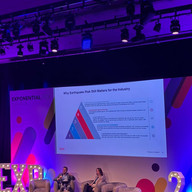
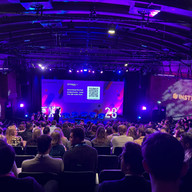
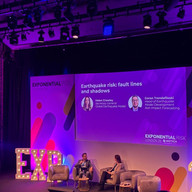
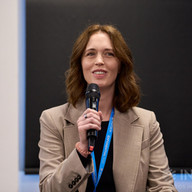
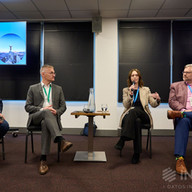
At InsTech’s Exponential Risk London 2026, Helen Crowley joined discussions on catastrophe modelling, transparency and risk insight in a changing analytics landscape. She contributed to the Owning Your View of Risk session organised by Zurich to discuss the role GEM played in supporting their in-house cat modelling development, and was on the main stage for a fireside chat with Goran Trendafiloski (Aon Impact Forecasting) to discuss the continued importance of seismic risk, even as climate-related hazards dominate much of the global conversation. The event provided a platform for engagement with insurance and analytics leaders on evolving risk priorities.





Link: https://www.instech.co/past-events/exponential-risk-london-26/
Insurance seminar reviews catastrophe losses and earthquake implications
At the Willis Natural Catastrophe Review Seminar on 28 January, Vitor Silva contributed to a panel discussion on major 2025 disaster events and what they mean for the insurance sector. His participation brought an earthquake risk perspective to a wider catastrophe review, helping connect recent losses with ongoing questions around model interpretation, portfolio understanding and the role of risk science in insurance decision-making.
Link: https://www.wtwco.com/en-gb/insights/2026/01/natural-catastrophe-review-january-2026
Research-to-practice dialogue at the 2BESAFE final conference
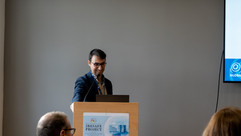
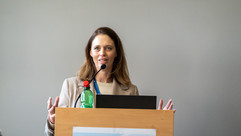
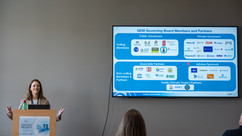
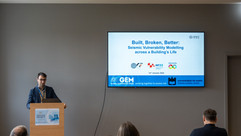
At the final conference of the 2BESAFE project in Zagreb, GEM contributed to discussions on how seismic vulnerability modelling can better support urban risk assessment and retrofit strategies. Contributions from Helen Crowley, Vitor Silva and Alejandro Calderón connected advances in hazard, exposure and vulnerability modelling with efforts to support seismic risk assessment in Croatia and across Europe.




Link: https://2besafe.grad.hr/final-conference/
3. Training, education and exchange
Annual TREAD meeting brings doctoral researchers and senior scientists to Pavia
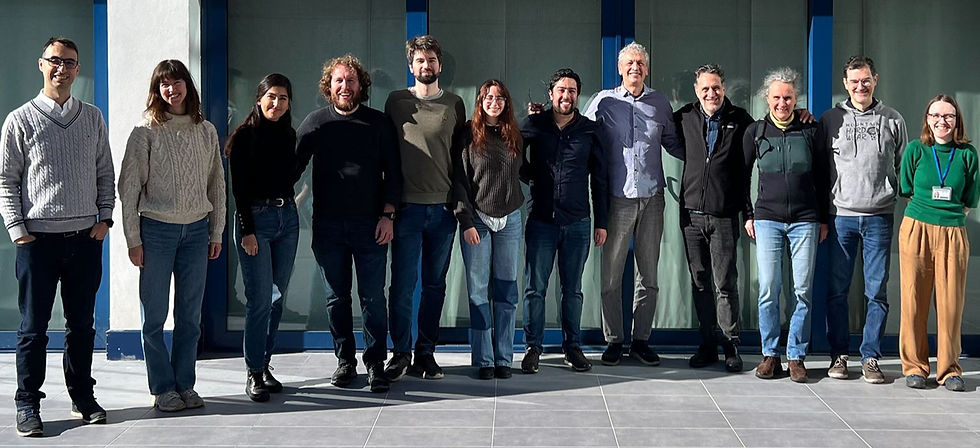
Hosted at GEM headquarters in Pavia, the annual meeting of the TREAD project brought together doctoral researchers and senior scientists working across earthquake observation, physics, hazard and risk. The meeting provided space to review progress, exchange perspectives across disciplines and coordinate next research steps, reinforcing GEM’s role in supporting scientific collaboration and training at the interface of earthquake science and risk modelling.
Link: https://www.globalquakemodel.org/proj/tread
Doctoral course examines sustainable retrofit design beyond seismic safety
GEM contributed to the IUSS Pavia doctoral course Beyond Seismic Safety: Sustainable Retrofit Design, co-hosted by GEM Seismic Risk Modeller Martina Caruso and Assistant Professor Gianrocco Mucedero, IUSS Pavia. Held from 23 February to 6 March, the course examined retrofit approaches that integrate seismic safety with environmental impact, life-cycle sustainability and energy efficiency. The programme reflects GEM’s growing engagement in linking risk reduction with broader performance and sustainability objectives in the built environment.
Link: https://www.linkedin.com/feed/update/urn:li:activity:7422220675718987777/
Colorado visit supports exchange on earthquake risk tools
A visit by Anirudh Rao, Seismic Risk Modelling Lead, and Al Mouayed Bellah Nafeh, Physical Vulnerability Lead, to the U.S. Geological Survey in Golden, Colorado, provided an opportunity for technical exchange on earthquake hazard and risk modelling, including areas of shared interest between GEM and USGS.


Photo credit: Kishor Jaiswal, USGS.
Discussions focused mainly on the use of GEM’s exposure and vulnerability models within the U.S. Geological Survey’s PAGER 2.0 framework, and also covered the dissemination of the International Macroseismic Scale, a pilot cost-benefit study for El Salvador on risk-informed seismic design actions, and implementation of the latest seismic risk model for the United States and its territories into the OpenQuake Engine for incorporation into GEM’s global seismic risk map.
Anirudh and Moe also presented GEM’s work on exposure, vulnerability and scenario-based verification for the 2026 global model at a USGS Geological Hazards Science Centre Engineering and Risk Brown Bag Seminar.
The visit was supported by the U.S. Geological Survey under Cooperative Agreement No. G26AC00056-00.
4. Institutional and community updates
ATLAS 2.0: facilitated access to global seismic hazard curves
GEM has introduced a more streamlined online procurement system for ATLAS 2.0, its hazard data service providing access to global probabilistic seismic hazard curves launched in 2024. The update is intended to support users seeking consistent, high-resolution hazard information across countries and regions for commercial applications, while GEM continues to make the data underlying the Global Seismic Hazard Map available for free, upon request, for public-good use.
Link: https://www.globalquakemodel.org/products/atlas
Subscription plans: https://www.globalquakemodel.org/atlas-subscription-plans
Seventeen years of advancing earthquake risk science
In March, GEM marked its 17th anniversary, reflecting on nearly two decades of work to advance earthquake hazard and risk understanding through models, data and analytical tools. The milestone also pointed ahead to the next phase of GEM’s work, including new global products, integrated risk assessment and continued collaboration across its international community of partners, sponsors and technical contributors.
Marking women’s participation and equality in science and practice
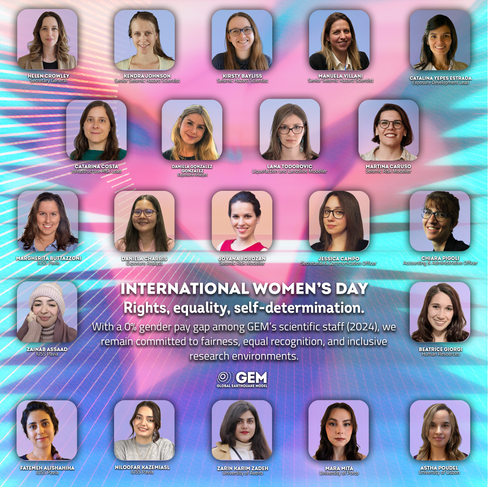
During the first quarter, GEM marked both the International Day of Women and Girls in Science and International Women’s Day, highlighting how inclusive knowledge systems strengthen research, modelling, software development and decision support. The foundation also noted that the gender pay gap among its scientific staff reached 0% in 2024, linking equality in practice with broader efforts to ensure opportunity, participation and leadership remain open and accessible.


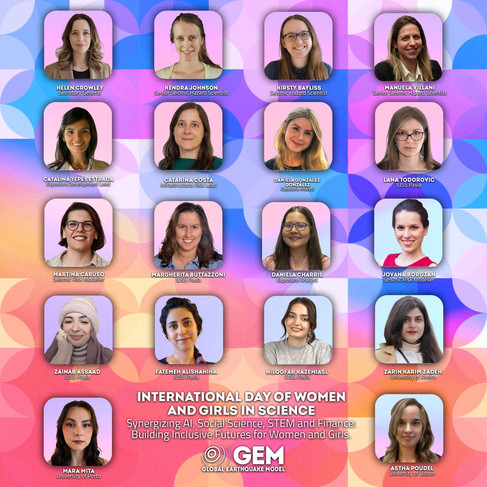
Link: https://www.globalquakemodel.org/gempublications/gem-foundation-gender-equality-plan
No images found.
GALLERY
VIDEO

RELATED CONTENTS
