top of page
Thanks for submitting!
You will be contacted as soon as possible


Featured Publications

Development of a global seismic risk model

GEM Strategic Plan and Roadmap to 2030

Improving Post-Disaster Damage Data Collection to Inform Decision-Making Final Report
Anchor 1
Publications List

0
Sort by Title:

Download
OpenQuake engine manual
Type:
User manual
Year:
2018
OpenQuake-engine is the seismic hazard and risk calculation software developed by the Global Earthquake Model. By following current standards in software developments like testdriven development and continuous integration, the OpenQuake-engine aims at becoming an open, and community-driven tool for seismic hazard and risk analysis.

Download
OpenQuake engine installation guide
Type:
User manual
Year:
2018
The OpenQuake Engine software provides calculation and assessment of seismic hazard, risk and decision-making tools via the data, methods and standards that are being developed by GEM (Global Earthquake Model) and its collaborators. The seismic hazard calculations of the OpenQuake Engine are powered by the OpenQuake Hazard Library and OpenQuake Risk Library Both libraries were built by the OpenQuake team to serve as a fast, stable, and lightweight alternative to existing risk and hazard libraries. To get involved in OpenQuake, join us on IRC (irc.freenode.net) in the #openquake channel by using an IRC client or via web at http://webchat.freenode.net. You can also submit questions, comments, or support requests to our OpenQuake users mailing list: http://groups.google.com/group/openquake-users. You can find more information about the project at http://www.globalquakemodel.org/tools-products
Download
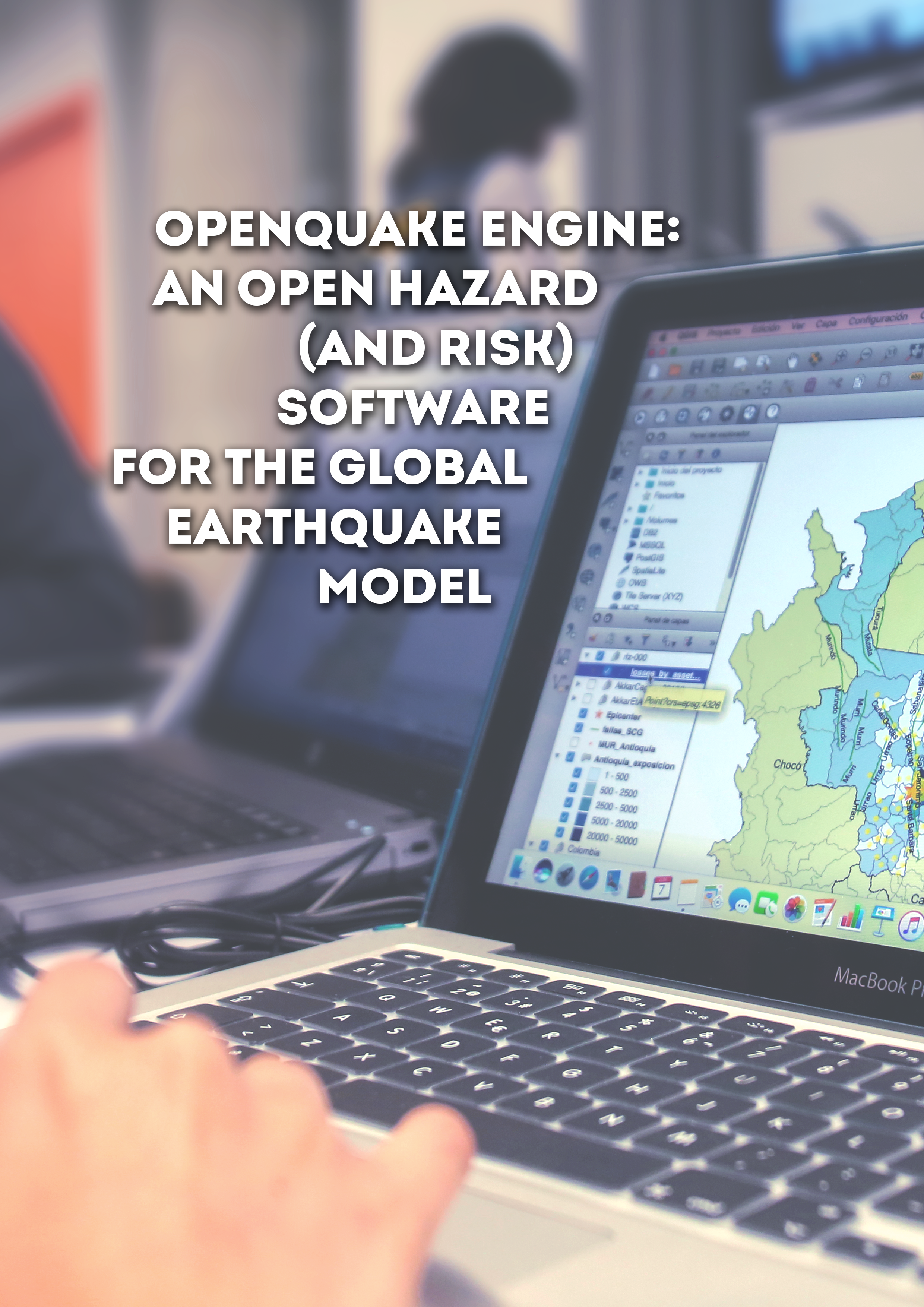
OpenQuake Engine: An Open Hazard (and Risk) Software for the Global Earthquake Model
Type:
Peer-reviewed
Year:
2014
Since its inception in the 1960s, probabilistic seismic‐hazard analysis (PSHA) (Cornell, 1968; McGuire, 2004, 2008) has emerged as the principal methodology for assessing the potential hazard posed by earthquake ground motion in a broad range of contexts. Seismic‐hazard analysis serves different needs coming from a wide spectrum of users and applications. These may encompass engineering design, assessment of earthquake risk to portfolios of assets within the insurance and reinsurance sectors, engineering seismological research, and effective mitigation via public policy in the form of urban zoning and building design code formulation. End users of seismic‐hazard analyses from...

Download
OpenQuake Hazard component testing procedures
Type:
Report
Year:
2014
The current document describes the testing procedures adopted in the development of the hazard component of the OpenQuake-engine (OQ-engine), the open source hazard and risk software developed by the Global Earthquake Model initiative. Nowadays seismic hazard analysis serves different needs coming from a variety of users and applications. These may encompass engineering design, assessment of earthquake risk to portfolios of assets within the insurance and reinsurance sectors, engineering seismological research, and effective mitigation via public policy in the form of urban zoning and building design code formulation.

Download
OpenQuake Underlying Hazard Science
Type:
Report
Year:
2014
This chapter provides an overview of the OpenQuake-engine (OQ-engine), its structure and the processes adopted for its development. A particular emphasis is placed on transparency, reproducibility, community-based development and testing (Pagani et al., 2014a), the central tenets of the development process adopted since the early stages of the project.
Download
Selection of ground-motion prediction equations (GMPEs) for GEM1*
Type:
Report
Year:
2010
This document describes a selection of published ground-motion prediction equations (GMPEs) (also known as attenuation relations or ground-motion models) and their features, for use in the seismic hazard assessment to be performed at the global scale in GEM1. Such a scale of application obviously requires that all the significant tectonic regimes affecting the generation of earthquakes that can cause damage to the built environment be taken into account in the selection. This requirement marks a first difference with respect to, for instance, those of the SHARE project, focussed on Europe and neighbouring countries only. The extension to the global scale requires dealing with many large regions belonging to different tectonic regimes where no strong-motion data have ever been recorded and no GMPEs directly based on strong-motion data been proposed. The whole of Africa, leaving out Algeria and Egypt, is a striking example of this situation, as are vast areas of Asia.

Download
Sub-Saharan Africa Geodetic Strain Rate Model 1.0
Type:
Report
Year:
2015
InthisreportwedescribetheSub-SaharanAfricaGeodeticStrainRateModel1.0,whichisacontributionto theGlobalEarthquakeModelFoundation(GEM)StrainRateProject.Theobjectiveofthisworkistoimprove the latest GEM geodetic strain rate model with an updated strain rate field of sub-Saharan Africa. SubSaharan Africa encompasses the East African Rift System (EARS), the active divergent plate boundary between the Nubian and Somalian plates, which accommodates strain along the boundaries of at least 3 microplates.ThecurrentversionoftheGEMgeodeticstrainratemodelisconstrainedbypublishedgeodetic data along the EARS and includes microplates between the Nubian and Somalian plates. In this work we developedan improved strain rate field for sub-Saharan Africa that incorporates 1)anexpandedgeodetic velocity fieldwithin theNubia-Somaliaplatesystemandalong theEARS2) redefined regionsofdeforming zones guided by seismicity distribution, and 3) updated constraints on block rotations from the recent publicationofSariaetal.(2014).TheSub-SaharanAfricaGeodeticStrainRateModel1.0spanslongitudes22 to55.5andlatitudes-52to20with0.5°(longitude)by0.4°(latitude)spacing,whichincludespartorallofthe following platesand/or sub-plates: Somalia,Nubia, Rovuma, Lwandle, Victoria, Antarctica,and Arabia. For theseplates/sub-platesweassignrigidblockrotationsasboundaryconstraintsonthestrainratecalculation thatisdeterminedusingtheHainesandHoltmethodof fittingsplinestogeodeticdata foraninterpolated velocitygradienttensorfield.Wederivestrainrates,velocities,andvorticityratesfromthevelocitygradient tensorfield.FollowingtheworkofKreemeretal.2014fortheGEMgeodeticstrainratefieldwealsoprovide estimates of model uncertainties, velocities, vorticity, and strain rates in a Nubia-fixed reference frame relativetothelowermantlefora0.1°x0.1°mesh.

Download
The GEM Faulted Earth Project
Type:
Report
Year:
2015
This is the final report of the GEM Faulted Earth Project (GFE), which was active between 2010 and 2013. GFE set out to build a global active fault database with a common set of strategies, standards and formats, to be placed in the public domain. Nearly 100 individuals from 43 institutions in 21 countries contributed to GFE by providing feedback on the database design and the compilation tool, as well as the documents describing them, contributing data and participating in several workshops.
Title | Year | Type | Topic | Journal |
|---|---|---|---|---|
OpenQuake engine manual | 2018 | User manual | OpenQuake | |
OpenQuake engine installation guide | 2018 | User manual | OpenQuake | |
OpenQuake Engine: An Open Hazard (and Risk) Software for the Global Earthquake Model | 2014 | Peer-reviewed | OpenQuake | Seismological Research Letters |
OpenQuake Hazard component testing procedures | 2014 | Report | Hazard | |
OpenQuake Underlying Hazard Science | 2014 | Report | Hazard | |
Selection of ground-motion prediction equations (GMPEs) for GEM1* | 2010 | Report | GEM1 | |
Sub-Saharan Africa Geodetic Strain Rate Model 1.0 | 2015 | Report | Global Components (2009-2013) | |
The GEM Faulted Earth Project | 2015 | Report | Global Components (2009-2013) |
bottom of page